
Introducing Adam Bird, Rapid Growth’s new Managing Photographer
Adam Bird has been a camera enthusiast since childhood, a passion which has afforded him many opportunities and adventures. Bird insists there are “no small assignments,” a philosophy which has proved rather productive…
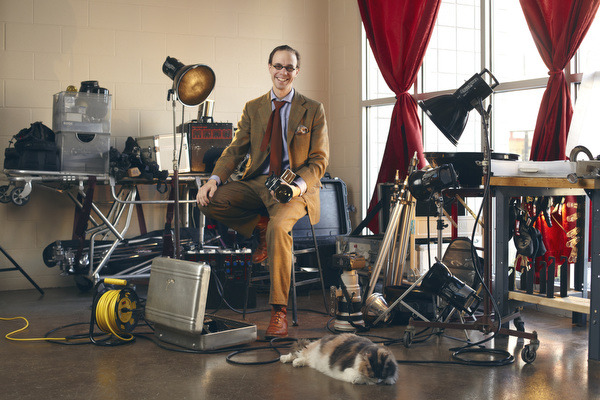
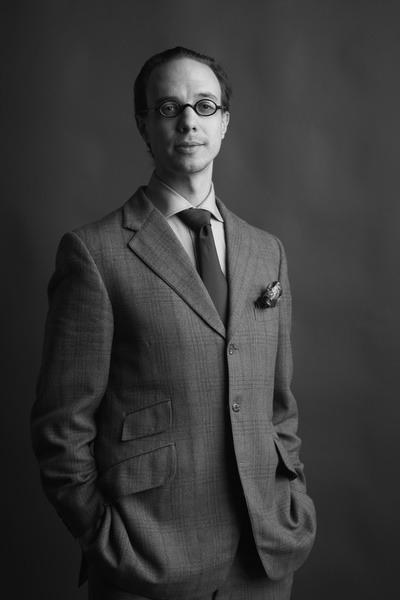
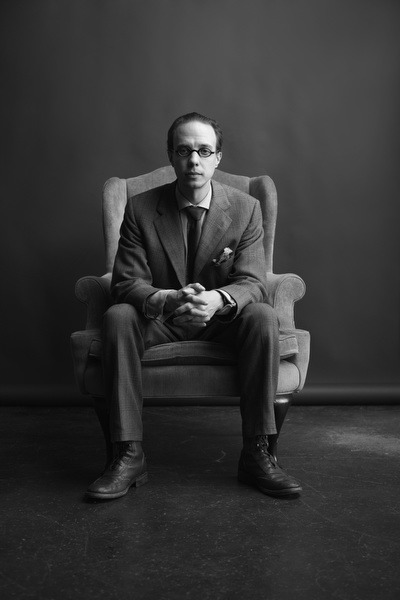
Adam Bird is Rapid Growth Media’s new Managing Photographer, and he is very hard to miss — a slender, bespectacled gentleman of indeterminate age who sports linens or tweeds (depending on the season) with unusual and considered elegance. His wardrobe tempts the imagination into wondering whether he might be some defrosted throwback, a gateway to an era when sharp tailoring was a simple universal standard. Due to these charming outfits, I had quite lazily assumed that Bird might be a fervent eccentric; in fact, he is relentlessly sharp and measured — a coolly self-assured and busy professional.
At 22, he realized he could either keep wearing “18-hole work boots and baggy pants” in an act of quite standard rebellion, or he could mature into someone more memorable. He left for a two-semester student exchange to Kingston University in London in 2002. The only clothes he took were the ones on his back, his theory being that he didn’t want to be a tourist, but would instead immerse himself in the British way of life. It was here that he began his aesthetic renovations
.
His decision to become a photographer came much earlier; Bird was only 10 when he stole his father’s camera, stashing the Pentax SLR at his mother’s house where he could explore it uninterrupted. Bird says it was with this camera that he first became infatuated, fascinated by the “forced engagement” with his surroundings that the camera provided him. Apart from a brief childhood ambition to become an Egyptologist (which he later realized was “unrealistic”), his desire to photograph remained at the forefront of his plans. Bird admits that he never experienced the flailing confusion that many young adults contend with when choosing an area of study. This ability to decipher his own strengths and maneuver them to his advantage seems to be unwavering.
As a sophomore in high school, Bird says that he managed to “blag” his way into a Detroit Pistons game, wielding his camera alongside the professionals. Each space designated for a photographer was marked with a business card. Bird says that he perused these cards until he found the name he was looking for: Carlos Sarsorio, the managing photographer for the Michigan Associated Press. Bird admits that he has always been “cheeky” and it was probably this cheekiness that helped him to gain freelance work through Sarsorio on premise rather than example.
Bird also spent some of his high school years as editor of the yearbook, a position which provided him with rather a lot of free film and access to a darkroom. This opportunity was not wasted on him;by 17, Bird was also freelancing for the Holland Sentinel. Bird says that although he was “prickly” at high school, not making swathes of friends, it did not concern him. He was invested in his photography; his camera gave him “license to be an observe.”
He continued freelancing when moving onto college, attending Grand Valley State University where he studied journalism and photography, adding to his bow the position of editor at the school’s paper, the Grand Valley Lanthorn. Bird was prolific, shooting 40-60 rolls of film per week. It was suggested to him by professors that he had excelled beyond what the Grand Valley curriculum could offer him in terms of photojournalism.
Bird therefore made the decision to spend two semesters in Kingston, a time which proved integral to his progress. Also fundamentally integral was the decision he made around this time to spend the entirety of an early $5000 inheritance on his first ever digital camera. The Nikon dh1, boasting only 2.74 Mega pixels, “couldn’t hold a candle to film,” he says, but it equipped him with something very few people had. His foresight is part of an essential formula which keeps him relevant. He was freelancing for Agence France Presse as well as The Associated press before a Visa complication meant that he had to leave the UK much sooner than he had planned. Using carpentry skills he had cultivated as a young man, he built his friend a deck in exchange for a one-way ticket back to the States. Following a brief hiatus in Detroit, where he spent more time honing his carpentry skills, he headed back to Grand Rapids in 2003.
The Grand Rapids Press was in the middle of a hiring freeze, but this didn’t stop Bird from executing a great deal of freelance work for them. This relationship with The Grand Rapids Press has afforded Bird the additional opportunities of working with such establishments as ‘The New York Times’ and ‘ESPN’. He has been steadily building up his client base since his move back and he’s done rather a good job. The work calendar on his wall seems to provide him with very little spare time.
To date Adam Bird has worked with dozens of internationally recognized publications including Newsweek, USA Today, Women’s Health, The Detroit Free Press and The New York Times. He is an engaging raconteur and seems imbued with an ambition devoid of aloofness or arrogance; it is inspiring to see such a distinctive, consummate professional who has chosen Heartside as his home. I look forward to seeing his summer wardrobe.
Emma Higgins has a BA hons in Fine Art, she is from England but is an honorary Michigander for the time being, you can reach her at elhiggins89@gmail.com.
Related Articles
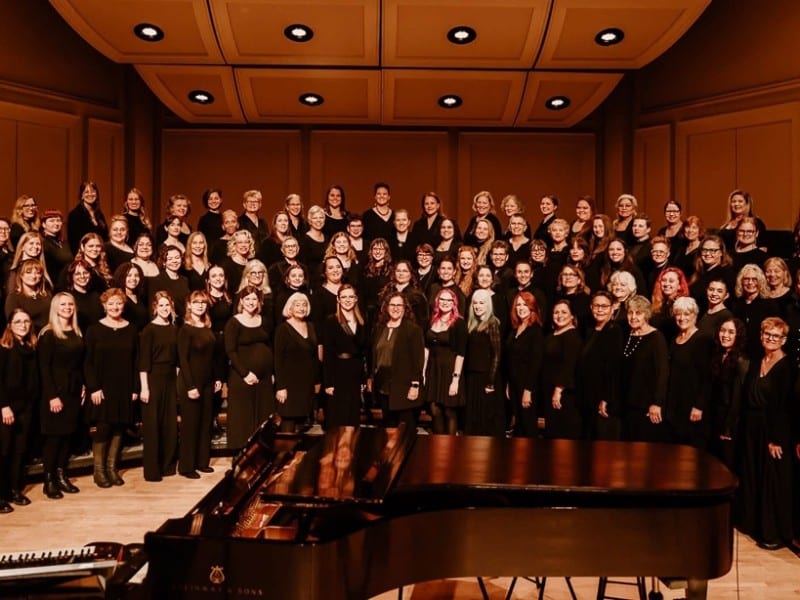
Grand Rapids Women’s Chorus to mark 30 years with powerful Michigan premiere honoring civil rights pioneer Pauli Murray
The Grand Rapids Women’s Chorus, a 110-voice ensemble, presents the Michigan premiere of Sincerely Yours, Pauli Murray, inviting the community to discover a civil rights trailblazer whose influence shapes discussions on justice, identity, and belonging.
#RG20LookBack: Power of art as a community convener
For his ninth #RG20LookBack, Publisher Tommy Allen revisits his 2013 story, written while he was Lifestyle Editor, about the Division Avenue Arts Collective’s eviction from Avenue for the Arts just days before its 10th anniversary.
Grand Rapids Public Museum’s journey to Sensory Sunday built empathy into its infrastructure
On every second Sunday, the Grand Rapids Public Museum dims the sensory “noise” of a typical visit, enabling more families to experience wonder, enhance their learning, and foster a sense of belonging for everyone.


