Vibrant Schools, Vibrant City: Will Grand Rapids invest in its future?
As the district rides the success of its Transformation Plan, Grand Rapids Public Schools is becoming an outlier among urban public school districts in Michigan, earning recognition for its efficiency and effectiveness. What lessons can other schools learn from Grand Rapids? And, come the November bond proposal vote, will the community step up to do what's best for the kids?
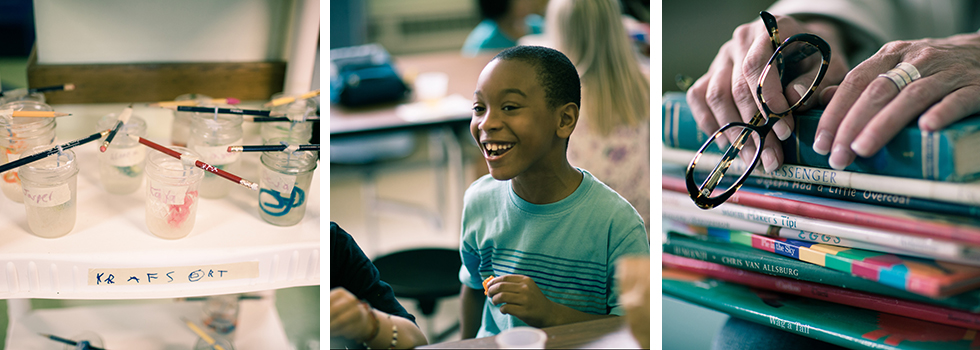
What’s Best for the Kids
One phrase stuck out in the mind of Larry Oberst, chief financial officer for Grand Rapids Public Schools (GRPS), when he met the new superintendent, Teresa Weatherall Neal. It had become her mantra, and it convinced Oberst that he wanted to work alongside her.
“She kept saying, ‘what’s best for the kids, what’s best for the kids,’” Oberst says. “I realized she meant it. It wasn’t about what was best for her career, or even what was best for the teachers and staff. It’s always been about what’s best for the kids.”
The Grand Rapids school board approved Oberst unanimously in February 2014 as the district’s new CFO, hand-picked by Weatherall Neal. Oberst, who lives in Gaines Township, is the former vice president of finance for Spectrum Health Continuing Care. He’s been in accounting for more than 30 years, a partner for the international accounting and consulting firm, BDO USA, and CFO for Holland Home, a senior care community.
“Working here, it’s been challenging and fun,” Oberst says. “There are a lot of positives going on, and the superintendent has mended many broken fences, but we still need to make a lot of changes.”
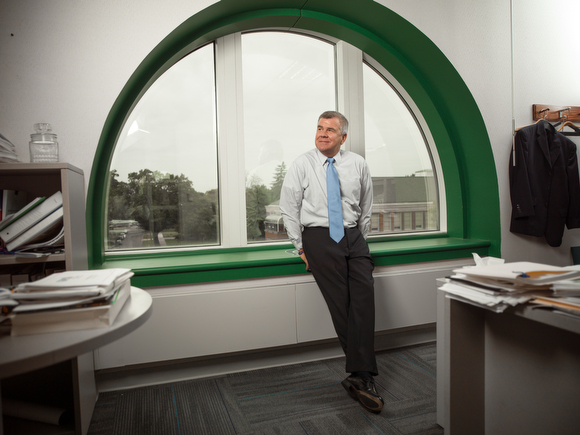
When Oberst arrived at his new position with GRPS, the third largest employer in Grand Rapids, he found plenty to do. He was on board with Weatherall Neal’s Transformation Plan (see Call it a Comeback, Rapid Growth Media, September 17, 2015) and rolled up his sleeves to continue what he calls “the first attack cost-side.”
“GRPS was still working with an old business model, the same model that’s been used for school systems for the past hundred years,” Oberst says. “To remain relevant in a constantly changing, evolving world, a business model needs to be fluid. When you hear people say, ‘But that’s the way we’ve always done it,’ you know it’s time for a change. Too often, we take the old model and tweak it, but what we need to do is toss it out and begin by asking—if we were starting a new school today, what would it look like?”
One of the first things Oberst noticed in his new position was that the business software in use at GRPS administrative offices was obsolete. He couldn’t find a reliable head count for GRPS students. The old software wasn’t issuing the regular reports he needed to oversee the GRPS budget.
“That’s how we get paid,” he says. “We receive funding per pupil from the state. New technology will get us the data we need to move forward.”
Oberst says he started asking questions that made people uncomfortable, but then—curious. With more accurate data in hand, how would that educational future look? What’s best for the kids?
A Model That Works
How efficiently are cities spending taxpayer dollars on public school education? That question was the premise for a recent ranking of GRPS by WalletHub, an online financial resource that provides state and local rankings. In 2015, WalletHub ranked GRPS a top school district in the country, giving taxpayers “more bang for their buck.” WalletHub divided the aggregate test scores of fourth- and eighth-grade reading and math in 90 schools of the most populated cities in the U.S. by total per-capita education spending. The scores were adjusted for socioeconomic factors including poverty rate and households in which English is not the primary language. With average standardized test scores at 84.99 percent and education expenditures of $1,237 per capita, GRPS rose to the top.
“WalletHub shows people that we are good stewards of the tax dollar,” Oberst says. “But our revenues are not growing fast enough when we look over a 10-year period of time. Inflation adjusted, we are behind by about $1,000 per student. We are spending $7,300 per student, but it should be $8,300.”
According to Oberst, GRPS is not getting the funding it needs from Lansing. “If you look at school budgets for 2015-2016, most schools in Kent County are just barely breaking even or have a deficit. We’re doing better economically as a state, median incomes are up, but why is none of this coming back to our schools? That’s the big question. Yet education is the best return on your investment.”
That sentiment is echoed throughout the greater Grand Rapids business community.
What Goes Around, Comes Around
“You can’t have a vibrant or successful city if you don’t have vibrant, successful schools,” says Ken Sikkema, senior policy fellow at Public Sector Consultants and former state senate majority leader. “If you’re an employer, your business is dramatically affected by the level of quality education in the schools. It’s a direct connection.”
Sikkema says he’s been keeping an eye on the downs and more recent ups that GRPS has experienced. He attributes much of that success to strong leadership.
“When you take a look at similar school districts in Flint, Pontiac or Saginaw, you see that they are facing fundamentally similar challenges,” he says. “Superintendent Weatherall Neal has a compelling vision, and she has been able to get the board, her partners and the community to buy into it. The Transformation Plan is a good framework for other districts to look at and customize to their needs.”
President of the Grand Rapids Chamber of Commerce Rick Baker agrees. “The health of the city, the community and the schools are all connected,” he says. “Families want to be sure their children are getting the best education—education is the best foundation for future success. But it also ties in with the health of the city when you consider property values. From the business perspective, education builds a strong workforce. Businesses do better when they can count on a qualified, educated workforce.”
“Access to talent will determine the future economic success of West Michigan, and our public schools are ground zero for the development of that talent,” adds Birgit Klohs, president and CEO of The Right Place, a West Michigan economic development agency. “A quality workforce continues to be one of the top three factors for companies making location decisions. Quality public schools are also a major component for talent attraction. Families relocating to a new community want an excellent public school system for their children.”
Looking to the future, Klohs considers the economic impact of a well-run, growing school district. “A successful public school system is the foundation for developing the next generation of talent in West Michigan. West Michigan companies need quality talent and the public school system is where that talent is developed. It’s a mutually beneficial relationship, one that will lead to new jobs and new business investment for our region.”
Regardless of how strong a framework the Transformation Plan provides on which to build and grow its schools, however, GRPS can’t do it alone.
What the Bond Proposal Supports
In the first phase of the Transformation Plan, Superintendent Weatherall Neal’s goal, in part, was to show the taxpayer that she could “stop the churn” and stabilize the schools without asking for more money. The churn has stopped. The budget has been stabilized.
Weatherall Neal says: “I made my promise. I kept my promise. We are doing the right work. We are producing remarkable results. We have established a proven track record. We are the second best in the country for managing taxpayer dollars. We’ve shown we are good stewards. Now, it’s time to ask for money.”
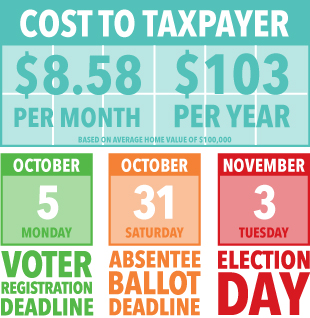
On November 3, the Grand Rapids taxpayer will vote on a $175 million, 30-year bond proposal that would provide buildings, technology, and security for GRPS. The bond would add about 2.1 mills to property tax bills. That translates to about $8.58 per month, or $103 per year, based on an average home value of $100,000.
“The GRPS bond is about stabilizing, strengthening, and growing Grand Rapids Public Schools,” Weatherall Neal says. “The future growth and success of GRPS is not just an education issue. It’s not just a city issue. It is a regional issue, an economic development issue, a workforce development issue, and a quality of life issue. If we want to retain and attract families, talent, and job providers to live, work, and play in our city, we need a stable and growing GRPS.”
“What we want voters to understand is that this is not expenditure,” adds Oberst. “It’s a long-term investment with a phenomenal return to the whole community.”
About $110 million of the bond proposal would be spent renovating the district’s high schools and building two new, smaller high schools. Another $40 million would be spent on building upgrades at 14 elementary, middle and theme schools. The proposed bond also includes $10 million for technology and $10 million for building security, such as reconfiguration of entrances to prevent visitors from accessing common areas.
“We are poised to become a national model for how large urban public school districts can transform for stability, growth, and academic success,” says Weatherall Neal. “Passage of the bond is absolutely key to ensure we keep the momentum and success going. Our bond rating is up. We are one of few urban districts in the state, let alone the nation, that saw our bond rating go from negative to stable in the midst of a recession, declining enrollment, and state budget cuts. Unlike the vast majority of urban districts, we are strengthening our fund balance, investing in our talent, and investing for stability and growth.”
This special report was made possible with support from Grand Rapids Public Schools.
Zinta Aistars is creative director for Z Word, LLC. She also hosts the weekly radio show about books and writers, Between the Lines, at WMUK 102.1 FM.
Photography by Adam Bird
Related Articles
#RG20LookBack ‘A Family Loving Environment’
As Rapid Growth marks its 20th anniversary, we’re revisiting archival stories that captured cultural shifts in our community. The 2010 snapshot of Rachel Hood and Dave Petroelje, brand-new parents making climate, clean energy, and public health relatable to families, still resonates today.

Letter from the publisher: On 20 years of listening and the sharing of solutions rooted in community.
As Rapid Growth marks its 20th anniversary, publisher Tommy Allen reflects on what the publication’s solutions journalism model has meant for telling the stories of Grand Rapids. While he has not led the organization for its entire history, Allen has spent two decades as one of its key storytellers, much of that time as a photographer.
KDL’s Let It Snow reading challenge turns winter into connection
At Kent District Library, longtime readers and librarians show how Let It Snow keeps patrons engaged through winter reading. The program runs through the end of February.