
5 things you may not know about Blandford School in Grand Rapids
Flora Duckworth-Guerra, a sixth-grader, uses five original illustrations to show what happens at Blandford. She highlights the songs, chores, doodles, “magic spots,” and confidence-building moments that make this year-long program unique compared to other school experiences in Grand Rapids.
My name is Flora Duckworth-Guerra, and I attend the Blandford School, a specialized institution within Grand Rapids Public Schools for sixth-graders.
Although many people might think they know what our days are like, I want to offer some insights through five original illustrations that depict our school and how it shapes how we learn, connect, and grow during this unique one-year program.
These illustrations highlight the benefits Blandford offers its students.
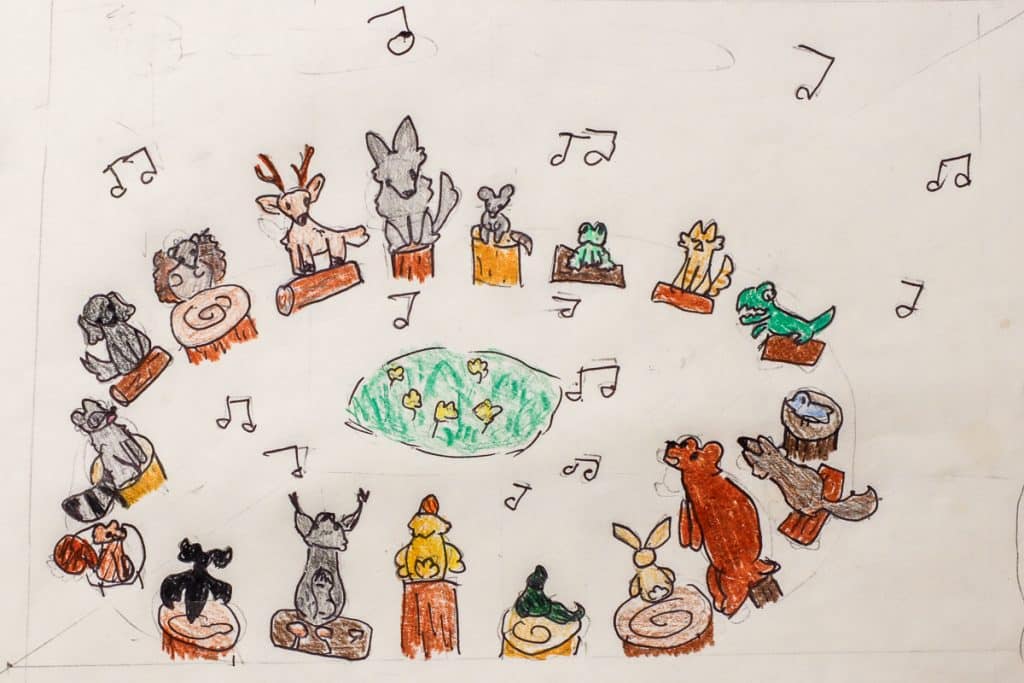
Start the day in song
Before entering the classroom, my fellow students and I come together as a community. Each morning, after a quick run around the gardens, we all gather at the stump circle, where we sit together on a circle of tree stumps and sing.
It’s a ritual that feels almost ancient – part attendance, part grounding practice, part shared tradition.
In my drawing of the stump circle, each student takes on the form of an animal, creating a playful portrait of a diverse group as we start our day together.
While outside at the stump circle gathering, we also have time to discuss the topic of the day led by our teacher. But what truly defines this moment is that we, who call ourselves BEEPs (for Blandford Environmental Education Program), center our experience by putting away our cell phones and redirecting our focus to a collective start.
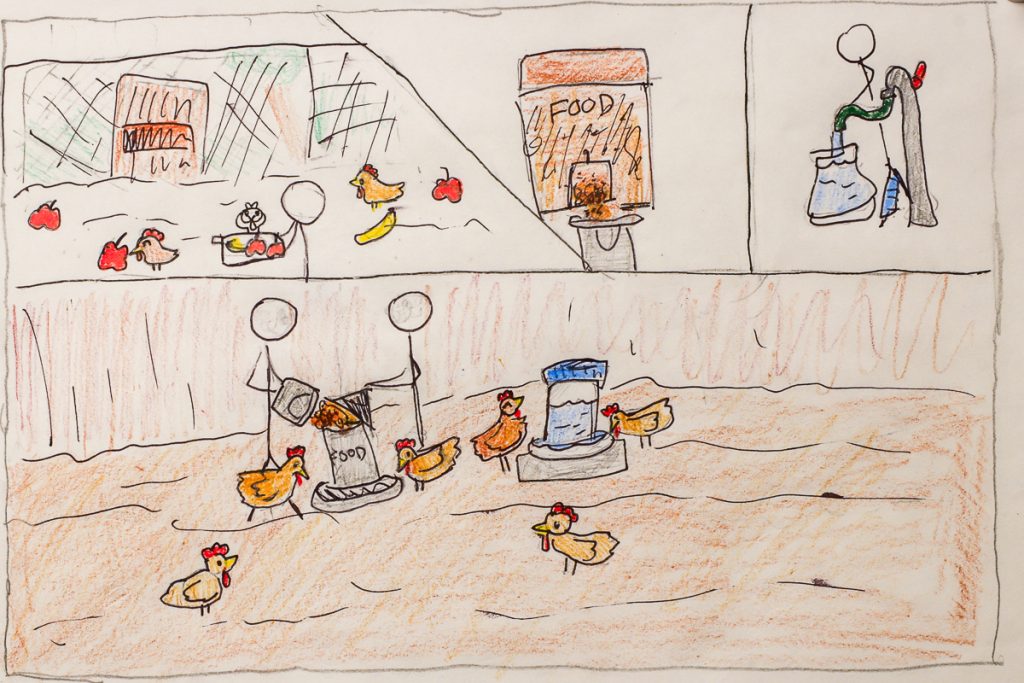
Chores are never a bore, especially if caring for chickens
At Blandford, responsibility is woven into the fabric of the day. After the stump circle, the students are often assigned various “jobs,” including the popular task of caring for the chickens.
I chose to illustrate this process in a comic strip format, showcasing how my fellow students are involved in every aspect of the work—from filling food buckets and drawing water to feeding the chickens leftovers from lunch.
What I enjoy seeing is that we do not waste food at our school. Leftover food is not sent to the landfill; instead, it goes to our chickens for their meals.
This hands-on learning experience teaches skills that are often overlooked in more traditional schools. We emphasize caring for living things, working as part of a team, identifying opportunities to reuse waste, and appreciating the everyday labor that sustains a community.
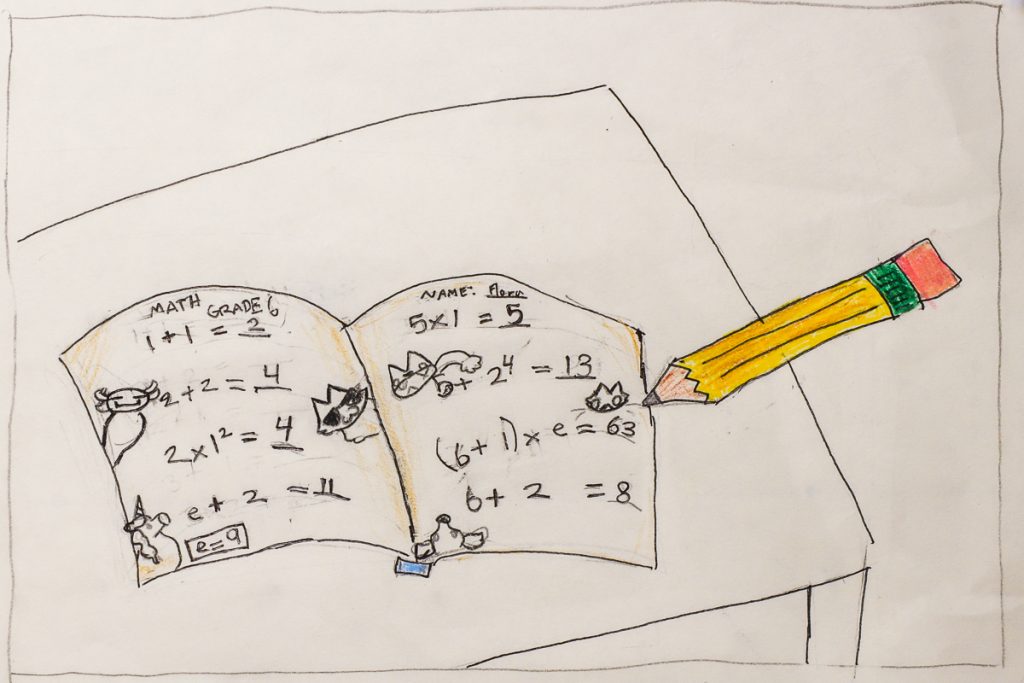
Being proficient doesn’t mean losing creativity
In discussing how coursework is handled, my Voices of Youth mentor, Tommy Allen, reminded me that in many of the meetings he has attended over the years, he has seen a colleague doodling in their notebook, which he claims doesn’t necessarily mean they have checked out. Often, I have found from personal experience that it is quite the opposite. For neurodivergent thinkers, doodling helps folks stay present, process, and organize new information.
In this illustration, I showcase how neurodivergent activity, i.e., doodling in my notebook, not only reveals that I am getting the answers correct, but also uses the extra space within to process my answers while I am thinking.
I draw the best things during math class because there’s all this empty space to fill.
Through my doodling, I reveal a small yet significant truth: even in math class, there is room for creativity. Blandford students learn the fundamentals through structured workbooks, but people like me fill in the margins with imaginative sketches, tiny characters, and creatures that help keep me engaged, even when the lesson feels repetitive or slow.
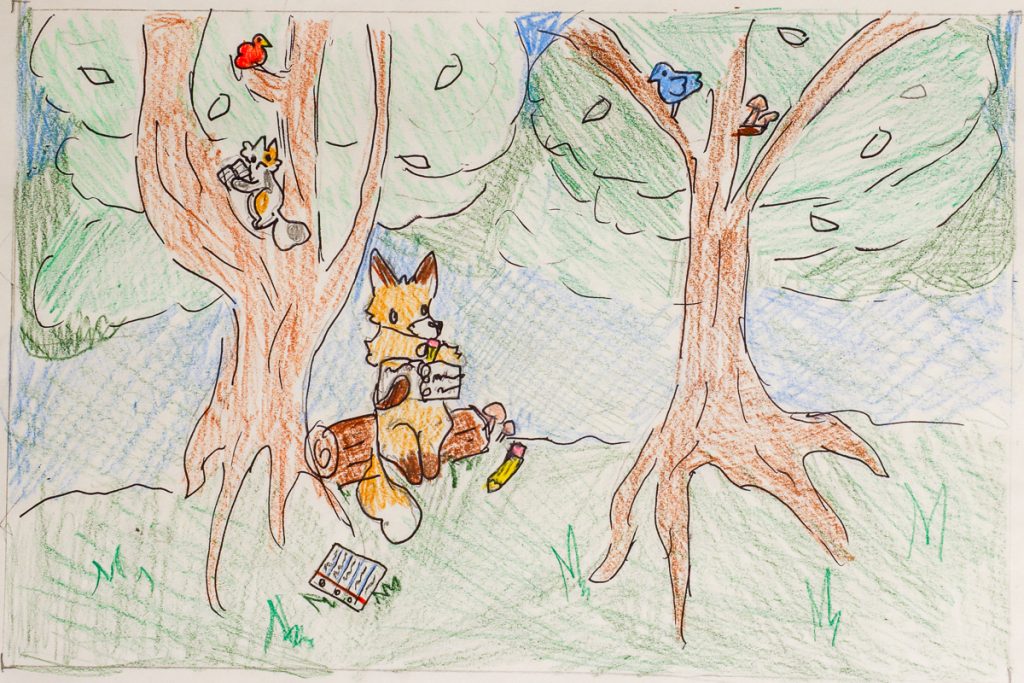
Friday journal time at the magic spot
Some students at other schools have the opportunity to work in a study hall or visit the library – both valuable ways to explore new ideas and nurture intellectual curiosity. At Blandford, however, my classmates and I experience something different: a “magic spot.”
Most Fridays, the students walk into a grove of maple trees and choose a quiet place that becomes their own. We intentionally space ourselves apart from our other classmates and away from the usual classroom distractions. For me, this is one of the highlights of my week.
It’s basically this moment in my week when we get to pick our magic spot. I enjoy getting to write—and sometimes draw—about the random things on my mind.
Sometimes journaling is guided by prompts, while other times it’s free writing. However, the purpose is always the same: students are given time to slow down, observe, and allow their thoughts to settle into the natural world. There are no phones, no noise — just time to reflect, notice, and capture whatever arises.
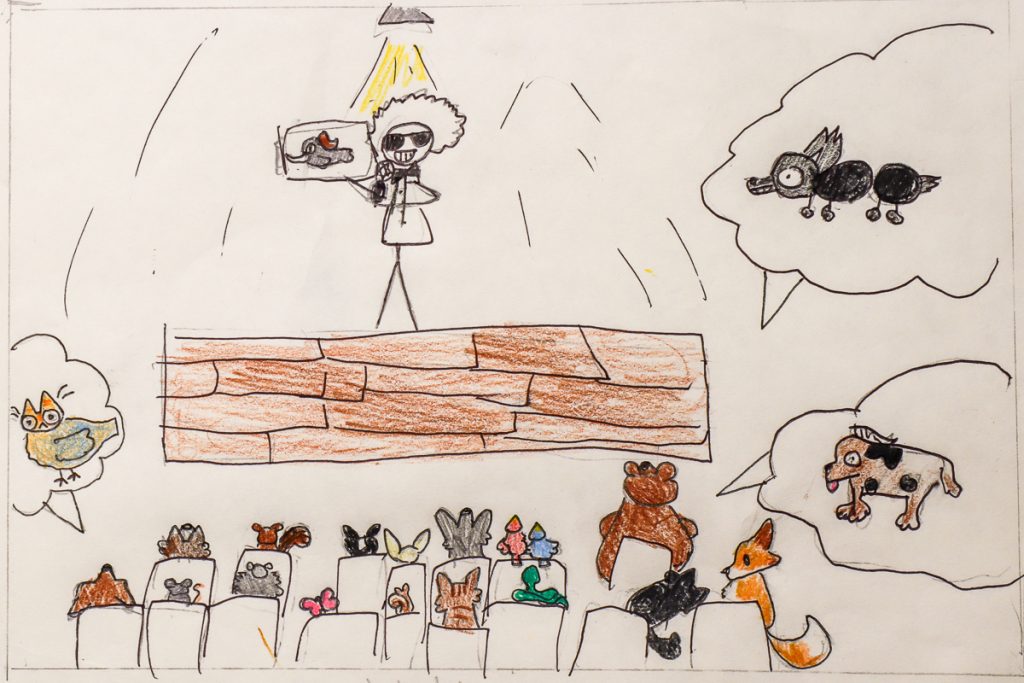
Staging for public speaking skills builds students’ confidence
If you’ve ever tried to talk with a student these days, you often find yourself competing with their handheld phones. Over time, this creates a concerning dynamic: we start to lose valuable skills in human interaction, such as listening closely, reading facial expressions, and communicating with one another fully rather than with our divided attention.
At Blandford, stepping onto a stage isn’t reserved for only the boldest kids; it’s an integral part of learning how to communicate with a group in real time, without hiding behind a screen.
In this illustration, I capture a moment from Camp Roger during a talent show—an experience that many students my age might dread: performing in front of an audience. However, instead of singing or acting, I was able to bring to the exercise one of my favorite practices, drawing, as a way to connect with the crowd.
By employing a technique often taught at an improv comedy school, my performance encouraged open dialogue between the stage and the audience, inviting students and their families to shout out prompts (in this illustration, different animals).
I then combined their suggestions into playful “animal hybrid” drawings on the spot, transforming the room into a live, and often very funny, collaboration.
If you would like to learn more about Blandford School or any of GRPS’s specialty schools, please visit this link.
Flora Duckworth-Guerra is a Grand Rapids Public Schools student attending the West Side’s Blandford School. The school, a choice option, emphasizes environmental awareness, creativity, and leadership. While her artistic talents are uniquely hers, they’re also partly influenced by her mother, local artist Alynn Guerra. Over the weekends this past spring, Flora could often be found in her community, offering hand-drawn pet portraits to neighborhood members whose dogs sat for her.
Original illustrations by Flora Duckworth-Guerra
This article is part of Rapid Growth’s Voices of Youth series, which features content created by Kent County youth in partnership with Rapid Growth staff mentors, as well as feature stories by adult writers that examine issues of importance to local youth.To learn more about Rapid Growth’s Voices of Youth project and read other installments in the series, click here. This series is made possible via underwriting sponsorships from the Steelcase Foundation and Kent ISD.
Related Articles
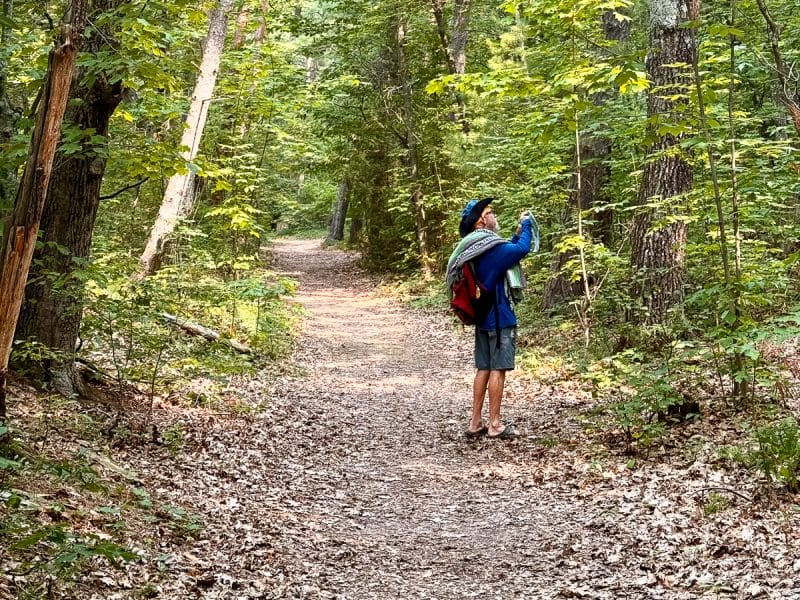
Trails as talent magnet: Outdoor access is key part of West Michigan’s ‘why here’ conversation
Trails and greenways are no longer just for weekend leisure. Regional leaders say outdoor access has become a key factor in recruiting and a crucial “quality of life” indicator for the contemporary workforce that West Michigan aims to attract and retain.
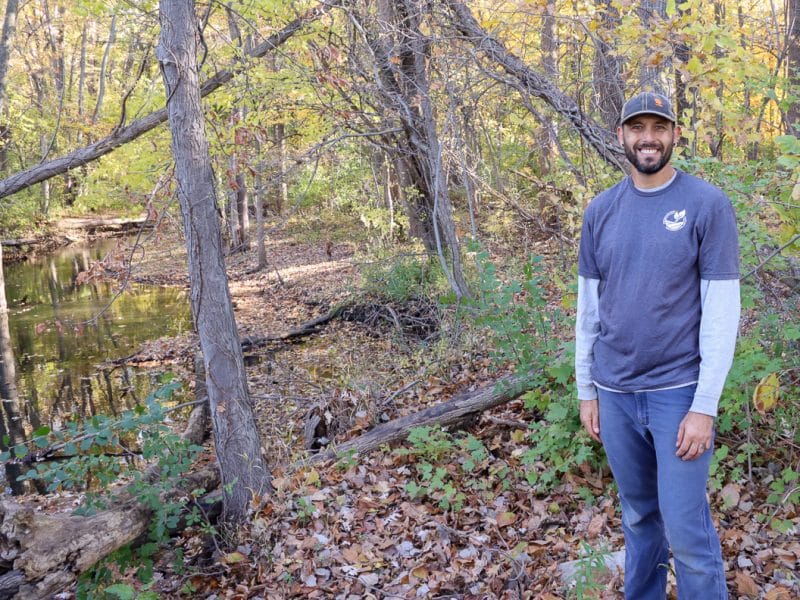
The trail as a classroom: Indigenous knowledge, reciprocity, and the future of greenways in West Michigan
What began as a snow-day chat with Kaya DeerInWater soon evolved into a trail-side lesson in reciprocity, encouraging West Michigan to view greenways not merely as pathways to develop, but as relationships to respect.
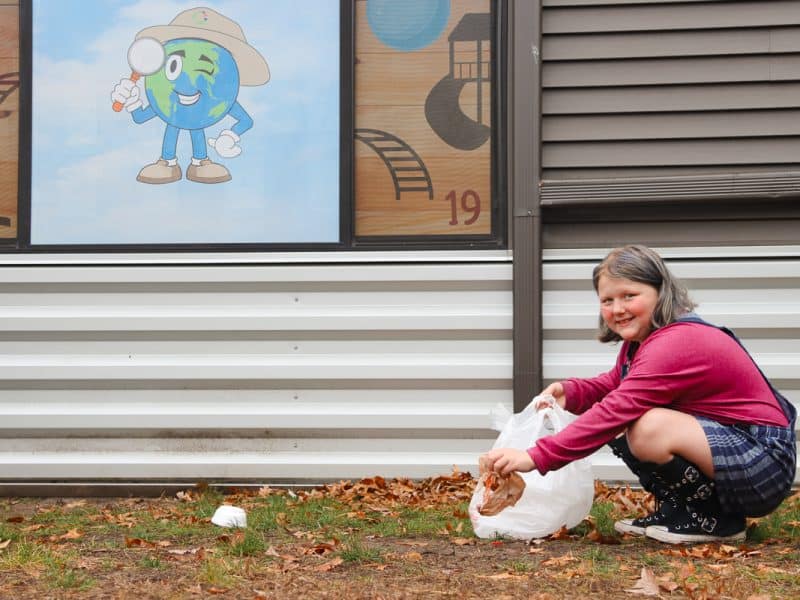
Sixth grader featured on Kelly Clarkson Show inspires community cleanup
Zoey Tice, a sixth-grader from Muskegon who is passionate about picking up trash, recently impressed Kelly Clarkson, who is sending her to Jamaica to help with an environmental project.


