
Fear of accessing public health programs, vulnerable working conditions, and lack of access to federal pandemic relief all contribute to immigrants being more susceptible to the pandemic than most.
This article is part of State of Health, a series about how Michigan communities are rising to address health challenges. It is made possible with funding from the Michigan Health Endowment Fund.
COVID-19 has disproportionately harmed Michigan’s already-vulnerable communities: people of color, the elderly, and those experiencing poverty. But among the hardest hit have been Michigan’s immigrant population, who have even more to fear than illness and unemployment.
“COVID-19 has impacted the communities we serve and clients we advocate for in a similar way as the general population, but those impacts are being felt more intensely,” says Susan Reed, managing attorney for the Michigan Immigrant Rights Center, a member of the statewide Protecting Immigrant Families – Michigan coalition. “There is devastating unemployment, no health insurance for unauthorized workers, and ineligibility for payments like the stimulus.”
One contributing factor is President Trump’s public charge rule, which went into full effect about a month and a half before stay-home orders were issued. The rule makes it harder for immigrants to get a green card, especially if they have received public benefits like Medicaid or SNAP. One survey determined that more than 20% of low-income immigrants chose not to participate in public benefit programs, which were safe for them to access, for fear of jeopardizing their possibility of getting a green card.
“While it actually applies only in limited circumstances, it has created tremendous fear about accessing public benefits and programs,” Reed says.
“A lot of fear was generated. People were not clear about who would be affected, partly by design, and this makes people nervous about using public benefits,” adds Simon Marshall-Shah, state policy fellow with the Michigan League for Public Policy, which is also a member organization in Protecting Immigrant Families – Michigan. “Families pulled out of programs. They disenrolled their children.”
Barriers to healthcare fan pandemic flames
Twice as many Michigan immigrants lack health insurance as do the state’s U.S.-born residents, and immigrants with green cards have to wait five years to be eligible for Medicaid. When the pandemic hit in spring, many were left without access to medical care.
“Now there are a lot less people with insurance and there is fear in seeking medical services,” Marshall-Shah says.
Emergency Medicaid covers low-income, uninsured immigrants’ emergency services, and Gov. Gretchen Whitmer clarified in May that COVID-19 testing and treatment expenses would be covered in Michigan.
“This went a long way to reassure people who were fearful to seek treatment, fearful that it would be too costly or that they’d be turned away,” Reed says.
However, immigrants are often unsure which services are covered. On top of that, they also worry about amassing high medical bills and fear encounters with U.S. Immigration and Customs Enforcement.
“The pandemic has helped lay bare those existing policies that don’t make sense in times of crisis,” Marshall-Shah says. “I think public charge is one of those.”
Barriers to federal help
Immigrants have also been largely left out of federal COVID-19 relief efforts. Immigrants without a Social Security number pay their taxes via an Individual Taxpayer Identification Number — and therefore were not eligible for this spring’s stimulus checks. Even when one spouse was a citizen, married couples who had filed jointly were excluded.
“In many households, that $1,200 went to the basics — rent and food,” Marshall-Shah says. “Many immigrant families, especially undocumented residents living in the state, were denied that money. They are going without that extra money to put food on the table.”
While many of Michigan’s immigrants struggle with pandemic-related job loss or reduced hours, a good portion work in occupations deemed essential, putting themselves and their families at risk of contracting COVID-19.
“These essential workers are working overtime to do jobs that are keeping all of us safe. Many industries like hospitals and food service have a large share of immigrant workers,” Marshall-Shah says. “Specifically, 8% of [Michigan’s] workforce are immigrants. Some of their top occupations include physicians, pharmacists, and agriculture production.”
Michigan was one of the first states to receive approval for Pandemic-EBT food assistance dollars. This program provides temporary food assistance to families of children receiving free or reduced lunches at school.
“This is a tremendously important support to families regardless of immigration status,” Marshall-Shah says. However, he adds, “one question we got instantly was, ‘Am I allowed to use this? Will I not get my citizenship if I use this?’”
Vulnerable working conditions

Roughly 94,000 migrant workers and family members came to Michigan to work in fields, nurseries, and food processing plants this year. While some employers provide safe work environments and fair compensation, many do not. Wage theft is common.
“From my observations, the pandemic has impacted immigrant farm workers more,” says Teresa Hendricks, director and senior litigator for Migrant Legal Aid. “They are more vulnerable to injury and illness at work because they have a fear of retaliation from employers, a fear of going to the hospital because they might lose their job, and a fear that they will lose their job if they do come down with COVID-19. They see people who are injured get terminated and sent back to Mexico.”
In West Michigan, where Migrant Legal Aid is based, Hendricks reports an increase in work-related illnesses and injuries this year. All-too-common complaints include pesticide poisoning, eye and ear injuries, and falls resulting in broken bones. A joint outreach between Migrant Legal Aid, the Michigan Department of Health and Human Services, and Northwest Michigan Health Services provides immigrants with COVID-19 screening and testing. Hendricks notes that the disease hits farm workers harder because of the way they live, work, and travel.
“They live in migrant housing, which is very dense with bunk beds and very little square footage for common areas for cooking, laundry, and bathing,” Hendricks says. “Depending on the crop, they could be shoulder to shoulder in the field, riding a cherry picker together, or standing in line to empty their blueberry buckets. When they travel, they are all on one bus, in one van, or carpooling.”
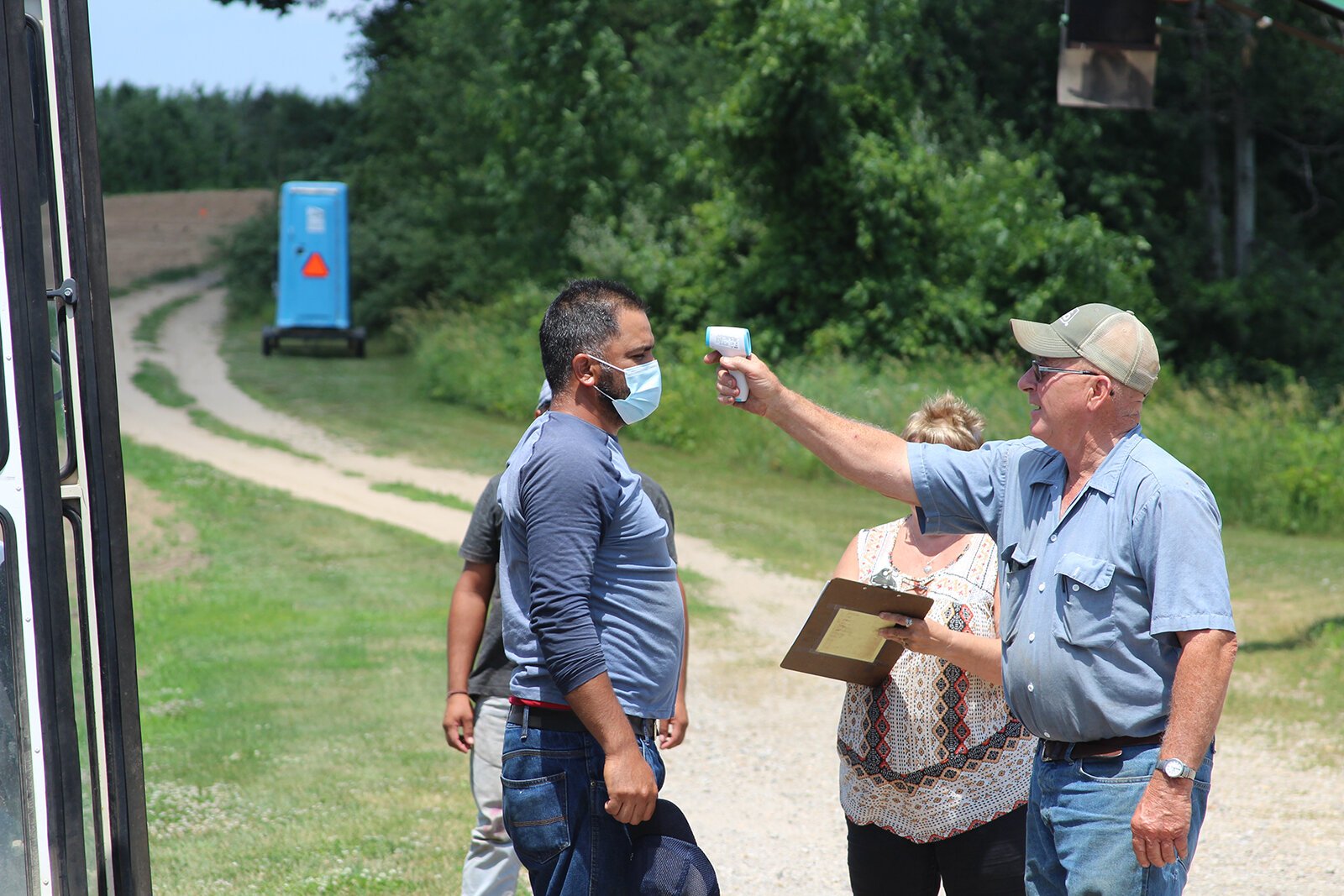
Whitmer has addressed immigrants’ higher COVID-19 risk with Executive Order 2020-111, which requires employers to take certain measures to protect farm workers from the pandemic, and Executive Order 2020-137, which expands telehealth access for migrant agricultural workers living in congregate housing. To support farms in taking steps to protect migrant workers from the pandemic, Migrant Legal Aid is also producing a video featuring Belding-based Belle Harvest farm, which Hendricks describes as “a model of what needs to be done.”

“They have a safety manual, take temperatures, ask necessary screening questions, and are placing partitions between the bunk beds,” Hendricks says. “They are doing everything right.”
Moving forward from COVID-19
Hendricks ranks California as the state with the best protective programs for migrant workers, followed by Washington and New York. She rates Michigan as tenth or lower, and says the state needs to have a farm workers’ rights bill that allows for collective bargaining and workplace organizing.
“That’s part of a history that goes back to chattel slavery and sharecropping,” Hendricks says. “Really, it is a deeply racist legacy in our system that is predicated on the assumption that we need coercion for agriculture to work. If anything good can come out of the pandemic, it would be an increase in respect and acknowledgement of the dignity of our farm workers and what they provide for us. The crops that they hand-pick bring billions of dollars of economic value to Michigan.”
Marshall-Shah and Reed agree that radical immigration policy changes are needed to address COVID-19’s grave impact on Michigan’s foreign-born residents.
“We’ve talked about immigration reform for many years, watching the way the immigration system has been used and abused to hurt people who are unpopular with the administration’s base,” Reed says. “This really reveals the need for a radical and total overhaul of the system that has been so easily weaponized.”
“Part of the ‘Why?’ is our shared humanity,” Marshall-Shah adds. “The health and wellbeing of immigrants impacts the health of all Michiganders.”
A freelance writer and editor, Estelle Slootmaker is happiest writing about social justice, wellness, and the arts. She is development news editor for Rapid Growth Media, communications manager for Our Kitchen Table, and chairs The Tree Amigos, City of Wyoming Tree Commission. Her finest accomplishment is her five amazing adult children. You can contact Estelle at Estelle.Slootmaker@gmail.com or www.constellations.biz.
Susan Reed photos by Susan Andress. All other photos courtesy of Migrant Legal Aid.
Related Articles

Shark Tank stars kick off Tech Week Grand Rapids
Daymond John and Robert Herjavec open a week that celebrates innovation, entrepreneurship, and West Michigan’s growing technology community.
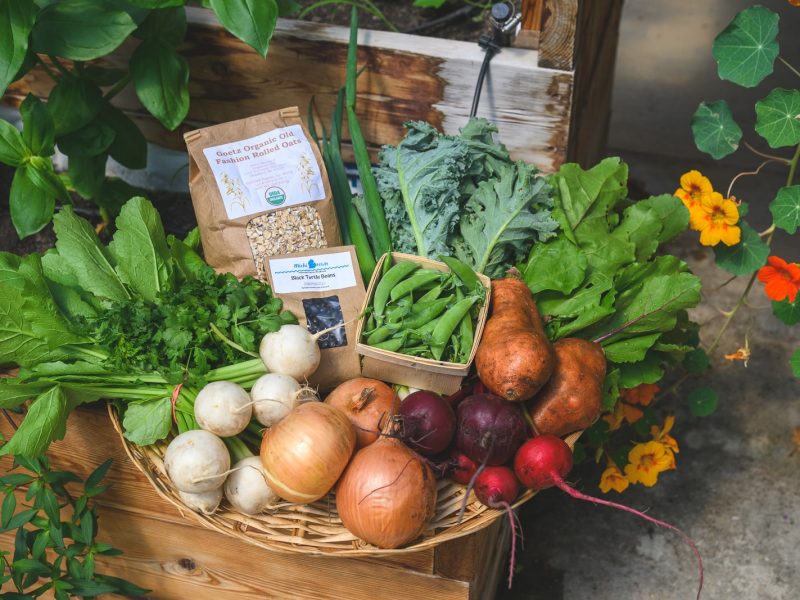
Trinity Health and Michigan community groups will make fresh, local food a Medicaid benefit
A new Trinity Health initiative will allow people in the Ann Arbor, Detroit, and Grand Rapids areas to access fresh, affordable produce from local organizations through their Medicaid health plans.
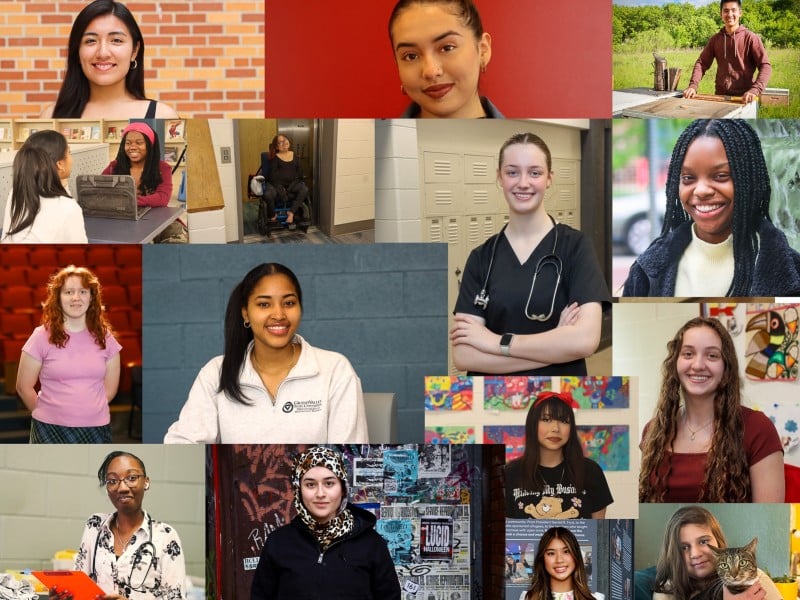
Voices of Youth: Lessons learned from listening to young people
Over the past three years, Voices of Youth has shown us that by actively listening to what young people want, we often develop better ideas. Here, Publisher Tommy Allen reflects on the achievements and lessons learned over three years with Voices of Youth.


