Bamboo Grand Rapids connects Michiganders by providing a third space that also combats loneliness
A once-vacant building in a creative Grand Rapids neighborhood now houses Bamboo’s expanded location, offering flexible workspace and connections to local and statewide innovation networks.
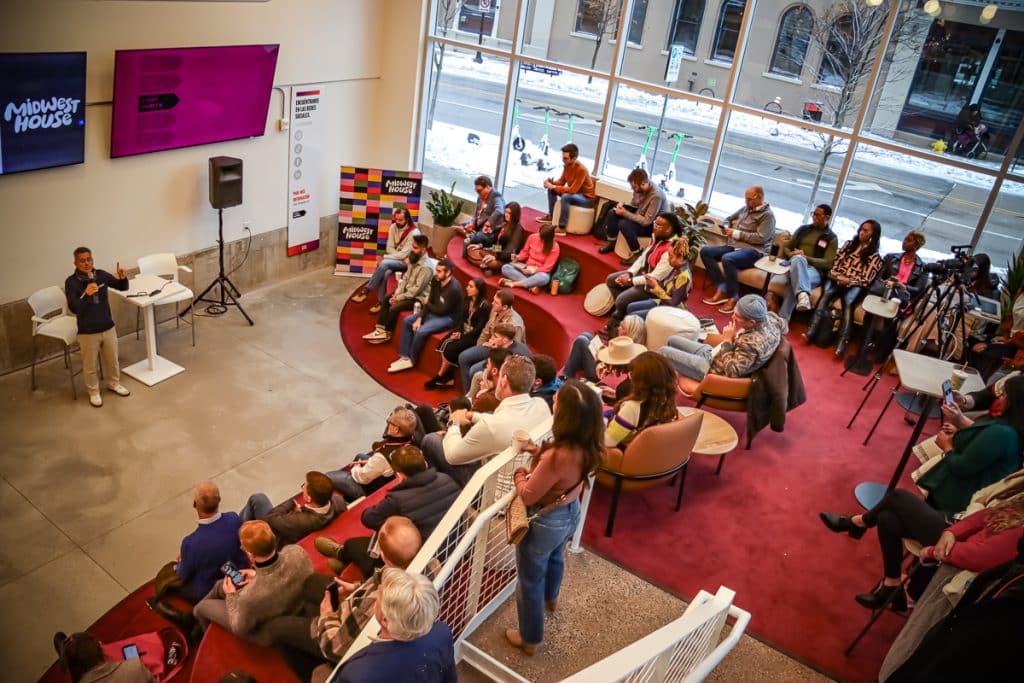
December can be a cold month in Grand Rapids as our city by the lake begins what is a long winter hibernation for some folks. For those seeking a different kind of warmth that comes from being around others, Bamboo aims to provide something greater: a chance to foster human connections.
Bamboo GR, a coworking and innovation hub that started in Detroit in 2013, has opened its first West Michigan location in the former UICA building in Heartside. This new site features flexible workspaces, startup support initiatives, and has reopened a gallery and a 200-seat theater. It revitalizes space that had been deserted for nearly five years, turning it back into a vibrant civic center.
For Amanda Lewan, one of Bamboo’s co-founders, the decision to open a location in West Michigan was much more than adding a new location or simply entering a new market.
“We always wanted to build something regional,” Lewan says. “The communities across Michigan were very siloed. We felt innovation could happen faster if people collaborated across cities and realized how much they actually have in common.”
Building on connection
Detroit launched Bamboo. Royal Oak followed. Ann Arbor came next. Now, Grand Rapids becomes the fifth node in what Lewan calls a statewide ecosystem.
What makes that ecosystem different is mobility. A member who joins in Grand Rapids can access Bamboo locations across the state, moving between cities without losing their professional community. Such a structure quietly reshapes how Michigan’s creative, tech, and startup sectors flow between coasts.
On opening week, the Detroit founders came together with the West Michigan investors who made this location a reality to learn Grand Rapids in real time.
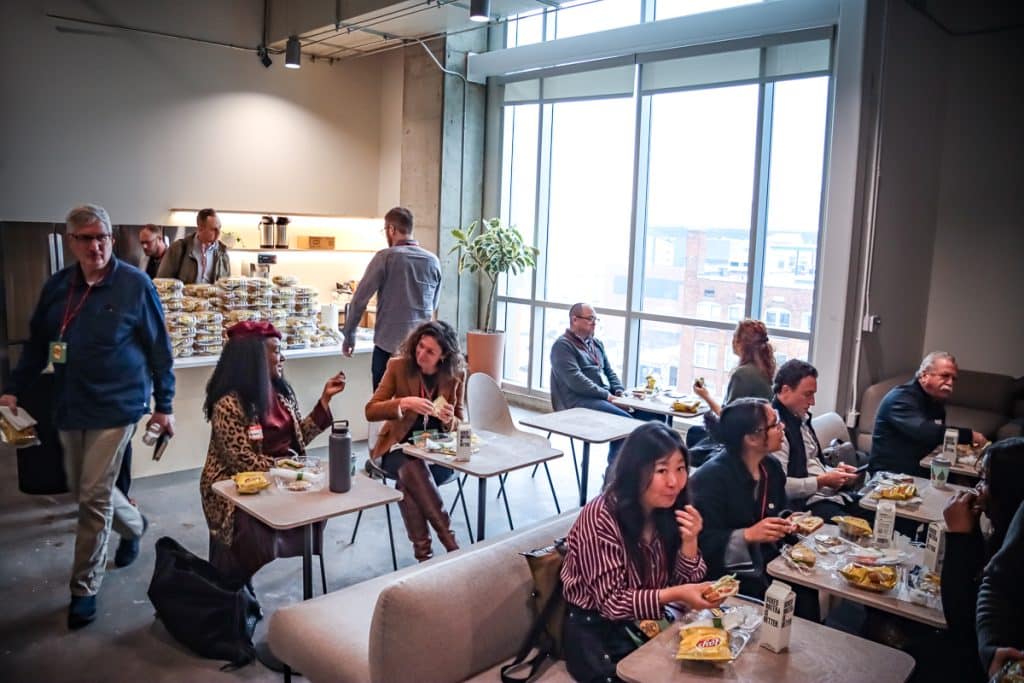
Due to this new web of interconnected coworking spaces, startups in Grand Rapids will find it simpler to access resources across the state. For instance, they can leverage funding from Detroit, take advantage of Ann Arbor’s research environment, or engage with the lively creative community in Midtown—all without the need to move.
Social engagement
Bamboo’s arrival also intersects with something far more profound than real estate trends. Long before office vacancies dominated headlines, public health leaders from think tanks were sounding another alarm: loneliness in America.
“Innovation hubs like this give people a safe third space,” Lewan says. “You can still work from home, but maybe one or two days a week, you come here. You’re around people again.”
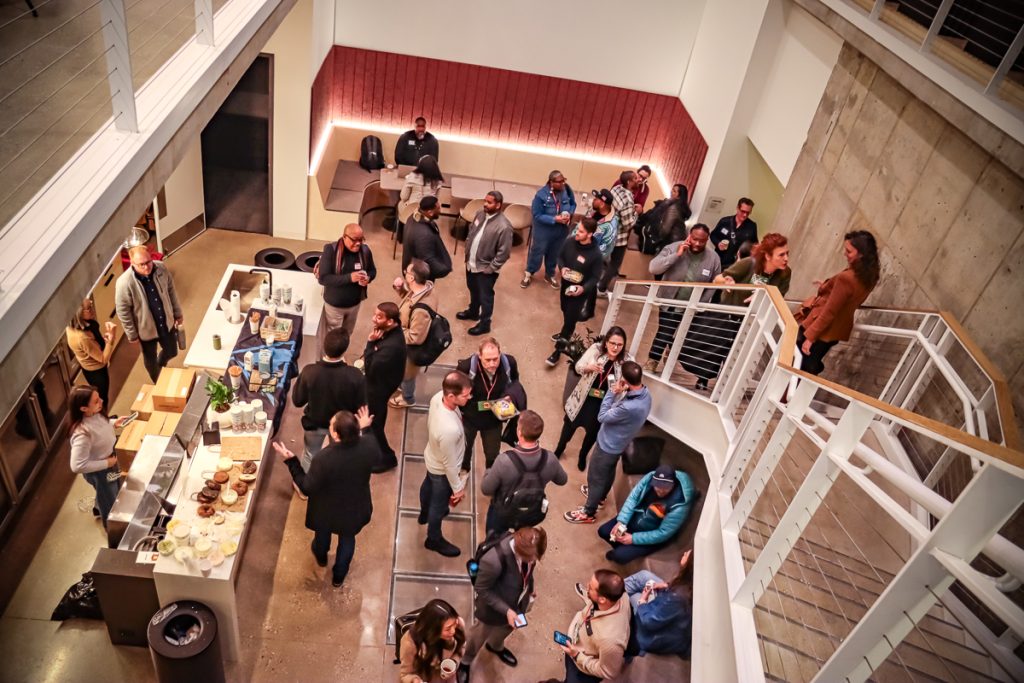
The building’s redesign aims to balance and harmonize personal productivity with social engagement, tackling loneliness through inviting initiatives. Events will be organized regularly, many of which will be free and accessible to the public. Workshops, coworking sessions, film screenings, and startup office hours are in the planning stages.
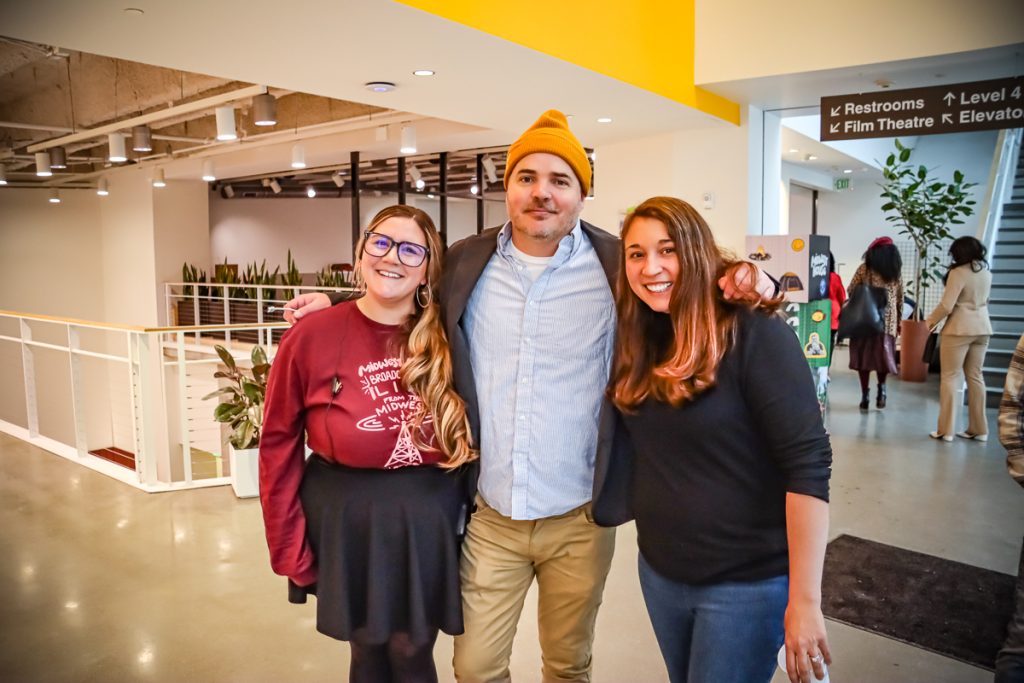
Even before the pandemic, when loneliness started to appear in mental health studies across the nation, Kent County’s 2020 Community Health Needs Assessment signaled a troubling rise in depression. Nearly one in four adults reported such a diagnosis, and mental health emerged as a top community priority. In that context, this reopening of this space is more than just a new workspace; it becomes a piece of shared psychological infrastructure needed in our region of the state.
Lewan recognizes the abundance of coworking options available in Grand Rapids. But she also sees opportunity based on studies on what modern cities need to evolve, and she believes West Michigan is ready based on how others here have organized before Bamboo arrived.
“We all collaborate—we’re very much like the indie beer community,” she says of Bamboo’s ability to build community here.
Cultural-based programming
Bamboo provides a diverse range of programming, fosters deeper engagement, and establishes a cultural framework that invites public participation. This encompasses spaces like the theater, gallery, and rooftop area, which offer breathtaking views of Heartside and Heritage Hill. The goal of this openness is to engage with the wider community on multiple levels.
One of the most understated yet impactful changes at Bamboo Grand Rapids is its renewed focus on promoting creative visibility—not merely as a decorative element, but as a core operational strategy visible throughout the space, which is adorned with original art.
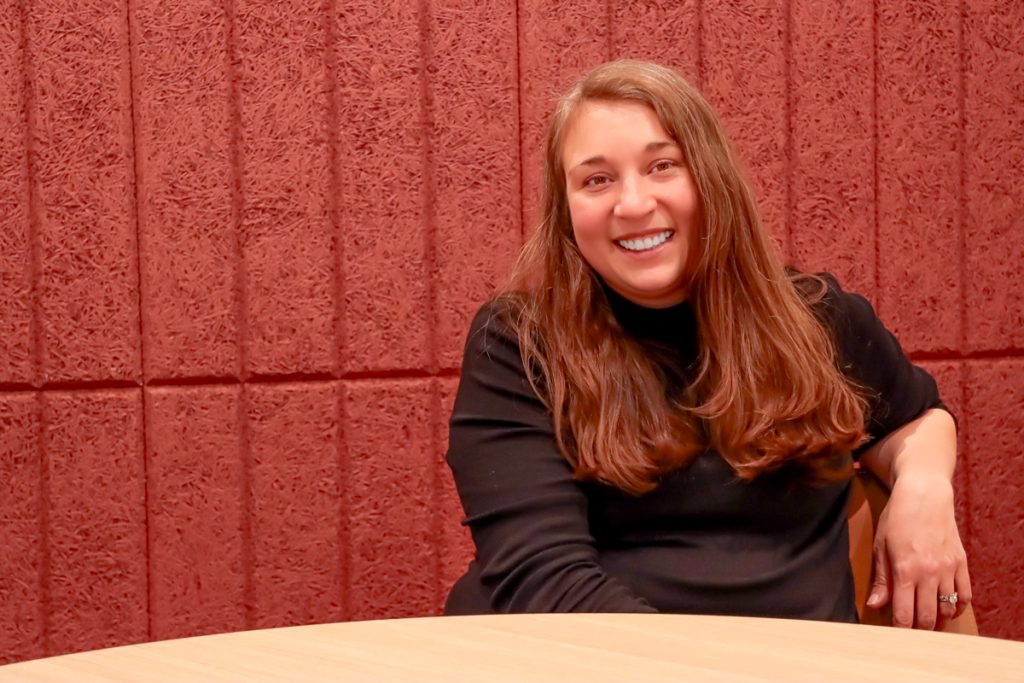
“Tech follows culture,” Lewan says of Bamboo’s welcoming of the creative community. “Culture is created by creatives, and they’re often underinvested.”
Collaborations are already taking shape with film organizations, local universities, and design programs stepping up to find ways to connect with Bamboo.
One of the initial public arts events scheduled is a graphic design showcase at Calvin University. Discussions are currently in the early stages with regional schools for a series of rotating gallery exhibitions, further expanding our arts community’s reach into the culture.
Lewan describes Bamboo as a women-led organization that emphasizes intentional diversity in all aspects of its operations, including hiring, contracts, and programming.
“You walk through here on day one and you’ll see minority-owned and women-owned businesses feeling welcome immediately,” says Lewan. ” That’s not incidental.”
Defining success by connection
Lewan defines success for Bamboo Grand Rapids five years from now not by square footage or headcount.
“Rather, we’ll measure success by the companies that grow here and hire here, and the artists who show their work here for the first time and then go beyond us,” she says.
She imagines indie filmmakers showcasing their new projects in this theater, or even screening them throughout the expansive, multi-level space. Lewan sees emerging founders expanding their influence and reach without leaving Grand Rapids, while Detroit businesses establish meaningful roots in this West Michigan hub through the connections that Bamboo provides to area entrepreneurs and our creative class.
In her vision, this thoughtfully renovated building transcends being just a destination; it becomes a living platform, an engine for movement, evolving growth, and a hotbed of creative opportunities to take root.
For nearly two decades, Rapid Growth, a publication by Issue Media Group, has highlighted the reasons for division among people, whether stemming from geography, inequity, or the growing awareness of loneliness and mental health issues, and how locals have often been a part of the much-needed solutions.
We have also observed the gradual reconnection between Detroit and Grand Rapids, as well as other Michigan cities that have historically operated independently rather than collaboratively.
According to the 2022 Greater Grand Rapids Tech Strategy Report by The Right Place, flexible workspaces are becoming crucial infrastructure. While only 5% of current office space is flexible, this figure is expected to rise to 30% by 2030. Bamboo GR is entering the market at a pivotal time, providing the daily, accessible workspaces that West Michigan has been missing.
At a time when many aspects of American life feel fragmented, Bamboo Grand Rapids does not claim to be a definitive solution. Instead, it stands as a living experiment, one founded on collective civic energy, creative interaction, and the belief that we grow stronger when our cities and their residents are genuinely connected.
Photos by Tommy Allen
Related Articles
Generation E: Growing the next generation of entrepreneurs
The Generation E program for student entrepreneurs is a collaboration among the city of Monroe, its small businesses, and Monroe Public Schools.