
The trail as a classroom: Indigenous knowledge, reciprocity, and the future of greenways in West Michigan
What began as a snow-day chat with Kaya DeerInWater soon evolved into a trail-side lesson in reciprocity, encouraging West Michigan to view greenways not merely as pathways to develop, but as relationships to respect.
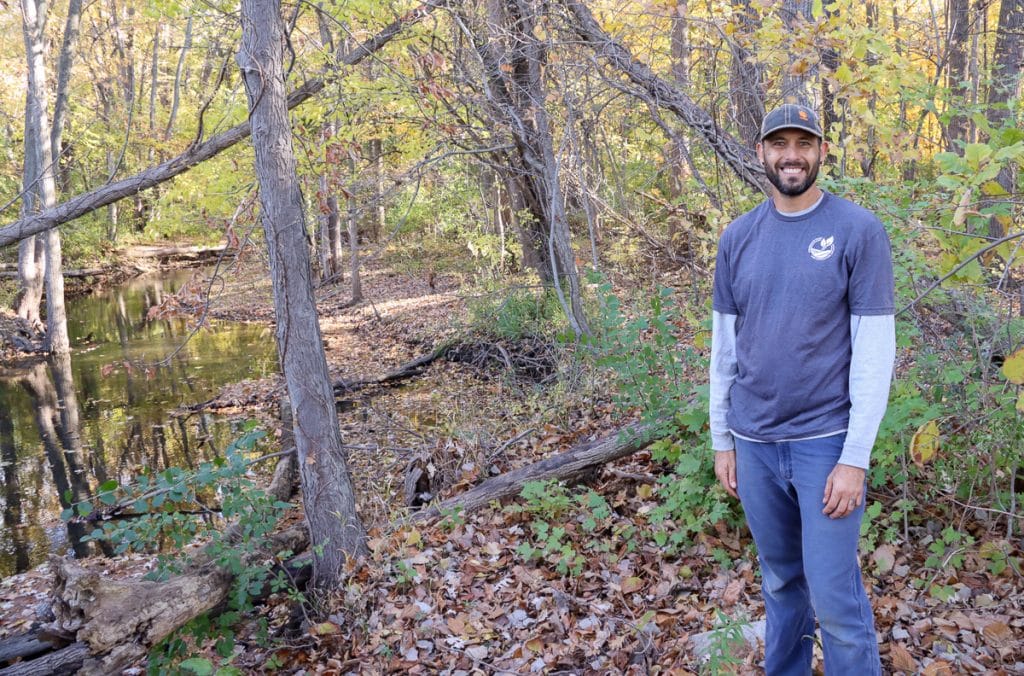
On a snow day in Michigan, one’s plans can change quickly. That’s where my conversation begins with Kaya DeerInWater, a bio-cultural restoration specialist with the American Indian Higher Education Consortium, which supports tribal communities and Tribal Colleges and Universities (TCUs) as they work to heal ecosystems and human connection to place.
What began under a blanket of snow, rooted in our casual, warm, and honest dialogue, moved into territory that felt bigger than any interview about trails we have reported on before.
Kaya describes TCUs as land-grant institutions (like Michigan State University), with a key distinction: many TCUs are 1994 land-grant institutions and are governed and chartered through federally recognized tribal governments.
That dual lens, land and relationship, ecology and culture, became the heart of our two-day, three-hour discussion. And it raises a question that matters right now, as West Michigan invests in trails:
What if trail-building isn’t just about the destination, but also about who we’re open to learning from along the journey? Having lived near a popular nature trail in West Michigan, I quickly saw that our discussions mirrored my own experiences with the users of these trail systems in the region.
Instead, this story serves as both a backdrop and a reminder of what happens when we slow down enough to truly listen – listen to someone whose bond with the land predates the systems most of us now rely on.
Beyond checking boxes is respect
Opening our second conversation, I named the tension that so many institutions quietly carry: the fear that centering Indigenous perspectives will be dismissed as “box-checking” or treated as political performance rather than meaningful collaboration. And Kaya didn’t let me soften the language. When I hesitated to say “colonizer,” Kaya asked plainly: Why don’t you want to say that?
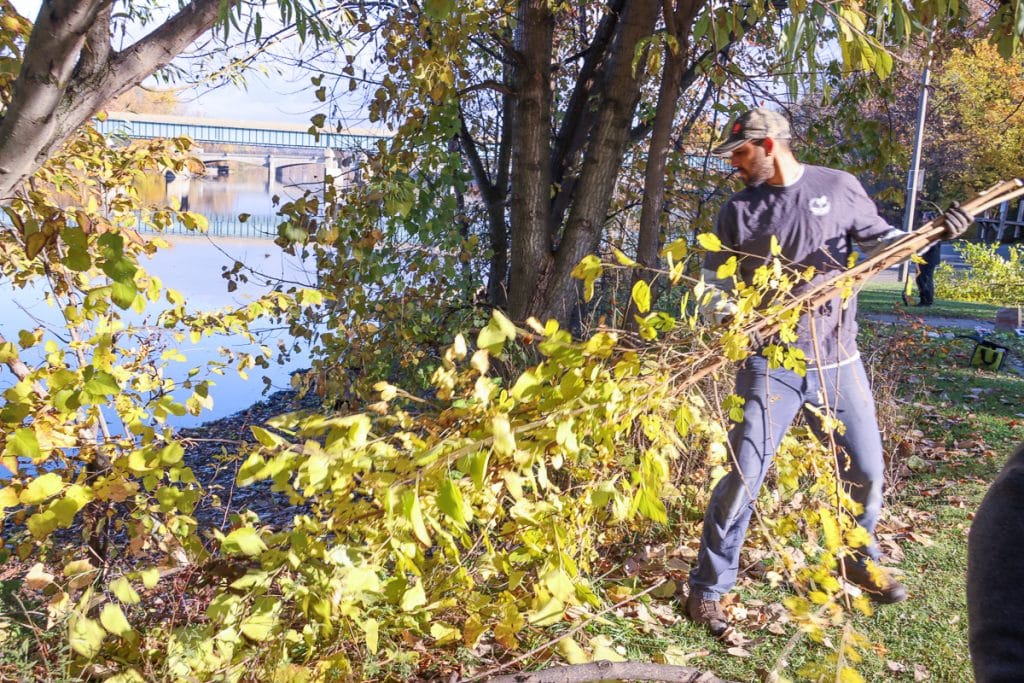
This isn’t abstract—it’s literally under our feet. Trails are public infrastructure. One only needs to travel to our Grand Rapids Public Museum, where an old WPA map reveals something many of us may never have been taught: the corridors we use to connect our urban centers often follow the same trails established by First Nations peoples.
That moment matters because it models something trail work desperately needs: the willingness to sit in discomfort long enough to tell the truth. Not to shame anyone, but to create the conditions from which an honest partnership can develop.
These paths shaped how this region developed, helping us see where we built, how we traveled, what we protected, and what we overlooked. And if we’re willing to listen now, they can help shape the long-term stewardship we urgently need.
“When you show up as a non-Native person on Turtle Island (an Indigenous term for North America), and you don’t respect the cultural norms – or even take time to learn the cultural protocols – that’s not just a gap in knowledge. It comes off as disrespectful,” says Kaya.
So, inviting Indigenous knowledge to the table isn’t symbolism. It’s a good strategy based on the history we see in our daily travels. It’s also a form of respect, and respect is always a great place to start.
The Honorable Harvest
One of the clearest entry points Kaya offered is something many Rapid Growth readers can understand quickly, even if the worldview behind it takes longer to absorb: the principles of the Honorable Harvest.
Kaya returned to this concept often, describing it as Indigenous ethical guidelines for interacting with the world, grounded in reciprocity, respect, relationship, gratitude, and relevance, terms meant to center us in dialogue and ensure that what we do does not ultimately harm the world around us. It gives us permission to slow down and pause, a practice often in conflict with modern life.
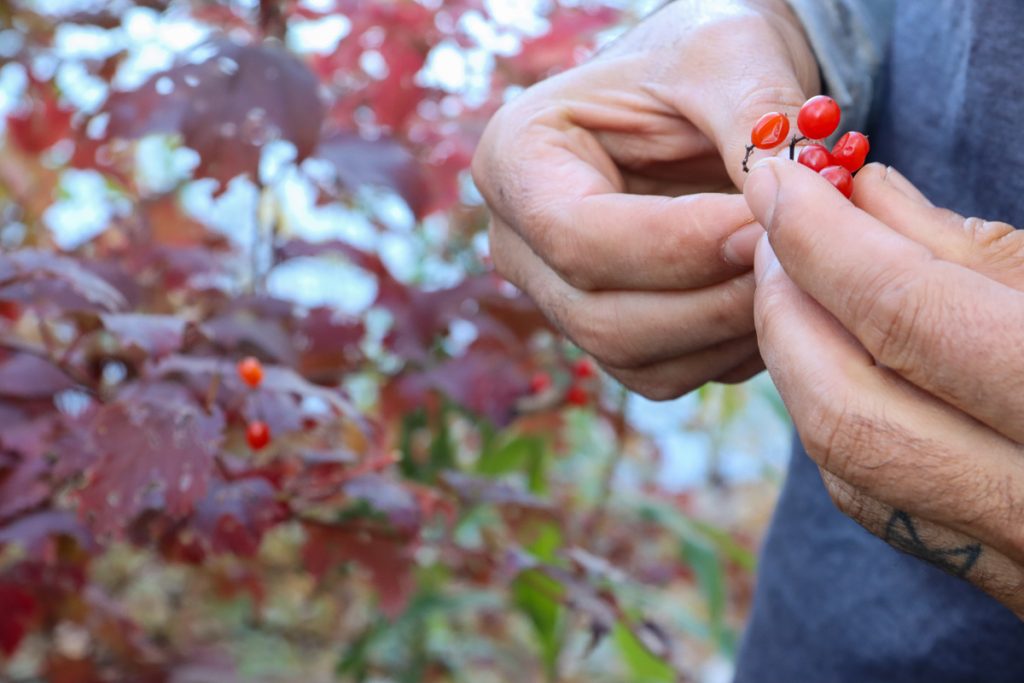
“Plants are seen as our elders—our relatives—and they came here before us. We regard them with respect as you would a grandmother,” Kaya says. “You wouldn’t steal from your grandmother, and so you can’t just go and take plants without reciprocity and a real understanding of your relationship to that plant.”
And this begins to reshape how we think, even about something like “edible trails,” pathways lined with edible plants that people can enjoy.
In a mainstream context, edible trails can sound like a clever amenity – something fun, healthy, and even Instagrammable. But in Kaya’s worldview, food plants are never just to be viewed as “resources.” They’re part of a living kinship network.
So Kaya’s question to us becomes: If we plant “edible” landscapes in public corridors, are we also willing to plant the values that must come with them? You can see why this conversation would take days to traverse, but it is necessary if we are to be truly respectful and willing to learn from each other.
Treaties aren’t just history; they’re our obligations
Kaya, a descendant of a signatory to the 1821 Treaty of Chicago, described having treaty rights to be on the land and to harvest plants, gather, and dwell, because the land was ceded in this document, but not the right to live culturally on that land. Kaya referenced language in Article Five stating that Indian tribes “shall live free of molestation from the United States,” meaning unbothered, free from interference.
Kaya also referenced an earlier late-1600s agreement with European nations, built on the principle of non-interference: one nation’s actions should not impede the other’s lifeways or future ability to live that way.
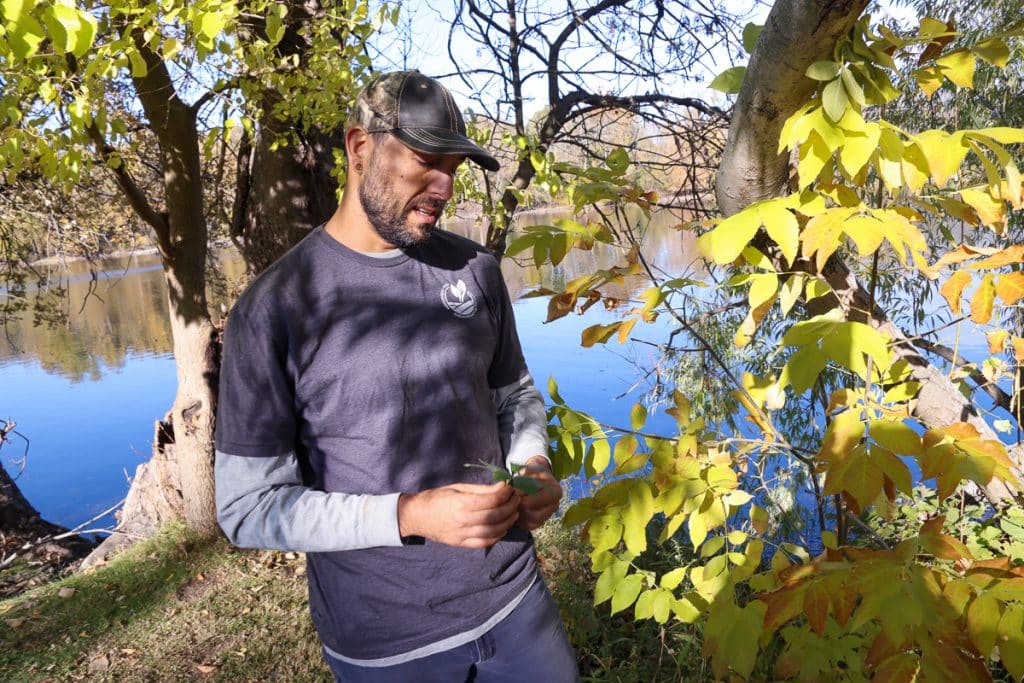
As we delved deeper, it became increasingly clear: this story isn’t just about greenways, connectivity, or the intriguing concept of “edible trails.”
“This is what your government said was going to take place,” Kaya says on the role we all play within our treaties … and ultimately knowing our history. “For you, as a citizen of the United States, need to make sure that your government is living within those terms.”
From fear to abundance
For trail planners, this helps to frame the work ahead. It’s not only about public input sessions and design charrettes, important as those are. It’s also about acknowledging that this land carries legal, cultural, and moral responsibilities that predate our current institutions.
When we talk about trails, we often sell them as escapes – as places to “get away.” But Kaya pushed deeper: the dominant narrative in Western culture frames nature as something that can harm you, something you must conquer, protect yourself from, outsmart. Kaya called that narrative damaging.
“We see the world around us as an abundant place that has provided for our ancestors since time immemorial,” says Kaya, “And as long as we are in this relationship, in balance with the world around us, we can expect that abundance to be there for us.”
That mindset shift, moving from fear to relationship-building, might be one of the most important “trail benefits” we could offer right now in a society drowning in noise.
Social media, which many once believed would be liberating, is also doing measurable damage to how we relate to each other. Trails may, in fact, be resurging because people are looking for something different—a place to turn off the noise and re-enter life.
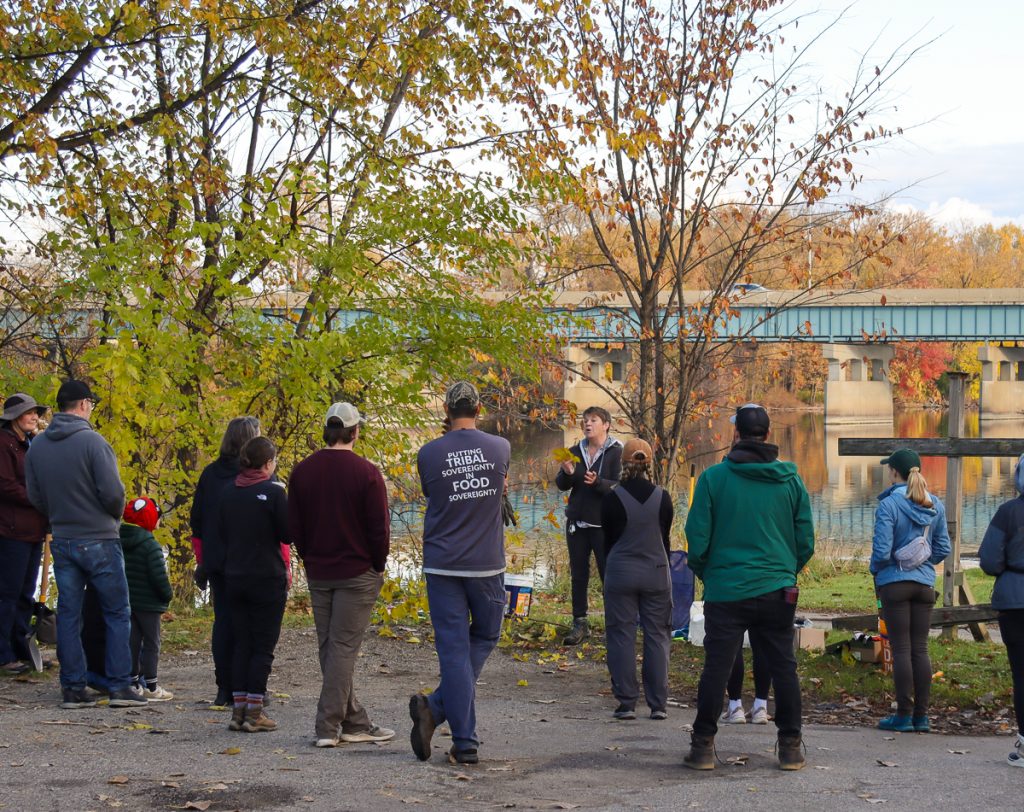
So yes, trails matter for health. But they also matter for something harder to quantify: repair.
Turtle Island and the living world
Kaya uses the term “Turtle Island,” which many Indigenous communities use to describe North America, rooted in origin stories and relational geography.
“Like we are the land because, like all the food that we eat, all of our ancestors’ bones make up this land. Like, we literally are the earth,” says Kaya.
Kaya described a worldview in which much of the natural world is considered “animate,” including some things many people wouldn’t expect, like rivers, and in which humans have responsibilities and relationships with everything around them.
This challenges a dominant hierarchy that places humans above the rest of creation. And once you shift that hierarchy, stewardship stops being a buzzword. It becomes a practice of kinship.
Seven generations
Kaya brought up the “seven generations” teaching as a direct contrast to modern systems that prioritize short-term returns – the next-quarter thinking, profit-and-loss sheets, delivering immediate wins, and, at times, taking on long-term risks for future generations.
Kaya offered a concrete way to understand it. Imagine you’ve been lucky enough to have met your great-grandparent and, if you’re even luckier, you live long enough to meet your great-grandchild. If so, you can directly touch seven generations spanning roughly 300 years. Suddenly, it becomes clear: trails bring long-lasting benefits, but they also carry risk when we forget our past and rush blindly into the future. That’s why building them must be a thoughtful, intentional process.
That’s a trail-planning framework if I’ve ever heard one.
Trails are long-game infrastructure. The question is whether our decision-making practices match that reality.
West Michigan trail-building in the now
Kaya and I also talked about the tangible, near-term work happening here: connecting networks, building greater access points, and stewarding land well. Kaya pointed to our local efforts to improve connectivity (including linking segments that currently force people into street detours) and described how the city has acquired former railroad land, studied designs, and pursued a public process to connect the White Pine Trail more seamlessly into downtown.
Kaya also mentioned stewardship practices are already underway locally.
“I’ve seen a shift in interest in learning from Native perspectives as I’m actively engaged with Friends of Grand Rapids Parks on this very topic,” says Kaya. “And the opportunity is better-stewarded trails because of the work that the city and Friends are doing by managing invasive plant removal and replanting native plants.”
So if you want to better understand where Indigenous perspectives could fit into trail-building work, and thus beyond symbolism and box-checking, Kaya offered these five practical, respectful starting points:
- Start with a relationship, not a request.
Don’t wait until plans are final to “consult.” Bring Indigenous voices in early, when decisions are still real. - Compensate expertise and lived knowledge.
If we pay engineers, designers, and consultants, we should also pay cultural and ecological knowledge holders. Otherwise, “inclusion” becomes extraction with better branding. - Use the Honorable Harvest as a trail ethic.
Even if a project never includes edible plantings, the underlying values—reciprocity, respect, gratitude, relationship—can shape signage, maintenance practices, volunteer roles, and how we learn and talk about land. - Treat treaties as present tense.
Trails sit on land shaped by agreements most residents were never taught. Learning the basics isn’t politics; it’s part of our civic literacy to know our historical documents and treaties. - Above all, make humility a core competency.
Kaya’s guidance for step one was blunt and freeing: be willing to be wrong, be willing to be ignorant, be willing to listen, and above all, don’t walk away, instead choosing to stay curious even when you mess up.
That last point is where I want to end, because it’s also where this story began for me.
Trails are often described as connectors—between neighborhoods, parks, rivers, and destinations. But maybe the more urgent connection we seek is human: the bridge between what we’ve inherited and what we’re willing to learn as we venture into the future.
If West Michigan is serious about building greenways that will serve the next century, we can’t build them solely on concrete and good intentions. We have to build them out of a relationship. Out of history. Out of listening. Out of the courage to stay in the conversation long enough to be changed by it, something I learned in the pursuit of this story and am happier that I did.
And if we can do that – if we can treat the land not as a backdrop, but as a relative –then maybe a trail becomes more than a route to a future destination.
Maybe it becomes a classroom… and maybe, for humanity, it becomes a repair.
Photos by Tommy Allen
With support from Friends of Grand Rapids Parks, Rapid Growth Media explores the future of outdoor recreation in West Michigan. This series examines key themes such as trail expansion, rural access, regional collaboration, youth engagement, economic impact, and park conservation, highlighting the opportunities and challenges shaping the region’s outdoor spaces.
Related Articles
#RG20LookBack: Can one small garden help grow a community movement? (Yes!)
In his 25th #RG20LookBack column, Rapid Growth Publisher Tommy Allen revisits Matthew Russell’s 2019 story about a GR resident’s rain garden helps protect local waterways.
#RG20LookBack: West Michigan models making progress over time
In his 21st #RG20LookBack, Rapid Growth Publisher Tommy Allen revisits Deborah Johnson Wood’s 2009 story about efforts to restore rapids to the Grand River — a timely reflection following last week’s groundbreaking of the Grand River Restoration’s Lower Reach project.
Startup tackles food system inefficiency with direct farm-to-home delivery
Zeeland-based Locavana expands delivery, helping residents buy local food easily while increasing farmer earnings and improving access across West Michigan communities.


