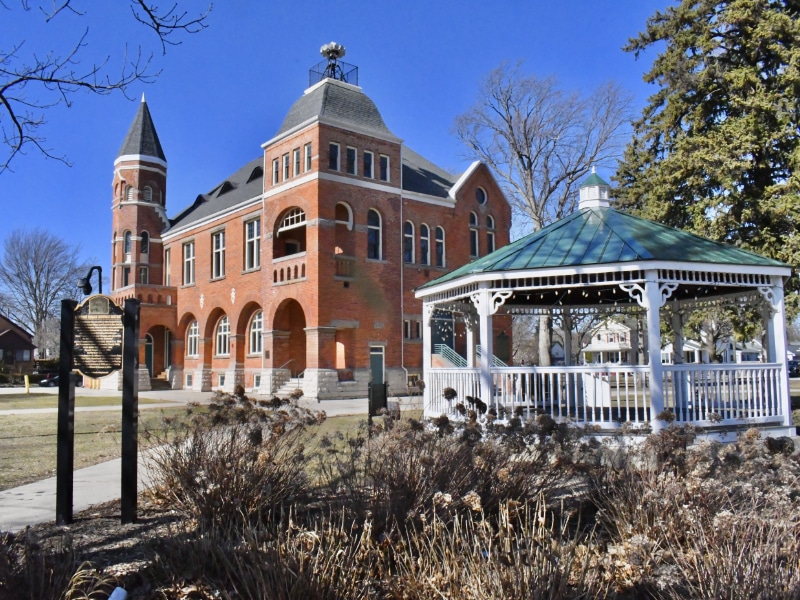
When Marine City Chamber of Commerce director Laura Merchant first came to live here 12 years ago, she found it very difficult to find her way around. That’s why she’s excited about new wayfinding signage that will connect Marine City’s four distinct business districts and make it easier for residents and tourists to find the marina, beaches, parks, and city facilities.
“These signs are going to be so beneficial for everybody to find the various areas,” Merchant says. “I can’t tell you how many people will ask, ‘Where is the marina? Where is this? Where is that?’”
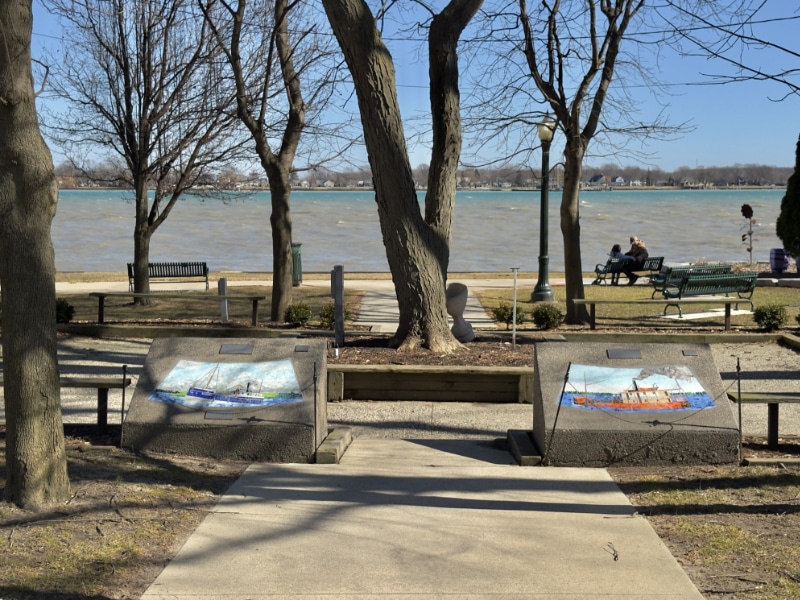
Situated on the shores of the St. Clair River, Marine City is a popular tourism destination “noted for its unique boutiques, eateries, and award-winning theatre performances,” according to Pure Michigan. The historic Great Lakes shipbuilding center and tourism destination of Marine City will soon be easier for landlubbers to navigate, thanks to the new wayfinding signage project.
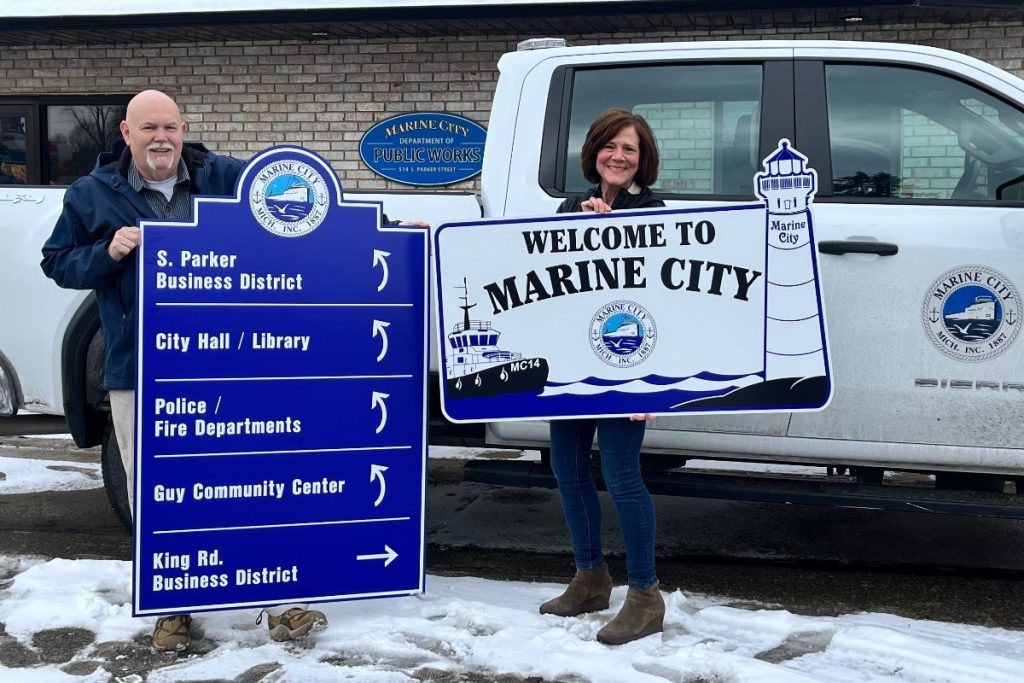
New wayfinding signage will soon connect Marine CIty’s four distinct business districts making it easier for both residents and tourists to find its marina, beach, parks, and city facilities.
Scott Adkins and Laura Merchant show off new wayfinding signs.
The grant-funded project was launched as a result of a Michigan Municipal League Opportunity Report, based on the input of the city’s leaders, Chamber of Commerce, and other local and regional stakeholders.
The report concludes with three recommendations for this waterfront city: Strengthen connections between business districts; develop placemaking and community; and empower entrepreneurs and foster small business. The new wayfinding signage launches Marine City’s action plan for bringing all three of those recommendations to reality.
“When we applied for the Michigan Municipal League Foundation microgrant, we really felt that this wayfinding project had roots in each of those three opportunity areas, most of all strengthening connections between business districts,” says Scott Adkins, Marine City special projects administrator. “We had some early wayfinding initiatives, some signage up, but not as robust as when the new signs go up.”
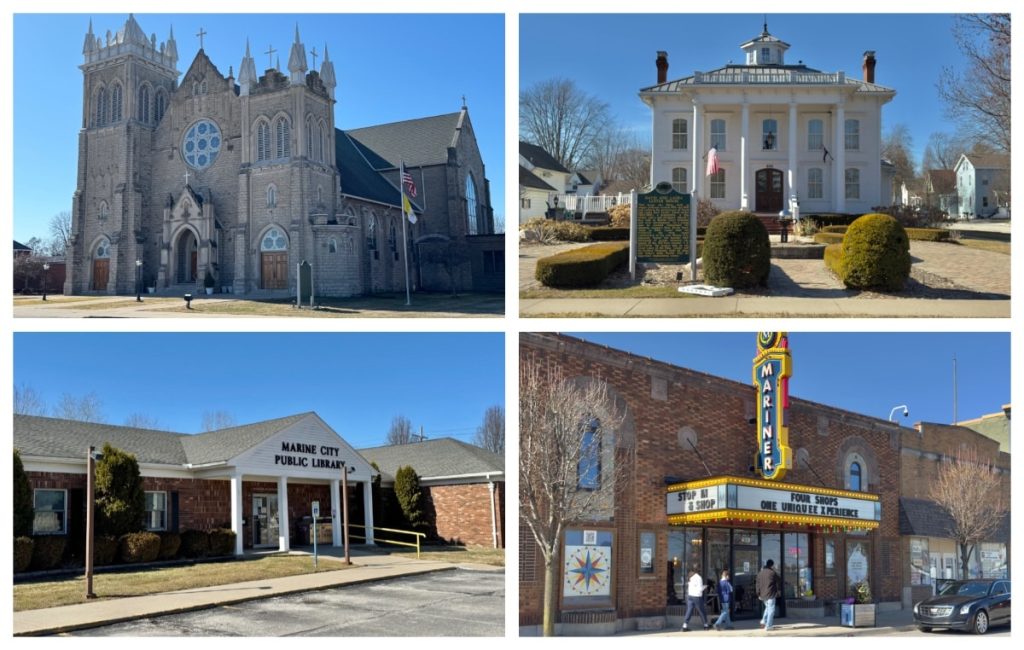
Some Marine City destinations: Holy Cross Catholic Church, Lester House, Marine City Public Library, and Mariner Theatre.
While prior signage directed people to Marine City’s Water Street District, it left out the other business districts and destinations.
“The marina, the parks, the business districts, the civic locations, we were missing those pieces,” Adkins says. ”I think we were focusing on getting people to our Water Street district and forgetting about the other districts that people were driving through to get there.”
The signs will not only direct people to popular destinations but also provide color-coded map elements so people can plan their route from one district to the next –– and realize how easy it is to get there.
“If you’re at the marina, or if you’re walking downtown, the color coded signs show ‘you are here.’ You’ll know you’re not that far from this other district –– maybe it’s walkable,” Merchant says. “That’s a piece that we didn’t have in any of the earlier attempts.”
Opportunity report recommendations: Strengthen connections between business districts; develop placemaking and community; and empower entrepreneurs and foster small business.
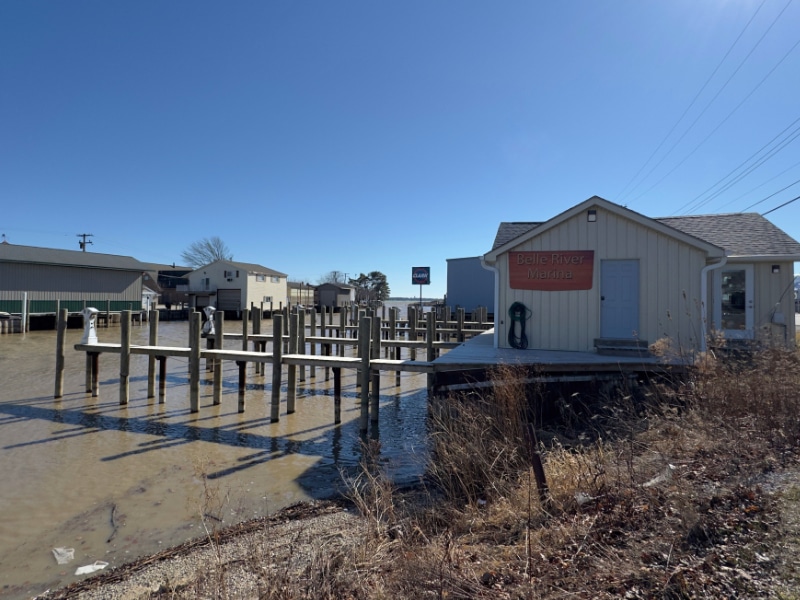
Marine City’s transient marina will fill with boaters come warmer weather.
“Wayfinding is so important.”
The wayfinding signs will identify Marine CIty’s multiple business and commercial districts and show how they all connect. The ultimate goal is to enhance local businesses, business development, tourism, and broader economic development opportunities.
“We need to help make those connections,” Adkins says. “Wayfinding is so important. This will be a benefit across the entire city and region. It will put all of the pieces together.”
Soon, people visiting the city’s walkable waterfront Water Street district, where watching freighters sail by is a common pastime, will have no trouble finding the transient marina and city facilities like the library, city hall, police department, and public works.
“I’m excited because it’s going to bring more people to our local businesses, and it’s going to help everybody to get around a little bit easier, including myself,” Merchant says.
The ultimate goal is to enhance local businesses, business development, tourism, and broader economic development opportunities.
Adkins also sees the wayfinding signage as a recruiting tool.
“When we bring people to the community, we want them to know that there’s a lot more to Marine City than just M-29, how they got here,” he says.
“There’s a ton of ideas that we’ve been throwing out that all tie back to how we can make an even bigger bang for the wayfinding,” Adkins says. “We need to involve people from all throughout Marine City.”
The Marine City Chamber of Commerce also creates connections among local businesses. Its Business Coalition provides opportunities for all local business owners to get together, talk, and find ways to collaborate.
“We’re trying to work together, to bring all of these districts together, and to help each other,” Merchant says. “It’s really been awesome.”
Marine City Chamber of Commerce Business Coalition provides opportunities for all local business owners to get together, talk, and find ways to collaborate.
More ways of making connections
Based on the opportunity report, Marine City is developing a new marketing plan and investing in park amenities like benches, Adirondack chairs, and additional recreational activities. New resource pages on both the city and chamber websites connect new businesses or families who want to move to Marine City with resources that make the move easier.
“We’re a waterfront community, so we’re working with our regional trail partners to get additional funding for expanding the trail and making modifications. We’re also working on small business and investor lunches and other things,” Merchant says. “We’re hitting the targets. This opportunity report is a great wayfinding roadmap for us for success.”
Photos by Leslie Cieplechowicz. Photo of Scott Adkins and Laura Merchant courtesy subjects.
This story is made possible with funding from the Michigan Municipal League Foundation, a nonprofit association dedicated to making Michigan’s communities better by thoughtfully innovating programs, energetically connecting ideas and people, actively serving members with resources and services, and passionately inspiring positive change for Michigan’s greatest centers of potential: its communities.
Local agencies, including Disability Network Northern Michigan, collaborate to help unhoused residents with disabilities find housing in Traverse City’s tight market.