
Here’s a look at three ways Michigan providers are offering new ways to help people experiencing a mental health crisis.
This article is part of State of Health, a series about how Michigan communities are rising to address health challenges. It is made possible with funding from the Michigan Health Endowment Fund.
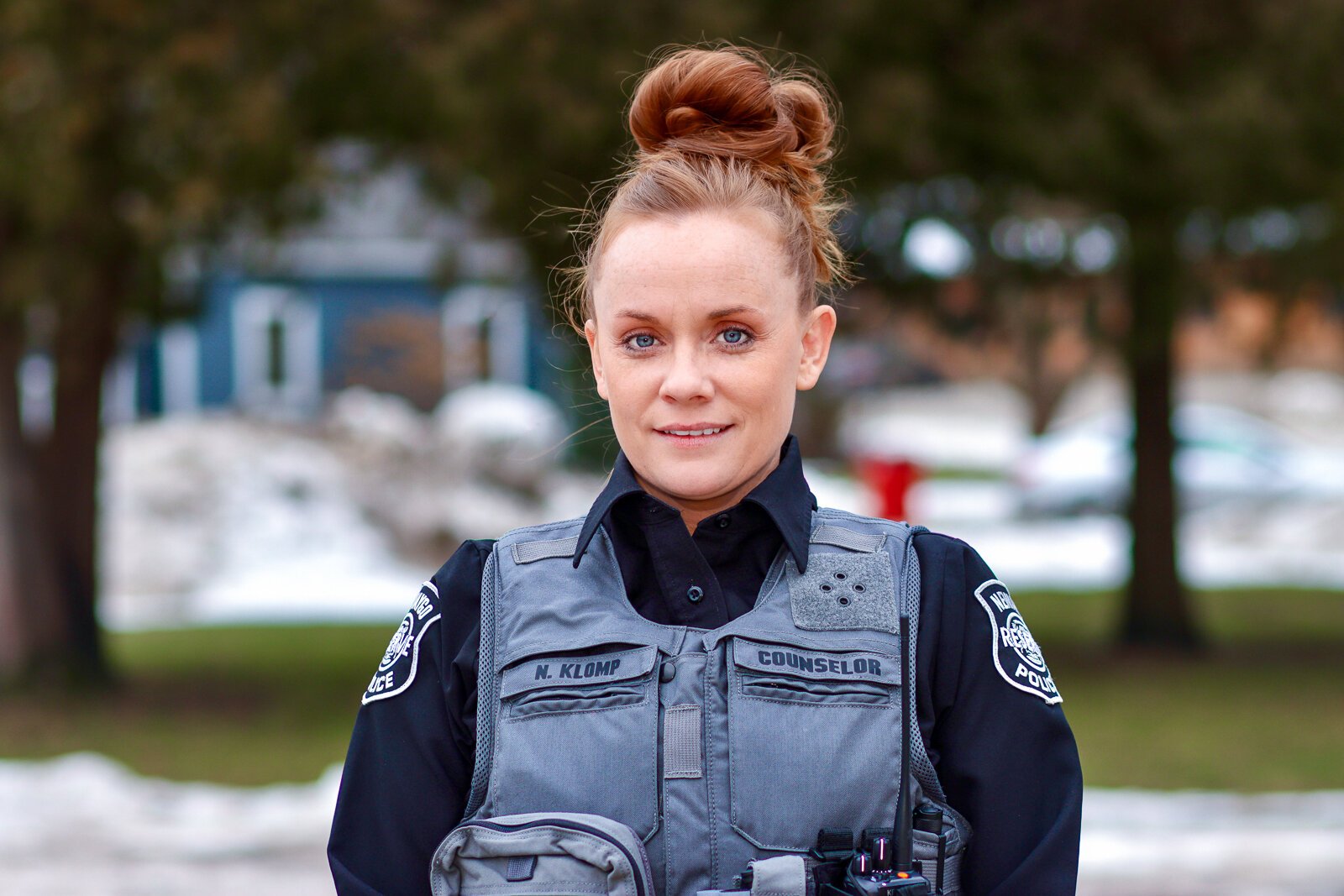
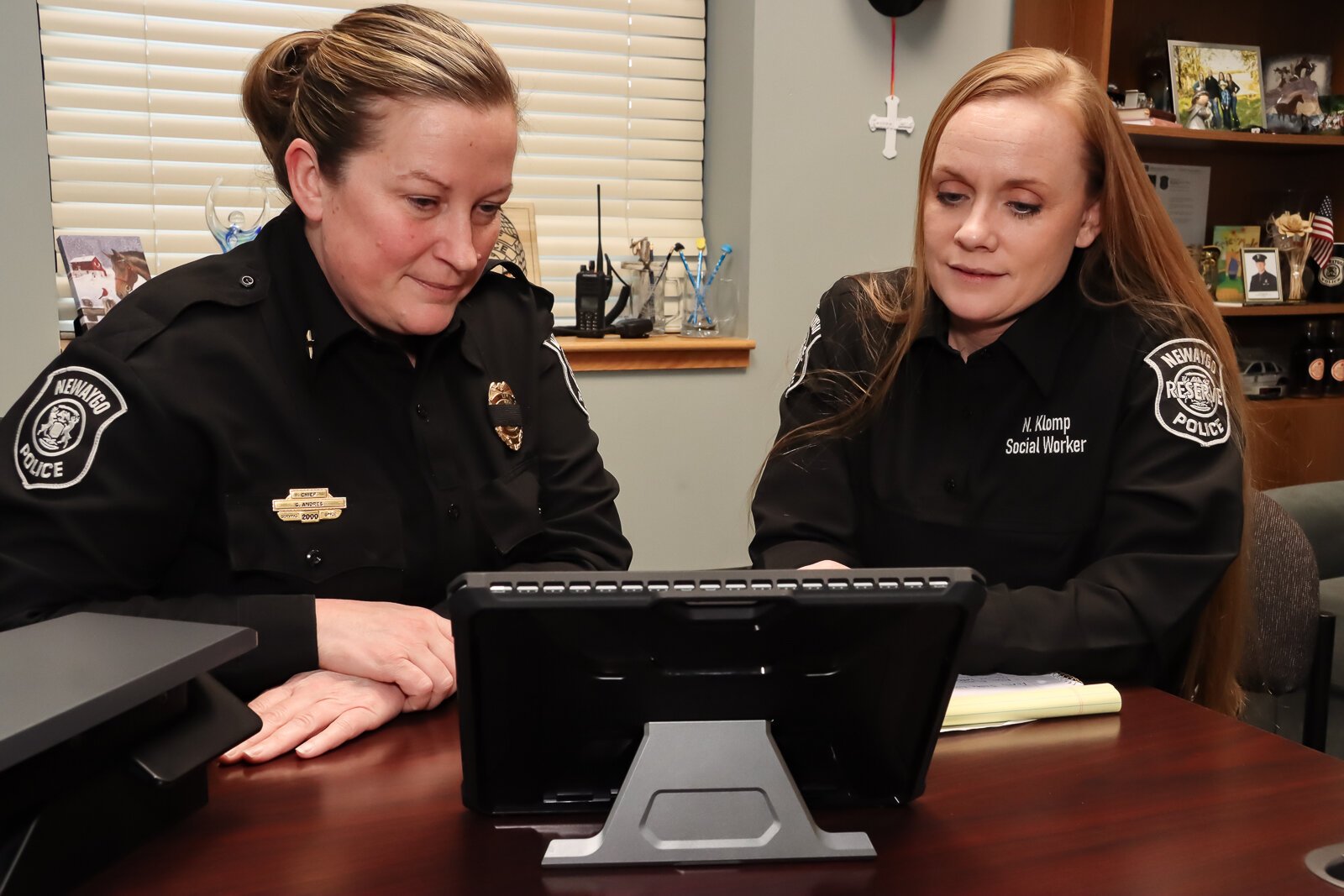
As a team lead for Grand Rapids-based Arbor Circle‘s outpatient counseling program in Newaygo, Nicole Klomp became familiar with the mental health needs of the rural West Michigan community as well as with its police department. Many of the calls the police department fielded involved mental health crises. And while the officers did the best they could, social work was not their expertise. With Arbor Circle’s blessing, Klomp applied for a grant from the Michigan Health Endowment Fund to pay for a social worker to join the force. When the grant was approved, Klomp took over the position.
“The City of Newaygo Police Department had a really good relationship with Arbor Circle, as well. That’s why Chief [Georgia] Andres was very willing for me to take on this new innovative role,” Klomp says. “Pretty much every call that I go on has some sort of mental health component to it, whether it be a diagnosis that they already have, they’re feeling suicidal, or lack awareness that they have some sort of mental health issue. When it comes to a juvenile concern, where kids are just not listening to the parents, a lot of times it’s an undiagnosed mental health issue. I’m able to point them in the right direction.”
The innovative partnership between Arbor Circle and the Newaygo police is just one example of how Michigan mental health agencies and health care providers are expanding mental health crisis care. They range from mental health urgent care facilities and crisis centers to mobile crisis teams. Here’s a look at three ways Michigan providers are offering new ways to help people in crisis.
Social worker on the beat
The crises Klomp deals with range from domestic violence and suicidal ideation to substance use disorders, which have become a big concern in Newago’s schools. Klomp recently sat with a husband and wife when the police were called to their house because a family member had died there. The couple didn’t want to call and tell anyone, but they obviously needed family support. Klomp explained that once the medical examiner and police wrapped up their work and left, they would be better off if they weren’t alone. Klomp continued to sit with the couple until they were ready to make that call for help.
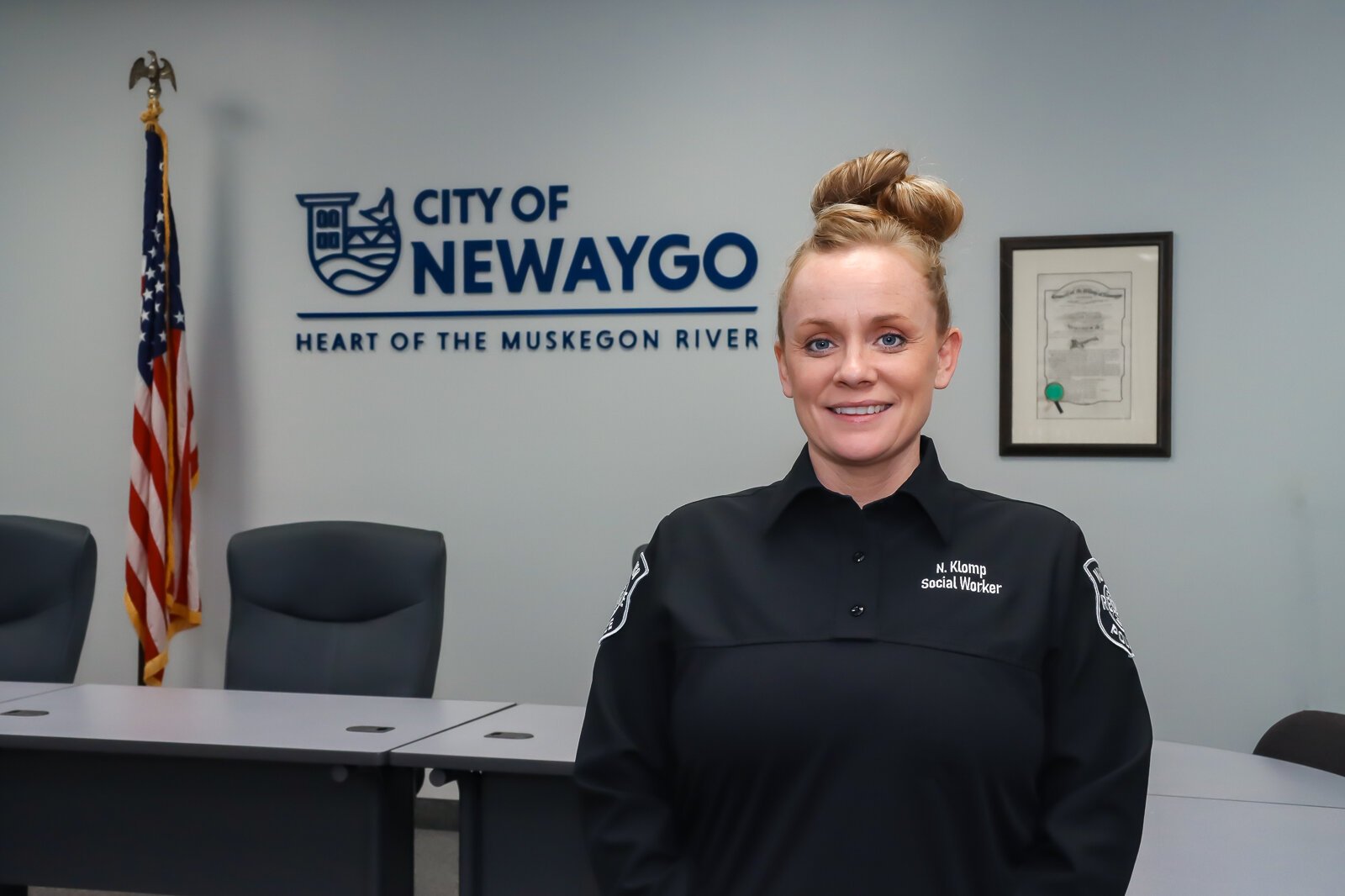
“I can respond to anything with the officers. We’re at a point where they’re very comfortable with me being out there,” Klomp says. “I also respond to the officers if they need help with debriefings after a crisis or even their family problems.”
While Klomp’s job is to help folks through a crisis, she also refers people who need additional help to treatment at Arbor Circle or other community mental health providers.
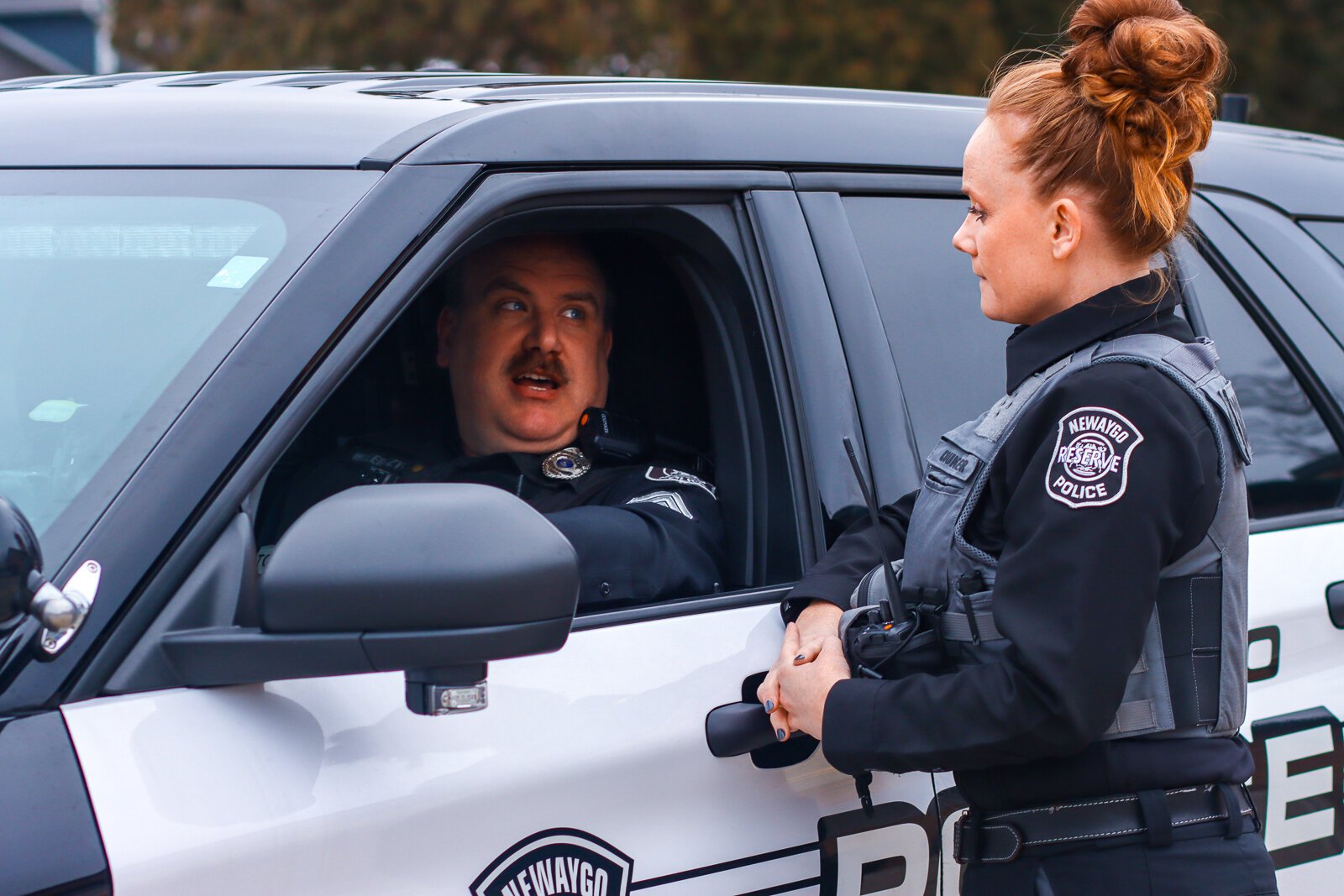
“I think in a rural community, it’s necessary to have a collaboration like we do,” Klomp says. “I’m stationed here at the police department and Arbor Circle provides that supervision. I’m not all on my own. Arbor Circle provides the accreditation and holds us accountable. It really helps ease some of those tensions between social work and law enforcement. It sets the example that, hey, law enforcement and social work programs can work together. And I think that that’s huge.”
Center will divert mental health crises from the ER and jail
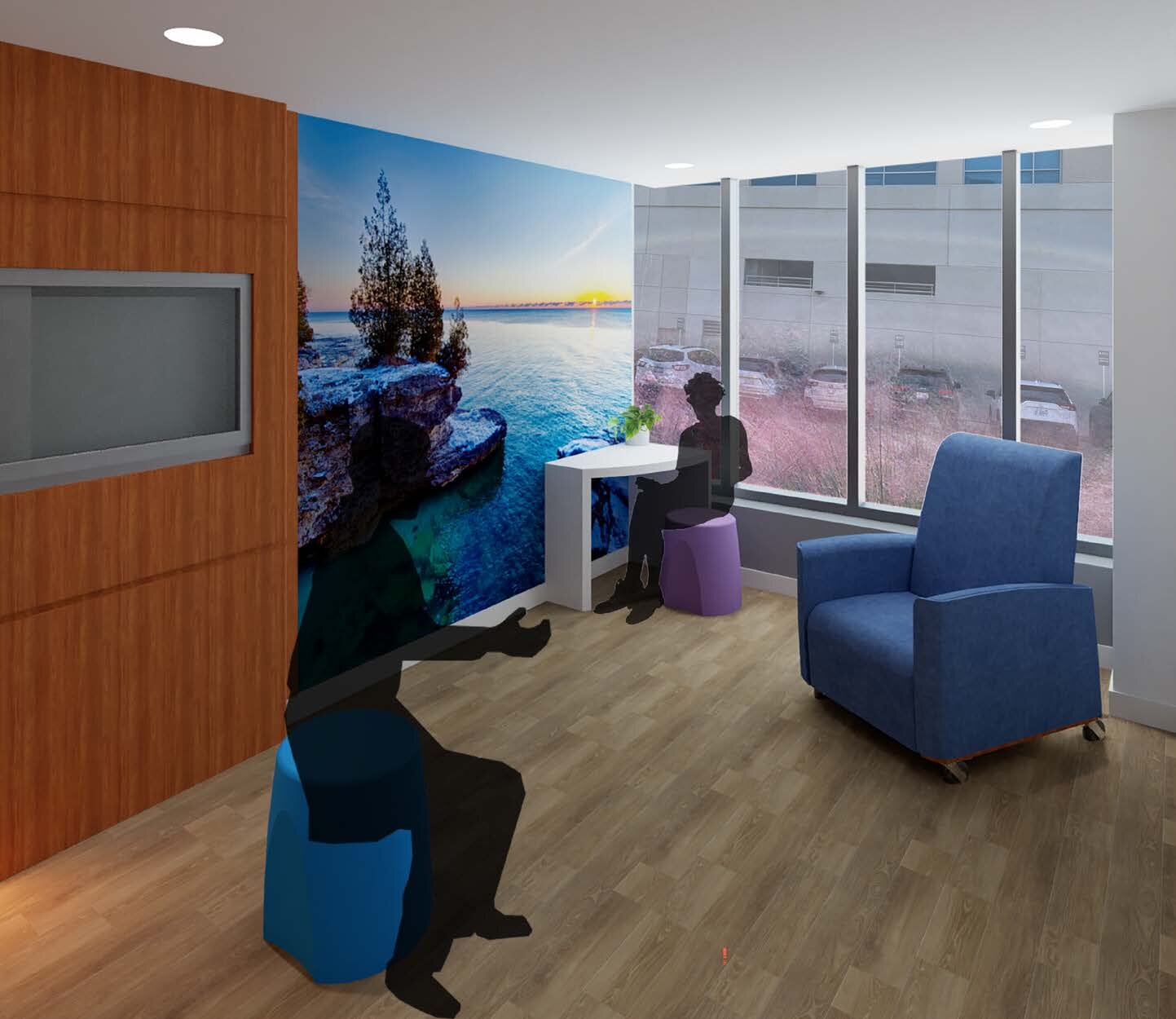
Another Grand Rapids-based behavioral health services provider, Network180, is collaborating with Trinity Health Grand Rapids Hospital, local law enforcement, and a host of community stakeholders in building a new Behavioral Health Crisis Center (BHCC) adjacent to the hospital in downtown Grand Rapids. The BHCC will provide a calm, caring environment where mental health professionals help people experiencing a behavioral health crisis to de-escalate in living-room-like surroundings and connect with needed care.

“This is a brand new model that’s possible because of legislation that Gov. Whitmer signed in 2021,” says Carrie Mull, clinical services director for behavioral health and case management services at Trinity Health Grand Rapids.

The BHCC’s Crisis Stabilization Unit will serve up to 16 people at a time. Currently, people in the Grand Rapids area who experience a mental health crisis often end up in emergency rooms waiting for placement in a psychiatric facility. If a placement isn’t open, the wait can further traumatize the individual and strain the health care workers who are trying to help. Loved ones seeking to help people in a mental health crisis often call law enforcement — and that can result in jail.

“We know that neither of those settings actually helps to stabilize a crisis,” says Beverly Ryskamp, COO of Network180. “Most of the time, people get worse in those settings. It’s not because people aren’t doing their jobs. It’s just that they’re not set up to deliver treatment. The whole point is to get people as rapidly as possible to a setting that can deliver immediate treatment. This setting fills a gap.”
Trinity Health Grand Rapids will provide BHCC patients with medical care, lab and pharmacy services, radiology, and medical consultations. It will also provide operational needs like infection control, security, food service, and environmental services. Network180 will provide the core behavioral health services: psychiatry, social work, peer support services, and case management, as well as administrative support. Mull says the BHCC will be the “one place to go” for behavioral health crisis needs, “no matter your insurance, no matter what.”
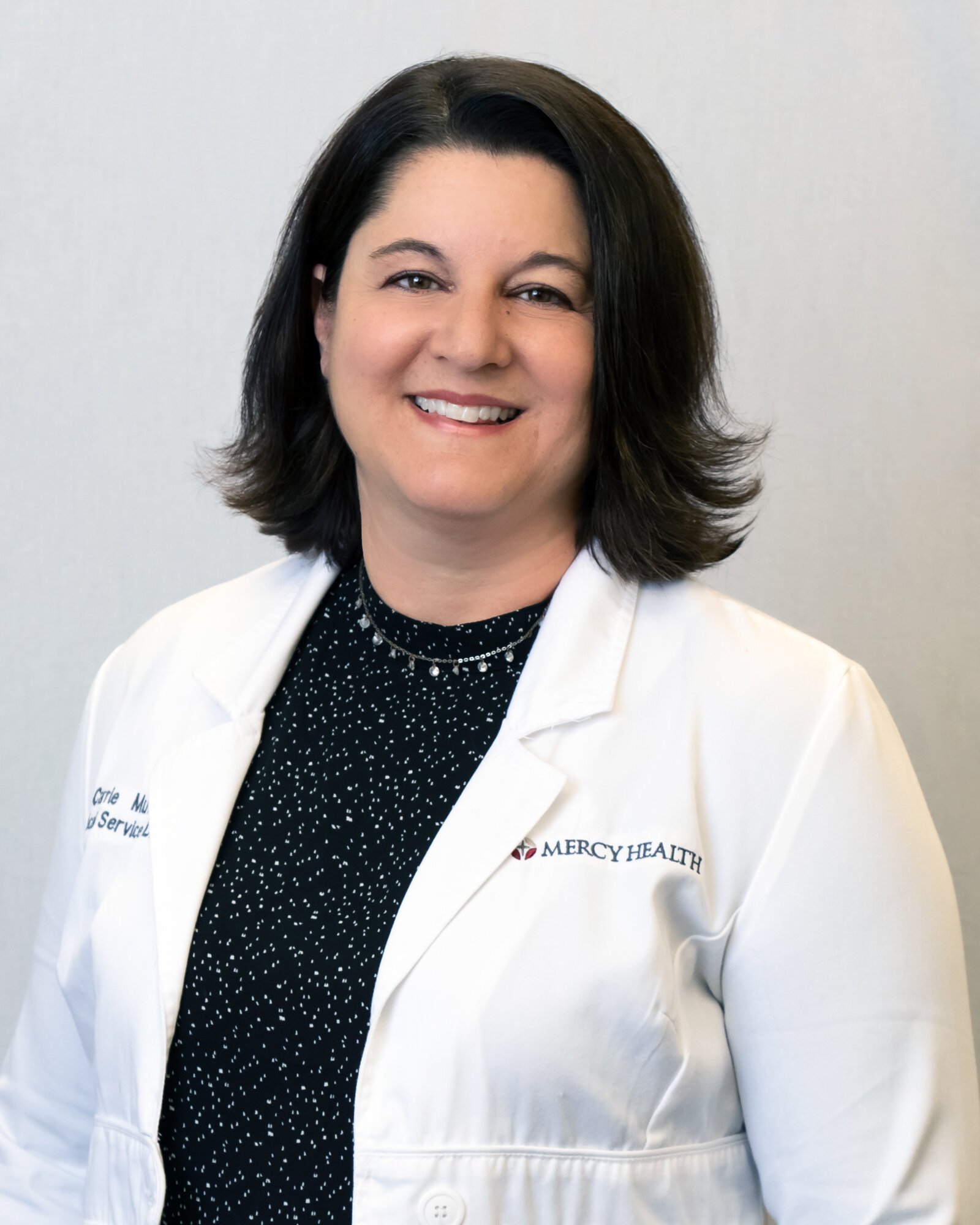
“When individuals in crisis know that one place to go, they’ll seek out care more proactively,” she says. “That’s going to impact the community because when people seek care proactively, we know that their health is better. And then the overall health of the community will be better.”
Northern Michigan crisis center offers residential treatment
After years of foundational preparation led by the Northwest Michigan Community Health Innovation Region (CHIR) Behavioral Health Initiative in collaboration with a wide range of community stakeholders, a new behavioral health center is in the works in Traverse City. The center is a partnership between Northern Lakes Community Mental Health (NLCMH) and Munson Medical Center.
The Grand Traverse Mental Wellness Center will be located on the Munson Medical Center campus in a former outpatient behavioral health building. It will bring existing crisis services, including NLCMH’s centralized access services, welcoming center, crisis hotline, mobile crisis services, and intervention, under one roof.
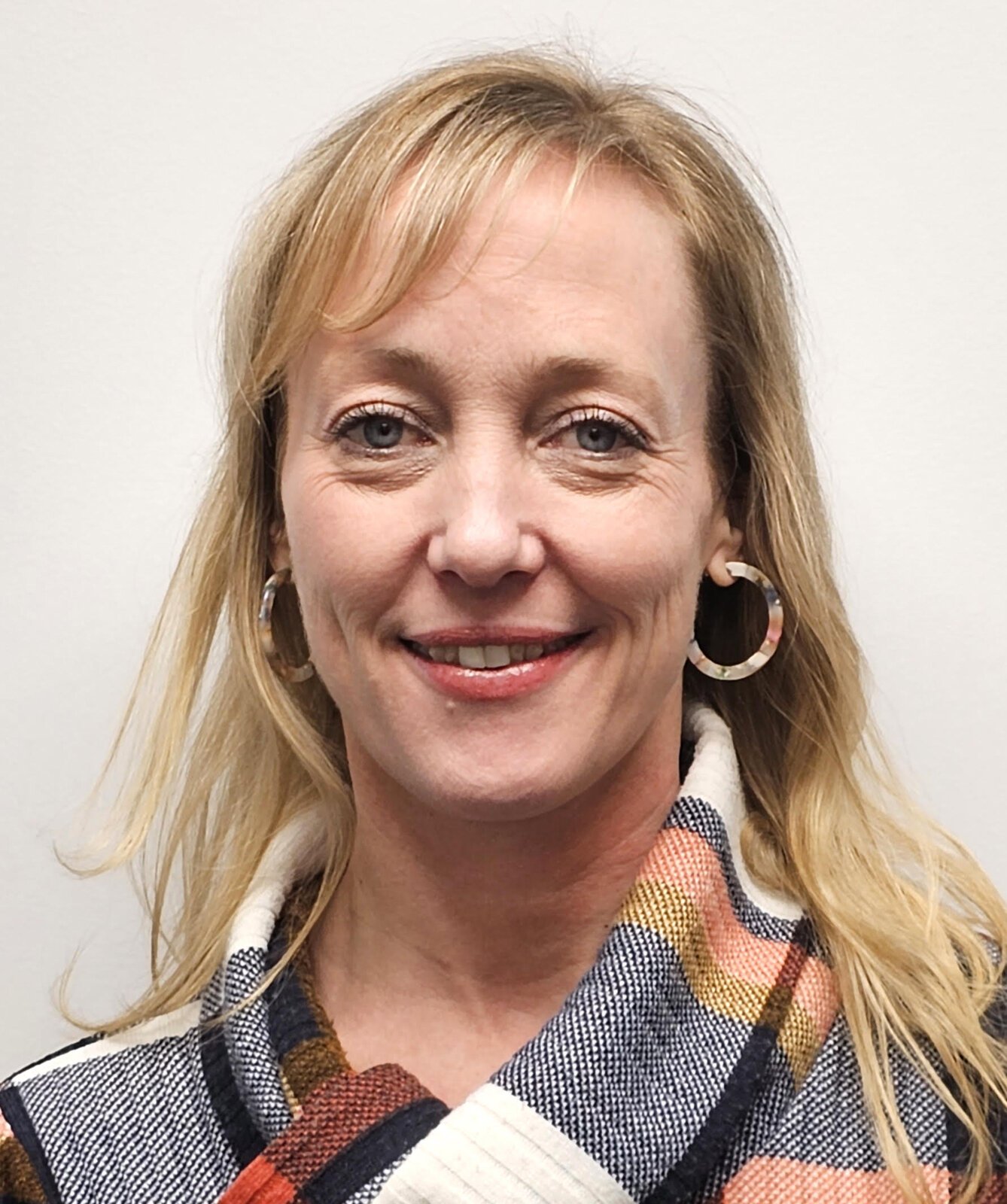
“We want our Wellness Center to be as welcoming and as warm and nurturing as humanly possible — just like a safety. It’s hard to get that type of ambience in an emergency room setting,” says NLCMH COO Nancy Stevenson. “This is more of a homelike setting. We want people to feel safe and welcome and have everything that they need in that moment.”
By the end of 2024, center leaders hope to offer outpatient therapy, peer support services, care coordination, nursing, and psychiatric assessment. In its next phase, the center will provide rooms for residential treatment. A separate area will offer services to children and a separate entrance will accommodate law enforcement.
“Law enforcement has a special role,” says Terri LaCroix-Kelty, director of behavioral health at Munson Medical Center. “Let’s say that we’re concerned about someone. They are the only entity that can go and actually check on someone, take them into protective custody, and bring them to a safe place for care. That can be really important for people who are too scared or unwilling to come in for care, but really need it.”

Dr. Pennie Foster-Fishman, project leader for the Northwest Michigan CHIR, sees the facility as a hub for behavioral health care in the region, a “one-stop shop” that will broaden the continuum of services.
“We’re really using this as the jumping-off point,” she says. “The center is not the end of this conversation. It’s really the beginning of what I think is an exciting opportunity for the region.”
Estelle Slootmaker is a working writer focusing on journalism, book editing, communications, poetry, and children’s books. You can contact her at Estelle.Slootmaker@gmail.com or www.constellations.biz.
Arbor Circle/Newaygo PD photos by Tommy Allen.
BHCC renderings courtesy of Trinity Health. All other photos courtesy of the subjects.
Related Articles
Library classes help residents learn skills, build community connections
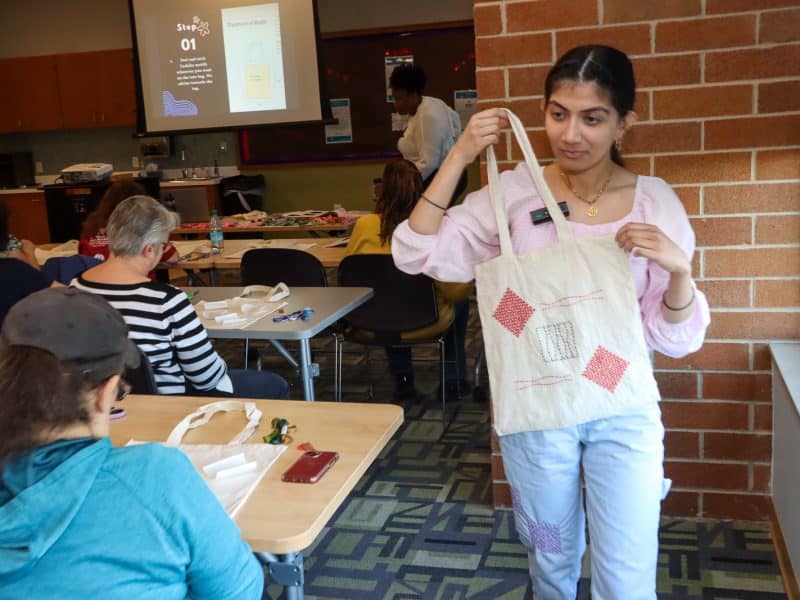
At Kent District Library, in-person classes help residents learn practical skills while meeting neighbors and building connections in their community.
Gentex engineers help nonprofits improve efficiency
Gentex engineers apply manufacturing skills to streamline donations, boost volunteer impact, and expand services at Community Action House and Kids’ Food Basket.

The Established Home mother-daughter designers launch children’s book to help families navigate life transitions
West Michigan design duo Jean Stoffer and her daughter, Grace Start, share a new children’s book offering families practical, faith-centered strategies to help children cope with moves and change.


