
Building better AI: West Michigan consortium focuses on trust, transparency, and design
As AI use increases, a federally funded Grand Valley University consortium will promote ethical, workforce-focused innovation.
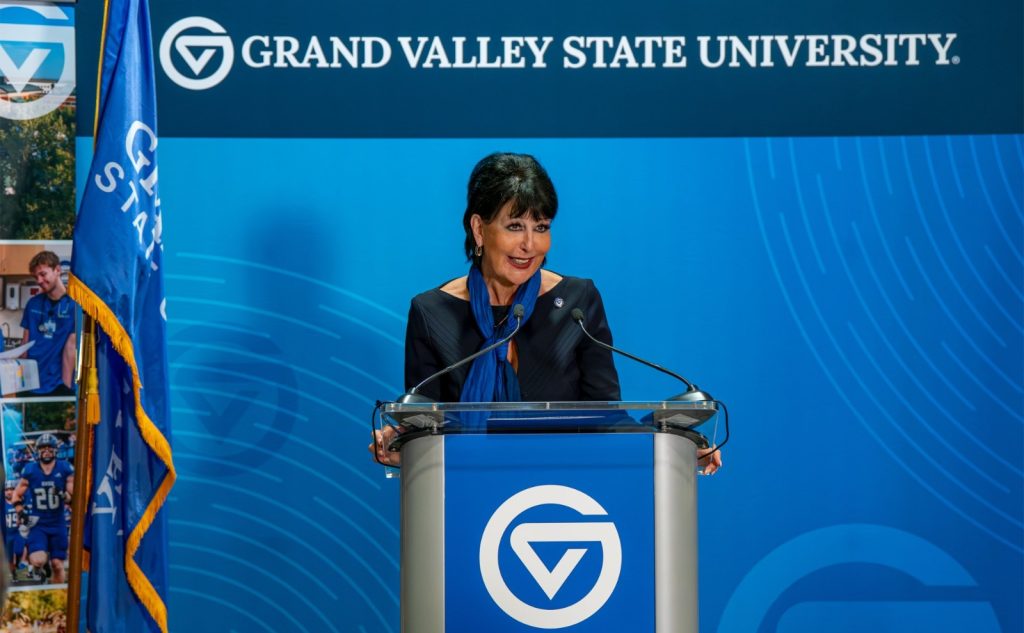
Like it or not, artificial intelligence is here to stay. And it’s being used more than ever by younger generations and those in the workplace.
According to a Gallup study, the number of Americans using AI at work has gradually increased each quarter since 2023. The same study showed 38 percent of employees reported their organizations are integrating AI into their systems to improve productivity, efficiency, and quality. AI is more commonly used in knowledge-based industries than in production- and service-based sectors.
But Michigan legislators are preparing for that to change — and to be the leaders of that change.
Leading the way
U.S. Rep. Hillary Scholten recently announced that Grand Valley State University will receive $1,031,000 in federal support to establish the West Michigan Trustworthy Artificial Intelligence Consortium, which will bring together partners across academia, industry, government, and nonprofit organizations.
“West Michigan should be leading the way in how artificial intelligence is developed and used, and that starts with investing in people and institutions we trust,” says Scholten, a Democrat representing the 3rd District. “This funding will help GVSU bring together educators, industry, and public partners to build AI systems that are ethical, secure, and transparent while preparing students for good-paying jobs and strengthening our region’s economy.”
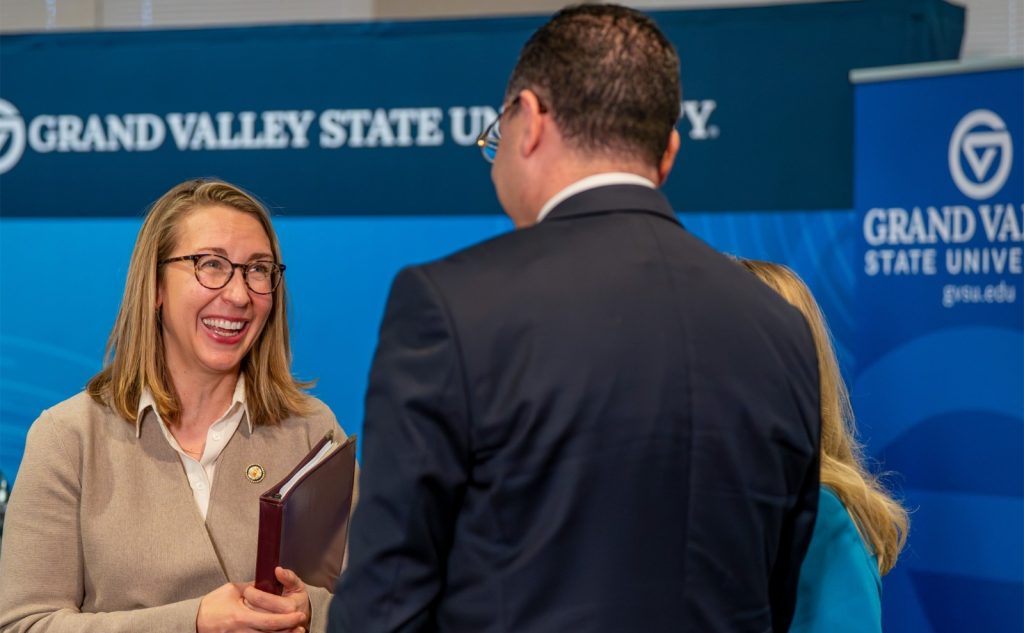
Marouane Kessentini, dean of GVSU’s College of Computing, explains the benefits of the consortium.
“The AI consortium is a regional hub that connects students, faculty, companies, public agencies, and nonprofits to advance research, workforce training, governance frameworks, and best practices around trustworthy AI,” Kessentini says. “Rather than working in isolation, partners share expertise, develop standards, and create practical solutions together.
“At GVSU, we believe AI should be advanced in a way that strengthens our economy, protects our communities, and prepares our students for meaningful careers. The West Michigan Trustworthy AI Consortium is a major step in that direction.”
The consortium, housed in GVSU’s College of Computing, aligns with the school’s Blue Dot initiative, which focuses on infrastructure for innovation, entrepreneurship, workforce development, and regional impact in AI literacy, talent development in tech, and applied research to support businesses.
“Through the consortium, we are not only advancing responsible AI research, we are also building talent pipelines in AI governance, safety, cybersecurity, compliance, and applied AI,” Kessentini says. “That means preparing students for high-demand careers while helping West Michigan organizations adopt AI responsibly and competitively.”
The consortium will be led by Samah Mansoor, graduate program director for the cybersecurity program in the College of Computing. The federal funding will support the infrastructure needed to launch the consortium, including computing resources, software tools, licensing, operational coordination, and programming support to develop training materials and research projects.
Shaping the future
The consortium emerged from a recognition that as AI adoption accelerates across industries, organizations need clear guidance, safeguards, and skilled professionals to implement it responsibly.
It will include more than 20 partners, including employers in health, manufacturing, education, and logistics, along with nonprofit organizations focused on tech ethics and digital rights.
“This is about making West Michigan a national model for innovation that is not just fast but trustworthy, secure, and human-centered,” explains Kessentini. “That includes advancing applied research, helping organizations implement AI safely and ethically, and building workforce pathways in AI governance, safety, cybersecurity, and compliance. Ultimately, it is about innovation that earns and maintains public trust via establishing guidelines, frameworks, and prototypes on trustworthy AI.”

What does “trustworthy AI” look like?
“In plain language, trustworthy AI means AI systems that are reliable, fair, secure, transparent about their limitations, and accountable to people,” Kessentini says. “It is measured by evaluating how systems perform across different groups and scenarios, how securely they handle data, how well risks are identified and mitigated, and whether governance processes are in place to monitor and audit them over time.”
While many people have concerns about whether AI will ever be trustworthy, GVSU is planning to design safeguards into its AI systems from the beginning to keep them in check.
“[You design safeguards] by defining the purpose and boundaries of the system before building it,” explains Kessentini. “You identify risks early, such as bias, privacy concerns, or security vulnerabilities, and build controls directly into the development process.
“Safeguards become part of the design requirements, not optional add-ons.”
Continued monitoring of the process will ensure the system behaves as expected over time.
The role of humans
Even with the rise of AI, humans are needed to create safeguards, monitor its outputs, address concerns and biases, and ensure the systems support the community’s needs. GVSU is preparing to address those issues, starting with wide-ranging partnerships.
“We are ensuring broad stakeholder engagement from the beginning by involving industry leaders, public-sector representatives, nonprofit partners, educators, and community voices,” says Kessentini. “We will define clear expectations around fairness, privacy, transparency, and accountability, and embed those values into governance frameworks and evaluation criteria.”
The consortium will focus on new research directions, including consents and guiding principles for AI use.
“Those values are important when training engineers who design, develop, and deploy those systems,” Kessentini says.
The goal is to help the region adopt AI responsibly while building a strong local talent pipeline.
“Many organizations want to leverage AI but lack governance frameworks, trained personnel, or risk management processes,” says Kessentini. “The consortium helps bridge that gap while preparing students for high-demand careers.
“Many businesses in West Michigan need clear guidelines on where to start to adopt trustworthy AI frameworks, so it is important to provide significant training opportunities for them.”
Wide economic impact
Kessentini believes that the sectors that stand to benefit the most from the AI consortium include health care, advanced manufacturing, logistics, education, and public services.
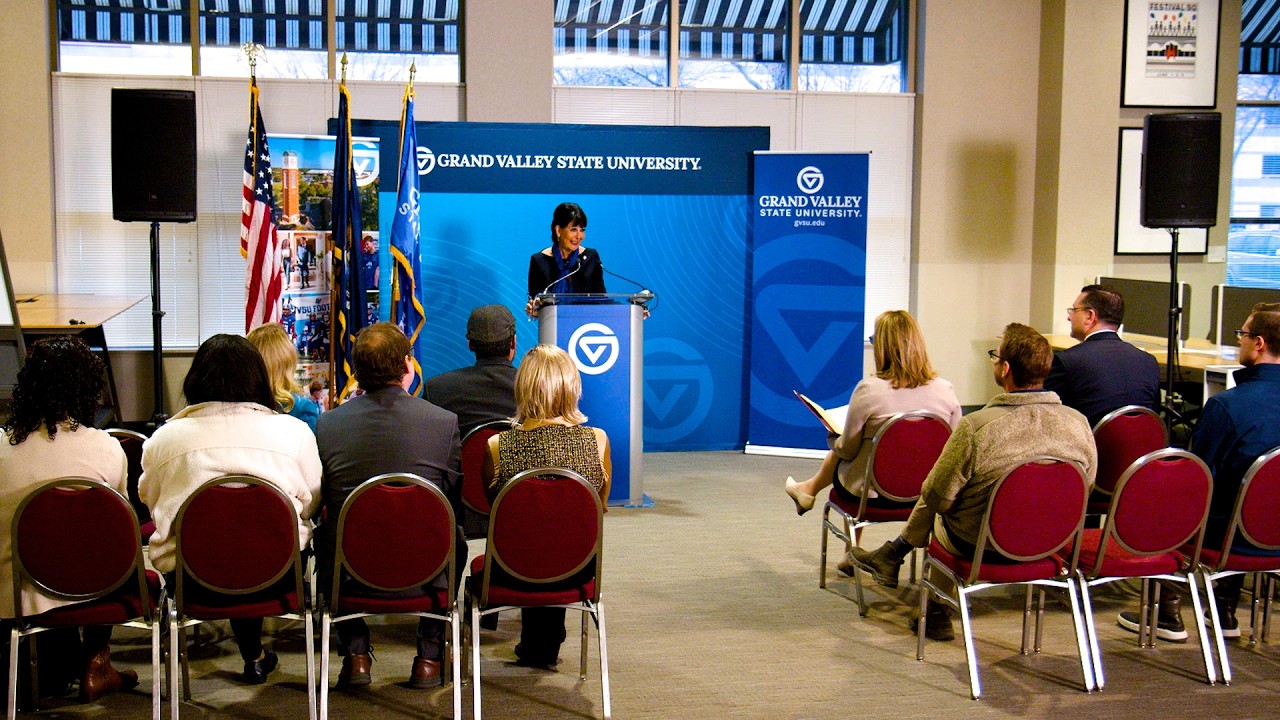
Scholten says her goals align with GVSU’s.
“The question is not whether AI will transform our economy, it is how we guide that transformation in a way that most benefits people,” she says. “I was proud to secure this funding because it will bring together researchers, students, educators, and industry partners to turn new ideas about AI into practical solutions, preparing our students for good-paying careers and strengthening our regional growth.”
As part of GVSU’s commitment to helping the community understand AI and to removing barriers to access, it is offering the public a chance to earn a free online community certificate on AI literacy with a focus on responsible and trustworthy AI practices.
Photos courtesy of GVSU
Related Articles

West Michigan students spread kindness by joining Positive Affirmations initiative
A group of West Michigan students launches an initiative promoting kindness, combating bullying, and creating National Positive Affirmations Day in schools.

“It was my safe place”: Walker mayor leads push for library expansion
Walker invests more than $20 million in library expansion that Mayor Gary Carey Jr. says will produce lifelong impact for its patrons and meet growing community needs.
Health center trains local residents as dental assistants to fill workforce gaps
HealthLinc, a federally qualified health center, covers training costs while preparing local residents for dental assistant jobs, strengthening workforce pipelines and expanding access to care.


