
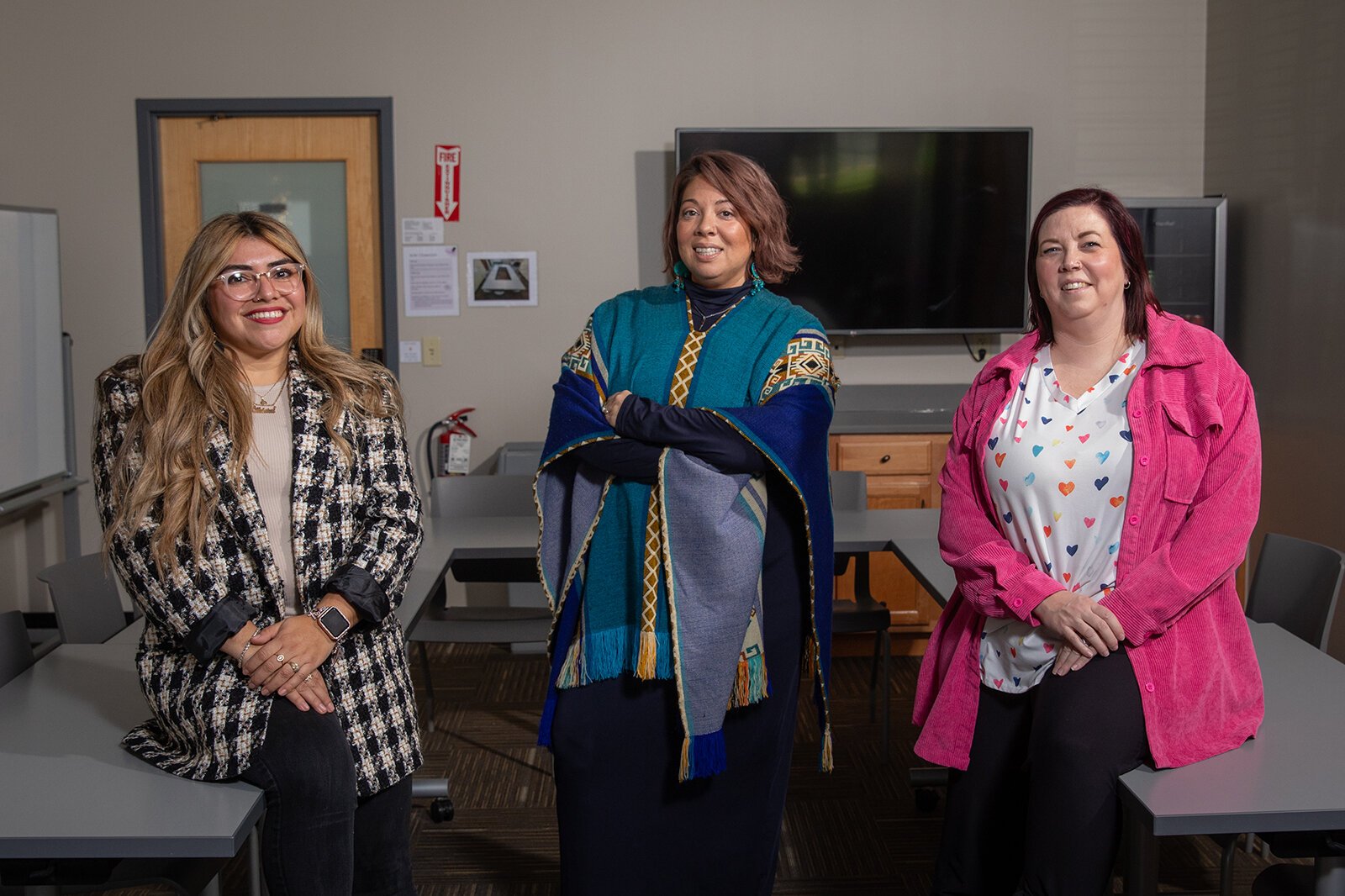
Health Net of West Michigan's new Care Model Training provides frontline navigators with tools and tactics to better help residents access health care and social services.
This article is part of State of Health, a series about how Michigan communities are rising to address health challenges. It is made possible with funding from the Michigan Health Endowment Fund.
According to the Michigan Association of United Ways’ 2024 ALICE Report, 1.6 million of Michigan’s 4 million households struggle to pay for basic needs like housing, child care, food, transportation, and health care, despite being employed. In Kent County, those households are concentrated in urban locations like Grand Rapids, Wyoming, and Kentwood, as well as the more rural city of Lowell and several smaller townships. Health Net of West Michigan is working to serve those community members better through its new Care Model Training, which provides frontline navigators with tools and tactics to better help residents access health care and social services.
Participants in the 16-hour training gain new skills and resources, emphasizing relationship building with a network of professionals and community members. The training incorporates trauma-informed principles, such as trauma-informed yoga and mindfulness, and uses diverse learning modalities like role-playing and group discussions. It adheres to a strengths-based empowerment approach, enhancing client engagement and motivation.
“We address the health equity issues by addressing navigators’ competencies, both in terms of their conceptual knowledge as well as their skills,” says Christina Pavlak, vice president of training and development at Health Net of West Michigan.
While Kent County is home to a multitude of nonprofits and community-based organizations that help people with food, housing, utility assistance, educational opportunities, and employment training, connecting to these resources can be difficult. It’s especially challenging when people don’t know about available resources or are so overwhelmed with need that they don’t know where to start.
“We want to empower individuals to seek their best health, to reach their goals. But we have to do that hand in hand with this equity lens, recognizing that unfair barriers exist in the systems that hold the access to resources and to opportunities,” Pavlak says.
The training model aims to spread effective practices throughout the community with a focus on recognizing and better understanding cultural differences.
“We actually distinguish between cultural competency and cultural humility,” Pavlak says. “Competency is great. That’s a starting point. We recognize that we can’t know everything about every culture, and just because someone shares a cultural identity doesn’t mean they’re going to be the same as someone else from that culture. Humility is understanding your own identity, your own power and privileges, how that positions you within relationships with other people. It also focuses on the institutional and systemic pieces.”
In a series of in-person workshops, the training covers seven main topics: empowerment approach and skills, professional boundaries, health equity, working with interpreters, personal interviews and client action plans, strengths-based documentation, and community resource navigation. Continuing education credits are available for social workers and community health workers completing the series.
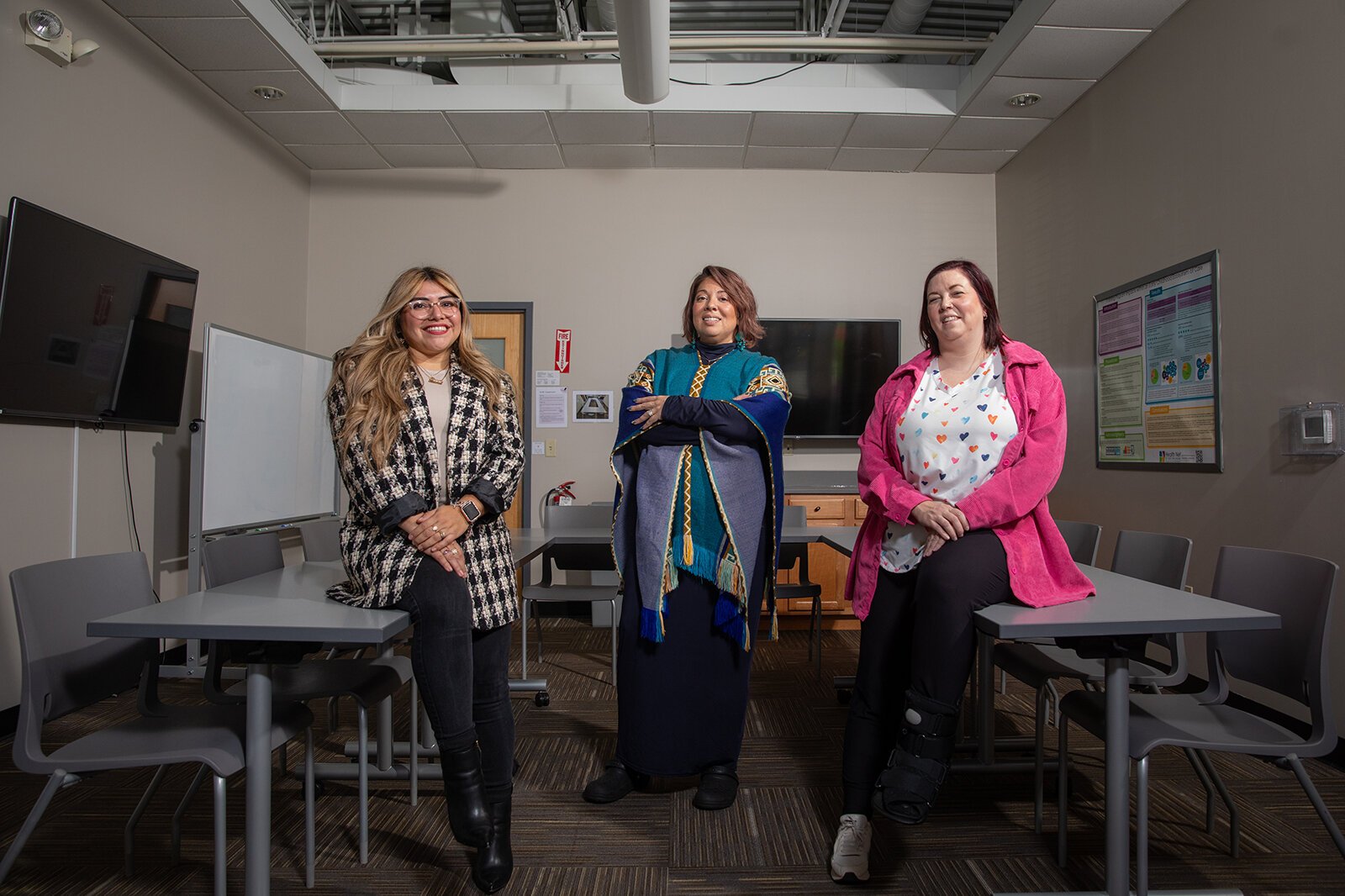
Care Model Training recipients Dinora Quintanilla (far left) and Kim Poplaski (far right) with Care Model Training facilitator Vanessa Jimenez (center).
“It’s typically done in a cohort series, so you will be with a group of peers for the entire 16 hours and learn collaboratively from one another as well as from the instructor,” Pavlak says. “There’s a lot of sharing of that experience and practical wisdom.”
Community health workers, case managers, social workers, housing specialists, parent educators, and others learn how to apply theoretical knowledge and practical skills within the context of cultural humility and health equity. Since the training launched in January 2023, 24 Kent County organizations have participated — and Health Net has had significant interest from organizations at both the state and national levels.
“There seems to be the most interest at that level in our health equity topic and our ‘working with interpreters’ topic. Those seem to be filling gaps that nobody else is doing in quite the same way,” Pavlak says.
Practical tips simplify standard processes
As a case manager with North Kent Connect, Dinora Quintanilla connects low-income families to financial assistance, local emergency food pantries, and the many other resources available to them. After completing Care Model Training, Quintanilla immediately began using the provider appointment form and client action plan templates she’d gotten from the program.
“The client intake form … helps [clients] bring their focus in and make a list of things that they’re looking for. Sometimes when folks get here, they’re not exactly sure what they’re looking for, but they know they need help,” Quintanilla says. “The templates help clients focus on a goal, and we’re able to work with them to achieve that goal.”

Dinora Quintanilla.
Quintanilla says the hands-on learning and cultural competency aspects of the Care Model Training gave her additional tools for working with the diverse communities she serves. She also appreciated the training’s interactive elements, such as role playing and opportunities to network with others taking the course.
“I am a hands-on learner, so I really enjoyed practicing how to rehearse for real-life moments in our work,” Quintanilla says. “I work a lot with the Hispanic community. I go to the schools. I go to different migrant camps. We want to share our information and get them connected with us. A lot of people are scared to talk about their needs.”
Recognizing strengths instead of focusing on shortcomings
Kim Poplaski, a Kent School Services Network social worker and community school coordinator for Kenowa Hills School District Alpine Elementary, also took the Care Model Training. She resonated with the program’s emphasis on recognizing clients’ and families’ strengths, even in challenging situations, as well as the value of a good conversation.
“I’m working with families who are in tough situations and are in a place where they’re needing assistance and resources,” Poplaski says. “They have skills that have gotten them through every day up to that point. The training shared how we can help a family see those strengths in themselves.”
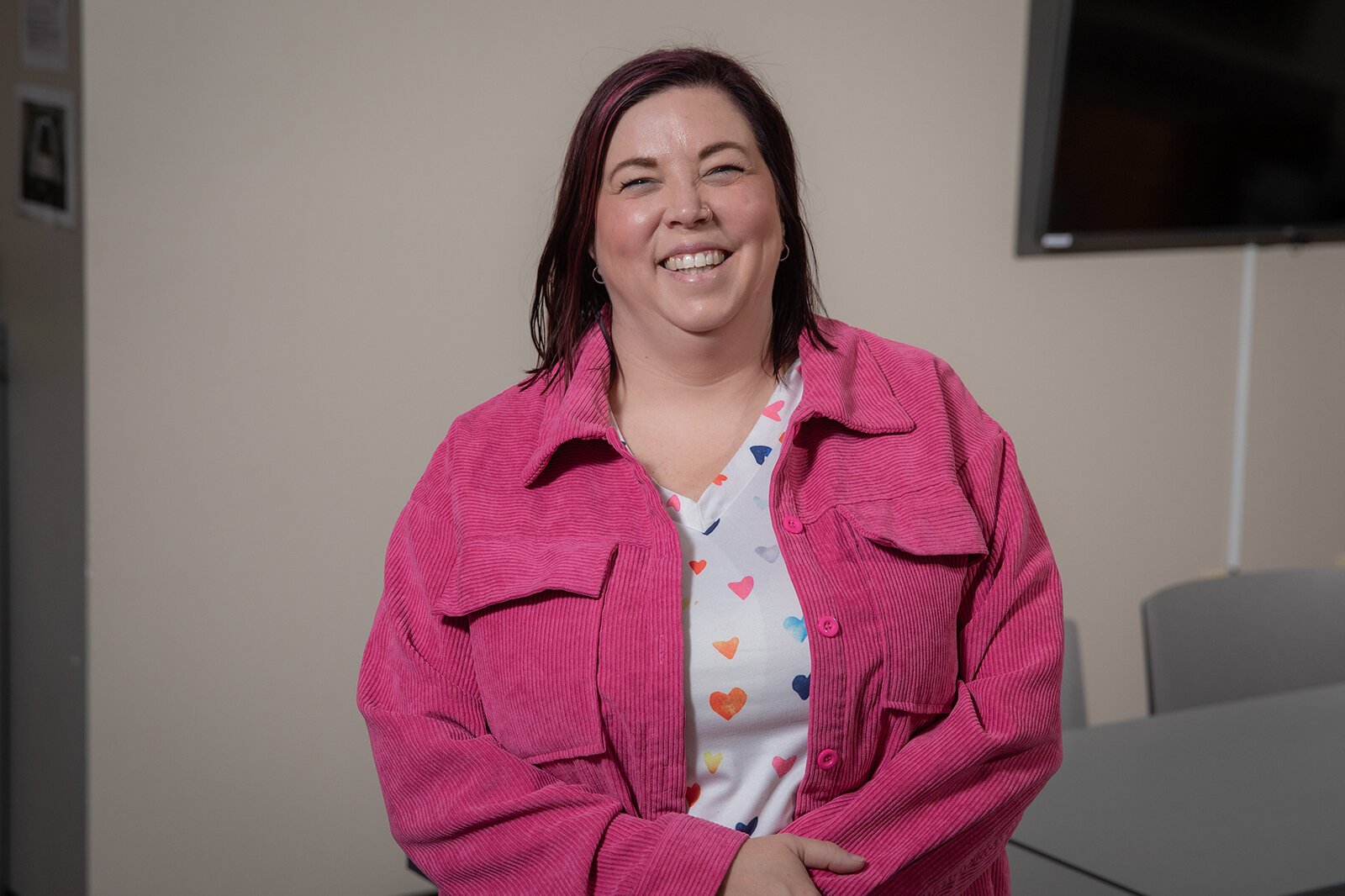
Kim Poplaski.
Poplaski also enjoyed the program’s in-person format, which helped her nurture new relationships with other organizations, like North Kent Connect, that are doing similar work.
“I loved that the learning was very conversational – learning information, but also talking about it and being able to think about how it applied to my position in the work that I do,” she says.
Convening nonprofits to address health equity, social determinants of health, and systemic change often leaves participants inspired to pursue lofty goals, but unsure of how to apply them to their nine-to-five lives. Care Model Training translates those goals into action steps for the navigators doing the work.
“There are these conditions that exist within our environment, within our systems, that we don’t have a lot of control over. That creates these health-related social needs that our community members are facing,” Pavlak says. “As a community resource navigator, you can help individuals address the needs that they’re facing by connecting them to programs, resources, and benefits they’re eligible for. But you can only do so much. You also have to recognize the systemic barriers and inequities that exist, advocate for change there, and not hold individuals accountable for those conditions that precipitate their needs.”
Estelle Slootmaker spends most workdays as a journalist and book editor. She also writes poetry and will be publishing a new children’s book, “Places Where the Sun Don’t Shine.” You can contact her at Estelle.Slootmaker@gmail.com or www.constellations.biz.
Photos by Kristina Bird.
Related Articles

#RG20LookBack: The Grand River is having the moment we imagined—together
In his 12th #RG20LookBack column, Rapid Growth publisher Tommy Allen revisits the 2008 story, “A River Runs Through Green Grand Rapids,” which now reads like an early spark for everything unfolding along the Grand River today.
How a sisterhood of dentists is expanding public health across Metro Detroit
A collective of African American women dentists delivers public health care, mentorship, and trust to underserved patients across Detroit, Wayne County, and Macomb County.
Fewer options, fuller ERs: The behavioral health fallout of Medicaid cuts
MHA advocates for state funding that preserves behavioral health care and keeps rural hospitals open.


