First generation Burmese children “Catching the Dream” in Calhoun County
Early learning center reflects children’s home languages, cultural practices, and supports first-generation families.
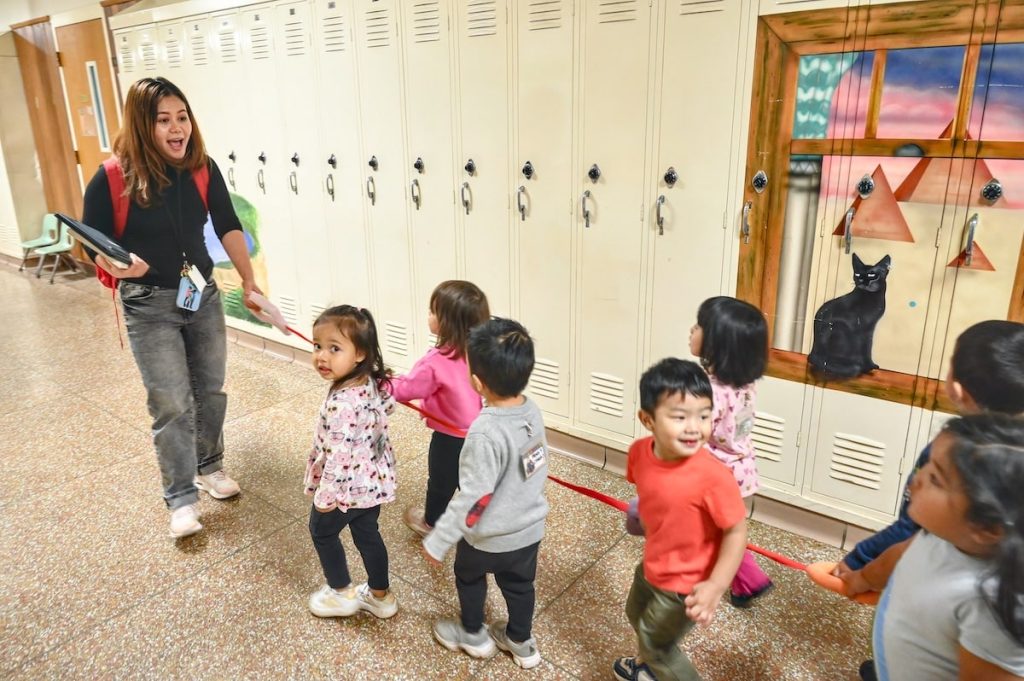
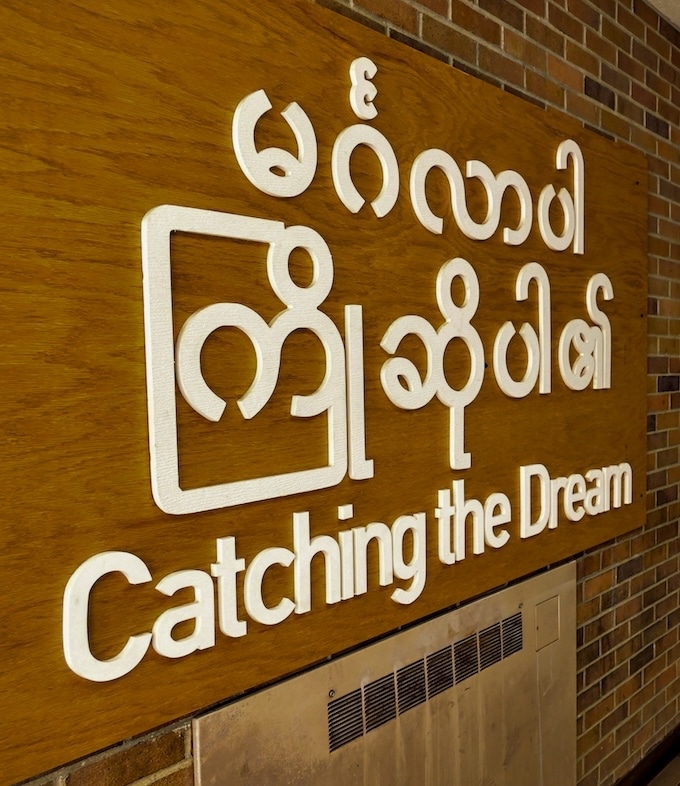
Located in Battle Creek, Catching the Dream Learning Center is the first Burmese-language early childhood program in Calhoun County, a region where thousands of Burmese refugees and immigrants have resettled over the past decade. Current estimates from community leaders and local organizations place the Burmese population in the Battle Creek and Springfield area at approximately 3,000 people.
The center emerged in response to a growing need for early learning environments that reflect children’s home languages, cultural practices, and the realities of first-generation families navigating two worlds at once.
Executive Director Lashi Mai says the idea grew from both personal experience and what she observed across the community.
“In many cases, parents do not speak English really well, and the children who grew up in this country do not speak their home language well,” she says. “It’s difficult to communicate in the family. I saw many families facing the same challenges, and I wanted to create a place where children could learn and families could connect through language and culture.”
Creating a culturally responsive learning environment
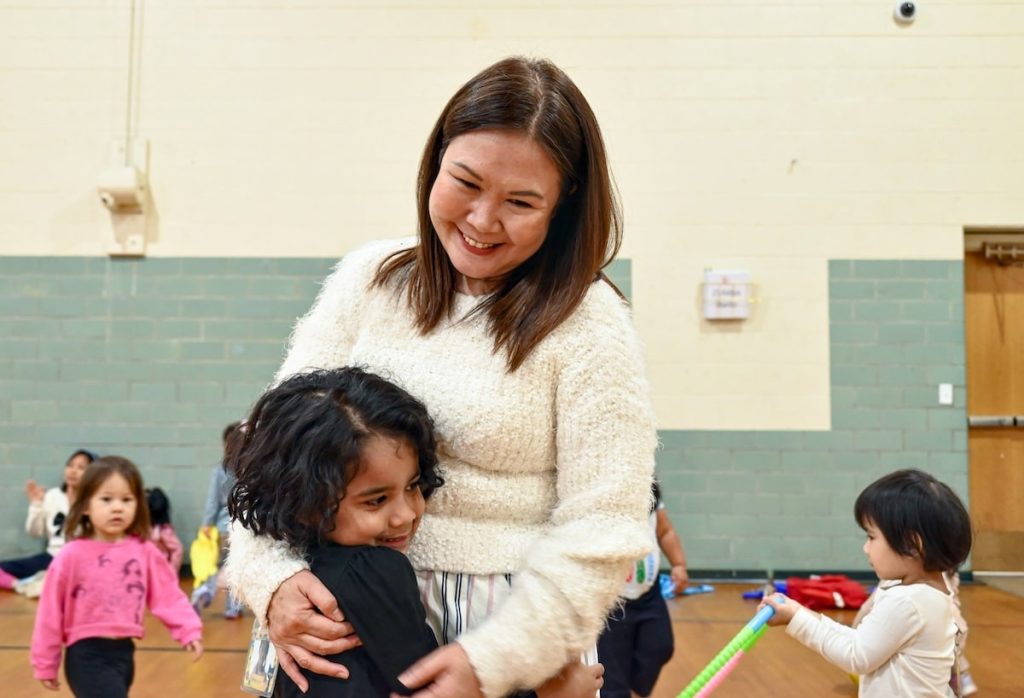
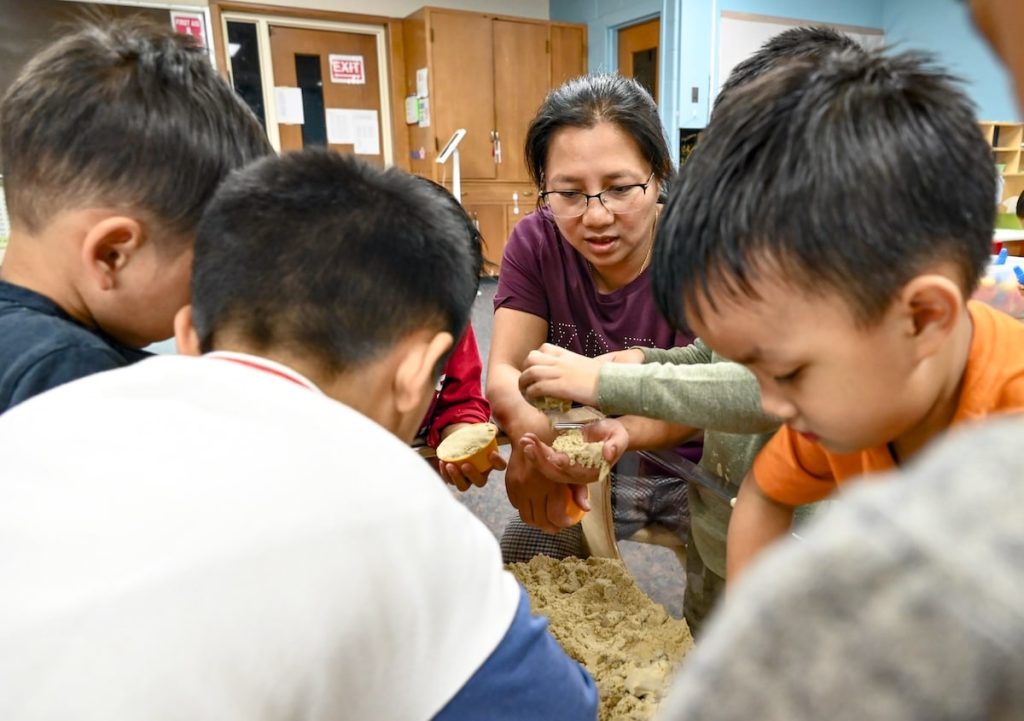
According to Mai, the team designed the center so that linguistic access is built into every part of the day, from arrival to dismissal. Teachers speak multiple dialects, including Hakha Chin, Tedim, Burmese, Falam, and others, ensuring that no child feels isolated by language differences.
Assistant teacher Christine Par, who attended American schools without Burmese-language support, says she immediately understood the center’s importance.
“When we’re talking to them individually, whether it’s playtime or they need to talk with a teacher, we usually use their native language as much as we can,” Par says. “Most of our teachers know two or more dialects.”
Par notes that this level of linguistic access is rare in early childhood settings, even in communities with large refugee populations. Research supports her observation. Studies show that dual-language learners in classrooms without bilingual staff experience significantly fewer conversational interactions, limiting children’s ability to express their needs and demonstrate what they know when they enter kindergarten.
Par says using children’s home languages not only increases students’ self-esteem, but builds a sense of trust between the students and staff.
“Here, most of the children hear the same language as they do from home, so it helps them get comfortable in the classroom,” she says. “They just love to talk to us, in both English and Burmese.”
The center uses the Creative Curriculum, a research-backed approach that emphasizes play, social-emotional development, and language-rich interactions. Because the curriculum is flexible and project-based, staff can adapt lessons in both English and Burmese and incorporate cultural stories, songs, and celebrations throughout the day
“We want to support the younger generation to feel proud of who they are,” Mai says. “And we want parents and grandparents to understand child development and parenting within American culture while honoring our own traditions.”
This dual approach of teaching American school readiness while preserving cultural identity is what distinguishes Catching the Dream from typical early childhood programs serving immigrant families.
Meeting family needs
For many parents, the center provides far more than early education. It has become an anchoring institution in a community where families often juggle work demands, transportation barriers, limited English proficiency, and unfamiliarity with U.S. school systems.
Parent Holy Sung learned about the center a few years ago while caring for three young children — including one with a disability — while also supporting her disabled parents.
“I looked at different learning centers, but I was always nervous about how my daughter would be treated,” she says. “After putting her in Catching the Dream, I had peace of mind. I trust the mission and the teachers.”
Sung says the staff’s cultural understanding immediately eased her worries. Teachers swaddled her youngest child, something common in Burmese households but not in most American centers.
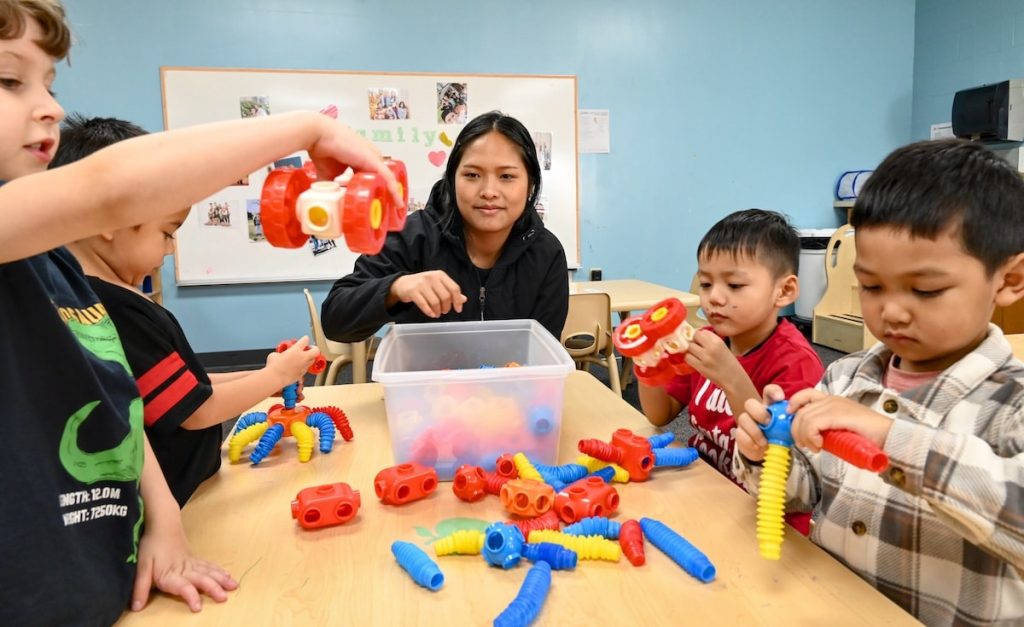
“At the end of the school year, she knew how to write her name and started using pronouns,” Sung says. “She was learning and growing socially and emotionally.”
Beyond academics, the center hosts monthly parent breakfasts, coaching sessions, and community resource drop-ins.
“We help families explore how to listen to themselves and how to ask questions when they need answers,” Sung says. “We connect families to programs for car seats, support families in completing Department of Health and Human Services forms, and offer mental health resources.”
These gatherings reduce stigma around mental health, teach U.S. school expectations, and give families a safe place to discuss challenges that may be difficult to share even within their own extended families.
Mai says the ultimate goal is to rebuild the sense of community many families lost during migration.
“Before the center, church was the only community space, and even there people spoke different dialects,” she says. “We wanted families to have a place to connect with each other and talk about parenting in a new country.”
Early impact and long-term vision
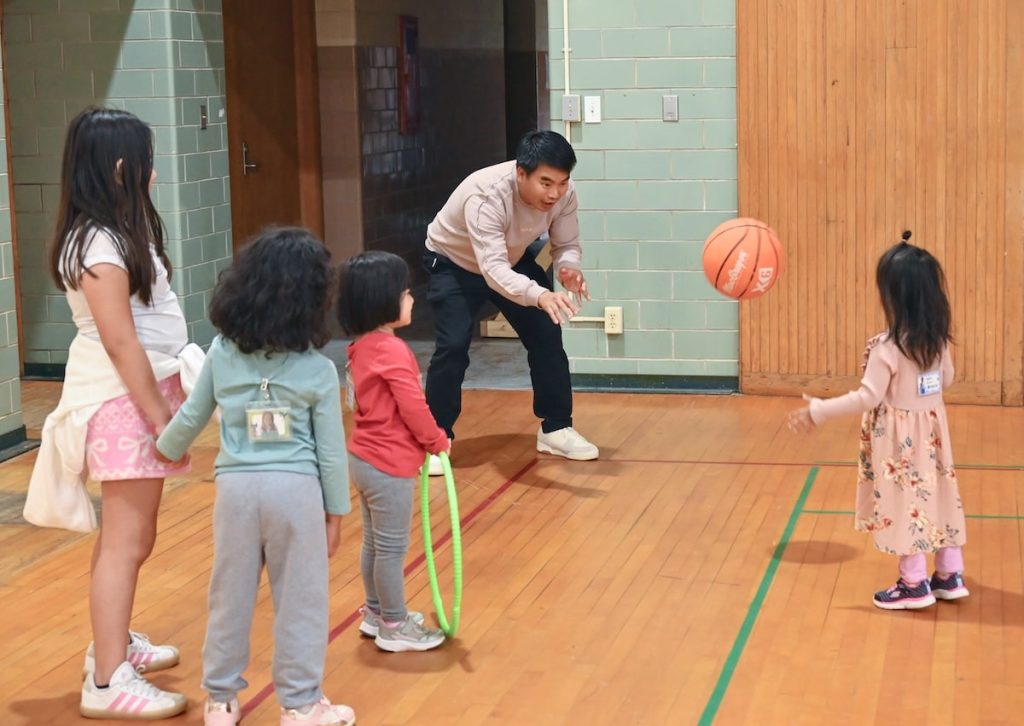
Since opening, staff report developmental gains among students, particularly in language development, confidence, and social-emotional skills.
“Children are developing stronger, and more advanced language skills because we use their home language to help them understand English words,” Mai says. “Families are more engaged in their children’s learning.”
The center is also working to address a shortage of Burmese early childhood educators.
“We have to encourage people to pursue education and support them with training and licensing,” Mai says.
Looking ahead, Catching the Dream plans to expand to other communities with large Burmese populations to address the ongoing needs Mai has seen.
“We plan to open another center in Grand Rapids, where the Burmese population is over 3,000,” she says. “And we hope to later open a center in Indianapolis, where the Burmese population is over 40,000.”
She noted that this growth has only been possible through strong community partnerships and philanthropic support from organizations such as the W.K. Kellogg Foundation, United Way of South Central Michigan, Battle Creek Community Foundation, and various state agencies.
“Without that support, it would’ve been really hard to give our community what it needed,” Mai says.
Photos by John Grap.
Early Education Matters shares how Michigan parents, child care providers, and early childhood educators are working together to create more early education opportunities for all little Michiganders. It is made possible with funding from the W.K. Kellogg Foundation.
Related Articles
12 days of Snowflake Break: Curiosity is on the calendar at the GR Public Museum
At a time when winter slows the city down, Snowflake Break shows how curiosity, culture, and community come together at the Grand Rapids Public Museum.
How one school system bridges the care gap with innovative Health Hubs
Detroit’s Health Hubs embed medical, behavioral, and dental care inside schools, ensuring students receive essential services and thrive in class.
Generation E: Growing the next generation of entrepreneurs
The Generation E program for student entrepreneurs is a collaboration among the city of Monroe, its small businesses, and Monroe Public Schools.