
Grand Rapids physical therapist builds a global women’s health community online
Dr. Caroline Packard grew a 425,000-follower online community focused on pelvic floor health, strength and postpartum recovery for women.
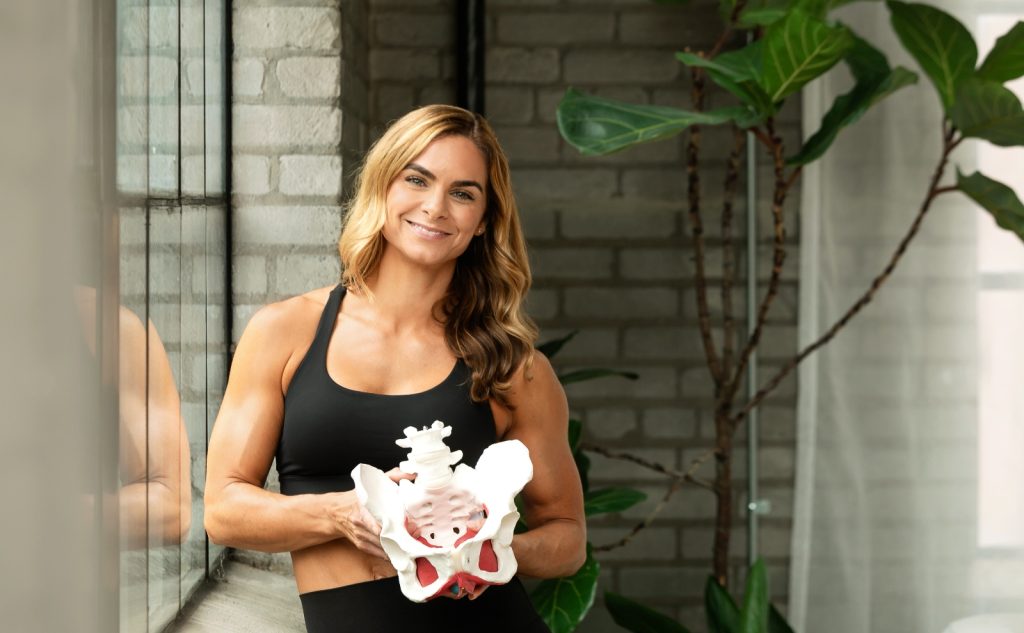
After having her children, Dr. Caroline Packard went through something many mothers experience. She struggled with pelvic floor problems that made exercise, movement and everyday life more difficult.
What frustrated her most, she says, was being told women simply have to live with those issues.
Instead of turning to surgery, the Grand Rapids physical therapist created her own program that combines rehab exercises, strength training, breathing techniques, and education.
Two years after its launch, the online platform Connect Pelvic Floor Fitness has helped more than 100,000 women around the world.
“Women are often told that leaking, pain, or instability are just part of motherhood or aging,” she says. “Our message is that these struggles have real, solvable causes.”
Packard’s program focuses on teaching women how the pelvic floor works with the rest of the body. Members move through step-by-step lessons that cover posture, breathing, and strength training.
The program appears to be resonating. Membership has more than doubled in the last year, according to the company, and about 70% of members stay active in the program.
Connect also has more than 425,000 followers on Instagram, where Packard shares educational videos and tips about women’s health.
She says the Grand Rapids-based business is growing because more women are looking for science-backed answers to health problems that are often overlooked.
Rapid Growth connected with Packard for a Q&A about her health journey and building an online business that is helping women around the world.
Rapid Growth: After experiencing postpartum stress incontinence and prolapse yourself, you used your background in physical therapy to create a holistic pelvic floor recovery program that has now reached women worldwide. How did your personal health journey influence the way you designed Connect Pelvic Floor Fitness?
Caroline Packard: Honestly, I built Connect for myself first. When I experienced leaking after having my kids, my first instinct was to just put on a pad and manage it quietly. I thought I could deal with it without anyone knowing. But when I experienced prolapse, that was the moment everything changed. I knew I couldn’t just manage around it anymore.
And here’s what made it harder: I was a physical therapist. I knew more than most women would about what was happening in my body, and I still didn’t know what to do or where to turn. That stopped me in my tracks. If it was this confusing and overwhelming for me, what was it like for women who didn’t have that background at all?
That’s what drove everything about how I built Connect. I wanted to make the path as clear and easy to follow as possible, with no guesswork and no trying to figure out the middle on your own.
My clinical experience shaped it just as much as my personal experience did. I built the program to reflect exactly what I would tell someone sitting across from me in the clinic, and what I’d want them doing when they left. Because that’s always been the hardest part of traditional therapy: you get some exercises, you go home, and then you’re on your own trying to figure out how to fit it into your life, how to progress it, how to actually get back to the things you love.
I wanted to build something where women could follow that entire journey from start to finish, without having to figure out the middle piece alone.
RG: In just two years, Connect Pelvic Floor Fitness has grown rapidly, with membership more than doubling in the past year and more than 100,000 women impacted globally. What do you believe has been the biggest driver behind your platform’s growth and strong member retention?
CP: The biggest driver is simple: the programs actually work. And I think women can feel that immediately when they come from other platforms that take a surface-level approach.
What we do differently is take complex topics and make them genuinely accessible, not dumbed down, but applicable. Women who have seen multiple providers, done program after program for years, and have still been struggling come to Connect and see changes in weeks or a month that they couldn’t get anywhere else. That’s not marketing. That’s what our members tell us over and over again.
The depth doesn’t stop at the foundational level, either. Our programming continues to build in a way where there’s never redundancy. Every video gives you real instruction from a new vantage point; you’re always progressing, always creating new strength gains, and always coming back to your core and pelvic floor foundation in a way that actually feels good.
I think retention comes down to that: women stay because they keep getting results. But community plays a huge role, too. Our Facebook community is incredibly active, and having coaches present in that space makes women feel supported beyond just the videos.
And we’re always listening. We actively seek out member feedback and use it to make the program better. That commitment to improvement is a big part of how we’ve reached women in over 17 countries and impacted more than 100,000 women globally, and honestly, that number still stops me. When I built this, I was solving my own problem. The fact that it has resonated this far and wide tells me the problem was never just mine.
RG: Pelvic floor health and postpartum recovery have historically been topics many women felt uncomfortable discussing publicly. Have you seen a shift in the conversation around women’s health since launching Connect, and what do you think is helping break the stigma?
CP: There has been a real shift, and I think our generation has played a big part in that. We’ve collectively decided that these topics aren’t embarrassing. They’re just healthcare. And that reframe matters more than people realize.
The cost of not talking about it has been enormous. Women have been silently suffering for decades, not just physically, but emotionally and socially too. When you’re leaking, when you feel heaviness or pressure, when you’re avoiding activities you love, it affects everything. Your confidence, your relationships, how you show up in your own life. That’s not a small thing.
What makes this particularly frustrating is that there are real, actionable solutions. These aren’t complicated or expensive fixes. They require understanding and application, and if we just gave women access to that information, we could have a dramatic impact on women’s health at scale.
Social media has been a huge part of breaking the stigma, and I say that as someone who has leaned into it fully. My first viral video was me simply holding a pelvic wand and explaining what it was. Fourteen million views. And honestly, a big part of that was shock: shock that someone was talking about this openly at all. That told me everything I needed to know about how starved women were for this conversation.
Being willing to be vulnerable, to talk openly about things most people won’t, to share my own experience with prolapse and leaking, that’s what builds trust. And having a sense of humor about it helps, too. If I can make someone laugh while teaching them something that changes how their body feels, they’re going to remember it, they’re going to share it, and suddenly a topic that felt shameful starts to feel completely normal.
That’s the shift I want to keep pushing.
RG: What started as a solution built from your own experience has evolved into a fast-growing women’s health company based in Grand Rapids with a global online audience. What has it been like for you to scale a wellness brand out of West Michigan?
CP: Scaling out of West Michigan has been an incredible journey, and an unexpected one in a lot of ways. We started with a local team, and having people nearby who genuinely believe in the mission made a real difference early on. Collaboration is easier when you’re in the same room.
But we quickly realized we couldn’t limit ourselves to local talent, and the beauty of being a virtual company is that we don’t have to. We’ve built a team that spans the country and beyond, tapping into experts in marketing, video editing, PR, and customer support who we never would have found if we’d stayed within a geographic boundary. That flexibility has been one of the biggest advantages of building a wellness brand in the digital space.
The personal side of scaling is a whole other conversation. Going from clinician to entrepreneur, from solving my own problem to running a growing team and serving women in 17 countries, is a lot. Any entrepreneur will tell you that. The hours are real. The challenges are real. But I love what I do, and that changes everything. On the hard days, I come back to why I started: if I can save even one woman from silently suffering the way I did, it’s worth it.
My husband, Matthew, co-owns Connect and leads the business operations side, covering marketing strategy, hiring, financial oversight, and the broader infrastructure that keeps a growing company running. It’s a genuine partnership. He owns the business side; I own the content and community. That division has made both sides stronger and is a big part of why I can show up fully for our members.
We’ve also been intentional about how we run the company as it’s grown. We implemented EOS, the Entrepreneurial Operating System, which has given our team a real framework for clarity, accountability, and growth. Building a great product is one thing. Building a great team and culture around it is a whole other skill, and one we’ve had to keep investing in.
RG: As Connect enters its next phase of growth, the company appears focused on building long-term infrastructure for expansion. What are your goals for the future of Connect Pelvic Floor Fitness and the impact you hope it continues to make on women’s health?
CP: The next chapter of Connect is about scale with purpose. We’re building toward becoming the No. 1 go-to resource for women’s pelvic floor health, and everything we’re working toward is in service of that goal.
On the infrastructure side, part of our longer-term vision is building our own in-house app, creating a more seamless, fully owned experience for our members. We’re also expanding our programming for women at specific life stages, including dedicated programs for perimenopause and menopause, and for pregnancy and postpartum, because the needs in those phases are genuinely different and deserve their own focused approach. And we’re focused on expanding our media presence, reaching women through more channels and partnerships so that Connect becomes a name women know before they’re already struggling.
But the bigger goal is a shift in how women’s health is approached at a cultural level. Pelvic floor health should not be something women stumble upon after years of silently managing symptoms. It should be part of the conversation from the beginning, woven into how we talk about fitness, postpartum recovery, perimenopause, and aging. I want Connect to be the platform that normalizes that.
And it goes beyond pelvic floor health specifically. Women have been handed a fitness industry that was largely built around men and then modified for us. We deserve a more nuanced approach, one that accounts for how our bodies actually work, how hormones affect training, how pregnancy and postpartum and perimenopause change everything. Pelvic floor health is the entry point for that conversation. But the bigger vision is women understanding that their bodies are complex and deserve programming that reflects that complexity.
If we do this right, the impact isn’t just the women inside our program. It’s the ripple effect: the women who find us earlier, the providers who adopt this approach, the culture that stops treating these symptoms as inevitable and starts treating them as solvable.
I started this because I couldn’t find what I needed. My goal is to make sure no woman ever has to say that again.
Author

Related Articles
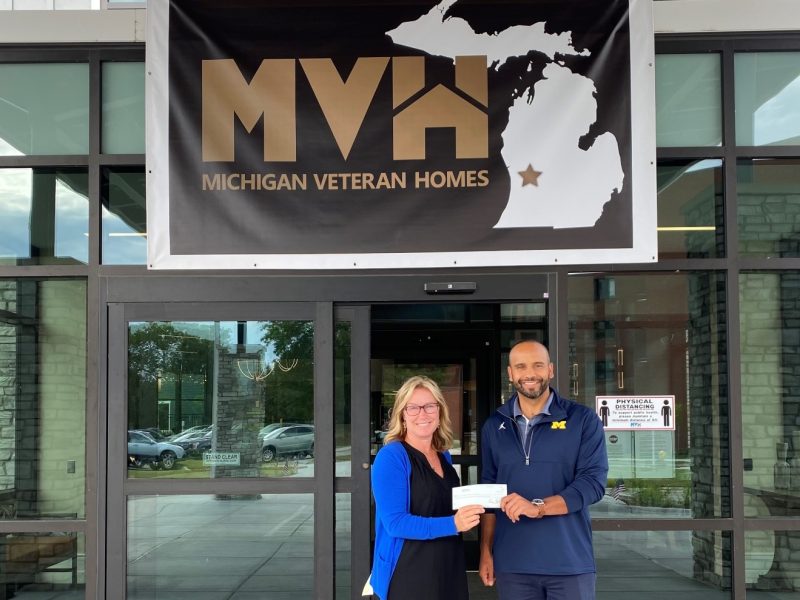
Gentex veterans group expands support for Michigan Veteran Homes residents
Gentex employees raise funds, volunteer, and add dementia technology supporting veterans living at Michigan Veteran Homes in Grand Rapids.
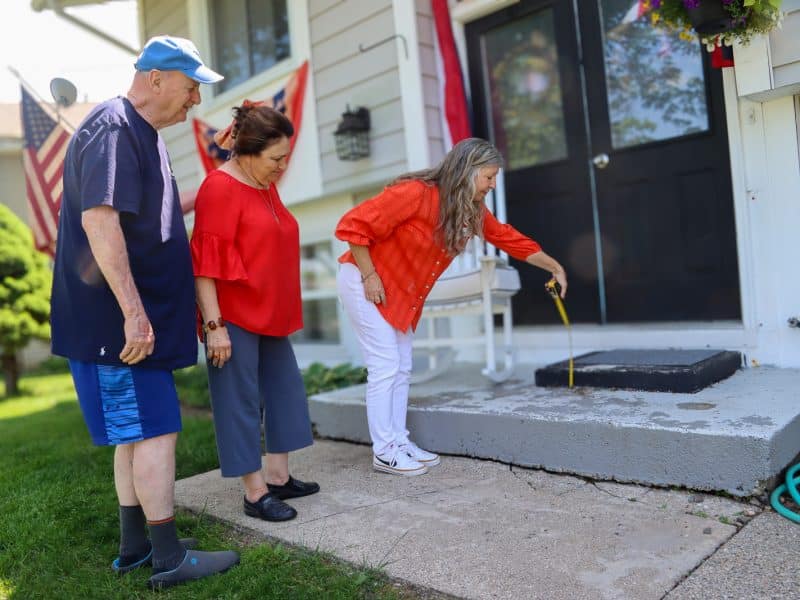
How occupational therapists help seniors age safely in their homes
A team of occupational therapists from Disability Advocates of Kent County is helping older adults stay independent through home modifications, safety assessments and accessibility improvements that reduce injuries and falls.
When everyone is welcome: How Michigan’s CCBHCs are changing care
CCBHCs have been improving access to quality mental health care for Michigan residents since 2021.


