
Grand Rapids Women’s Chorus to mark 30 years with powerful Michigan premiere honoring civil rights pioneer Pauli Murray
The Grand Rapids Women’s Chorus, a 110-voice ensemble, presents the Michigan premiere of Sincerely Yours, Pauli Murray, inviting the community to discover a civil rights trailblazer whose influence shapes discussions on justice, identity, and belonging.
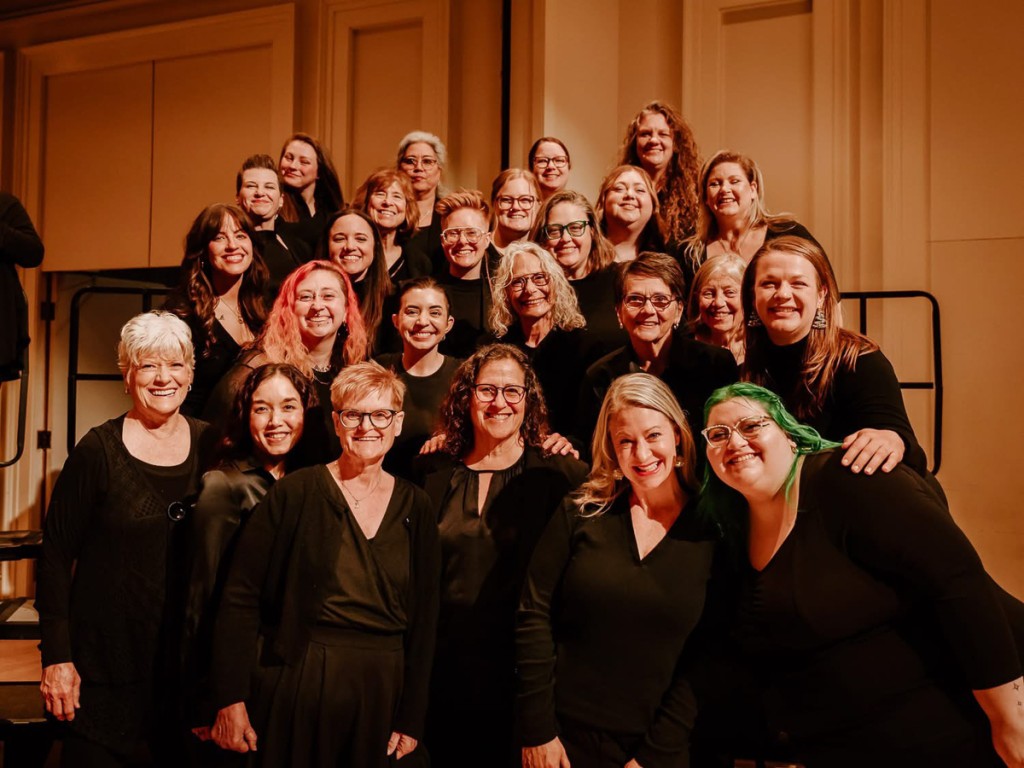
As the Grand Rapids Women’s Chorus started planning its 30th-anniversary season, Artistic Director Lori Tennenhouse looked back at its years of programming and realized that this significant milestone deserved more than just reflection.
“We were tired of talking about hope,” she says. “We’ve had five concerts over the years with the word hope in the title. This time, we wanted to talk about resilience and action.”
This new perspective on the search for a forward-looking program prompted the 110-voice ensemble to make a bold choice, welcoming Sincerely Yours. Pauli Murray — a cantata that chronicles the life of one of America’s most influential — and often overlooked — civil rights figures.
For Tennenhouse, it was not only the opportunity to present the cantata in Michigan for the first time that felt important, but also the discovery of Pauli Murray’s story.
The reaction to Murray’s story mirrors the awakening many Americans experienced after watching the film Hidden Figures, which revealed the overlooked contributions of Black women scientists during NASA’s early efforts. Art has that awesome power to cast a spotlight that illuminates hidden narratives.
“As soon as I heard what it was about,” she recalls, “I thought, this is exactly what we should be doing for our 30th season.”
The chorus will present the cantata at 7:30 p.m. on March 21 at Fountain Street Church in Grand Rapids, culminating a weeklong series of events celebrating Murray’s life, ideas, and advocacy.
The performance will combine choral music, narration, and instrumental elements to narrate Murray’s extraordinary life, highlighting her involvement in the fights for racial justice, gender equality, labor rights, and LGBTQ inclusion long before these causes gained widespread attention.
A life that reshaped American history
Born in 1910, Murray was a legal scholar, poet, activist, and became the first Black woman to be ordained as an Episcopal priest. Her life’s work was recognized by many leading female voices at the time, like first lady Eleanor Roosevelt. Murray contributed to shaping the legal arguments in Brown v. Board of Education, and her scholarship greatly influenced Supreme Court Justice Ruth Bader Ginsburg’s approach to advancing gender equality.
Murray also co-founded the National Organization for Women and was an early civil rights activist, refusing to move to the back of a segregated bus more than a decade before Rosa Parks.
Murray’s life intersects with many contemporary discussions on identity and justice.
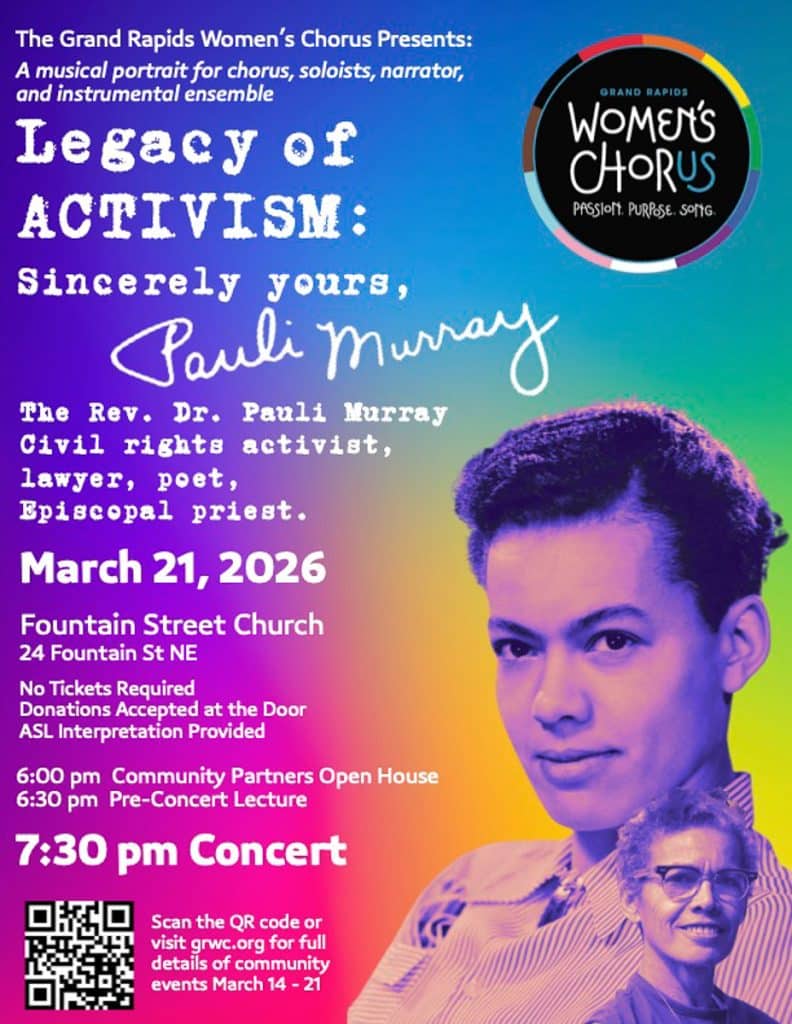
As a Black woman who loved women and grappled privately with her gender identity, she spoke candidly about feeling torn between social categories that didn’t fully define her. (Many contemporary scholars suggest that, given the extensive personal writings and archival materials Murray left behind, Murray might today be understood as nonbinary.)
For Tennenhouse, this complexity is a key part of Murray’s enduring legacy.
“Her whole life illustrates that race, gender, and identity intersect,” she says. “And the larger struggle is really about allowing people to be who they are.”
That insight also influenced Murray’s legal perspective. Her work contributed to including the word “sex” in the Civil Rights Act of 1964 — language that, decades later, became the foundation for workplace protections for LGBTQ Americans.
“We might not have those protections today if it weren’t for Pauli Murray and Ruth Bader Ginsburg pushing that thinking forward,” Tennenhouse says.
Despite this remarkable influence, many Americans still do not know Murray’s name … but those in West Michigan may soon.
“There’s not any social movement she wasn’t involved in,” Tennenhouse says as she reflects on her foundational influence on many modern U.S. civil rights laws. “But how many of us ever learned about her?”
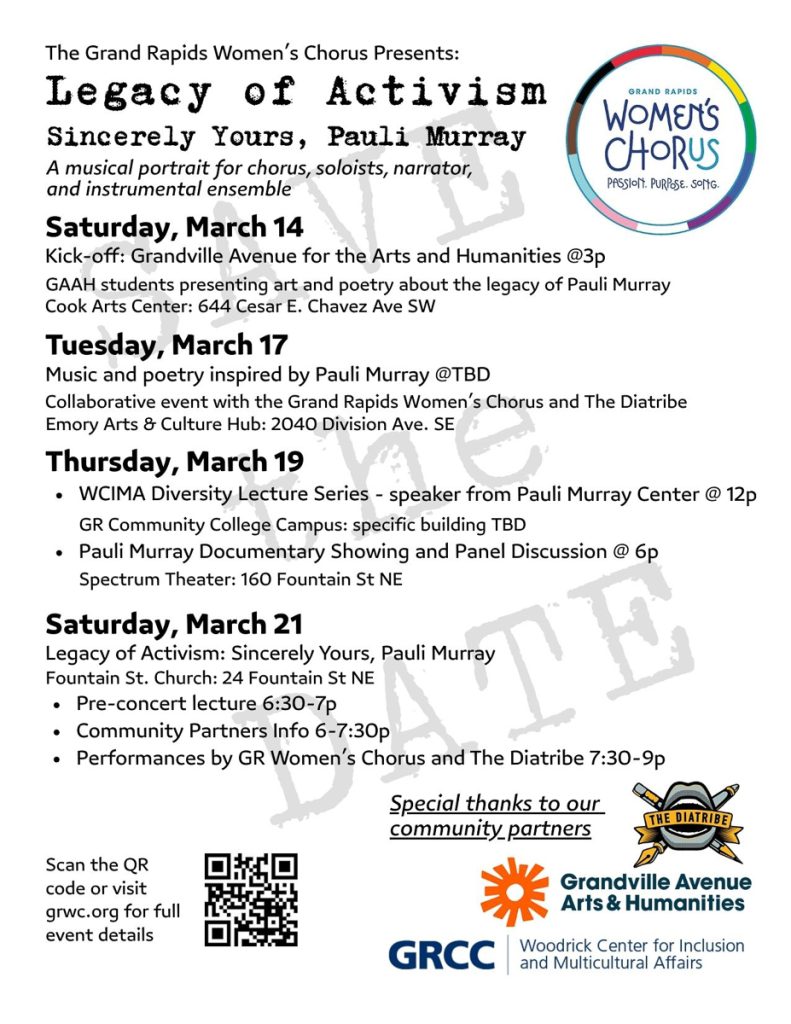
Addressing this educational gap presented an opportunity to make the chorus’s cantata debut more significant, leading to the inclusion of additional community events from March 14-21 that focus on Pauli Murray’s life. These events include poetry readings, handmade zine presentations from area youth, lectures, and film screenings, all designed to deepen the community’s understanding of Murray’s influence and societal impact.
“History often feels distant,” Tennenhouse says. “[So] when a story like Pauli Murray’s comes to life through music, suddenly you realize this was a real person navigating the same kinds of struggles we still face today.”
Music that travels through “Herstory”
A multi-movement cantata, Sincerely Yours, Pauli Murray explores Murray’s life from childhood to her roles as an activist, scholar, and spiritual leader.
The score incorporates a range of musical styles—from ragtime and early gospel to folk and blues—each representing the different eras Murray lived through. Sincerely Yours, Pauli Murray, written by composer Steve Milloy and librettist Kim Hines, explores Murray’s life from childhood to her roles as an activist, scholar, and spiritual leader. This cantata was made possible by a consortium of 15 commissioning-member choruses of GALA Choruses, led by dramaturg Jane Ramsmeyer Miller.
“Music is a marker of time,” Tennenhouse says. “The composer uses different styles to help us travel through her life.”
The performance showcases soloists, narrators, and a live ensemble accompanying the chorus.
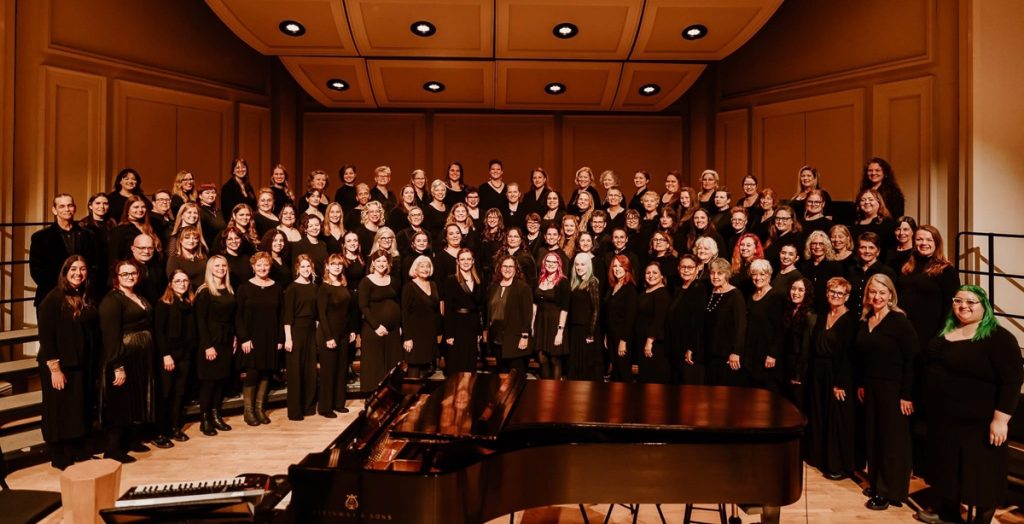
During early rehearsals, Tennenhouse says, the story’s emotional impact was immediately apparent.
“We had a first read‑through where the narration was spoken while we listened to the music,” she recalls. “There were long moments of silence in the room afterward. People were just sitting there — crying or reflecting — because the reality of what people endured under Jim Crow and Jane Crow was so powerful.”
Asking hard questions
A notable aspect of the project is the chorus’s willingness to consider its own role in telling Murray’s story.
The Grand Rapids Women’s Chorus is mostly white. This prompted the organization to confront a difficult question early on: Is it appropriate for them to perform a piece about a Black civil rights leader?
“It’s not a secret we’re a mostly white chorus,” Tennenhouse says, explaining the intentional approach that led to deeper questions. “So before we even began, we asked the composer and librettist directly: should a white chorus sing this?”
The answer the chorus received was clear.
“They said ‘absolutely,’” she says, adding that the composer and librettist believed that “everyone should know this story.”
Armed with this blessing, Tennenhouse and her leadership team developed a comprehensive educational program for the chorus singers, offering historical resources and articles, and organizing discussions on Murray’s life, identity, and legacy.
“We didn’t want people just singing the notes,” she says. “We wanted them to understand who Pauli Murray was.”
Beyond the concert hall
The performance is just one aspect of a larger community initiative to honor Murray’s legacy.
The chorus is collaborating with local groups and colleges to organize lectures, film screenings, poetry events, and youth programs throughout Grand Rapids. Students from Cook Arts Center have produced zines inspired by Murray’s poetry, and college panels will examine the links between race, gender, and justice. One event will feature a speaker from the Pauli Murray Center in Durham, North Carolina.
“We wanted people who might not come to the concert to still encounter this story somewhere,” Tennenhouse says.
The goal is to spark curiosity about Murray’s place in history and, in doing so, encourage more in-depth conversations long after the programming ends.
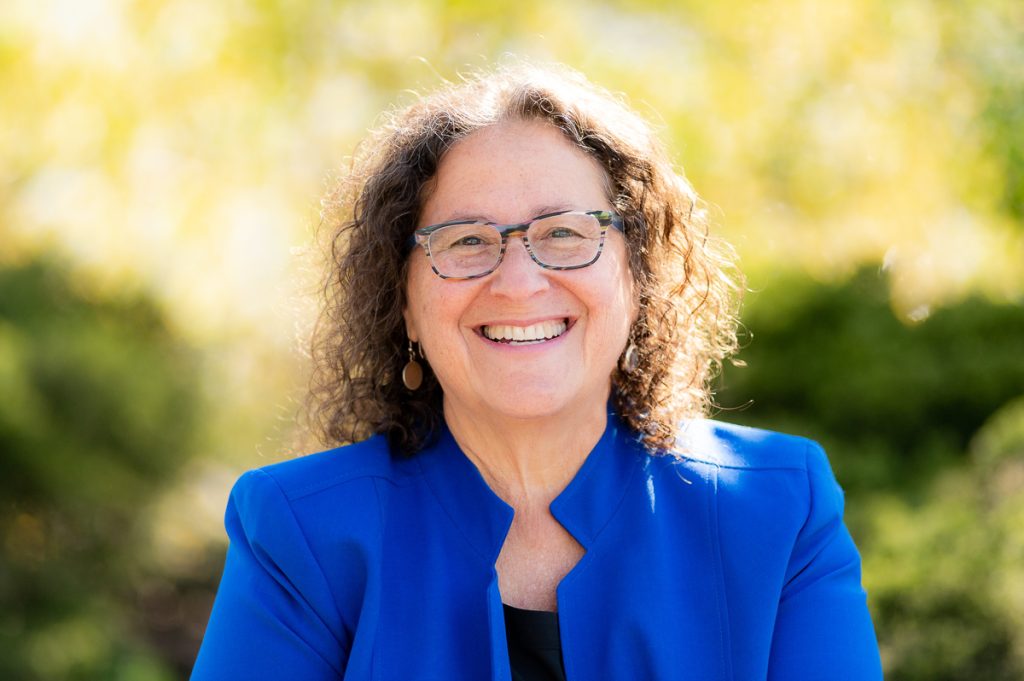
“If someone walks in knowing nothing about Pauli Murray,” she says, “I hope they leave wanting to learn more.”
More importantly, she aims to inspire action through the story.
“Pauli Murray once said that when she was doing the work, she didn’t always see progress happening,” Tennenhouse says. “But years later, she realized those efforts indeed mattered.”
That message strongly resonates today, when so many feel unable to effect social change.
“We want people to leave asking themselves one question,” she says. “What small thing can I do to make a difference?”
For a chorus celebrating 30 years of music and community, the solution might start with a straightforward step: uniting their voices … in this case with song and word in harmony. For details on all five Pauli Murray events from March 14-21, including the Michigan premiere of Sincerely Yours, Pauli Murray by the Grand Rapids Women’s Chorus, visit this link.
Images provided by the Grand Rapids Women’s Chorus
Related Articles

#RG20LookBack: Hungry for community? Step out; mingle.
In his eleventh #RG20LookBack column, Rapid Growth Publisher Tommy Allen revisits his 2014 story, “The Vegan Kitchen Takeover: Tip Top Deluxe Bar & Grill,” reflecting on how local restaurants can be spaces for connection and community.
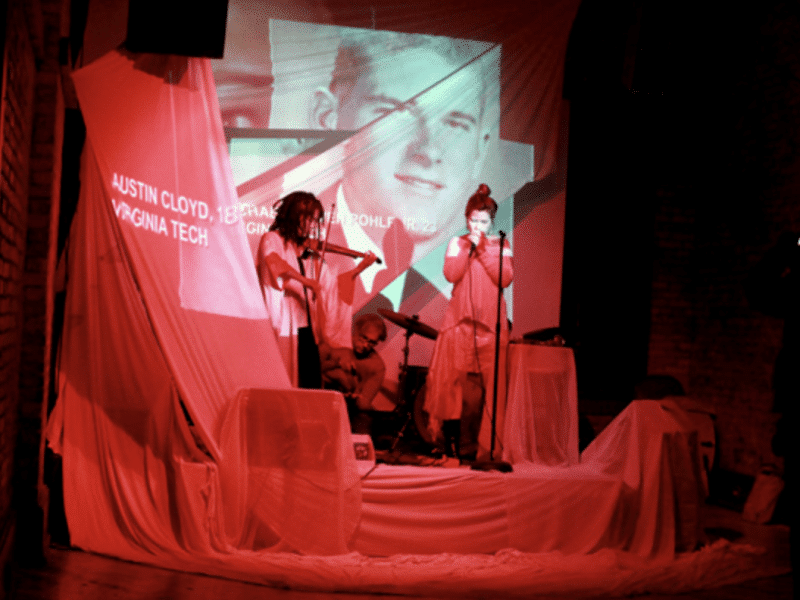
#RG20LookBack: Power of art as a community convener
For his ninth #RG20LookBack, Publisher Tommy Allen revisits his 2013 story, written while he was Lifestyle Editor, about the Division Avenue Arts Collective’s eviction from Avenue for the Arts just days before its 10th anniversary.
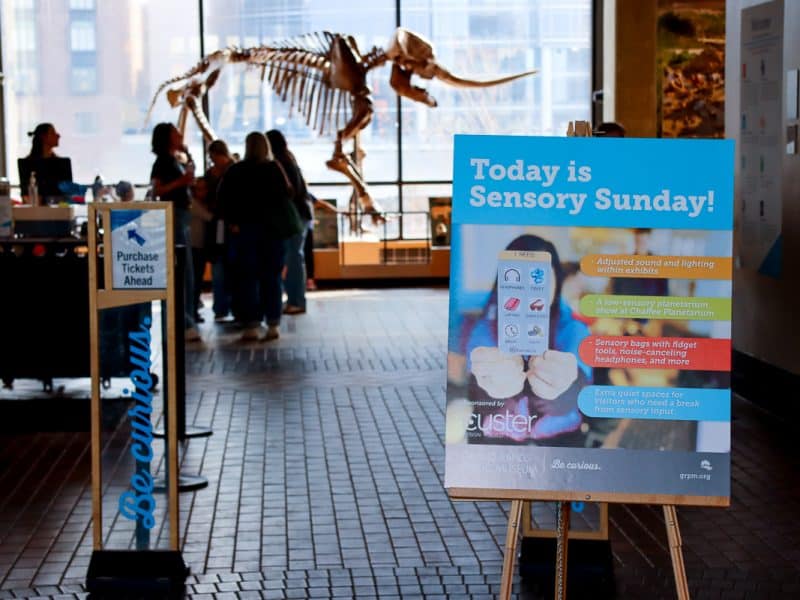
Grand Rapids Public Museum’s journey to Sensory Sunday built empathy into its infrastructure
On every second Sunday, the Grand Rapids Public Museum dims the sensory “noise” of a typical visit, enabling more families to experience wonder, enhance their learning, and foster a sense of belonging for everyone.


