
KConnect earns national recognition for transforming systems supporting Kent County youth
A decade of cross-sector collaboration leads to measurable gains in graduation, housing stability and economic opportunity across Kent County.
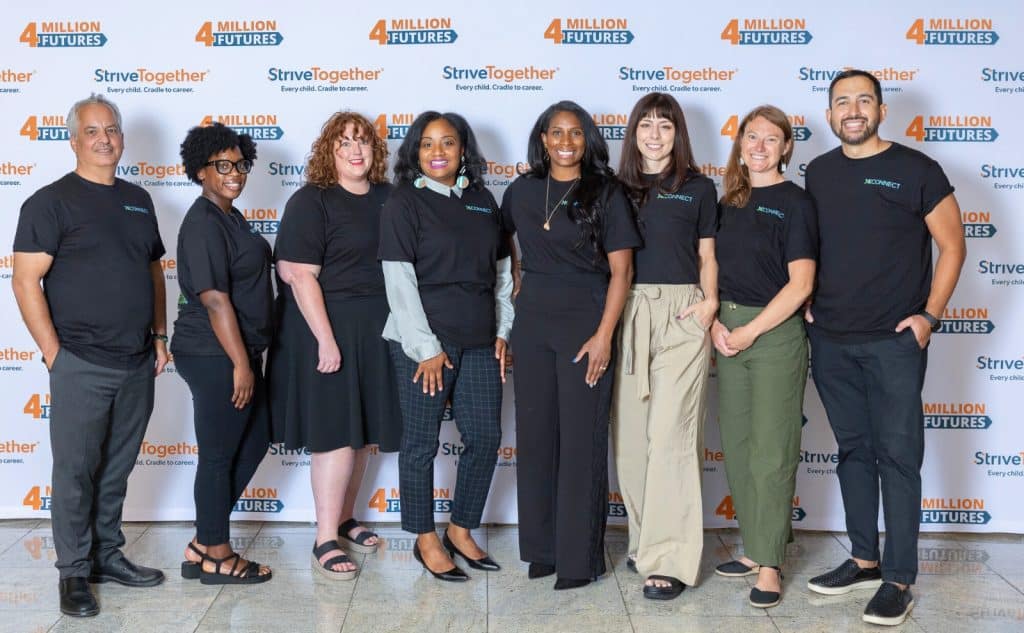
After more than a decade of coordinated work across education, housing, and workforce systems, KConnect has earned national recognition for changing how Kent County supports young people and families.
The regional partnership received the Systems Change designation from StriveTogether, a national organization that tracks how communities improve outcomes from early childhood through adulthood. Only 17 communities nationwide have reached this level.
“KConnect and their partners show us what it takes to change systems: strong partnerships, clear alignment, and a deep belief in what’s possible for young people,” says Jennifer Blatz, president and CEO of StriveTogether.
Launched in 2013, KConnect brings together more than 250 organizations and 400 partners from education, government, health care, housing, and nonprofit sectors around the goal of expanding economic mobility.
That approach has produced measurable results.
High school graduation rates have risen countywide, with nearly 700 more students graduating on time each year than a decade ago. Efforts to diversify educator pipelines have led to a 35% increase in Black educators and a 30% increase in Latino educators.
The network also helped redesign local housing systems, leading to the creation of Housing Kent as a backbone organization for housing stability, and developed new cross-sector strategies to support youth involved in the justice system.
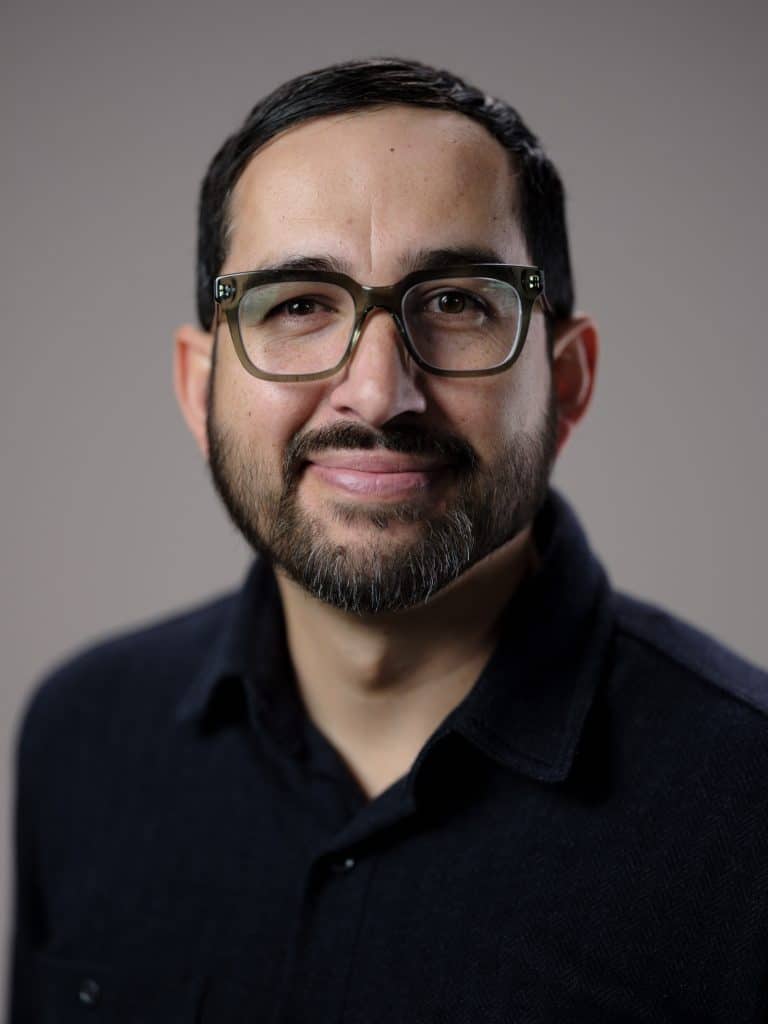
“Coordinated partnership can shift long-standing conditions and build a more equitable future,” says Salvador López, president and CEO of KConnect. “This progress happens because people choose to align around community voice and shared responsibility.”
KConnect has partnered with StriveTogether for nearly 10 years and advanced through four of the organization’s five national benchmarks for systems transformation.
Looking ahead, KConnect says it will focus on accelerating efforts from prenatal care through adulthood, expanding shared data systems, and co-designing solutions with residents to drive measurable gains in education, stability, and economic opportunity.
Rapid Growth caught up with Salvador López for a conversation about KConnect’s national reputation and what it means for its work across Kent County.
Rapid Growth: KConnect has just been recognized by StriveTogether as one of only 17 communities nationwide to earn the Systems Change designation. In simple terms, what does this recognition mean for KConnect and for families across Kent County?
Salvador Lopez: This recognition is a meaningful affirmation for KConnect and for Kent County. KConnect has partnered with StriveTogether for nearly a decade, and communities must meet rigorous benchmarks to join and remain in the network. Those benchmarks align with StriveTogether’s Theory of Action, a nationally recognized framework that helps communities move from isolated efforts to coordinated, measurable change for children and families.
Being named a Systems Change community signals that our region is doing more than running strong programs — we are aligning policies, practices, and resources across sectors to improve outcomes from prenatal through career. While there is still significant work ahead, this designation reinforces that our community’s partnership approach is working and that national leaders see Kent County as an example in the cradle-to-career field. It also connects us to experts, peer communities, tools, and best practices that strengthen our ability to improve opportunities for all children and families, regardless of their starting point.
RG: The designation reflects years of work aligning partners, policies, and resources to improve outcomes for young people. What do you think made this kind of progress possible in West Michigan?
SL: Collective work is hard. It requires time, strong organizing, and — most importantly — trust. It often starts with making many phone calls, sending a lot of emails, and crossing our fingers that people show up. We often joke that collective work is like herding cats.
What makes West Michigan different? Although we have real challenges, we also have a history of collaboration and innovation. Leaders across sectors are willing to sit down together, learn from data, and adapt their approaches to improve outcomes not only within their organizations but across the community.
Progress happens when we’re honest about our history, treat setbacks as learning opportunities, and set aside individual agendas in service of shared goals. KConnect’s role as Kent County’s prenatal-to-career backbone helps make that possible. We convene partners in philanthropy, business, education, nonprofit, and government, and we work to create the conditions for coordination, shared measures, aligned strategies, and sustained follow-through.
We’ve worked hard to earn community trust, and we take seriously the responsibility to help partners roll up their sleeves to address systemic challenges that take years, not months, to change.
RG: Since KConnect launched in 2013, the community has seen real gains, including higher graduation rates and more diverse educators. Can you share an example that shows how changing systems, not just running programs, has made a difference?
SL: One example is our work to strengthen and diversify Kent County’s educator pipeline. Several years ago, our community identified an urgent challenge: a significant teacher shortage, alongside even wider disparities in data on Black and Brown educators. This wasn’t a problem one program or one organization could solve. Every sector depends on students receiving a high-quality education, and without educators, communities cannot thrive.
KConnect helped convene partners to define the problem, align strategies, and coordinate action to increase both the supply of educators and the conditions that support recruitment and retention. Over six years, Kent County saw nearly a 30% increase in Latine educators and more than a 40% increase in African American educators. The broader shortage remains a challenge, but the work has created durable infrastructure — including the Shades of Strength Collaborative — that continues to build awareness, align resources, and support leaders closest to the issue. This is what systems change looks like: building long-term capacity and shared responsibility so progress continues beyond any single initiative.
RG: KConnect now brings together more than 250 organizations across education, housing, workforce, justice, and other sectors. Why has working across so many sectors been so important to moving the needle for kids and families?
SL: Working across sectors is essential because children don’t experience life in “program categories” — they experience it as a whole. The same is true for families. If we only look at a student’s test scores, it’s easy to place blame on schools, teachers, or parents. But when we look deeper, we often find root causes that sit outside the classroom: housing instability, food insecurity, untreated mental health needs, unreliable transportation, or caregivers working multiple jobs that still don’t provide a living wage.
Those conditions shape whether a child is ready to learn. A hungry child can’t concentrate. A child experiencing chronic stress at home struggles to focus. If a parent is navigating a mental health crisis or living with fear because of immigration status, that can affect attendance, stability, and academic progress. These realities touch education, housing, workforce, healthcare, and justice. Too often, those systems operate in silos because everyone is busy doing their best within their lane.
Kids spend only a portion of their time in school; most of their lives unfold in the broader community. Systems change requires leaders across sectors to align around shared outcomes, coordinate resources, and remove barriers together. That’s how you move the needle — by easing pressure on any one system and working in alignment, so families experience consistent, connected support wherever they turn.
RG: What’s next for KConnect, and what should the community be watching for in the year ahead?
SL: With this milestone behind us, KConnect’s next phase is about going deeper in the work already underway, staying humble about what we don’t yet know, and strengthening the learning loop that systems change requires. Systems are complex, and no single organization can predict what will work for every family, or how quickly change will happen. That’s why you’ll see us making more room for lived experience alongside data, sharing power with communities and frontline practitioners to help shape the questions we ask, and prioritizing learning over credit.
You should also expect iteration to be a visible discipline: try, learn, adjust, repeat. That means piloting strategies on a small scale, using real-time feedback to test assumptions and improve implementation, and scaling approaches that show results. The community can watch for clearer shared outcomes across partners, more frequent reflection on who is benefiting (and who isn’t), and practical adjustments based on what families are telling us — especially in early literacy, attendance, math proficiency, and workforce pathways.
Finally, we anticipate sharing what we’re learning beyond Kent County. As KConnect’s work matures, we’re positioned to support peers across Michigan and contribute technical assistance to communities nationwide through our consultancy arm, ConnectUS. We’ve learned a lot about what it takes to build trust, align partners, and sustain collective action, and we intend to share those lessons with communities earlier in their systems change journey — while continuing to learn alongside them.
Related Articles
Marine City wayfinding project launches action plan for economic growth
New wayfinding signage will connect four business districts and help boost the local economy.
Revolutionary housing collaboration in Holland bridges faith, accessibility, and tribal communities
The Kollen Park Housing Development, created through a collaboration involving a former food pantry, church land, and tribal partnership, is a unique example of how communities can collaboratively address housing challenges.
BANK program prevents evictions, keeping Dwelling Place residents housed through sudden crises
Donor support is needed to sustain BANK, which prevents evictions through one-time rental assistance and services that build lasting housing stability.


