KDL databases help residents launch businesses, plan investments, access resources
With over 100 free databases, KDL gives patrons powerful tools for business research, skill building, and personal finance.
Looking for market data to launch a side business? Planning your retirement? Need a last-minute legal form at 10 p.m.?
All of this information is at your fingertips and free with your Kent District Library card.
The Kent District Library (KDL) provides access to more than 100 digital databases designed to solve everyday problems, whether researching business competition or discovering family histories.
KDL is on a mission to help more patrons use these tools through expanded access, hands-on training, and partnerships with other organizations.
“Patrons are not yet aware of these tools,” explains Hannah Lewis, KDL’s community engagement librarian. “Getting the word out is the best way to help entrepreneurs understand what the library has to offer.
“Folks think libraries are just for children,” she says. “We have great programs for kids, but there are also robust tools for adults, entrepreneurs, and organizations. Public libraries provide databases, materials, programs, and online services for everyone.”
Impact through partner institutions
One of KDL’s longest-running resources is the Institute Card, which gives partner organizations access to materials and equipment. Lewis says it has become an important resource for nonprofits working with multilingual communities.

“The Hispanic Center of West Michigan uses its institute card to check out interpretation equipment, giving clients language access during town halls and other large community meetings,” Lewis says.
Bethany Christian Services is another nonprofit that employs KDL resources to help its underserved clients.
“They use an institute card so clients can check out books and access the bookmobile when it visits their residences,” she says.
Lewis notes that institutions frequently replace paid subscriptions with KDL’s free versions.
“I tell organizations already using LinkedIn Learning or Data Axle that they can use the library edition instead and save on costs,” she says.
She adds that Gale Legal Forms is a frequent last-minute problem solver.
“It’s often used for business-related legal forms that need to be found quickly. It’s a great time-saver for institutions.”
Supporting entrepreneurs
KDL also offers practical tools for individuals launching or expanding a business who don’t have access to business consultants, training programs, or market research services. Lewis says two online resources stand out: Data Axle Reference Solutions and LinkedIn Learning.
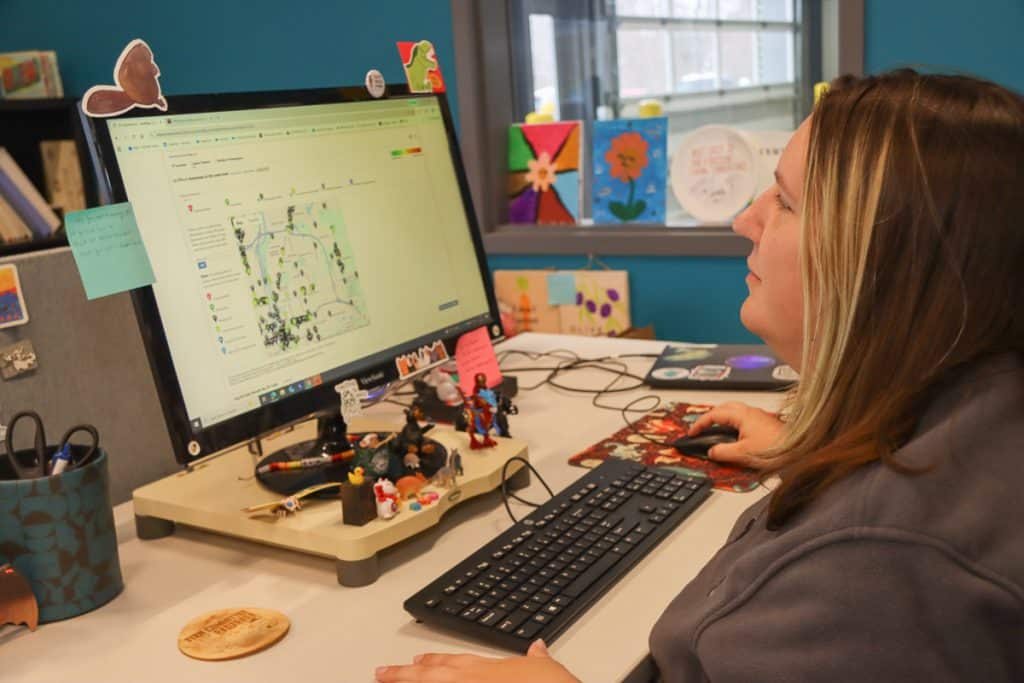
Data Axle allows users to research markets and competitors by using detailed filters.
“I worked with a contractor who used it to identify gaps in contracting services in Kent County. They were able to pinpoint an area with limited competition.”
LinkedIn Learning offers professional development and credentialed training.
“It’s a great way to train staff or build skills yourself,” Lewis says. “There are up-to-date courses on everything from Microsoft products to leadership, plus accredited certifications in Adobe, Docker, and ServiceNow.”
The library offers several online databases to support business research, legal needs, and financial planning. Data Axle Reference Solutions and AtoZdatabases provide access to business and residential listings, making them useful for job searches, market research, and locating contacts.
For investment research, KDL is replacing the current database with two new investment databases in January to provide data and analysis on more than 3,500 publicly traded companies. Users can review industry trends, compare stock performance, and track market activity.
Patrons with legal questions can find state-specific templates through Gale Legal Forms – Michigan, including forms for wills, real estate, name changes, and other common needs. Legal Information Source and Legal Source offer additional legal reference materials, as well as access to scholarly research and articles.
Other online tools include Business Book Summaries, eBook Business Collection, Entrepreneurial Studies Source, and Small Business Source. These resources cover topics such as management, finance, leadership, entrepreneurship, and business planning.
LinkedIn Learning is another tool for small business owners to brush up on their professional development skills and learn to use hundreds of software and investment tools, as well as complete instructional modules on interpersonal and professional skills.
Training available
KDL also offers hands-on learning to help patrons make the most of these resources.
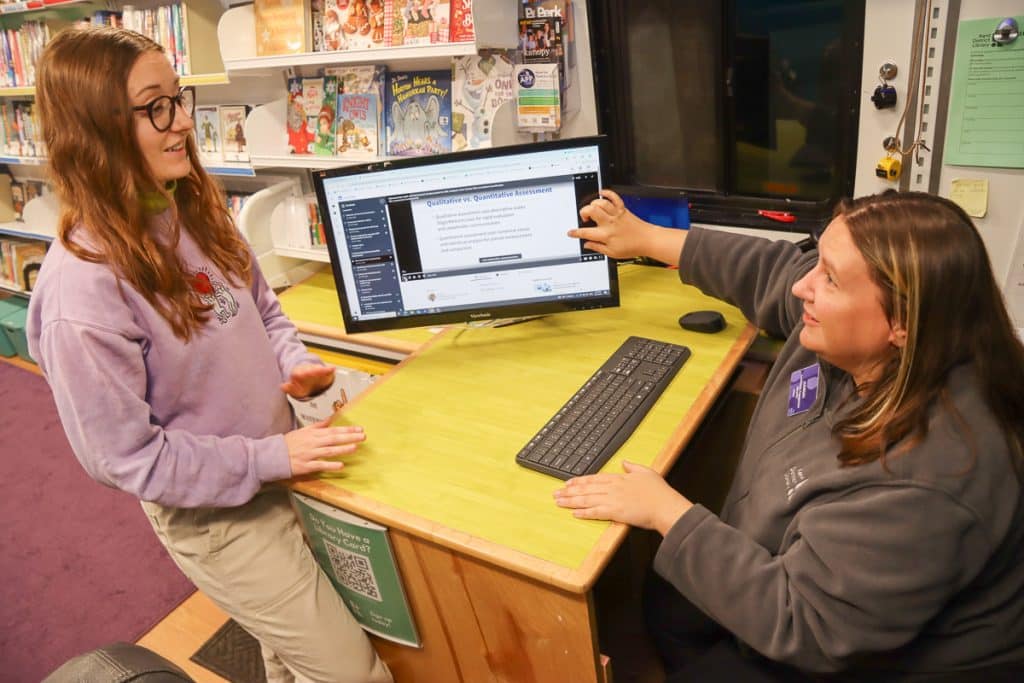
“Most branches offer one-on-one tutoring,” Lewis says. “Librarians can teach patrons how to navigate databases or help them brush up on computer skills. Think of it like a tutor for digital library services.”
KDL also brings training to workplaces.
“Librarians can visit institutions to teach staff how to use Data Axle or LinkedIn Learning,” she says.
She notes one limitation with legal resources: “We can help you find a form, but we cannot fill it out for you.”
“We also offer training to local chambers of commerce,” Lewis says. “Then the chamber can share with members about the power of a library card.”
KDL has an ongoing partnership with the Grand Rapids Chamber.
“There is a small library within the Chamber’s downtown office,” she says.
Guided by patron needs
KDL currently offers 104 databases and digital resources. Patrons can browse them by visiting kdl.org, selecting “Discover the Library” and then “Learning and Research,” or going directly to kdl.org/freesources.
The library’s collection is primarily driven by patron needs and responding to requests.
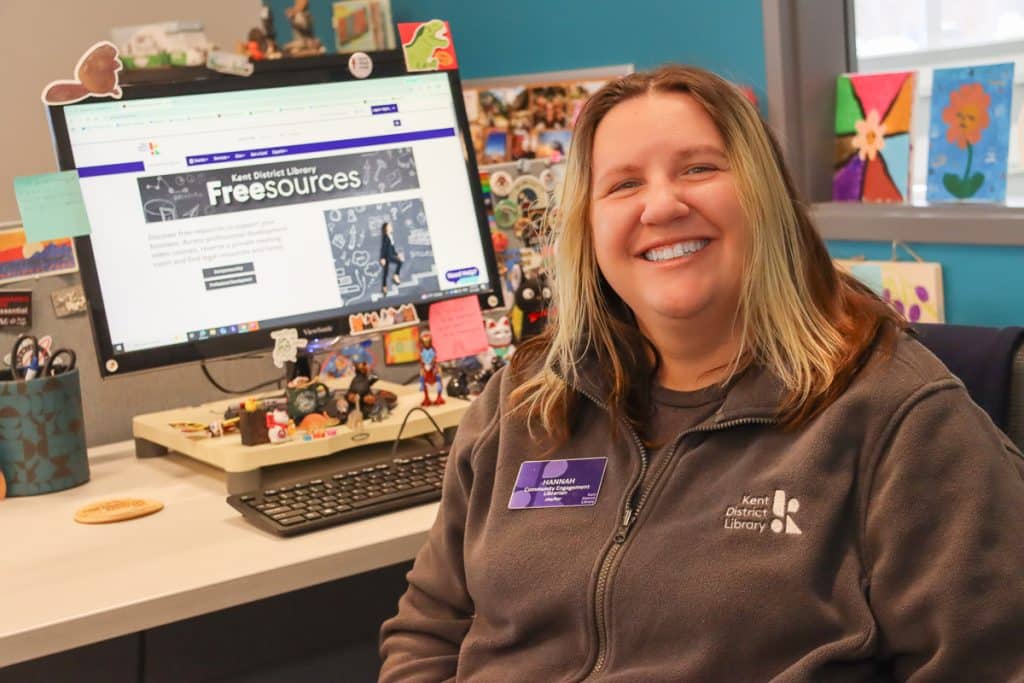
“Many determining factors go into the decision, but patron requests guide what we add,” she says. “Businesses and entrepreneurs asked for more tools, so we expanded business databases. Caregivers, educators, and lifelong learners helped shape offerings in other areas. We want a balanced collection for all, and the community shapes what the library provides.”
While the tools, training, and partnerships have measurable impact, Lewis says the biggest barrier remains simple: people don’t know what the library can do for them.
“People are surprised when they learn how much the library can offer,” she says. “Once they discover these resources, it can change the trajectory of their work, their organizations, or their future.”
Photos by Tommy Allen
Literacy Matters is a series focused on the importance of knowledge, community resources seeking to remove barriers to access, and the value of our library systems to society. Literacy Matters is supported by Kent District Library.
Related Articles

Hope Starts Here stabilizing early childhood services in wake of policy changes
Long-term perspective keeps Hope Starts Here imperatives relevant despite policy changes.

On Ada library’s ‘golden’ birthday, Amy Van Andel reflects on its origins, possibilities
Amy Van Andel looks back on her role in building Ada’s library, inspired by family, community needs, and a lifelong love of reading.

The early childhood models in other states inspiring Michigan policy advocates
Michigan is making meaningful strides to advance early childhood education but could make even more by looking to other states’ models.