
College Town
With several major institutions of higher education growing in and around Grand Rapids – and a Big Ten university looking for land – there’s definitely a pervasive college culture alive and well and thriving in the city
Grand Rapids – a college town? No. It’s not, and probably never will be an Ann Arbor, East Lansing, or heaven forbid, a Columbus. GR is not a college town in the traditional sense. Not the kind of university town where the city grows up around the school for more than a century and a half and becomes nothing more than a host for the institution, merely mirroring the culture and the personality of the school it serves.
But with several significant institutions of higher education growing in and around Grand Rapids there’s definitely a pervasive college culture alive and well and thriving in the city.
The model for Grand Rapids is probably more like that of Chicago (on a smaller scale, of course), where universities and colleges grow from within and around the urban scene and share a good deal of the city’s original character, color, and culture – from neighborhood to neighborhood. One of the greatest advantages, and selling points, off these types of institutions is that students have access to a real and working city environment – rather than living and learning in a geographically isolated and dissociated intellectual closed cell. Internships are more easily had, and access to entertainment, shopping, arts, and culture is readily available for faculty and students.
For the city, colleges and universities translate into an infusion of brain capital and youthful energy – plus more jobs, construction, housing, and essential services. All those elements that keep a city thriving and growing.
Each college and university in Grand Rapids has grown at their own rates, suiting distinct institutional personalities, philosophies, and senses of heritage. Aquinas College, for example, is a school that has woven itself into the fabric of the neighborhood around it without a lot of fanfare or noise. Founded by the Dominican Sisters of Grand Rapids in 1886, Aquinas has quietly become a liberal arts institution with a national reputation for turning out top graduates. The campus is almost hidden behind East Town and East Grand Rapids. But it boasts over 2,000 undergraduate and graduate students studying in approximately 61 different majors.
Calvin College is another top-rated school that once ran under the radar but now stands prominently along the East Beltline. Considerable investment in the school during the last few years is evident in the rise of new buildings, the elevated walkway stretching over the Beltline, and a steady stream of students flowing back and forth – all marking a successful school that’s not only well established but steadily on the rise.
With a 390-acre campus and more than 4,000 students – almost half of whom hail from beyond Michigan and the United States – Calvin is another local liberal arts school that rates highly on the national barometer for quality education. And, like most area colleges, Calvin uses its proximity to Grand Rapids as a key drawing card. “Grand Rapids, a metropolitan area of 600,000, has every urban advantage, including opera, art galleries, ballet, the symphony, an IMAX theater, four professional sports teams, and more,” reads the college prospectus.
Through sheer force of investment and new construction, Grand Valley State University now is the most visible institution rising from the city landscape. With the big blue signage along U.S. 131, a classic clock tower sprouting out from the urban campus, bold new buildings along the Grand River, and the Center for Health Services standing atop Health Hill on Michigan Avenue, GVSU has established a major presence – and a new college spirit – in downtown Grand Rapids.
DeVos. Cook. Secchia. Eberhardt. Keller. Pew. The names adorning classrooms, laboratory buildings, halls, studios, and auditoriums featured on GVSU’s urban campus illustrate just how intimately connected city business leaders and local industry is with the university.
But there is far more to GVSU’s presence in Grand Rapids than just brick and mortar. And there’s more to it than just giving students a real-world background and interface with a working, breathing, and living city – one that’s not just a support system for the college. The points of contact are many and diverse and are important to the well being of both school and city.
The university, for example, estimates that its students, faculty, and staff generated more than $588 million in regional economic activity during the 2003-2004 fiscal year, according to a recent economic impact study. GVSU estimates that more than half of its 56,000 alumni now work in the West Michigan tri-county area.
The university also is helping to expand the city’s growing commitment to practice sustainability, a form of development that is able to continue indefinitely, simultaneously boosting profits, building social equity, and enhancing, rather than steadily degrading, the natural environment. GVSU has constructed two so-called ‘green’ buildings, and recently launched construction of one of the nation’s first ultra energy efficient residential homes in the City of Grand Rapids. Students also have stimulated new activity and interest in regional mass transit service, which helps to reduce the area’s dependence on the automobile and gasoline consumption.
The most physically visible institutions aren’t the only schools and universities that continue to expand in Grand Rapids. Ferris State University has offered extension classes in the city for some time, and recently joined forces with Kendall College of Art and Design – a school that has worked in partnership with the Grand Rapid’s design community for over 73 years and continues to reinforce the region’s image as a leader in innovative design and craftsmanship.
West Michigan University also is growing its presence in Grand Rapids. And not to be forgotten is our own Grand Rapids Community College – a technical school that adds special touches to the local culture such as an active theatre company and the Heritage Restaurant, a fine dining establishment, staffed by the schools culinary students.
So what’s next?
It looks like a major medical school. The Michigan State University Board of Trustees voted in April to expand the university’s medical school into Grand Rapids. The school will most likely be located somewhere in the vicinity of Health Hill near the Van Andel Research Institute and Spectrum Health though other sites are still under consideration, including a site around Saint Mary’s Hospital.
The MSU medical school expects to begin operation in 2008 with about 50 second-year medical students moving to town. In 2010, the first of the four-year students would begin their studies in Grand Rapids. The potential economic effects for the city could exceed $1.5 billion in the facility’s first ten years, according to a 2004 economic analysis prepared by Deloitte Consulting.
The prospect of establishing a major Big Ten university in downtown Grand Rapids confirms the city’s emergence as a modern hub of higher education. It also points to the metro area’s ongoing evolution from a small Midwest manufacturing town to one of the nation’s more diversified, distinguished, and enlightened mid-sized cities. Grand Rapids may not be a college town in the traditional sense. But the city certainly is learning to grow in the 21st century.
Related Articles
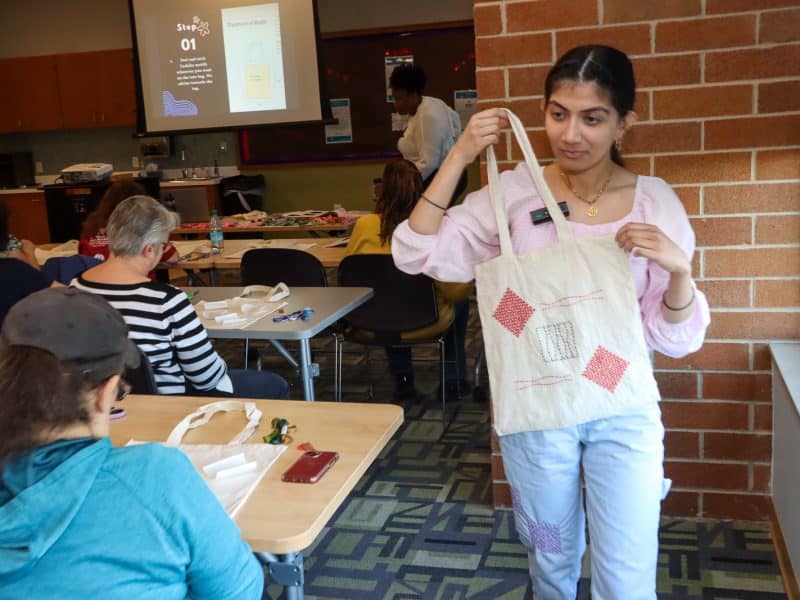
Library classes help residents learn skills, build community connections
At Kent District Library, in-person classes help residents learn practical skills while meeting neighbors and building connections in their community.
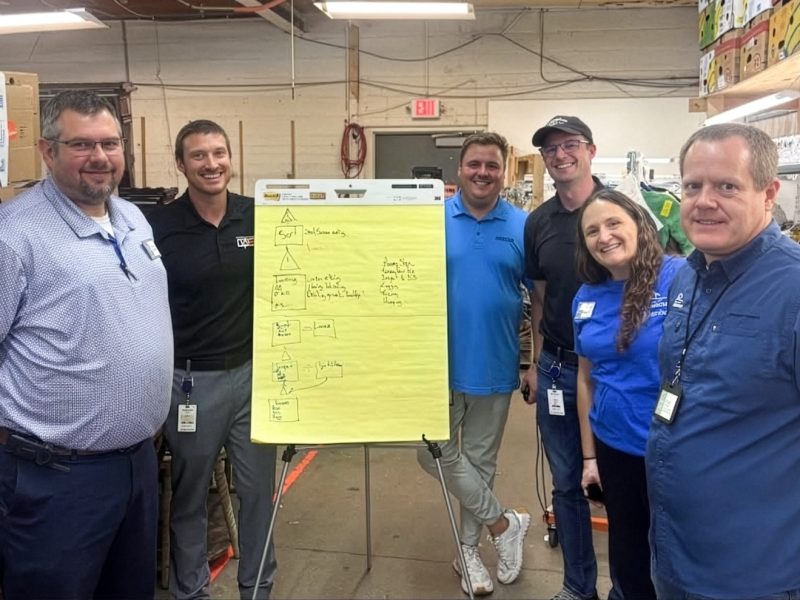
Gentex engineers help nonprofits improve efficiency
Gentex engineers apply manufacturing skills to streamline donations, boost volunteer impact, and expand services at Community Action House and Kids’ Food Basket.
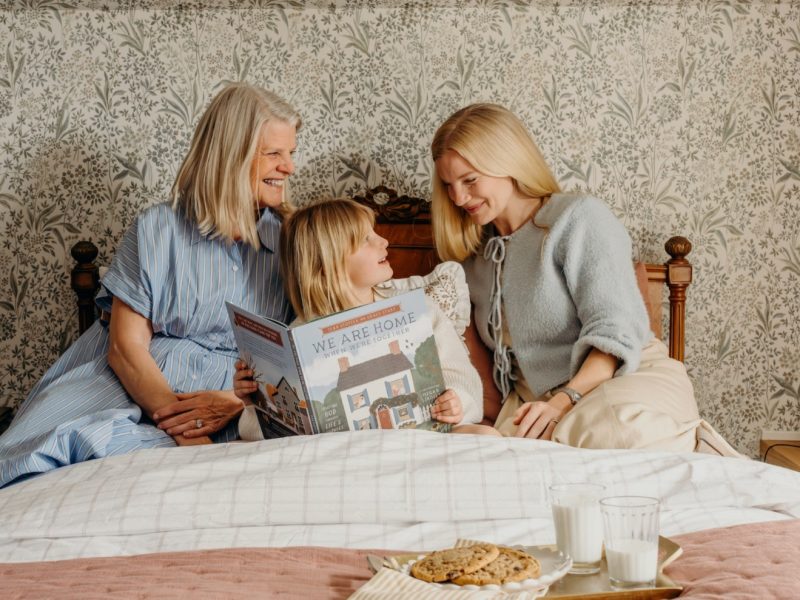
The Established Home mother-daughter designers launch children’s book to help families navigate life transitions
West Michigan design duo Jean Stoffer and her daughter, Grace Start, share a new children’s book offering families practical, faith-centered strategies to help children cope with moves and change.


