Letter from the publisher: On 20 years of listening and the sharing of solutions rooted in community.
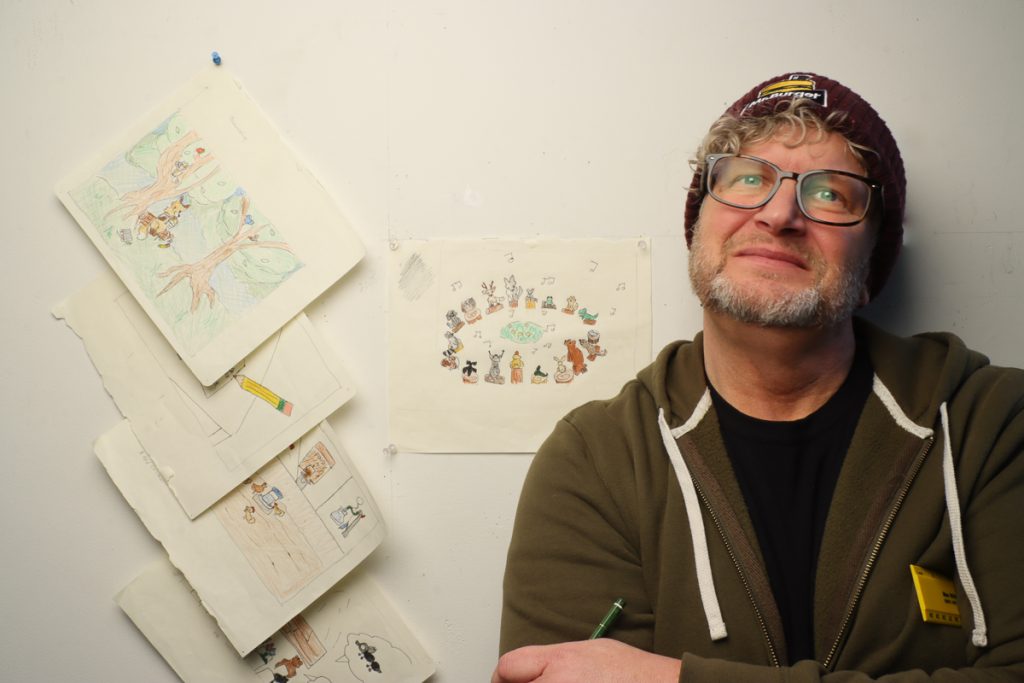
As Rapid Growth marks its 20th anniversary, publisher Tommy Allen reflects on what the publication’s solutions journalism model has meant for telling the stories of Grand Rapids. While he has not led the organization for its entire history, Allen has spent two decades as one of its key storytellers, much of that time as a photographer.
One of the hardest lessons I’ve learned over time is how damaging it is when we turn on each other.
When we dismiss someone else’s path or minimize what they’re creating because it doesn’t align with our expectations, lived experience, or even timeline, we cause a wound. Whether expressed through conflict loudly, reactively, or even quietly (i.e. the passive-aggressive nature that is attributed to West Michigan Nice), this burden affects not just the next generation but leaves a mark on all of us.
I was reminded of this recently during lunch with a friend.
As in this example, I realized I was discussing quite passionately, as I often do when excited about a local story I uncovered: a series of vintage stores that have appeared over the past five years along a small corridor in Grand Rapids.
And I mean “vintage” in the broadest, most genuine sense: personal curation, remixed fashion, upcycling garments with inventive tailoring, and even the integration of art to create fresh couture. These emerging spaces devoted to everything but fast fashion seek to blend identity, sustainability, and creativity, and, most of all, build community.
Division Avenue, aptly named, is a street that I have written about long before I joined RapidGrowthMedia.com. Prior to my time here, I spent nearly five years covering our city’s arts scene with the simple goal of removing barriers to access for folks curious about the arts through dialogue with artists about their work.
From this vantage point, I’ve always felt lucky to have a seat from which I got to watch our city change. And by showing up, I’ve watched it struggle. I’ve held its hand on our dark days. And I’ve cried happily when we got it right.
Finding its moment
Over time, while not perfect, I have watched it become about perfecting, as I see the city evolving into a place where the future is shaped by those who still roll up their sleeves and believe the story of who we are has not yet been fully written.
So I say, despite it all, I still have hope in tomorrow.
At one point during my lunch conversation, I received a response from one of my lunch companions that I’ve heard many times before: polite skepticism. A suggestion, if you may, I’ve often heard is that this energy might not last. That it might fail.
Both are truths, as history has shown us.
And I get it. I’ve lived here since 1981, after leaving my hometown of Flint for this unknown city, arriving right as Celebration on the Grand would debut, and right as the Amway Grand Hotel would open across from the Ford Presidential Museum. It was magical.
Having wandered our streets for decades, I know firsthand South Division Avenue’s history and its constant desire for reinvention, a wish repeated nearly everywhere in our city as the old sheds its skin to welcome something new with each wave of fresh faces arriving at a steady clip.
Celebrating solutions
In some ways, “Division” can feel like the country right now, fragile yet strong; familiar yet mysterious. Still in a state of becoming. And still, I hold on to hope, because of the community-building I have witnessed here for decades.
After spending time with the Gen Z leadership, whom I reported on in my November “The little vintage district that could” story, who are shaping that corridor, I listened to their values, rigor, and resourcefulness, and yet here I was mid-bite, finding myself worn down by my friend’s reflexive doubt.
Finally, without much thinking, these words calmly rolled off my tongue, “It’s not being built for you.”
It wasn’t said in anger. It was said with clarity.
Because that’s the moment we’re in.
Not everything unfolding around us is meant to serve every generation’s tastes, timelines, or definitions of success. Some things are being built precisely because earlier systems didn’t make enough room or trust it could happen here. And sometimes what couldn’t take root in one era suddenly finds its moment in the hands of a new generation.
The real work before us now is learning how to be genuinely happy for others, not despite the fact that it didn’t happen for us, but because it can still happen for someone else.
There is a grace in aging and knowing when to let go. It can be as freeing as learning to say, “I don’t know.”
These lessons learned over the ages teach us…often with some kicking and screaming along the way. I know I have been guilty of this as well.
I write this as someone who has been reporting with Rapid Growth since April 2006, nearly twenty years now. When we began, the work we were doing didn’t yet have a name for this type of community-centered, impact-driven journalism that focuses not only on problems but also on responses that have risen in our society long after the news vans left the scene. And hear when I say that we need robust news coverage here as well as stories that help the community see clearly how we are doing after the event.
In telling a story at Rapid Growth, we may have had to focus on the problem, something some people initially didn’t understand or hated because it aired out our dirty laundry. But this act was essential to building the bridge that showed how we, as locals, were committed to making an impact. Our reporting focused on progress in situations once thought unwinnable.
Constant evolution
Later, this style of reporting that we would help pioneer would become widely known as solutions journalism, shaped by thinkers and writers, including New York Times journalist David Bornstein, who coined the term. But long before it had a label, it had a purpose: to notice what was working, who was being overlooked, and how communities actually move forward.
It also gave people something that they did not know they were missing: hope.
And yes, this work has always been messy, because all community work is messy. And news as it breaks is often about loss and, at its core, messy.
As the saying goes, you have to break a few eggs to make an omelette. In many ways, we may have to loosen our grip on the past to build a future that’s more generous, more expansive—far beyond what we once imagined for ourselves.
The city of yesterday is no more. And what we have now will change again, because time always has its say. You can hold the reins for a moment, but, in my opinion, cities break free. They evolve. They outgrow us.
That’s what I’ve come to love about this role.
For nearly twenty years, I’ve had the rare privilege of sitting with the long view, watching ideas emerge, stumble, dust themselves off, take new shapes, fall apart, and return sometimes even stronger.
Progress isn’t neat. It isn’t linear. History shows us it can collapse, and I’ve seen that collapse up close in my hometown of Flint, in ways both quiet and seismic. I have watched my hometown rebuild into something uniquely its own.
But this work, our work as neighbors, as citizens, as storytellers, is deeply human.
If I’ve learned anything in twenty years of solutions journalism, beyond somehow keeping the lights on as so many magazines and publications have come and gone, it’s this: If we stay present through discomfort… if we allow our once-unshakable views to mellow in time… we may discover we have much to celebrate — even when what’s being built doesn’t center us.
Because when we let go, through community care centered on encouraging dialogue, something extraordinary can emerge on the other side of “being right.”
Cheers to twenty years of reporting stories few dared to tell before. And cheers to the generations still building our city’s story.
Related Articles
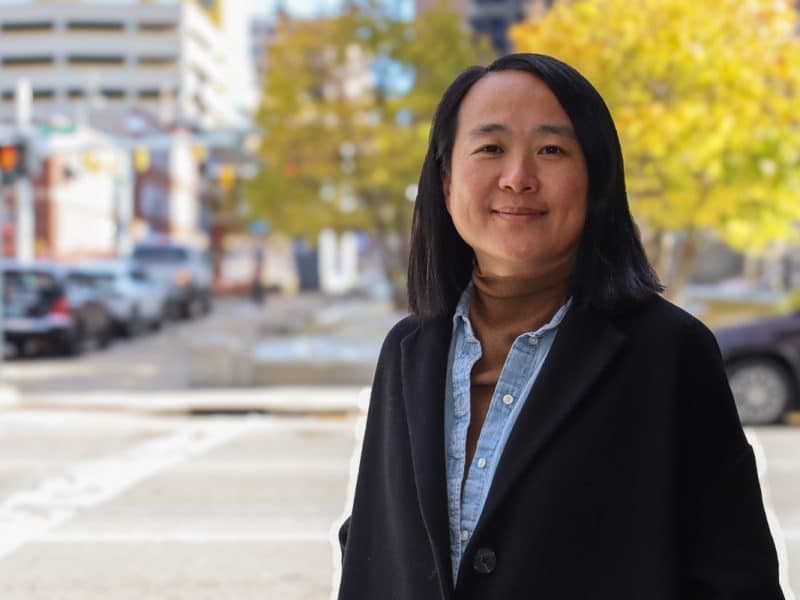
From moonlit dinners to WMAAA leadership: Yilin Wendland-Liu builds community
Scholar Yilin Wendland-Liu’s journey from rural China to West Michigan leadership, embracing identity, empowering youth, and strengthening Asian American community connections.
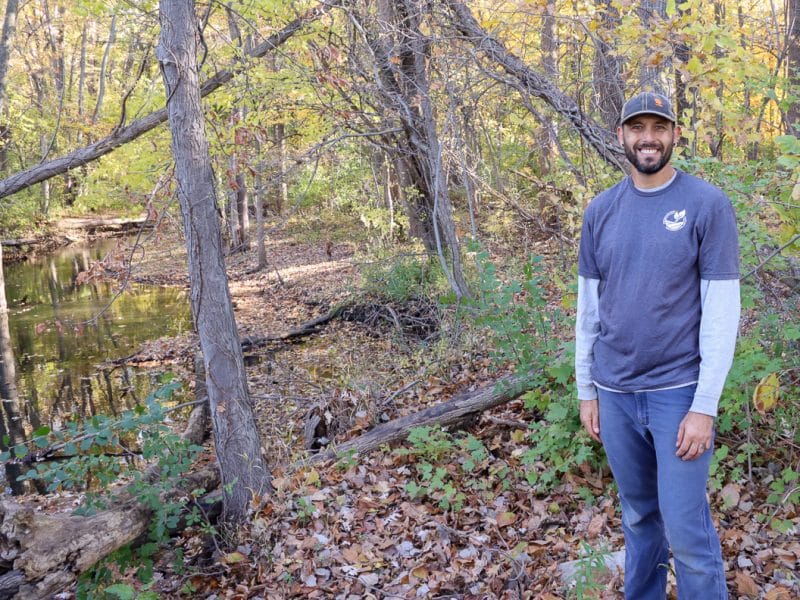
The trail as a classroom: Indigenous knowledge, reciprocity, and the future of greenways in West Michigan
What began as a snow-day chat with Kaya DeerInWater soon evolved into a trail-side lesson in reciprocity, encouraging West Michigan to view greenways not merely as pathways to develop, but as relationships to respect.
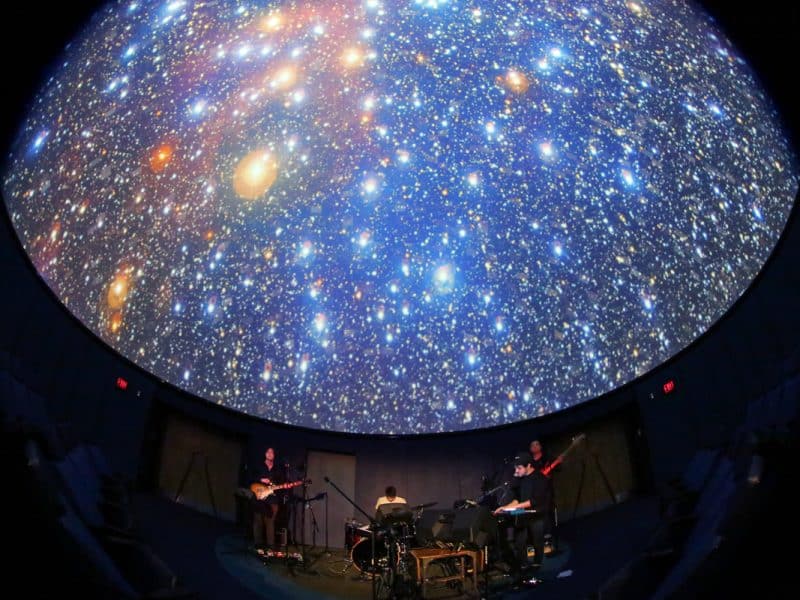
Under the stars, together: Don’t miss GRPM’s 9th planetarium concert series
Grand Rapids Public Museum’s highly anticipated annual live-music series Concerts Under the Stars returns in 2026. Historically, delaying ticket purchases for this series might result in missing this once-a-year event entirely.