Michigan Health Council: Collaborations urgently needed to strengthen Michigan’s health care workforce
The Michigan Health Council facilitates collaborations and shares solutions that build the state’s health care workforce.
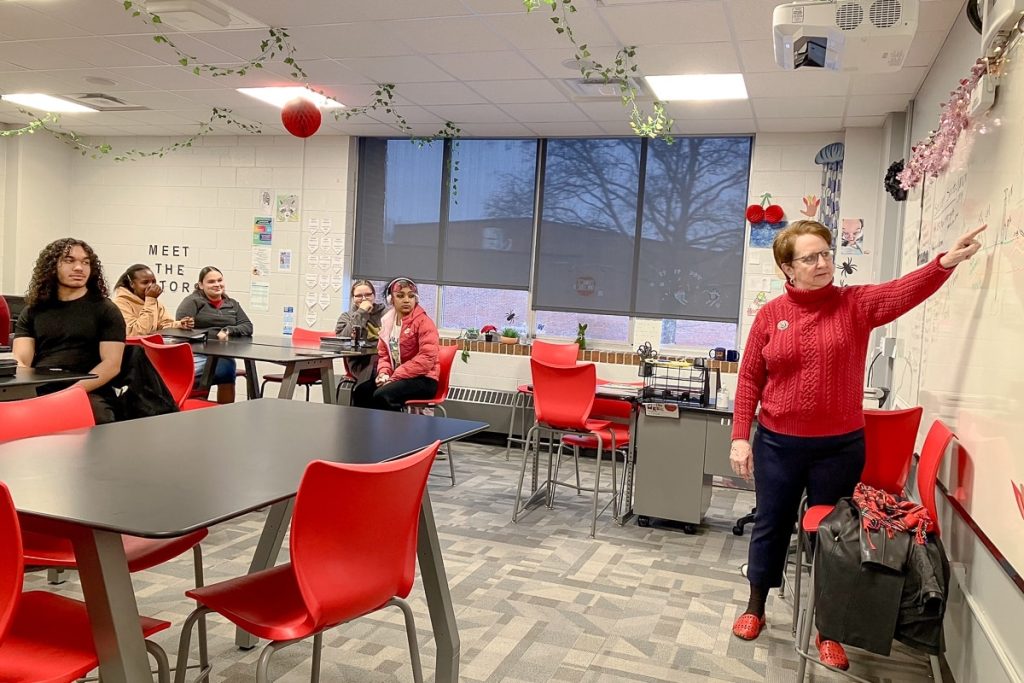
With health care workforce shortages a growing concern, collaborations within and among public health entities, health care systems, and educational institutions are imperative. Across the U.S., health care workforce shortages are making it harder for people to access timely care. By 2026, experts project there will be 85,000 fewer physicians than needed.

“These health care workforce shortage issues have been going on for decades. The looming Medicaid cuts and expiring ACA subsidies will only exacerbate the problems and impact access to care,” says Craig Donahue, president and CEO of the Michigan Health Council (MHC). “Addressing the shortage requires collective action and sustained commitment. No single organization can solve this alone.”
Collaborations count
One way MHC approaches its mission is by facilitating collaborations and sharing proven solutions. Donahue shares the example of a collaboration in Sault Ste. Marie among Bay Mills Community College, the local high school, Lake Superior State University, and the University of Michigan.
“Folks took it upon themselves to build local partnerships,” Donahue says. “That’s where it begins. Looking around communities, finding who can make a difference, leveraging expertise, and scaling things that work.”
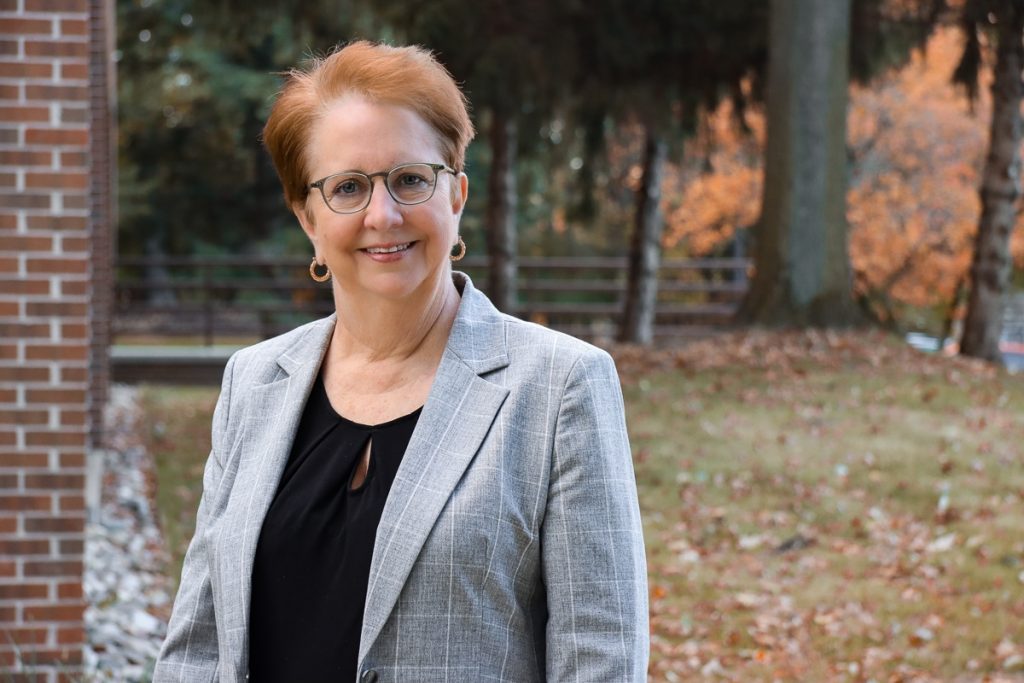
Another example, registered nurse Joann Hoganson, Kent County Health Department division director of community wellness, took it upon herself to collaborate with Grand Rapids Community College and Grand Rapids Union High School.
“She is a grassroots individual who asked herself, ‘How can I make a difference in my community?” Donahue says.
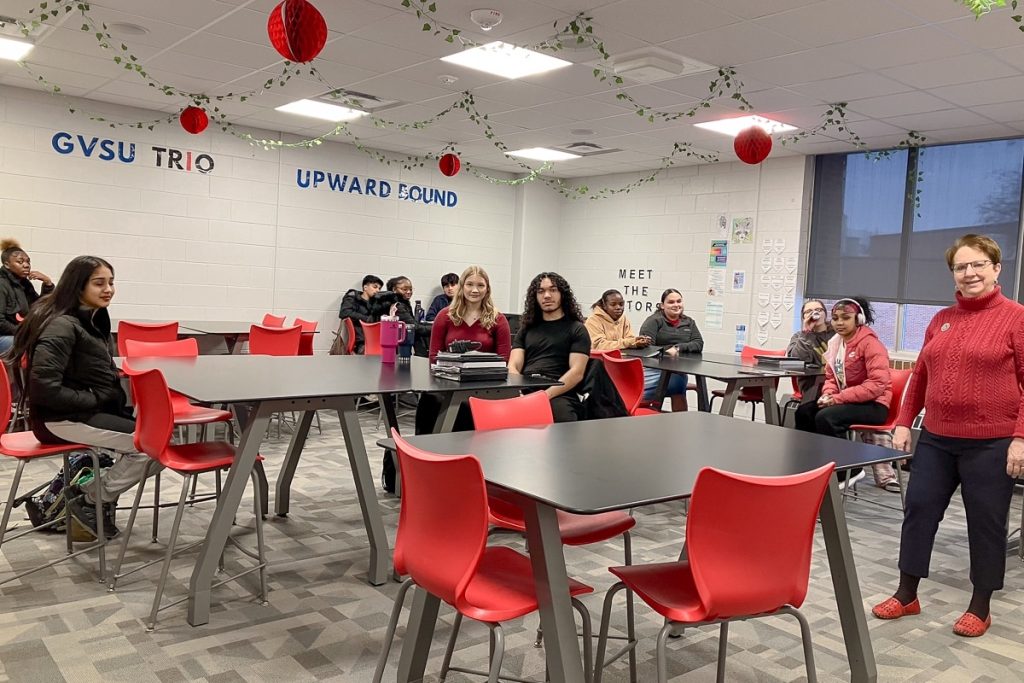
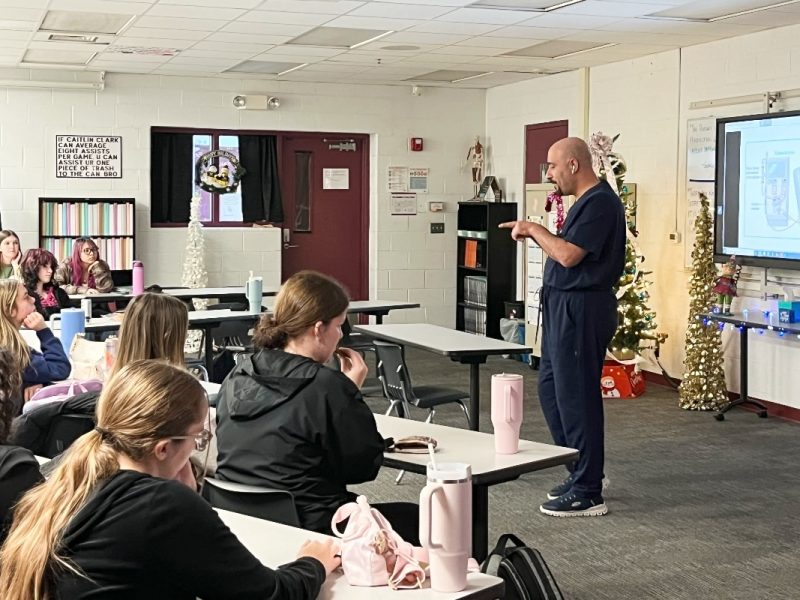
The dual-enrollment medical terminology class Hoganson taught at the high school offered college credit while exposing students to health care careers. Guest speakers included a social worker, family physician, nurse, and mental health professional.
“I included stories about my career path, patients that I’ve had, fun times, challenging times, and fulfilling times,” Hoganson says. “I perceived ‘light bulb moments’, where students would engage and I knew they were thinking, ‘I can do this.’ It’s too soon to know how many of them will follow through, but all of the students enrolled in my class had some interest in going into health care as a career.”
Hoganson chose Union High School because of its diverse student population.
“I felt like I was at the United Nations,” Hoganson says. “I saw Black faces, Asian faces, Hispanic faces. I couldn’t help but wonder, wouldn’t it be great if we could walk in the hallways of a local hospital, clinic, or health department and see faces like these?”
She believes building a diverse health care workforce is key to both overcoming workforce shortages and creating higher quality care. Many students of color she taught had no idea of the possible health care careers that are available.
“We need more nurses, therapists, technicians, community health workers, doctors, dentists and CNAs. We need these people in our workforce. We cannot afford to leave whole sections of our population out,” Hoganson says, “These students will soon need good jobs. If I can present these options to them while they are still in high school, they can consider health care as a possible career. They are meeting our needs, and we are meeting their needs – we bring it together, and it’s a win for everyone involved.”
Solutions Summit: Real-time networking for scaling success
With more than eight decades of service behind the scenes, MHC helps ensure that Michigan’s health care systems and providers have the tools and information needed to recruit and retain their workforce. Beyond that, MHC will host the Solutions Summit, an event connecting employers, state agencies, educational institutions, and other stakeholders in real time for collaboration on solutions to workforce challenges.

“The event is an opportunity to dig into the Michigan Healthcare Workforce Plan and bring it to life,” says Lindsay Brieschke, MHC public affairs manager. “It’s an opportunity to break down silos and bring collaborative networking together in one place at one time.”
The Summit will take place this fall in East Lansing. Presentations on each facet of the Workforce Plan will be followed by tabletop discussions that create space for face-to-face connection and ongoing collaboration.
“Participants will gain an opportunity to collaborate, network, and hear best practices from around the state that have provided creative solutions for growing the health care workforce,” Brieschke says. “We hope that participants will leave knowing that they have a stronger connection, a new connection, or a new idea. It’s about bringing ideas and plans to fruition.”
Michigan Healthcare Workforce Plan breaks it down
Two MHC initiatives, the Michigan Healthcare Workforce Index and the MHC Insight initiative database, are the foundation of its Michigan Healthcare Workforce Plan. The plan focuses on four strategic areas –– awareness of health care careers, access to health care career education, expansion of clinical education, and increasing recruitment and retention.
As manager of Michigan’s HOSA – Future Health Professionals program for the past 25 years, MHC engages middle school, high school, college students, and adult learners in understanding the how and why of pursuing a health care career.
“It starts with awareness. We need to do a better job of engaging students, parents, and school counselors,” Donahue says. “We must prioritize sharing information and resources on health care careers early in the education process in order to promote informed decision-making about whether that path is appropriate for them.”
To build access to education, the Workforce Plan speaks to making post-secondary education, certifications and credentials more accessible to more people where they live.
Scaling apprenticeships, on-the-job training, and career pathway resources can support people in entry-level health care careers with opportunities to advance while helping to build the needed workforce.
“Apprenticeships have been challenged because most need a degree or a credential to provide patient care,” Donahue says. “Working through those issues and providing support will create more accessibility and more resources for training.”
Expanding clinical education opportunities will result in more places for students to train and achieve clinical experiences while not overburdening staff.
“We need to find non-traditional spots, more folks willing to be clinical faculty,” Donahue says. “Finally, recruitment and retention of staff –– once they’re there, we need to understand how to keep them there.”
For information on MHC or the Solutions Summit, visit MHC.org.
Photos by Tommy Allen.
Photo of Craig Donahue courtesy subject.
This story is made possible with funding from the Michigan Health Council, a solutions-oriented nonprofit organization working to ensure the future of the health care workforce by connecting health care leaders, professionals, employers, educators, and students to various products and services spanning the education-to-practice continuum.
Related Articles

Trails as talent magnet: Outdoor access is key part of West Michigan’s ‘why here’ conversation
Trails and greenways are no longer just for weekend leisure. Regional leaders say outdoor access has become a key factor in recruiting and a crucial “quality of life” indicator for the contemporary workforce that West Michigan aims to attract and retain.
Partner Partner Content “When I grow up.” Inspiring kids to dream big about careers in health care
These collaborations show how growing interest in health care careers can begin early.
Tech volunteers inspire students through hands-on classroom coding lessons
West Michigan tech professionals visit 52 classrooms, teaching coding basics and inspiring elementary students to explore future careers in computer science.