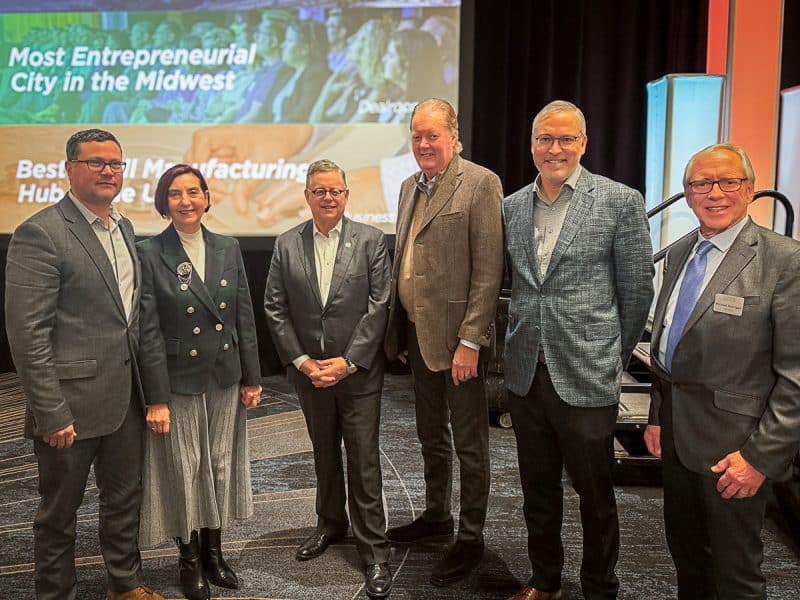
MML recognizes these pillars of community wealth building: Lifelong learning, public health, arts and culture, financial security, sustainability, and infrastructure. “We have three broad buckets of work — advocacy, education, and assistance.” – Helen Johnson, MML Foundation president
The nonprofit Michigan Municipal League (MML) improves Michigan’s communities through sharing innovative programs, fostering collaborations, and connecting communities with resources. MML currently serves more than 530 member municipalities of all sizes.
Helen Johnson
“We have three broad buckets of work — advocacy, education, and assistance,” says Helen Johnson, MML president.
MML’s educational programming shares new, research-informed ideas and resources with local leaders at the forefront of municipal operations and service delivery. Legislative advocacy work raises the voice of Michigan municipalities the 10 million residents living in them.
“The membership team runs our Elected Officials Academy and provides direct technical assistance like the Local Economies Initiative.”
MML’s Local Economies Initiative projects gather elected officials and leaders, small businesses and business organizations, and other stakeholders to identify challenges and create collaborative solutions unique to their community.
Grace Carey
“We never go in and say, ‘We have all the answers.’ And we never go in and say, ‘You have all the answers.’ What we do say is, ‘Let’s identify what your ecosystem is and how we can learn from others to create new approaches,” Johnson says.
Local Economies Initiative projects focus on everything from infrastructure and housing to downtown green spaces and beyond.
“We figure out new ways to look at problems, bring partners together, and innovate new ideas,” says Grace Carey, PhD, MML program officer. “When leaders look at new opportunities and new ideas, it’s easy for them to forget that there are a lot of others in their community who want to get involved and lock arms on these big issues.”
MML Local Economies Initiatives gather local, regional, and statewide stakeholders to identify the municipality’s ecosystem, brainstorm challenges, innovate opportunities, and collaborate for success. “We visit, have conversations, do research, and share the opportunities that we see and the resources that can help.” – Richard Murphy, AICP, Michigan Municipal League program manager, research policy labs
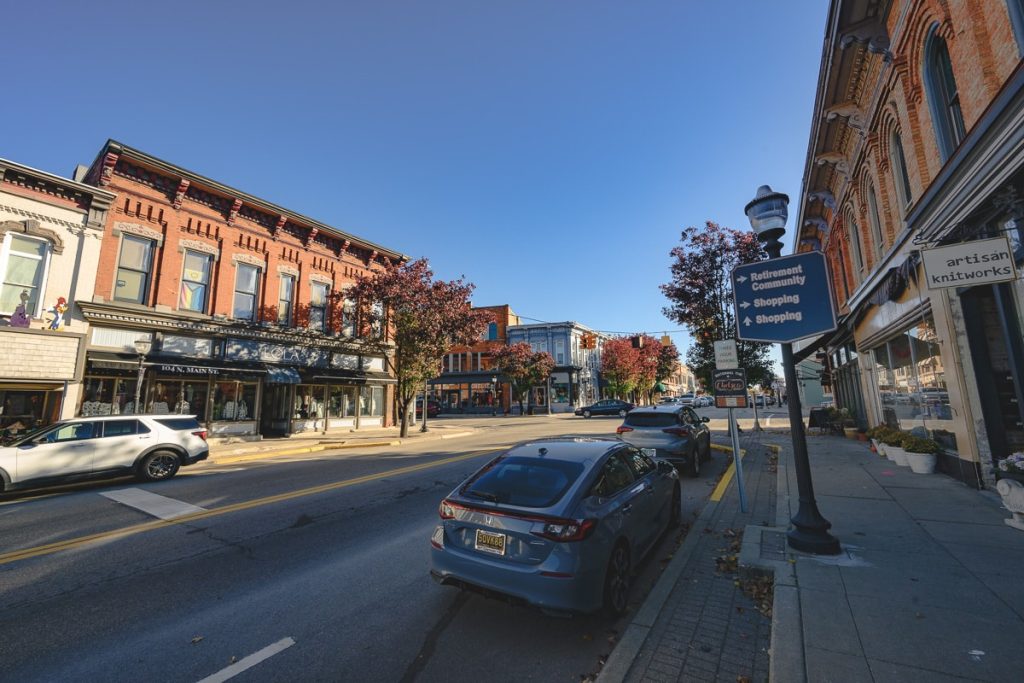
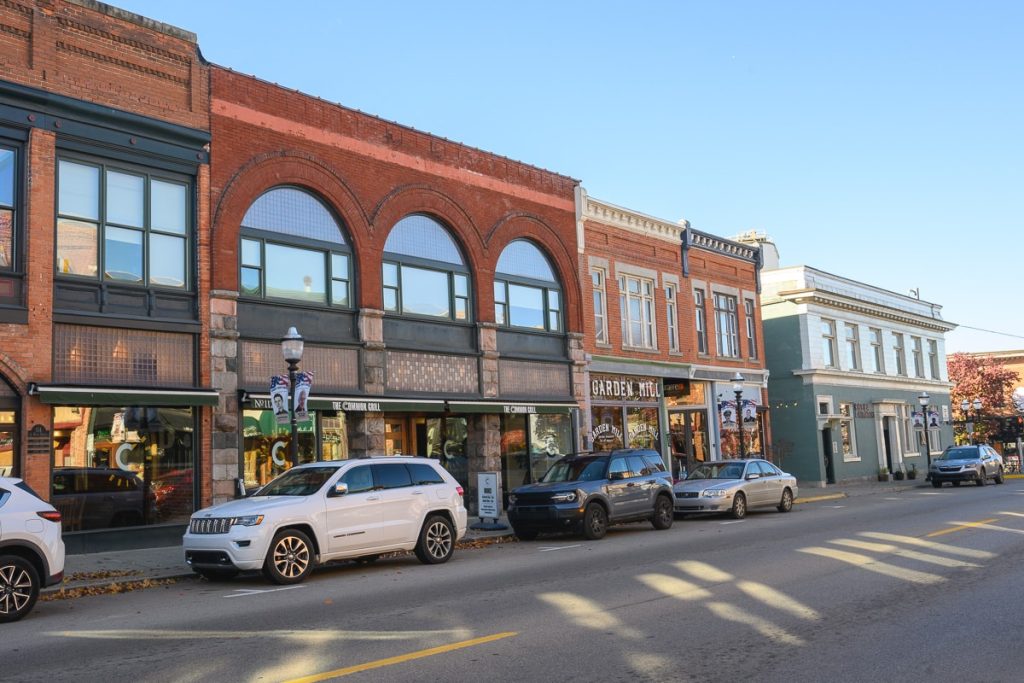
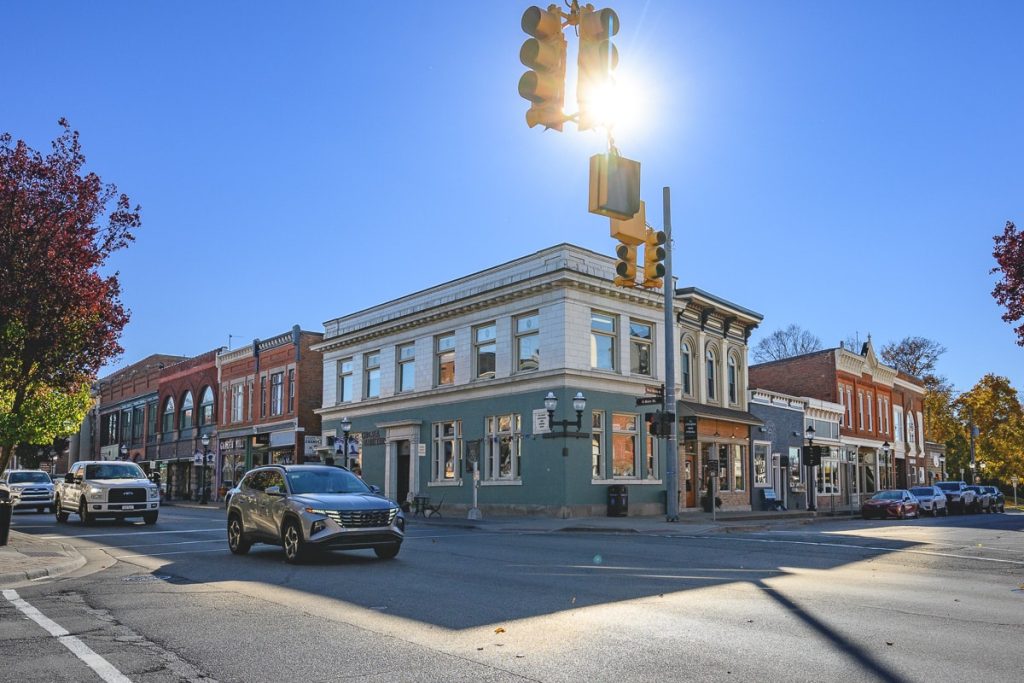
Michigan Municipal League’s Local Economies Initiative proposed opportunities for both Chelsea’s historic downtown and its commercial strip development near M-52.
How connections are made
One morning in August 2024, Richard Murphy, MML senior program manager, sat down with the city of Chelsea’s leaders and small business owners to hear their perspectives on what was working, what challenges they were experiencing, and what they would like to see happen in their town. Next, the group took a walking tour of Chelsea’s Main Street business area, parks, and surrounding areas to provide context for those perspectives.
Richard Murphy
“That’s the arc of our engagement in a community,” Murphy says. “We visit, have conversations with people, do research, and share the opportunities that we see and the resources that can help implement those opportunities.”
“The goal is to build connections,” Murphy says. “One organization may be working with businesses in a community, but maybe the chamber and the city staff don’t have a connection with that organization — so there’s a broken link. That network of relationships lets everybody make sure that the entrepreneur gets into contact with all the support that’s available.”
Terris Ahrens
Like many smaller Michigan cities, Chelsea has a historic downtown as well as commercial strip development near the highway – in this case, M-52. When MML came back with its report, opportunities for both were proposed.
“The Opportunity Report outlined some projects in our community that had the potential to improve,” says Terris Ahrens, executive director of the Chelsea Area Chamber of Commerce. “They put together something really comprehensive that helped us see some of our shortcomings and some of the places we’re succeeding. And that has led to some pretty cool stuff.”
MML Opportunity Reports outline potential projects, provide data to substantiate moving them forward, and connect municipalities with resources to help make them a reality. “We figure out new ways to look at problems, bring partners together, and innovate new ideas.” – Grace Carey, Ph.D., MML Foundation program officer
A Michigan Municipal League Foundation micro-grant helped spruce up Chelsea’s Palmer Commons.
Hotels and workforce housing
One challenge that Chelsea business owners shared was the lack of hotel rooms. Chelsea is home to many events and wedding venues, but guests rarely can find accommodations within city limits. As a result of MML’s involvement, conversations on how to meet this need are taking place.
“We were able to take that recommendation and go to our local destination marketing organization Destination Ann Arbor and ask them for help,” Ahrens says. “They recommended companies that do hotel feasibility studies.”
The feasibility study found that Chelsea was a logical location for a new hotel. Now, the city is using the study to attract hotel developers.
“Without this report from the MML, it would have been a lot harder to get people on board to look into this,” Ahrens says. “When you’ve got something right in front of you from someone like the Michigan Municipal League that’s saying this is a need, it makes it a lot easier to get everybody on board to spend some money.”
Another challenge identified was the lack of affordable housing within the city.
“The majority of people that work in Chelsea can’t afford to live here,” Ahrens says.
Thanks to the MML report, the city council created a housing commission. Efforts are now underway to repurpose city-owned land used for a recycling drop-off site for a new housing development.
“They are able to now take requests for proposals and create that development,” Ahrens says. “This is another example of having more than people’s opinions to get these conversations started.”
Chelsea also used an MML micro-grant to spruce up Palmer Commons, a public park and event space that “needed serious attention.”
“We did a ‘bermification’ project — basically [the berm on the] whole northern wall,” Ahrens says. “It was completed this fall and looks 100 times better.”
Michigan Municipal League Local Economies Initiative projects focus on everything from infrastructure and housing to downtown green spaces and beyond.
The MML’s City of Chelsea Opportunity Report also suggested redeveloping the commercial strip and improving pedestrian safety near M-52; enhancing the downtown social district; and developing more businesses catering to outdoor recreation at nearby Waterloo State Recreation Area.
“When we’re in each community, we focus on what’s going on in that community,” Murphy says. “We bring in the outside stakeholders — on the county and regional scale — to talk to folks. The city, the chamber, or individual businesses can raise their hand and say, ‘We need help with this,’ and get expertise from higher levels of government or regional entities.”
MML’s work with Chelsea is leading to workforce housing for employees of Chelsea’s businesses, a new hotel to support the city’s robust event scene, and redevelopment of downtown and commercial strip areas for business success and walkability. “Without this report from the MML, it would have been a lot harder to get people on board.” – Terris Ahrens, executive director, Chelsea Chamber of Commerce
MML also connects municipalities with each other. For example, Ahrens attended an MML-facilitated seminar in Farmington to learn about community marketing and space activation.
“I don’t think there are any communities or any organizations that can solve the complex problems we are facing as our communities on their own,” Johnson concludes. “It really requires us to think about partnership and to leverage the assets and the expertise of different individuals and organizations. Cross-sectoral partnership is key to solving problems.”
Photos by Doug Coombe Photos of MML staff courtesy subjects.
This story is made possible with funding from the Michigan Municipal League, a nonprofit association dedicated to making Michigan’s communities better by thoughtfully innovating programs, energetically connecting ideas and people, actively serving members with resources and services, and passionately inspiring positive change for Michigan’s greatest centers of potential: its communities.
Nestled in the center of Grand Rapids, a group of fashion-oriented creatives is subtly turning South Division Avenue into a lively cultural hub rooted in sustainability, community, and shared goals.