NeighborWoods plants 200 trees in Grand Rapids’ former redlined neighborhoods
Friends of Grand Rapids Parks and The C4 led NeighborWoods, planting 200 trees in disinvested Oakdale and Boston Square neighborhoods.
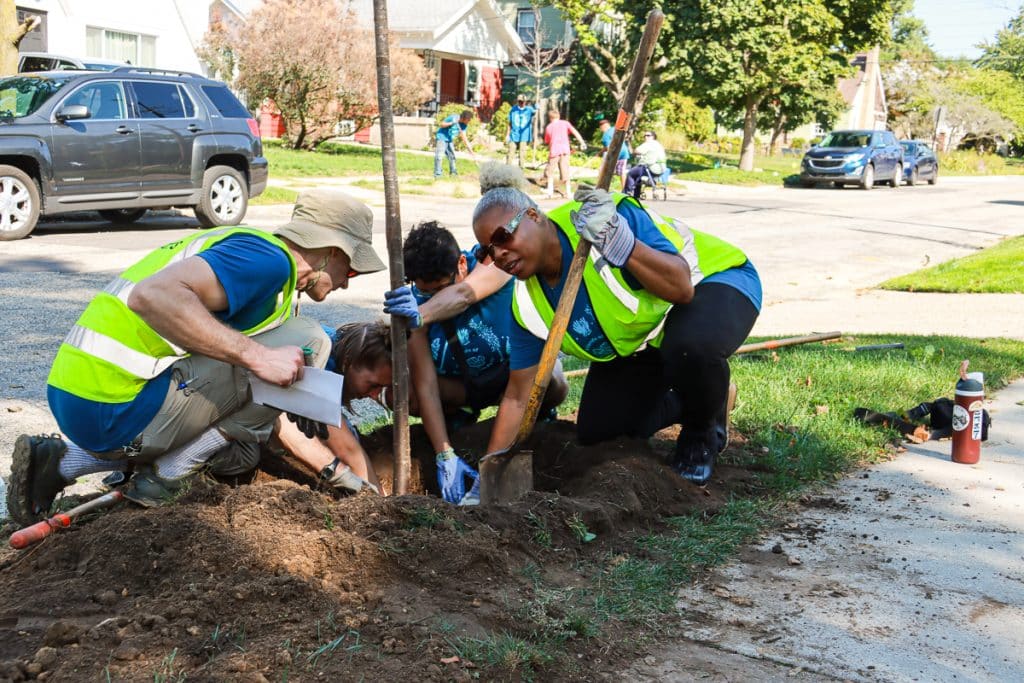
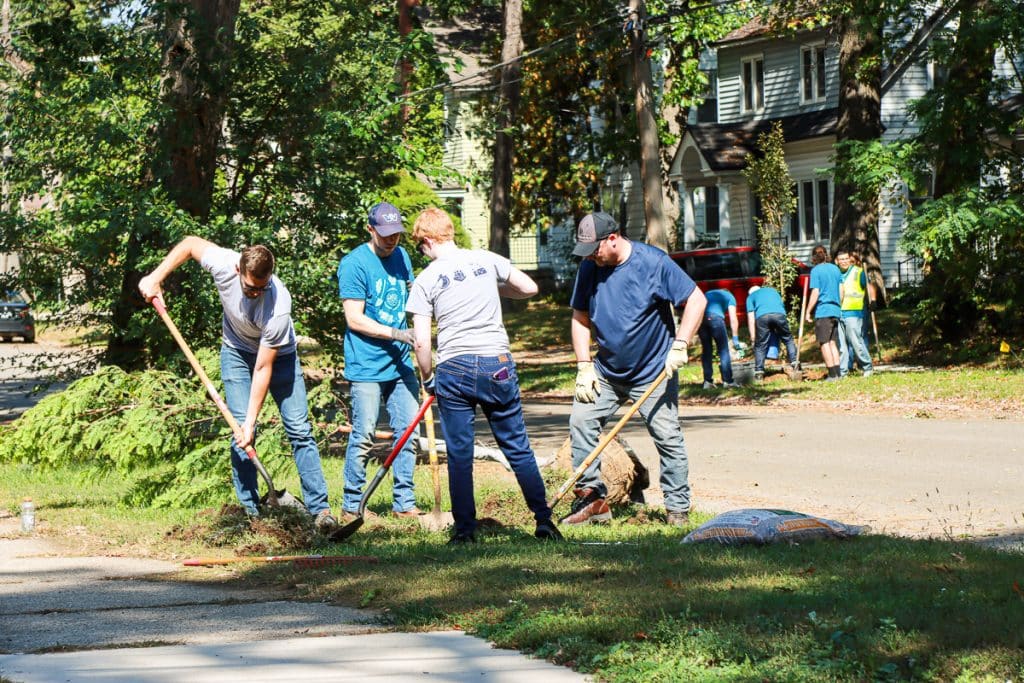
Neighbors, volunteers, and local leaders gathered at River City Scholars Charter Academy this past weekend to do more than plant trees. They came to strengthen their community.
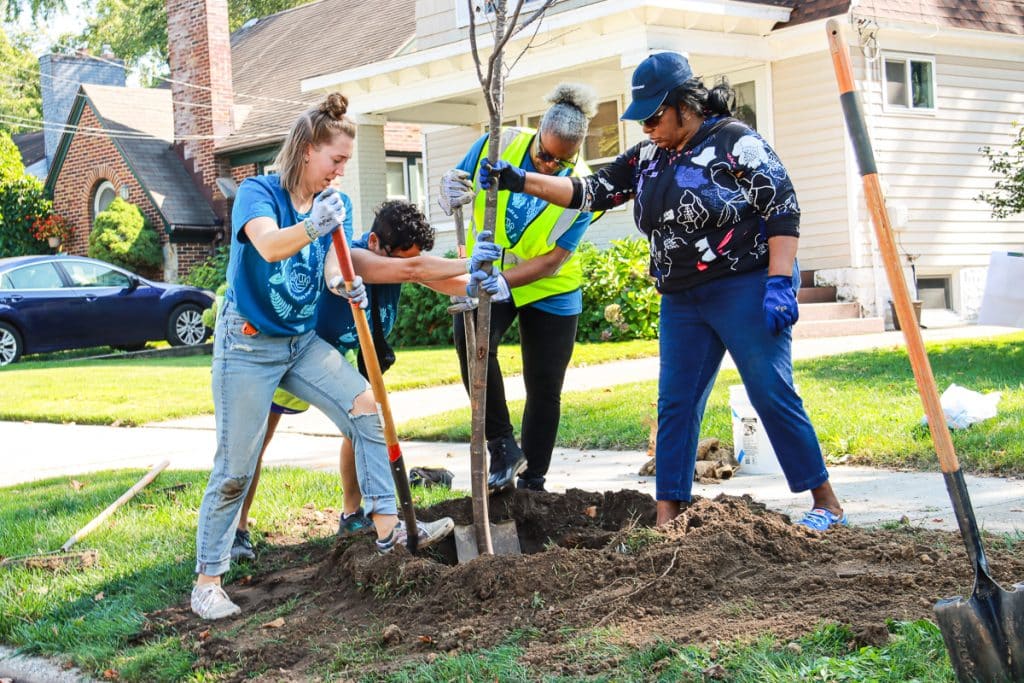
As part of NeighborWoods 2025, Friends of Grand Rapids Parks’ annual fall tree-planting program with the Mayor’s Greening Initiative, and the Community Collaboration on Climate Change (C4), more than 200 trees were added across the Oakdale and Boston Square neighborhoods.
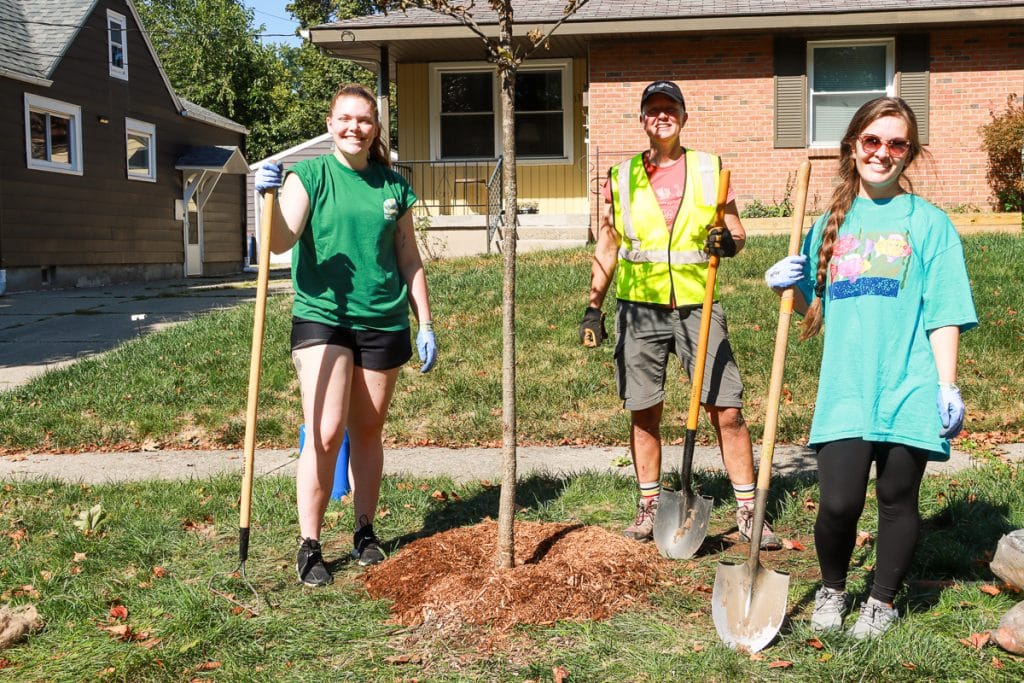
The project wasn’t only about filling empty sidewalks with trees. It was also about starting conversations with residents, allowing each household to have a say in greening their block.
This year’s planting marked an important step: more than 450 trees were planted in 2025 in neighborhoods that have long lacked tree canopy because of redlining and disinvestment.
“Two hundred trees in the ground, partnering with C4 for outreach. It’s exciting,” says Stacy Bare, executive director of Friends of Grand Rapids Parks. “It feels like a very warm and receptive community. We’ve had people change their minds mid-conversation, and we’ve even had people reach out asking for trees. That doesn’t always happen.”
Retired teacher pushes for action
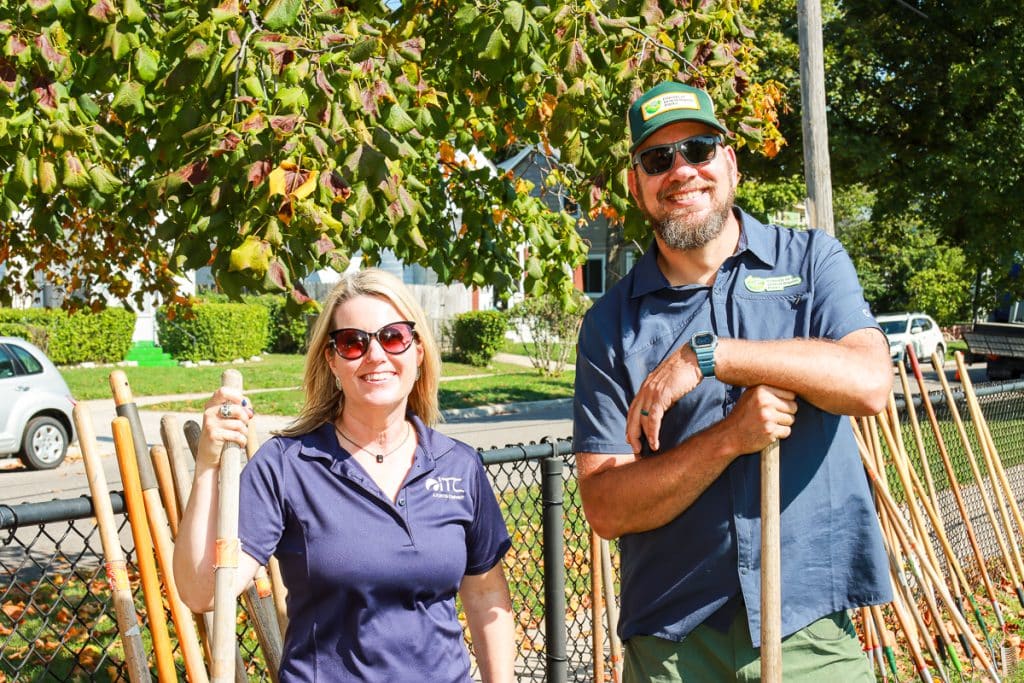
The partnership with C4 has been central to NeighborWoods’ success. Leading the effort is Ned Andree, C4’s project coordinator since 2021 and a retired public high school teacher.
Andree spent years teaching social sciences, including geography. In class, he guided students through conversations about ecosystems, climate, and global warming.
“Students debated whether climate change was real or not, and I told my students: I believe it is real, and your future depends on how we respond,” Andree recalls.
Looking back, he says the classroom gave him perspective but left him wanting to do more.
“I wish I had given every kid a tree to plant,” Andree says. “Not just to learn about it, but to activate.”
That shift from teaching about issues to prompting people to take action now defines his work with C4.
Historical inequity
Urban tree canopy is more than greenery. Trees can cool streets, absorb stormwater, improve mental health, and raise property values. But in Grand Rapids, as in many U.S. cities, decades of discriminatory housing policies carved inequity into the landscape.
Neighborhoods once marked in red on federal lending maps, which were largely Black or immigrant areas, received less investment. That meant fewer parks, fewer city resources, and fewer trees. The losses worsened when pests such as the Emerald Ash Borer and Dutch Elm Disease wiped out what little canopy remained.
“Historically redlined neighborhoods didn’t get the resources necessary for trees, and then they were hit again by pests,” Bare says. “The canopy had been decimated. We’re working to reverse that.”
Climate change deepens those challenges. Tree-deprived neighborhoods become heat islands, with higher temperatures than greener areas. Residents also face more flooding, mold, and public health risks when heavy rains overwhelm infrastructure.
NeighborWoods aims to rebuild the canopy equitably, neighborhood by neighborhood. To do that, FGRP turned to C4 for grassroots leadership and trust in BIPOC communities.
“Friends of Grand Rapids Parks had the tree expertise; we brought the grassroots,” Andree says. “Our missions aligned. This partnership makes sure the people most impacted by climate and environmental injustices are part of the solution.”
450 trees planted this year
The collaboration began with a U.S. Forest Service grant that required a community-based partner. Friends of Grand Rapids Parks had the technical know-how, while C4 brought relationships and credibility in neighborhoods where residents had long been excluded from decision-making.
“Rich and poor, Black and white, able and disabled. Everybody’s going to come together, because it’s good for everyone,” Andree says.
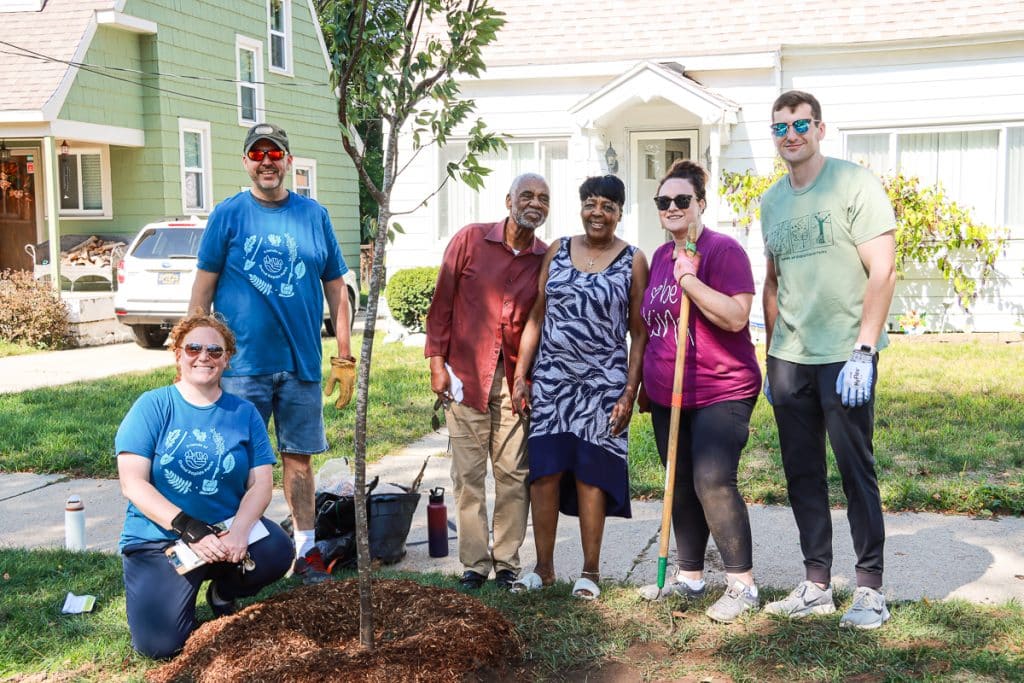
This spring, Friends of Grand Rapids Parks planted more than 200 trees in Oakdale and Boston Square. This fall, another 200 went into Oakdale and Boston Square, bringing the total to more than 450, nearly half of Grand Rapids’ annual goal for street trees.
But leaders say numbers aren’t the whole story. Bare points to how residents shifted from reluctance to acceptance.
“These are the nicest no’s we’ve ever gotten,” he says.
Andree attributes that shift to listening.
“People become more amenable if you have multiple positive encounters and if you make it clear from the start that it’s OK to say no,” he says. “We just ask them to consider the benefits.”
Stipends for residents
To support participation, C4 began offering stipends. Residents who joined planting sessions received $50 each, plus a $50 bonus for completing all three plantings, totaling $200.
For low-income families, that money can help offset costs like leaf bags, repairs to pipes damaged by roots, or lost wages from taking time off work.
“It shifts the dynamic from charity to collaboration,” Andree says. “Neighbors are not passive recipients. They receive a stipend for their time and their lived experience. They’re part of the solution.”
The partnership is also testing new ideas. C4 promotes “unlawning,” a call to “Restore the Forest Floor,” a movement which encourages residents to replace grass lawns with native plants, shrubs, and trees.
“Your entire lawn is an invasive species,” Andree says. “We want to peel that grass out and replace it with Michigan natives that restore habitat and biodiversity.”
This fall, C4 demonstrated the concept. It planted trees, bushes, and ground cover in a “pocket forest” at Boston Square Church, a neighborhood church, offering a living example of layered, native plantings in an urban setting.
Tree equity requires more than planting. It requires care. Many residents welcome shade and beauty but worry about labor and costs.
“Fifty leaf bags is expensive,” Andree notes. For older residents or those with mobility issues, raking is simply not possible.
To address this, FGRP and C4 are diversifying plantings to reduce pest risks, offering training on tree care, and working with the city on long-term maintenance. But resources remain limited, and demand for trees outpaces supply.
“It doesn’t make sense if one neighborhood gets all the trees for three or four years,” Bare says. “We want to plant in an equitable manner, so everybody benefits.”
Environmentally conscious
NeighborWoods is intended to be more than a once-a-year weekend event. It’s part of a larger shift in how cities respond to climate change and who leads that work.
C4 grew out of the city of Grand Rapids’ Office of Sustainability, which had been part of an earlier Community Sustainability Partnership. It represents a move from academic-led study to community-led climate justice advocacy and solutions.
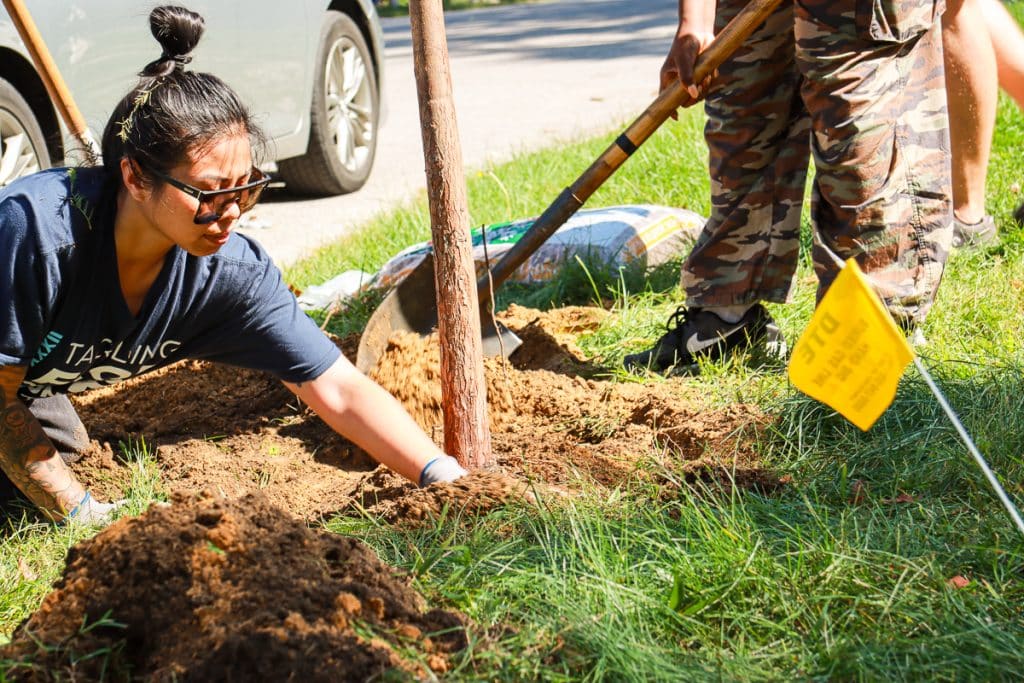
“Our work is centered on helping people connect the climate change impacts they are experiencing in their communities to the climate crisis and find local ways to take action,” Andree says.
Bare adds that the benefits go beyond the environment.
“If you have 10 trees on your block, you feel $10,000 wealthier,” he says, citing a 2018 study. “But beyond the economics, trees bring people together. This weekend, we saw neighbors meeting neighbors. That’s what building community through nature looks like.”
FGRP and C4 aim to plant 5,000 trees between 2024 and 2028, focusing on neighborhoods most in need.
For Andree, it’s a continuation of what he did as a teacher, but with more direct impact.
“We’re educating, but more importantly, we’re activating,” he says. “It’s not enough to learn about climate change. You have to take action. Planting a tree is one of the most powerful ways to do that.”
Photos by Tommy Allen
The Parks-People-Possibility series, made possible through a partnership with Friends of Grand Rapids Parks, will spotlight community-led initiatives to improve, create, and sustain the city’s parks and green spaces.
Related Articles
The Davies Project expands care by connecting families to oral health
With Delta Dental Foundation’s support, The Davies Project, based in Lansing, removes transportation barriers, helping families access dental care as well as critical medical appointments for seriously and chronically ill children and expectant women.

Local networks, real results: Success stories from Michigan’s CMHs
Michigan’s community mental health agencies serve as lifelines and innovators.

It’s hard for foster kids to get the health care they need, but this project is working to change that
A Grand Valley State University project is working to create an integrated mobile care team to serve foster kids’ complex health needs.