
New campaign seeks to reduce Michigan businesses’ food waste by doubling food donations
A new initiative led by the nonprofit Michigan Sustainable Business Forum is seeking to double the amount of food that Michigan businesses donate to food banks and rescues.
This article is part of State of Health, a series about how Michigan communities are rising to address health challenges. It is made possible with funding from the Michigan Health Endowment Fund.
According to the 2024 Michigan Food Waste Roadmap, Michiganders send 1.5 to 2 million pounds of food to landfills every year, including massive amounts of perfectly edible food. A new initiative led by the nonprofit Michigan Sustainable Business Forum is seeking to change that by doubling the amount of food that Michigan businesses donate to food banks and rescues.
The Michigan Sustainable Business Forum’s Double Food Donation campaign, launched late last year, is supported by a $188,300 grant from the Michigan Health Endowment Fund. It’s engaging over 200 Michigan food system stakeholders, including food banks and relief agencies, in developing strategies to make it easier for businesses to donate food and increase food relief agencies’ capacity. Daniel Schoonmaker, executive director of the Michigan Sustainable Business Forum, says Michigan businesses and farms are “currently throwing away or leaving unharvested enough food to feed every insecure family in the state of Michigan.”
“The businesses we work with want to donate more food,” he says. “I think they would prefer to sell it, but that does not always happen. And as an organization, we’re trying to advance sustainability practices in business. We’re trying to make businesses more environmentally responsible, more socially conscious, and this is the key strategy to it.”
The Double Food Donation campaign grew out of the Michigan Food Waste Roadmap, which the Michigan Sustainable Business Forum authored in partnership with the nonprofit Make Food Not Waste and the Michigan Department of Environment, Great Lakes, and Energy (EGLE). The Roadmap laid out a plan for Michigan to reduce food waste by half by 2030, a goal set by Michigan’s MI Healthy Climate Plan, the U.S. Environmental Protection Agency, and the United Nations.
“Throughout that Roadmap, there’s a great emphasis on doubling food donation,” says Aubree Carlisle, food waste specialist in EGLE’s Recycling Unit and Michigan Sustainable Business Forum board member. “So this Double Food Donation initiative is kind of a next step.”
While plenty of surplus food exists in Michigan, numerous barriers currently prevent it from reaching food relief organizations and hungry residents. One common barrier is concern among businesses about potential liability for food donations, especially non-shelf-stable products. The federal Bill Emerson Good Samaritan Food Donation Act of 1996 limits liability for those who donate food in good faith, but not every business owner is aware of that.
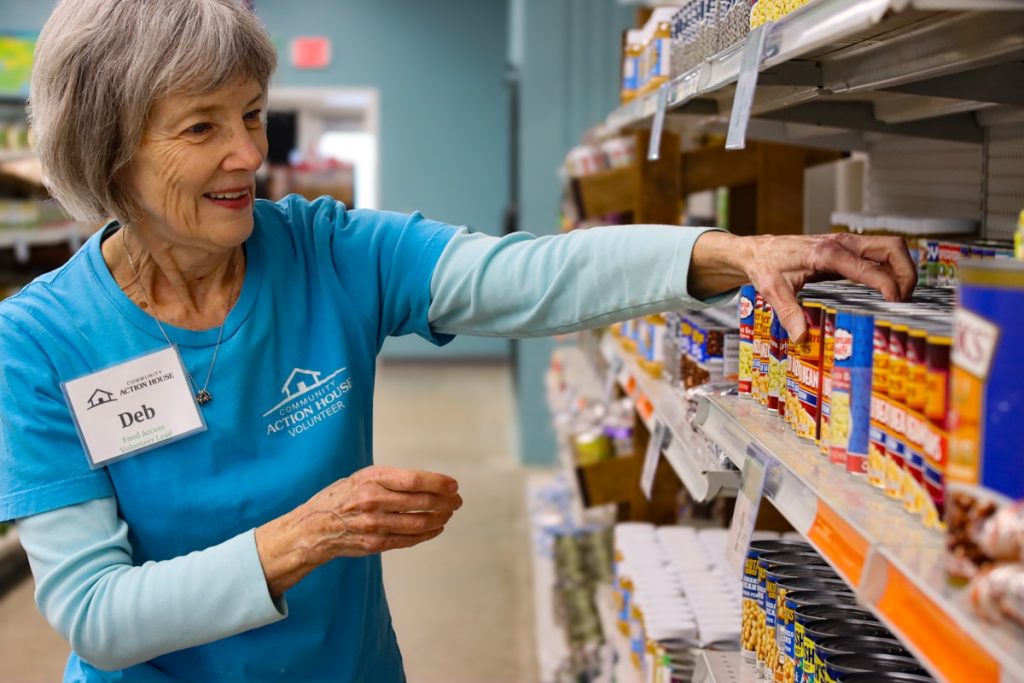
“When people say ‘liability,’ what they really mean more is, ‘I need to trust that when I give up this food that it’s being handled appropriately,'” says Krista Burgett, senior manager of food partnerships at Lakeshore Food Rescue, a program of Community Action House in Holland. “And a lot of that comes down to having a trusting professional relationship with whoever they’re contacting. What it takes to build that trust is completely different depending on the business.”
Another common challenge for some businesses is finding a food relief organization that can accept their food. Taylor Moore, director of Goodwill Northern Michigan‘s Food Rescue program and a Double Food Donation advisory committee member, says it’s “not unusual” for a farmer in his community to contact him asking how to donate 30,000 surplus pounds of apples. The food pantries he works with don’t have the capacity to handle and distribute that much food on their own. And in other Michigan communities, there may not be any food relief agencies within a convenient distance to a would-be donor.
“One of our challenges is making sure that that food finds alternative homes across the state,” Moore says. “… I think that’s going to be the real challenge here: making sure that everyone throughout the system is supported in increasing our collective capacity to deal with this.”
Rose Spickler, director of education and engagement at the Michigan Sustainable Business Forum, says her organization aims to be “an informed, go-to resource” for businesses and food relief agencies as they address these challenges. She, Schoonmaker, and their colleagues have assembled a coalition including representatives of food nonprofits, businesses, and state agencies. In October they convened members of that group for a Double Food Donation summit in Lansing to assess current gaps in food donation infrastructure and develop strategies to reduce food waste.
The Michigan Sustainable Business Forum is now preparing to publish three key documents to help advance the Double Food Donation campaign. The first is a food donation characterization report, which will break down the current state of Michigan’s food donation activity, food relief infrastructure capacity, and infrastructure gaps. Spickler says the report will serve as a “data-driven baseline” for the rest of the Double Food Donation campaign.
The second document is a policy platform, which will outline legislative steps to help accomplish the campaign’s goals. Schoonmaker says a key policy need is a tax credit for food donations, which would help incentivize businesses to contribute food. Michigan House Bill 5166, introduced in October 2025, would accomplish that goal.
The third document will be a resource guide to help educate businesses on how to donate food. It will include state guidelines on donations, information on liability and the Bill Emerson Good Samaritan Food Donation Act, and other resources designed to answer business owners’ common questions and make the donation process easier. Spickler says the Michigan Sustainable Business Forum will also host a series of “informative, but also action-based” webinars to engage business owners and answer their questions.
Leaders in the food relief space express gratitude for the Michigan Sustainable Business Forum’s efforts. Moore describes the group as “an important convener” that is helping to build and strengthen connections between businesses, nonprofits, and state government. He says that although food relief organizations were already collaborating, they’re “working with each other better than we ever had before” as a result of the Michigan Sustainable Business Forum’s work. Burgett agrees.
“When it comes to those of us working in food rescue and food access, we are so much focused on here-and-now and operations and making it happen,” she says. “And so the benefit of having the Sustainable Business Forum involved is having a group that has some time to take a step back.”

The timing of the Double Food Donation campaign is fortuitous in light of a tumultuous year for federal food policy. 2025 saw major cuts to federal funding of the Supplemental Nutrition Assistance Program (SNAP), as well as a pause in SNAP benefits during the government shutdown in November. The federal government also cut $500 million in funding for the Emergency Food Assistance Program, which buys food to send to food banks and similar organizations.
“Many, if not most, organizations we’re working with had some significant interruptions in funding or food sources during the course of the last year,” Schoonmaker says. “So this program has, I think, happened at a time in which it is very valuable to be having these conversations.”
He says the “legitimate crises” resulting from federal policy have had a positive side effect of raising business owners’ awareness of their ability to help alleviate food insecurity.
“As there are such visible interruptions in funding and supply to the charitable food system, I think you’re starting to see the private-sector leaders of food businesses have a greater sense of responsibility for what they can do to help,” Schoonmaker says.
Related Articles
Health center trains local residents as dental assistants to fill workforce gaps
HealthLinc, a federally qualified health center, covers training costs while preparing local residents for dental assistant jobs, strengthening workforce pipelines and expanding access to care.

Kent ISD’s planned CTE Center in Caledonia highlights the exciting surge of career-connected learning sweeping across the state
Kent ISD’s second CTE center in Caledonia is more than a new building—it’s a bet on opportunity, supported by an already impressive 96.7% graduation rate for Kent County’s CTE students and a countywide goal to welcome 10,000 students annually to the power of CTE by 2030.
#RG20LookBack: Jeff Hill and the power of showing up for each other.
For his seventh #RG20LookBack, Tommy Allen reflects on the lasting impact of his predecessor, Jeff Hill, who served as Rapid Growth publisher from 2008 to 2015.


