
Parent feedback shaping literacy pilot for littles with special needs
How a Kent County alliance centers parents in developing literacy strategies for their kids.
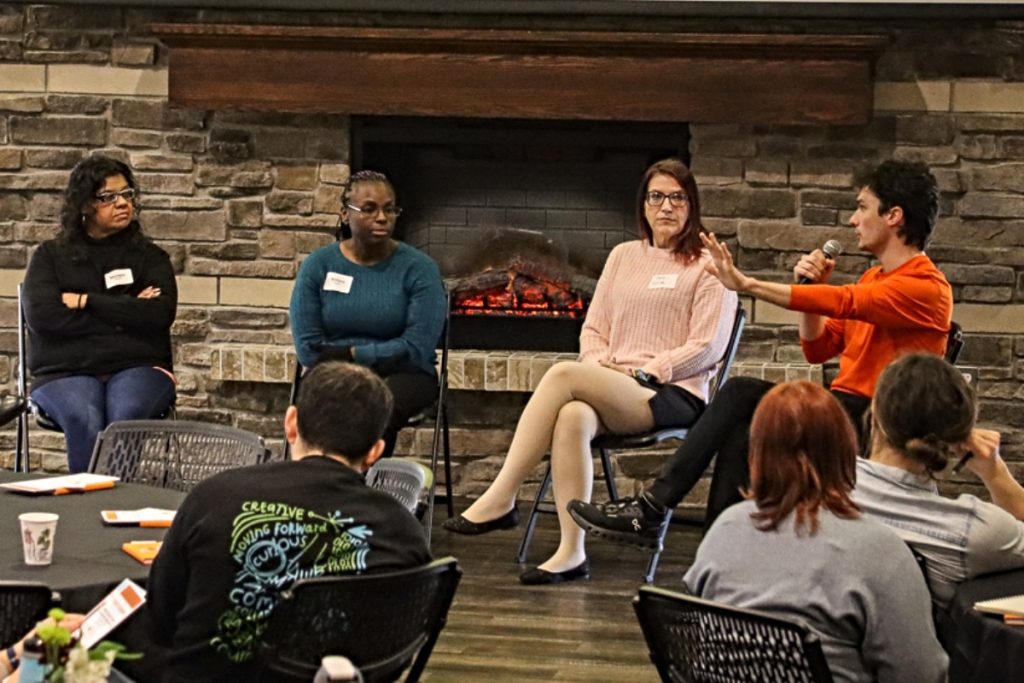
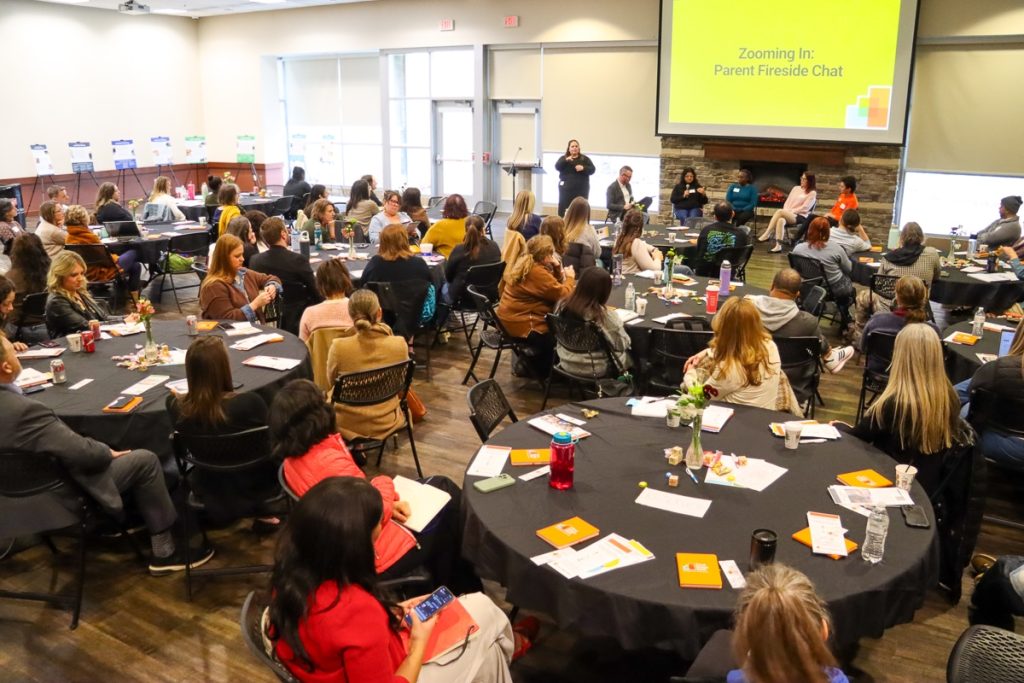
On Feb. 20, Kent County’s Inclusive Literacy Alliance (ILA) brought together parents, educators, libraries, health care providers, and community organizations for a community feedback forum, Building Inclusive Literacy. The ILA addresses barriers to early literacy access, specifically for children who are blind or have low vision, deaf or hard of hearing, or autistic.
The convening shared the ILA’s first year’s progress and proposed four pilot projects to improve early literacy access for the county’s youngest children with special needs. Parent feedback gathered over the past year informed the projects’ design.

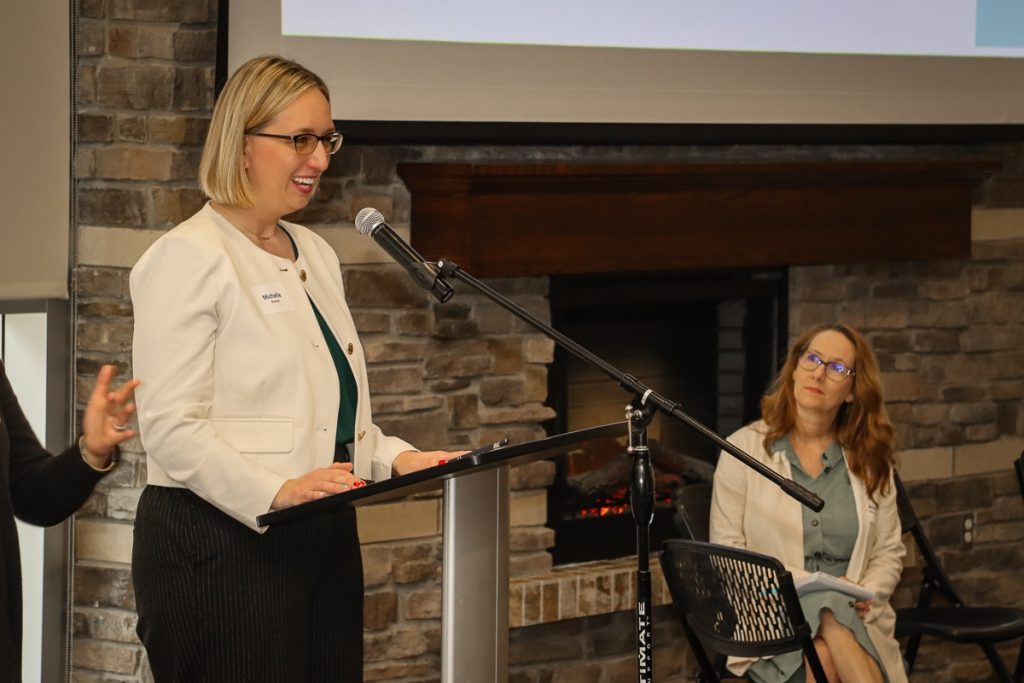
While speakers included ILA collaborators First Steps Kent and Kent District Library along with Michelle Richard, senior advisor to Michigan Gov. Gretchen Whitmer, four ILA parents raising special needs kids made the most powerful presentation. They were Cara Sutliff, a mother of four with a deaf child; Monique Vasquez, mother of an autistic 6-year-old who has mild cerebral palsy and cognitive delays; Seth Torkelson-Regan, stay-at-home dad of a special needs 2-year-old; and Brittany Franks, a mother of sons ages 2 and 4, one of whom is autistic.
“Our goal was simple –– to understand lived experiences before designing solutions,” Franks says. “The insights gathered are now shaping the next phase of work.”
During the convening, Franks shared how her primary care provider went above and beyond to make sure she had access to information and resources for her autistic son. She also noted that many parents do not receive that kind of help from their providers.
“The more I talk to parents, the more I’m finding that they don’t have as many resources as I have, as much help, or the amount of knowledge that I have. And my son’s only 4,” she says.
Four projects for inclusive literacy
The hope is that four proposed pilot projects will make it easier for those parents. The projects include a Peer Navigation Network, an Adaptive Tech Lending Library, Take Home Kits, and a web-based Inclusive Literacy Hub. Franks’ favorite, the Peer Navigation Network, will connect families with each other as well as with trained peers who have lived experience with special needs children.
“To me, the most important is the Peer Navigation Network,” she says. “It is overwhelming. You do need a break. You do need to decompress. And you do need to be able to talk to someone who’s going through the exact same thing that you’re going through. If they can build that network, then the other projects will thrive.”
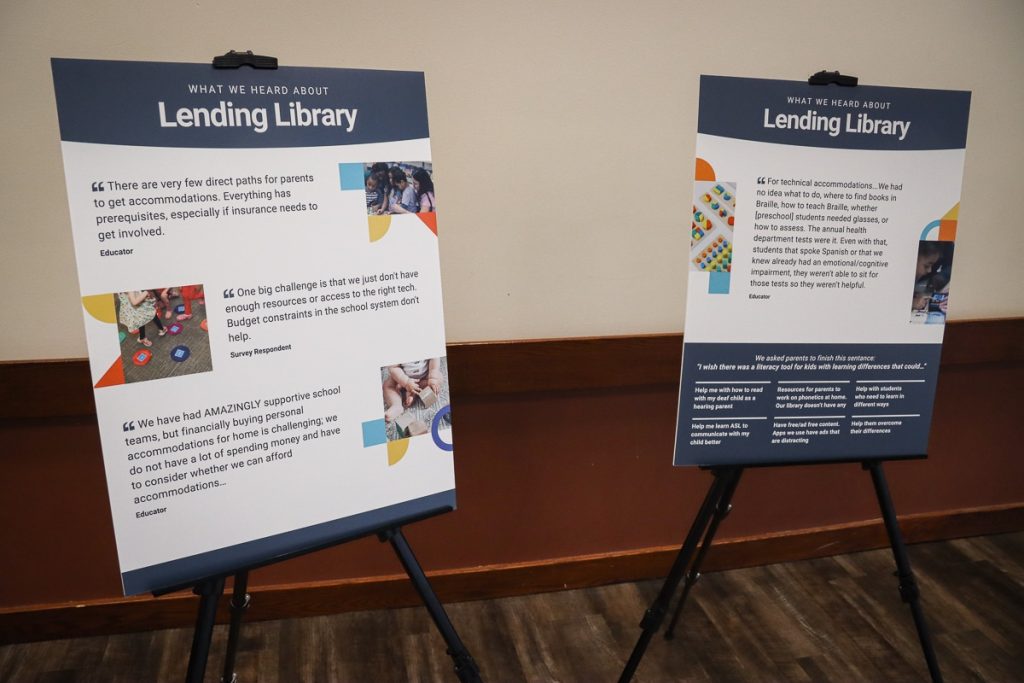
The Adaptive Technology Lending Library, to be housed at one Kent District Library branch and one Grand Rapids Public Library branch, will provide families with adaptive literacy tools and assistive technology devices –– as simple as checking out books. Parent feedback that the ILA gathered throughout the year indicated family budgets, school budgets, and lack of insurance coverage often prevent special needs kids from accessing adaptive technology.
“My son is very technology savvy. This is going to really fit my child — perfect for him,” Franks says. “I have another friend whose daughter has special needs. She loves books, she loves being at the library. So this part is going to be really good for her, too.”
Take Home Kits designed for families of children newly diagnosed with developmental differences will be distributed by ILA partner organizations, health care providers, schools, and libraries. The kits will include learning manipulatives, specially selected children’s books and book lists, parent-friendly tips and tools for promoting early literacy, and a directory of community resources. For health care providers, the kit will help bridge the gap between diagnosis and resources.
While the kits will be helpful, Franks encourages parents to demand their health care providers give them the time and attention they need to understand what a diagnosis means and find resources and information.
“Not everybody is the same, and some people need more time and more information. They need to demand that doctors pause, listen to them, and meet them where they are,” she says. “If they can’t get that, then fire that doctor and find someone else.”
Franks also expresses concerns about the cost of the kits.
“This is where parents are going to have to be really honest and say, ‘I don’t need this information’ or ‘I need that information.’ Providers need to be very careful and make sure that they’re handing the kits out to the right people, and not just handing them out like candy,” she says.
Lastly, a web-based Inclusive Literacy Hub will integrate professional learning, family resources, a shared repository of high quality materials, and a resource library that will both enhance professional training and help families connect with resources.
Special needs children are Michigan’s future, too
In the United States, two to three of every 1,000 children are born with hearing loss. Three in 100 have a diagnosed vision impairment or blindness. And about four in 100 boys and one in 100 girls are autistic. The parents, professionals, and community organizations comprising the ILA see these four pilot projects as the best way to help Kent County’s children with these special needs achieve their full literacy potential and academic success.
“The earlier that we can get them into school, the more possibility that they can graduate with a diploma instead of an attendance degree,” Franks says. “And if they’re able to function without a parent, they have that independence. It’s a little less to worry about. If I’m not here, who’s going to take care of my child?”
Photos by Tommy Allen.
Early Education Matters shares how Michigan parents, child care providers, and early childhood educators are working together to create more early education opportunities for all little Michiganders. It is made possible with funding from the W.K. Kellogg Foundation.
Related Articles
Home-based providers call for flexibility as Michigan expands Pre-K for All
Home-based providers could be significant to making Pre-K for All available to more children.
From phone to big screen: Youth films spotlight food justice, identity, community
GR teen filmmakers share mobile-made stories on food justice and identity at Mosaic Film Experience screening, highlighting youth voices and community connections.
West Michigan schools respond as families face “new hunger cliff”
As the new ‘hunger cliff’ approaches, schools and nonprofits are working together to help families facing rising hunger and uncertain food assistance.


