Paul Collins: ‘The Traveling Artist’ and his global vision of hope for humanity
Over a lifetime of global exploration and artistic talent, Michigan artist Paul Collins shares his profound vision of dignity, resilience, and, most importantly, our shared humanity in The Traveling Artist, an engaging new exhibition at The Charles H. Wright Museum of African American History in Detroit.
Paul Collins’ art tells stories — not just of individuals but of cultures, resilience, and humanity. He has embarked on many journeys throughout his life. A Grand Rapids icon and a globally respected artist, Collins has spent decades creating works that celebrate the dignity and diversity of our human family. His latest solo exhibition, “The Traveling Artist,” at The Charles H. Wright Museum of African American History in Detroit, offers a profound look at his life’s work.
Early life and inspirations
Born in Muskegon in 1934 and raised in Grand Rapids, Collins’ early life was marked by challenges. His family faced racial discrimination, including being denied housing because of their race. Yet, these experiences and the voices around him as a youth have shaped his determination to create art that uplifted and dignified historically marginalized communities.
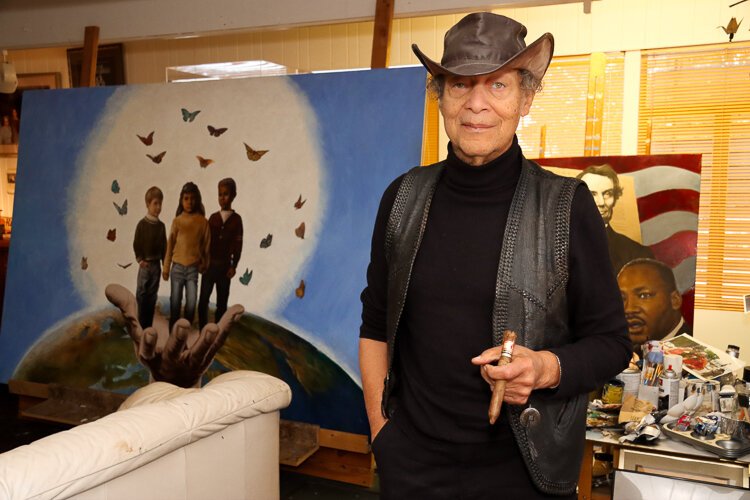
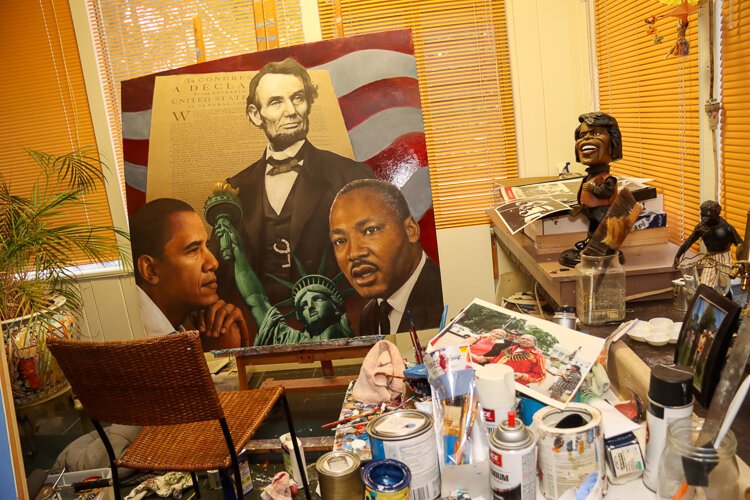
A look inside the studio of artist Paul Collins.
As a child, Collins discovered his talent for drawing, encouraged by teachers who saw his potential. While, like many kids, he initially dreamed of being a quarterback, art became his calling.
“I didn’t know drawing could be a career until a teacher said, ‘Your talent can take you places,’” says Collins as he reflects on his formative years within the Grand Rapids Public School system.
A career rooted in dignity and representation
Collins’ artwork spans decades and continents. It celebrates everyday heroes, the underrepresented, and hidden perspectives.
His “Worker Series,” displayed for years and in its entirety at the Amway Grand Plaza Hotel, honored the laborers who formed the backbone of modern society in the late 1900s.
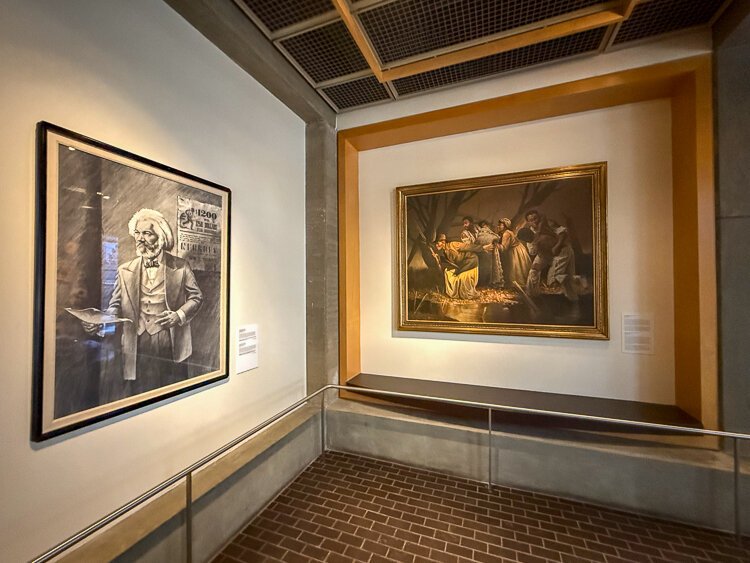
He also painted historical and cultural icons, including “Harriet Tubman’s Underground Railroad” (1980), which hangs prominently in the Grand Rapids Public Museum. His artwork consistently challenges stereotypes and offers dignified portrayals of Black, Indigenous, and global subjects.
“I wanted to paint people with dignity. Growing up, I saw caricatures that distorted Black and Indigenous features,” says Collins about his upbringing during the Jim Crow period in America, “My mom would ask, ‘What are you going to do about it?’ That question stayed with me,” says Collins.
Collins’ “Harriet Tubman’s Underground Railroad” (1980) hangs prominently at the Grand Rapids Public Museum.
‘The Traveling Artist’
This new exhibition at the Charles H. Wright Museum of African American History (affectionately known in Detroit as The Wright) highlights Collins’ global perspective. It features works from the museum’s permanent Paul Collins collection of works inspired by his travels to Africa, Japan, and beyond.
Each piece reflects his deep engagement with the various cultures he encountered, from a boy on a broken motorcycle in Senegal to portraits of Japanese villagers commissioned by one of his early patrons, Amway Corporation of Ada.
As we discussed the exhibition’s themes of empathy, cultural understanding, and shared humanity, it became apparent that these same themes resonate deeply with me and need revisiting in today’s divided world.
“Art isn’t just about what you see — it’s about who you meet and what you learn,” says Collins about his painting practice and the lessons learned. “Every culture taught me something about myself.”
Collins recalls one particularly moving moment when asked about pieces that resonated with the artist during its creation.
“In Senegal, I saw a young boy on a broken motorcycle. The bike had no engine, but he was going somewhere in his mind,” Collins says. His host did not want him to paint the scene, believing it lacked dignity. “That [boy’s] resilience and imagination inspired me to paint him. It’s those small stories that connect us as humans.”
Challenges and triumphs
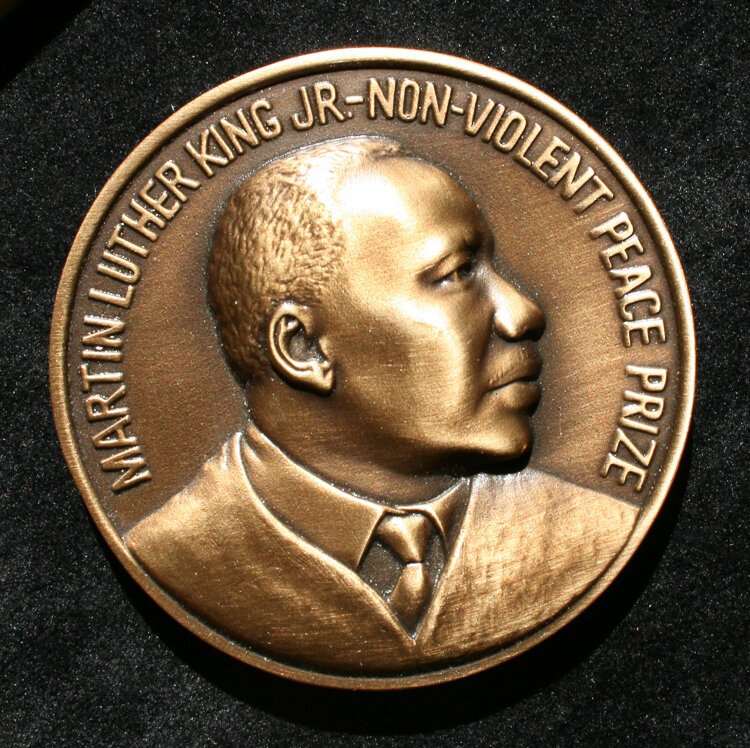
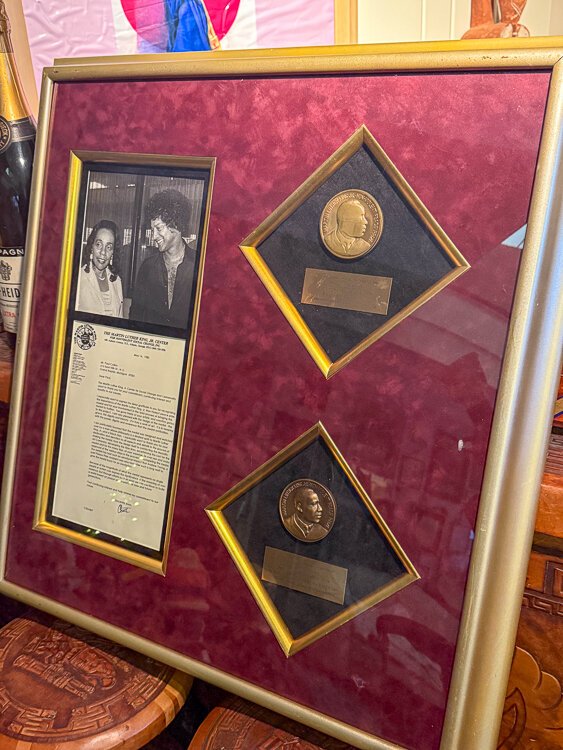
Despite his success, Collins’ journey was not without obstacles. From experiencing racism in his youth to facing skepticism as a Black artist, he has continually overcome barriers. Yet his talent and determination earned him global recognition, including the chance to design the Martin Luther King Jr. Peace Prize medal, one of his most proud moments in his art career.
“People often judged me by my color before seeing my work. I learned to let the art speak for itself,” says Collins. “I’ve always believed that art can break down walls and build bridges.”
The Martin Luther King Jr. Non-Violent Peace Prize medal designed by Paul Collins.
Legacy and mentorship
Collins’ influence extends beyond his art. He has mentored young artists and advocated for expanding our views on inclusion and embracing the power of democracy.
When I asked him about his advice to emerging creatives, without missing a beat, he leans in with a serious look that only an artist who has traveled many roads could deliver.
“Leave negativity behind when you walk through a door,” says Collins. “An open mind will take you further than you can imagine.”
A framed tribute to Paul Collins from Coretta Scott King.
Reflecting on his career, Collins expresses pride in the connections his art has fostered over his eight decades of walking this earth.
“We’re all connected. My art is my way of showing that we’re more alike than different,” he says.
Collins also emphasizes the importance of role models.
“Young artists need someone to look up to, someone who can show them what’s possible,” says Collins from within his studio where we were seated which is adorned with letters from world leaders and a plethora of snapshots proudly framed depicting a life well traveled. “That’s why I’ve always tried to be accessible, to share what I’ve learned.”
“The Traveling Artist” is more than an exhibition; it is a celebration and a fitting testament to Paul Collins’ enduring vision of unity and our shared humanity. Through his art, visitors are invited to explore his journey, see the world through his eyes, and, eventually, reflect on the stories that connect us all.
“Art has the power to remind us of our shared humanity,” says Collins. “It’s not just about what we see, but what we feel and how we grow together.”
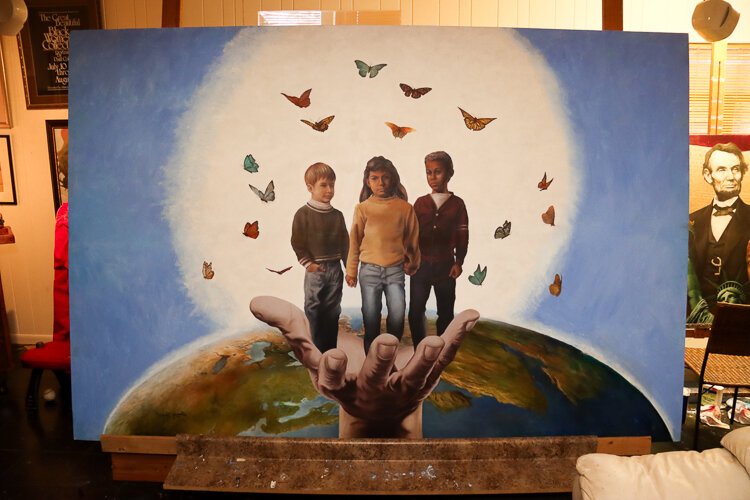
The latest piece by Paul Collins reflects his hope for humanity.
Exhibition Details
“The Traveling Artist” is on view at the Charles H. Wright Museum of African American History’s Chase Gallery until March 2. Located in midtown Detroit, The Wright celebrates African American history and culture through dynamic exhibitions and programs. For more information, visit thewright.org.
Related Articles
The museum as a classroom
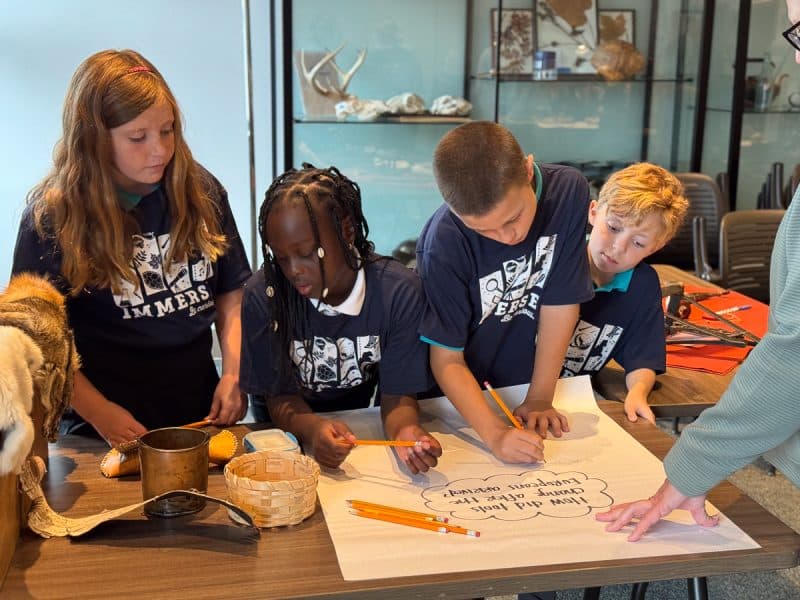
Educators increasingly rely on the Grand Rapids Public Museum as a dynamic classroom where students can “wake up” history, learn through listening, and find that curiosity and a sense of belonging can be cultivated together … and sometimes through the sharing of individual stories.
Voices of Youth: Theater offers kids skills beyond the stage
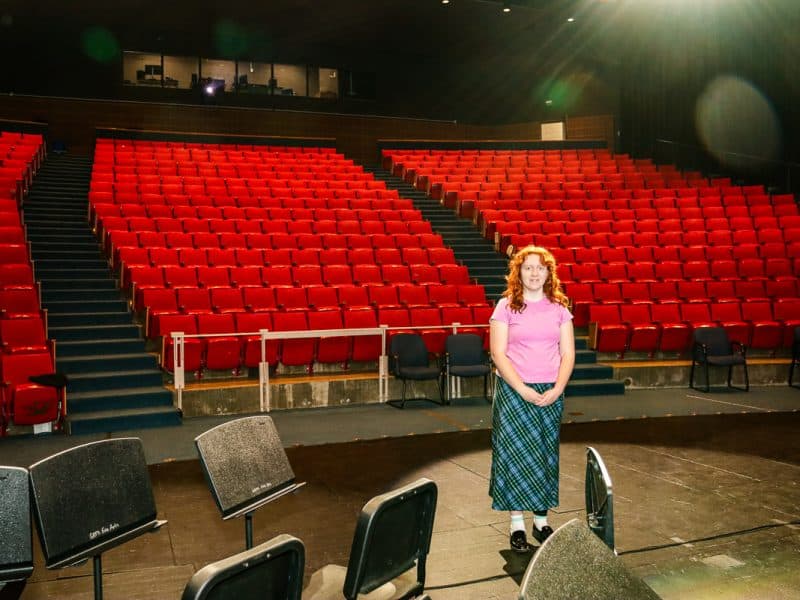
Our Voices of Youth narrative shows how theater fosters empathy, confidence, and belonging. City High Middle School student Ineke Petroelje explains why this art remains a deeply human experience.
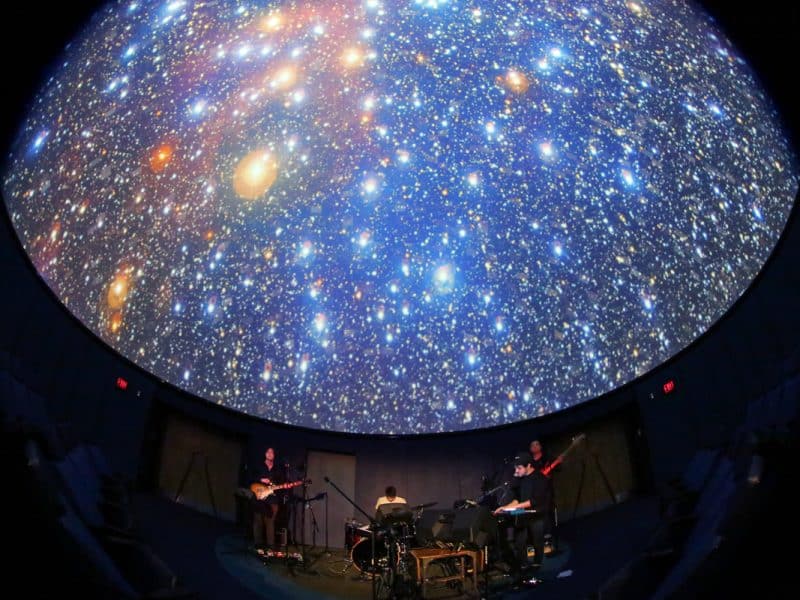
Under the stars, together: Don’t miss GRPM’s 9th planetarium concert series
Grand Rapids Public Museum’s highly anticipated annual live-music series Concerts Under the Stars returns in 2026. Historically, delaying ticket purchases for this series might result in missing this once-a-year event entirely.