Rehab without borders: building a Grand Rapids-Ghana connection
Dr. Abena Tannor visits Grand Rapids to explore rehabilitation collaboration, innovation, and shared learning between Ghana and Mary Free Bed.
One rehabilitation hospital in Grand Rapids brings together specialized physicians, therapists, prosthetists, and advanced diagnostic tools to help patients recover after strokes, spinal cord injuries, and traumatic brain injuries.
This isn’t the case for Ghana. The country, about the size of Oregon, with a population comparable to California, has fewer rehabilitation specialists than the staff at Mary Free Bed Rehabilitation Hospital in Grand Rapids.
That contrast is what brought Dr. Abena Tannor to West Michigan during the first week of December. She not only observed how rehabilitation works in an American hospital, but also explored the possible shapes of long-term collaboration between Grand Rapids and Accra, the capital of Ghana, and how both systems could benefit.
“There is a lot we can learn from each other,” Tannor says. “Collaboration is not one-way.”
Tannor is Ghana’s first rehabilitation and sports physician trained through the Ghana College of Physicians and Surgeons and an internationally recognized leader in global health equity.
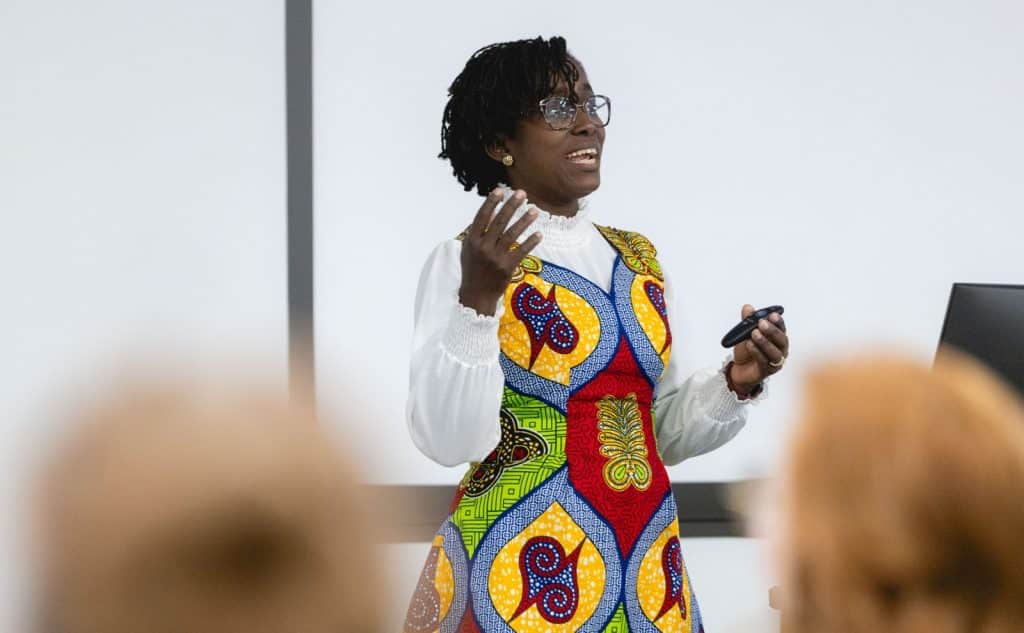
During her tour of Mary Free Bed’s inpatient and outpatient programs, she met with physicians and hospital leaders. She also spoke with residents training to become rehabilitation doctors. Her visit also included educational grand rounds, where she described what it takes to build services when resources are limited and the workforce is small.
“Rehabilitation should be a human right, not a luxury,” Tannor says.
Access to rehab is low priority
In Ghana, where roughly 38 million people live, fewer than 1,000 rehabilitation professionals serve the entire population, according to Tannor.
Tannor says she is the nation’s only physician formally trained in physical medicine and rehabilitation.
While survival rates for serious illness and injury have improved in many settings, long-term recovery is often shaped by whether patients can access therapy, assistive devices, and follow-up care.
“Rehab is very much needed, but it hasn’t always been prioritized compared to other survival needs in health care,” she says.
Tannor says the challenge is not only clinical, but logistical. Many patients who are discharged once stable are expected to continue rehabilitation on an outpatient basis. But that option may be inconsistent, unavailable, or geographically out of reach.
Long travel distances and out-of-pocket transportation costs can turn follow-up care into a plan that collapses in practice.
“Inpatient rehab allows families to see progress, receive education, and prepare for life at home,” Tannor says. “Right now, many families are sent home without training, equipment, or a plan.”
Her vision is to help establish Ghana’s first inpatient rehabilitation hospital. Intensive therapy, discharge planning, and caregiver education would be built into the care model instead of being treated as optional add-ons.
The goal, she says, is strengthening continuity of care, improving functional outcomes, and creating a training environment for the next generation of rehabilitation professionals.
Seeing system’s shortfalls
The motivation behind her work is personal as well as professional. Tannor says a family member with a disability received comprehensive rehabilitation outside Ghana. This relative returned to Ghana with a high quality of life.
The contrast stayed with her as she began practicing medicine.
“I kept asking myself what would have happened if they hadn’t had access to rehabilitation,” she says.
Rather than accept the limitations of the system, Tannor is focused on building it.
Over the past 15 years, she has supported the growth of rehabilitation professions that were once rare in Ghana.
She describes how the workforce slowly expands over time, alongside efforts to create formal training routes in physical medicine and rehabilitation. She currently directs the Alera Rehabilitation and Sports Centre, a facility that offers patient rehabilitation services and serves as Ghana’s sole accredited clinical training site for Rehabilitation and Sports Physicians
Her work also stretches beyond Ghana. Tannor was a consultant with the World Health Organization’s rehabilitation program where she led a project aimed at training primary care doctors, nurses, and other frontline providers. They are trained to recognize rehabilitation needs, provide basic interventions, and refer complex cases to the limited number of specialists.
“Even when specialists are limited, people still deserve to be identified and supported,” Tannor says.
West Michigan connection
Tannor has collaborated for nearly a decade with Dr. Yunna Sinskey, a physiatrist at Mary Free Bed, through global rehabilitation networks. Sinskey says bringing Tannor to Grand Rapids changed the energy in the hospital.
“When you’re busy and tired, you sometimes forget why you went into medicine,” Sinskey says. “Her energy and passion reignite that purpose.”

Sinskey says Tannor challenges U.S. clinicians to think differently about what “resources” really mean.
“She thrives in low-resource environments,” Sinskey says. “It reminds us that creativity, empathy, and problem-solving matter just as much as technology.”
That lesson, Sinskey says, applies even within the United States. Distance from specialty clinics, limited local staffing, and financial barriers can shape patient outcomes in rural areas. These issues echo global access problems.
“When you go up north, you see similar under-resourced situations,” she says. “It’s not the same scale, but the access issue is real.”
Lack of resources sparks creativity
Tannor used her visit to emphasize that solutions are not only imported from wealthy systems. Some of the most transferable strategies come from settings where equipment is scarce, and workarounds are routine.
“We’re looking into learning how to also provide rehab services in a low-resource setting where we don’t have ready access to MRI, EMGs, ultrasound, and all, and how we’re able to still provide rehab without those diagnostic tools,” Tannor says. “And also, how we’re using our local resources to innovate and develop some assistive devices.”

She contrasts that approach with settings where equipment can be purchased quickly.
“I know people here are used to things being produced and being bought off the market,” she says. “But when you don’t have access to the things even on the market, you learn to innovate and ultimately learn how to still thrive in a low-resource setting.”
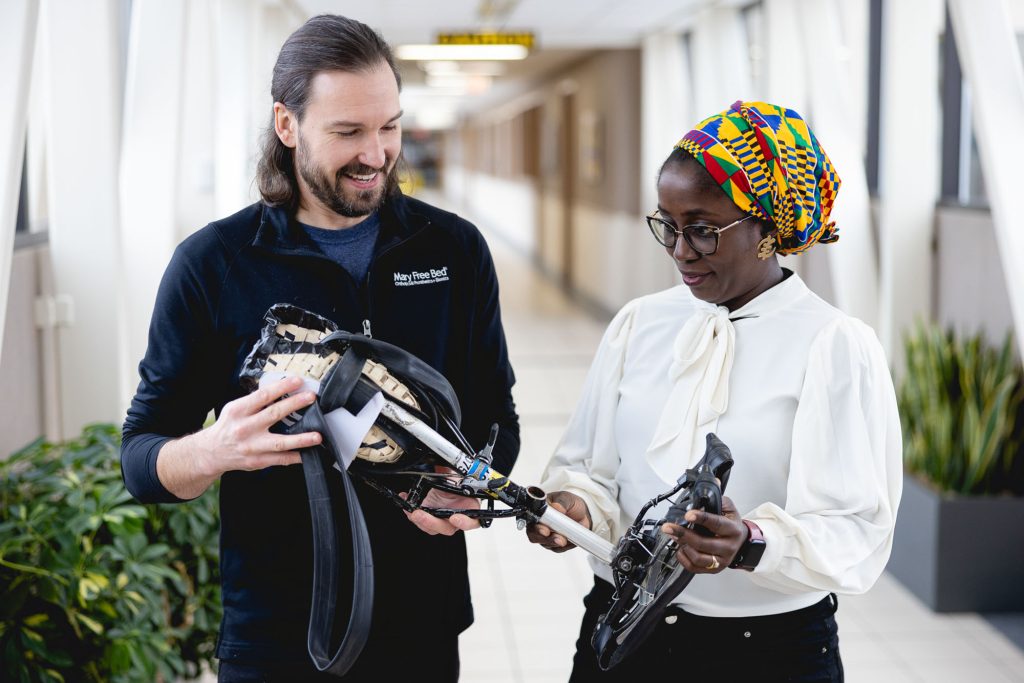
That theme of innovation as a response to constraints of resources is one of the collaboration ideas that was discussed. Building low-cost prosthetic technology from recycled materials is an example of how a solution developed through international experience can move back across borders.
Chris Mills, Mary Free Bed’s public relations manager, points to the work of Ben Hogan as an example of the bridge between resource-rich and resource-limited settings.
“Ben is a Mary Free Bed certified prosthetist and orthotist, who, after traveling to Guatemala, developed this resource of building a prosthetic leg out of a bicycle,” Mills says.
Mills describes it as a design born out of necessity that leverages widely available materials when conventional prosthetic components are too expensive or hard to source.
“He just took an old bicycle and tore it all apart and turned it into a prosthetic leg,” Mills says.
Hogan travels back to Guatemala to show the design to local clinicians and technicians, Mills says. That approach could translate to Ghana, especially if training can be shared with prosthetists there.
“I think that’s something he’s hoping to bring to some of the team out in Ghana to help them see how they can maybe try to mimic and follow along his plans,” Mills says
The concept has also drawn international attention in the prosthetics field, Mills says, including a presentation by Hogan that was connected to the International Society for Prosthetics and Orthotics. It has helped validate the idea that practical, low-cost designs can still meet professional standards and improve global access.
More than just resources
For Tannor, innovations like the bicycle-based prosthetic are not side stories. They represent a broader strategy of making rehabilitation more accessible by designing tools and workflows that fit the realities of the environment.
She also emphasizes that rehabilitation is not only a clinical technique. It includes trust-building, community education, and addressing misinformation about disability and recovery.
While her visit focused on hospital-based learning and collaboration, she repeatedly returned to the same goal: achieving functional independence and dignity.
“Rehabilitation should be a human right, not a luxury,” she says.
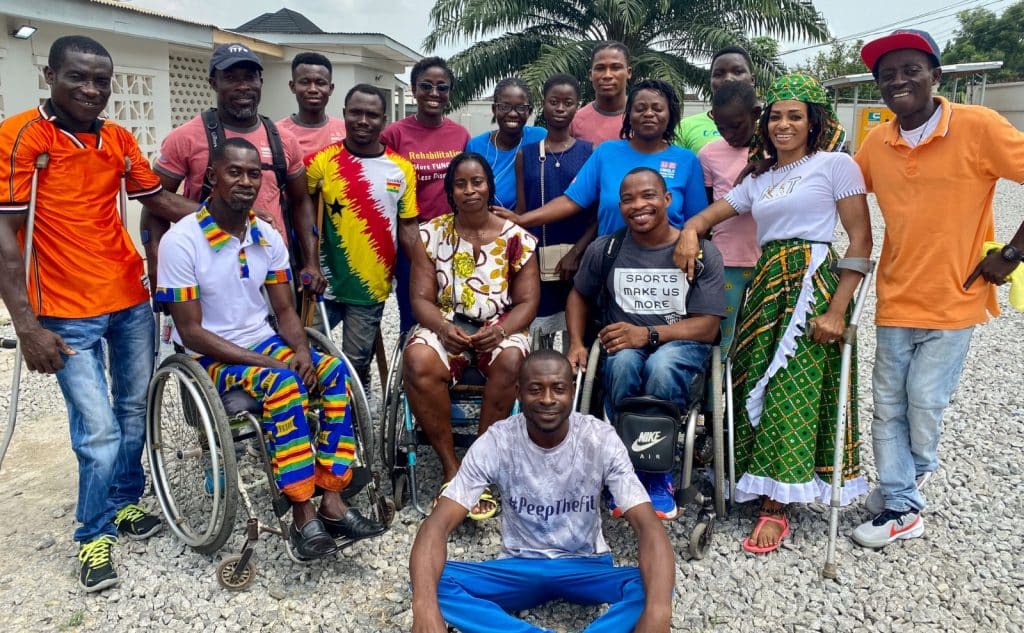
The possible collaboration is still evolving, but its outlines are clear. Tannor and Mary Free Bed clinicians talk about telemedicine consultations, shared training, and future site visits in both directions.
Tannor also describes her interest in a “sister” relationship between an eventual inpatient rehabilitation unit in Ghana and Mary Free Bed. The partnership will be built around peer-to-peer learning rather than one-directional aid.
“This is about connecting well-resourced and under-resourced systems so we can learn from each other,” Tannor says. “When we do that, people with disabilities don’t just survive — they thrive.”
Related Articles

Community mental health’s unsung heroes: Ashley Gibson, recovery coach
Gibson’s journey from inmate to recovering addict to recovery coach gives her a unique perspective.

Local networks, real results: Success stories from Michigan’s CMHs
Michigan’s community mental health agencies serve as lifelines and innovators.
Conference creates welcoming space where autism community connects with wide range of resources
The Autism Alliance of Michigan hosts the 2025 Navigating Autism Today (NAT) Conference in Grand Rapids on Friday, November 14.