
#RG20LookBack: Music as infrastructure, talent retention, neighborhood identity, and the glue of community
In his 13th #RG20LookBack column, Rapid Growth publisher Tommy Allen reflects on the 2022 story by Enrique Olmos, which serves as a reminder that the region’s music economy is about more than entertainment.
As Rapid Growth looks back on nearly two decades of documenting the people and ideas shaping West Michigan, we are resharing our Aug. 17, 2022, story by Enrique Olmos, “Harnessing the power of the digital age within West Michigan’s music scene.” It still acts as a strong reminder that our region’s music economy is about more than entertainment. It includes infrastructure, retaining creative talent, neighborhood identity, quality of life, and community bonds that give a place vibrancy. In a competitive world for creative talent, a lively music scene is one of West Michigan’s most valuable yet often overlooked assets that pays dividends, as we have seen as it evolves.
That is one reason the Michigan Music Alliance has remained such an important organization to watch. Long before the Alliance’s weekend Music Econ Summit arrives at Bamboo GR in downtown Grand Rapids, this nonprofit had already shown an ability to evolve with the needs of artists and communities alike.
For example, when the pandemic disrupted the state’s creative economy, Rapid Growth centered on the Alliance in our March 2020 G-Sync story, “West Michigan nonprofit retools overnight to benefit Michigan’s musicians.” Published just days after Michigan entered lockdown, this piece also captured the nimbleness of an organization that did more than convene events. It moved quickly to advocate for artists, launch the Michigan Artists Relief Fund, and provide education, connection, and support at a moment of extraordinary uncertainty.
That response mattered. While emergency programs eventually emerged to support many businesses, the spaces where artists first build and refine their craft often received far less attention in the early days of COVID. Across the country, venues folded under that pressure.
So when we returned to the Alliance in 2022 through Olmos’ story on our music scene, we could see that same spirit still at work, expanded into a broader vision of what a healthy music ecosystem requires.
Although our arts reporting budget was never restored after the pandemic, we managed to connect the dots through the Grand Rapids Chamber and the Michigan Film and Digital Media Office’s Creative Industries Rebound Grant. This allowed our story to highlight how the Alliance, a volunteer-run nonprofit, continued to strengthen Michigan’s music scene through workshops, panel discussions, and artist resources.
Today, under the leadership of Executive Director Nicholas Thomasma, the Alliance continues to affirm a truth Rapid Growth has long understood through our arts and culture reporting: music scenes do not thrive by accident. Our scene, just as it did for decades, still needs organizers, advocates, and institutions willing to help artists stay, build careers, and contribute to the social life of the places they call home.
This weekend’s Music Econ Summit, set for Saturday, April 11, 2026, from 9 a.m. to 4:30 p.m. at Bamboo GR, offers a fresh example of that evolution. Focusing on sustainable careers, workshops, mentor sessions, and networking for Michigan musicians, the summit showcases practical support that bolsters our entire creative community.
Rapid Growth continues to highlight what’s at stake in the arts today, as trends show people preferring to stay home, staring at their handheld screens, rather than returning to the essential third spaces where genuine human connections, empowered by the arts, can happen. After 20 years of reporting, we remain committed to the belief that investing in our musicians and their support systems—by extension—is an investment in our neighborhoods and gathering spaces, fostering the shared cultural energy that keeps West Michigan lively.
Harnessing the power of the digital age within West Michigan’s music scene
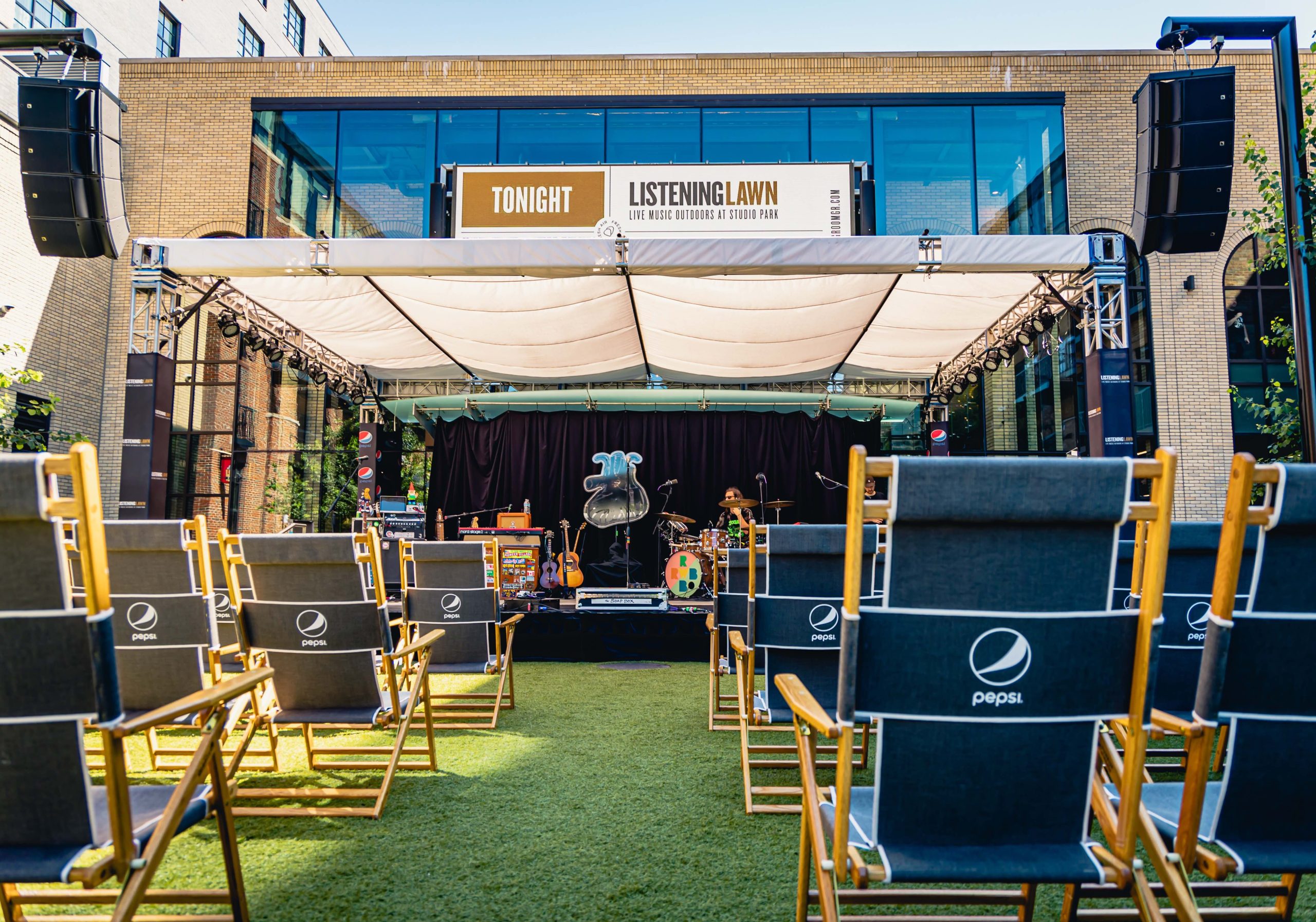
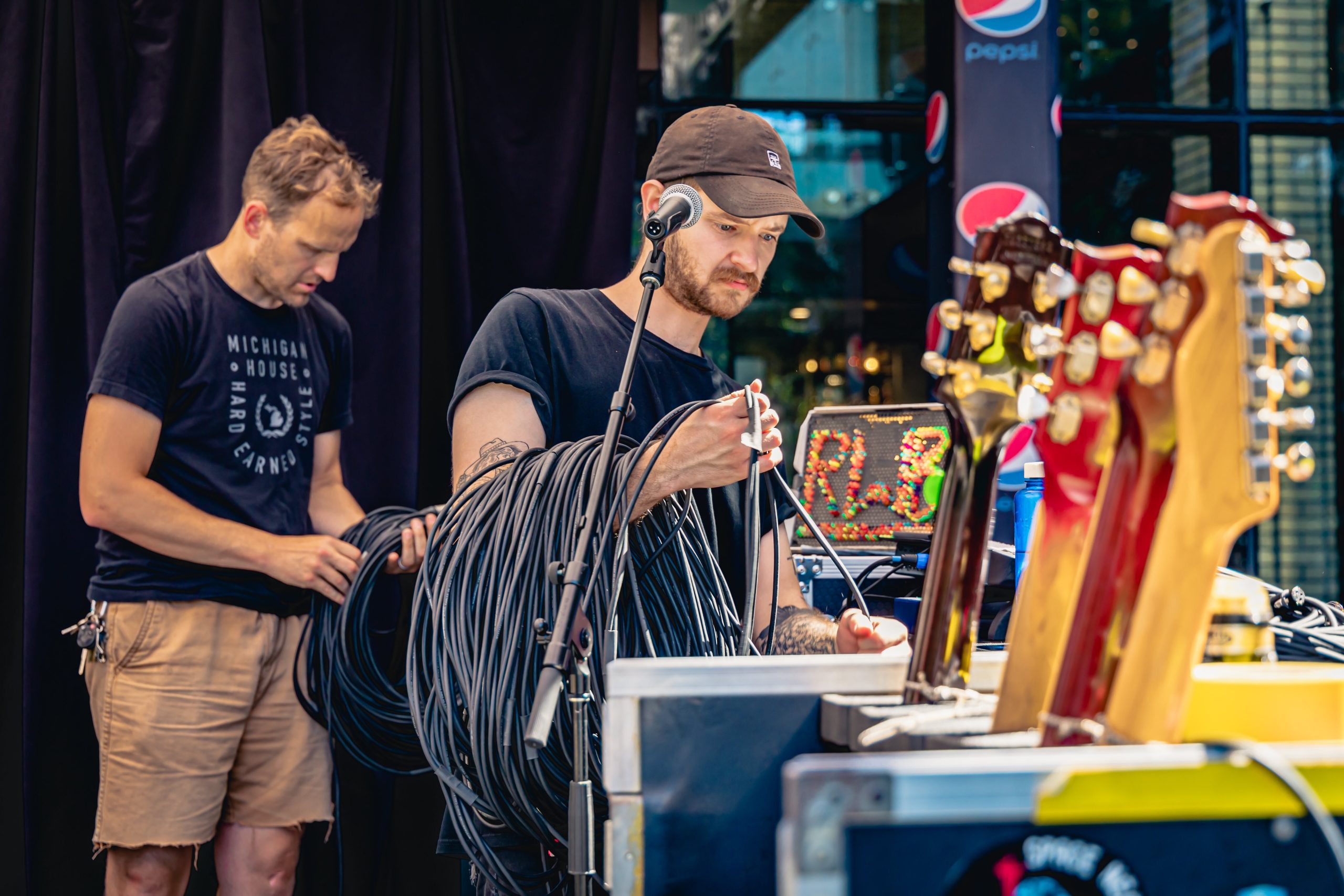
It’s late summer and the sky is a soft blue over the lawn at Studio Park. Concertgoers sprawl over the AstroTurf and nestle in on blankets and lawn chairs. National touring act, Red Wanting Blue is soundchecking for their show and the Listening Room staff is moving like clockwork around the lawn for one of their many Listening Lawn summer shows.
Elle Lively is the assistant general manager of events at Studio Park and she’s making her rounds to various staff members to assure everything is running smoothly. Lively is also the executive director of the Michigan Music Alliance, a volunteer-run nonprofit based in Grand Rapids that promotes the statewide music scene through workshops, panel meetings and artist resources.
We have a seat inside One Twenty Three in a corner booth and talk about the music scene.
“I feel like Grand Rapids has become a hot spot to attract talent from all over the state, which is really cool. We’re beaming with talent and I think the state always has been. If you look at the list of rock stars that have come out of the region, Michigan has always been a machine for pumping out talent,” Lively says.
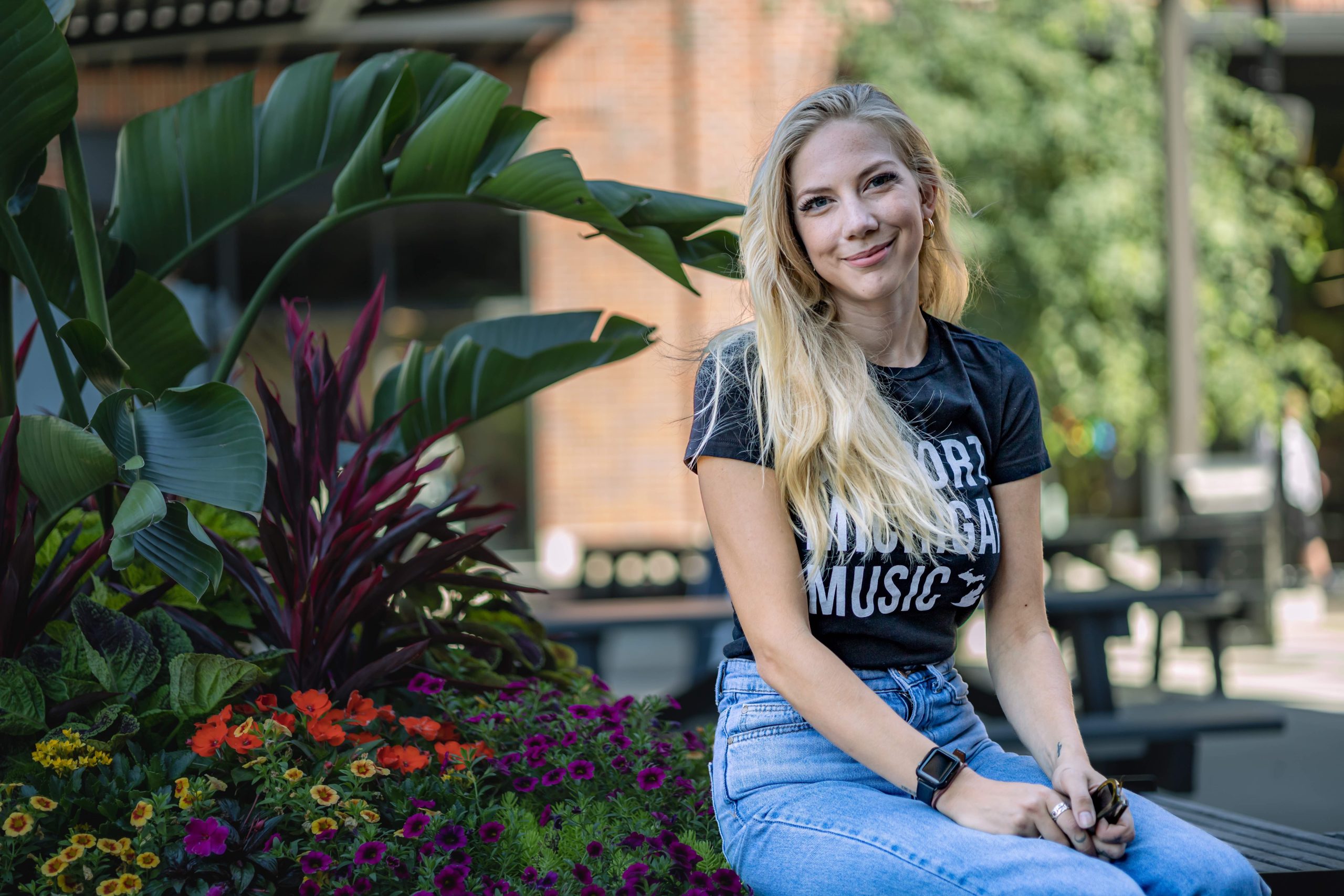
“But we haven’t always had the ecosystem to support retaining it here,” she says. “Right now, I feel like we’re hitting a point where there are so many artists on the cusp here who don’t want to leave the quality of life that they have living in West Michigan. So it’s kind of creating a new push to develop some of the infrastructure that we need to retain that talent.”
One of the tools that has long been ubiquitous as a way to promote live music is digital content. In the age of the pandemic especially, social media filled the void of in-person shows, with livestream concerts popping up left and right.
A long standing example for combining virtual and physical performances is WYCE’s GR Live, a weekly concert series hosted at Listening Room that is both streamed on-air as well as on Facebook Live while hosting an in-venue audience. The show runs every Thursday at noon.
Artists that have successfully wielded digital platforms include The Hacky Turtles, a Grand Rapids-based band that has over a thousand followers on TikTok, as well as a pinned video that has garnered over 300 thousand views.
Songwriter and musician Patty PerShayla, who recently relocated to Nashville from Grand Rapids, is another prime example of a strong and engaging digital presence. She regularly posts reels of covers on Instagram and hosts virtual performances on Twitch.
However, with the return of in-person concerts, the line between digital promotion and the need for concrete venues and live shows can be blurred.
“During the pandemic, we saw the digital space become the number one platform for collaboration. People weren’t able to get together and collaborate, so you saw all kinds of new and outside the box ideas being implemented in the digital world. It allowed people from all over to create with each other,” Lively says.
In July, Rolling Stone reported that Rashida Tlaib, the Democratic representative for Michigan’s 13th congressional district, called for a fairer streaming revenue model for working musicians, in an article by Jon Blistein.
Tlaib proposed the implementation of a streaming royalty, which would allow digital content creators to profit directly from their live internet content.
“The digital scene has been like the Wild West as new platforms pop up and it’s given artists more visibility, but also made it harder to get paid in a saturated market,” Lively says.
“A lot of Michigan artists, especially those who have been uncomfortable creating on new platforms like TikTok, have stuck to the real world and not dabbled in the digital space as much because it is such a hard thing to understand how to garner income from. Those who have harnessed the power of the digital space by utilizing things like Patreon and different streaming platforms to reach a new audience have grown, but it’s not easy for everyone to justify the time versus direct income.”
John Sinkevics, publisher and editor of Local Spins, an online Grand Rapids music publication, has been exclusively covering the West Michigan music scene for the last 10 years. He’s had a firsthand look at the many changes that have occurred.
“The fact that many artists and musicians have moved to the Grand Rapids area in recent years from cities such as Los Angeles, Nashville and other big markets proves that there’s a vibrant music scene here, along with a more reasonable cost of living,” says Sinkevics.
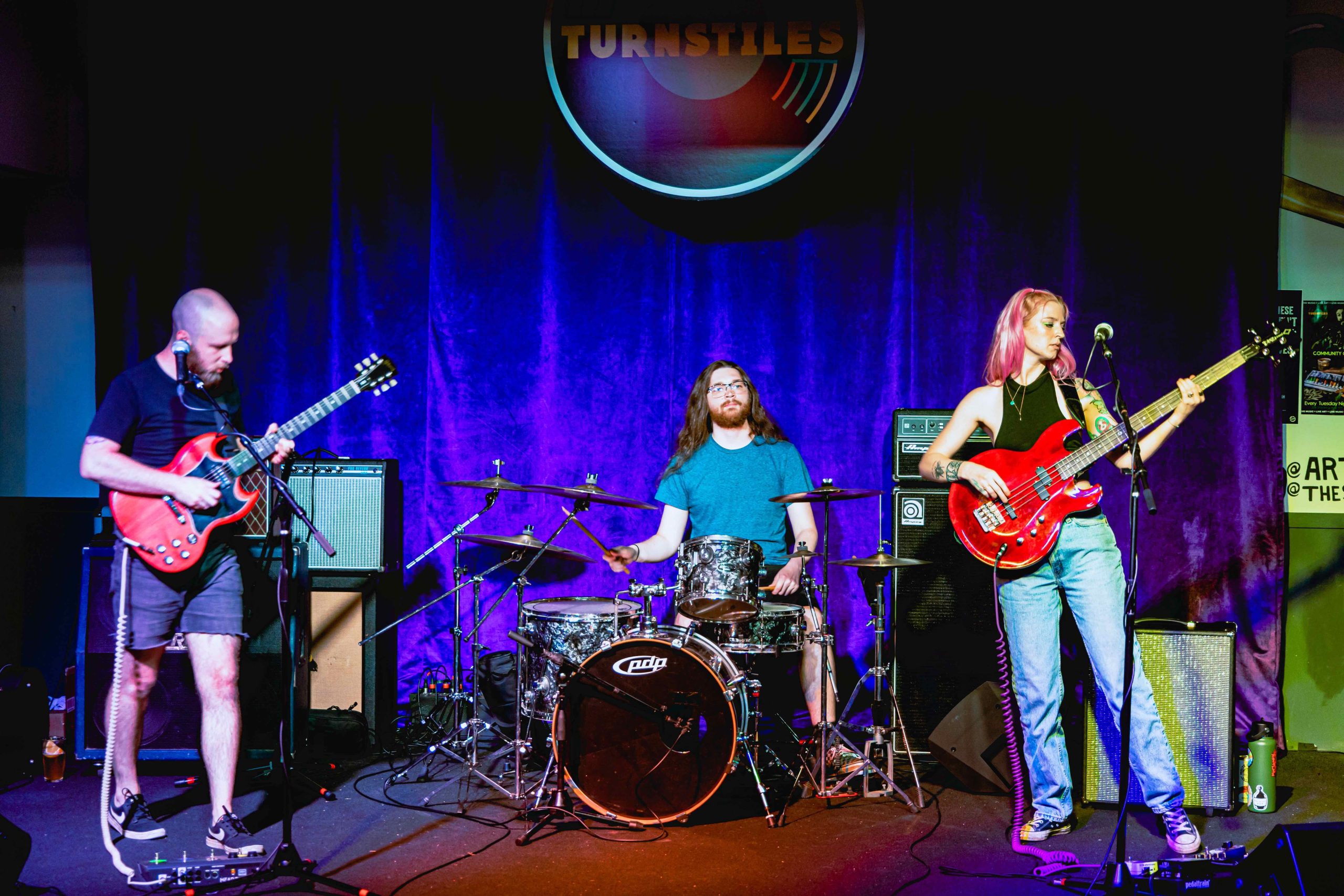
One live venue that sprouted up amid the pandemic is Turnstiles, a Westside bar and music venue that hosts live music most days of the week. One such evening of live music is Community Creatives Night every Tuesday from 9 p.m. to 1 a.m., an open mic style showcase where anyone from musicians, painters and poets can come in and share their work. Grand Rapids songwriter, Scottie MacDonald, who hosts Community Creatives night, shares his thoughts on the merging of the digital and physical music communities.
“Content is key for an artist to stay relevant in today’s music business. It helps show your fan base not only your music but [it provides] a chance for them to feel like they’re getting to know you,” MacDonald says.
“One of my favorite types of content, a friend of mine, [Lyle Divinsky], does a really great job of, is a ‘making of’ video. So it shows inspiration for the lyrics, melody and how their process of creating a song takes off and becomes real,” MacDonald says. “I think that’s a pretty neat way of showing your fan base another side they don’t really get to see.”
Back at the Listening Lawn, Lively walks us through Listening Room, which is housed on the second floor of the Studio Park complex. The room is serene and poised for an evening show. Although the music scene is flourishing, a current dialogue looks at what infrastructure is still needed to perpetuate sustainability as the city and scene grows.
“In places like Austin or Nashville, and New York and L.A., they attract artists because of the touring opportunities and infrastructure that they’ve built — like entertainment lawyers, booking agents, managers, the touring companies, even studios, too. And it’s interesting to see in recent years, even the number of small studios and producers has grown in Grand Rapids, but it’s still not anywhere near what Nashville is, for example.”
Sinkevics adds a similar sentiment while looking ahead at West Michigan’s growing market and its potential to become a major player in the entertainment industry.
“Sure, some Michigan-bred artists continue to test their talents and make connections in places like Nashville, but almost all of them return to perform here and lean on their homegrown fan bases in West Michigan,” he says. “Although the pandemic pulled the rug out from under some smaller, popular concert venues, the region remains poised, I think, to expand exponentially over the next couple of years when it comes to live music.”
Photos courtesy of Tyler Herbstreith
Our three-part series on West Michigan’s creative sectors is made possible through the Grand Rapids Chamber and the Michigan Film and Digital Media Office’s Creative Industries Rebound Grant.
About Enrique Olmos: Enrique is a writer and musician living in Grand Rapids. When he’s not writing for Rapid Growth Media, he performs as a touring keyboard player and percussionist, recites original poetry and drinks a bit too much espresso.
Related Articles
From phone to big screen: Youth films spotlight food justice, identity, community
GR teen filmmakers share mobile-made stories on food justice and identity at Mosaic Film Experience screening, highlighting youth voices and community connections.
12 days of Snowflake Break: Curiosity is on the calendar at the GR Public Museum
At a time when winter slows the city down, Snowflake Break shows how curiosity, culture, and community come together at the Grand Rapids Public Museum.


