
#RG20LookBack: People have the power…to change
In his 23rd #RG20LookBack, Rapid Growth Publisher Tommy Allen revisits his 2014 story, “Let’s Break Some Laws & Eggs Together,” a cheeky look at two ordinances that no longer fit the Grand Rapids many envisioned.
A decade ago, I walked into City Hall dressed, as I wrote at the time, in all-black — “the official color choice for covert activity,” but also, I would come to understand, an unofficial look for city folk.
The mission was not exactly Watergate. I was there, not as a journalist but as a citizen of the city, to ask about backyard fire pits and urban chickens.
On April 3, 2014, Rapid Growth published my G-Sync column titled “Let’s Break Some Laws & Eggs Together,” a slightly cheeky look at two ordinances that felt increasingly out of step with the Grand Rapids many of us were beginning to imagine.
At the time, what motivated me was that our city had already started repealing a few outdated rules from another era. As led by our city attorney, fortune-telling was no longer forbidden. As the keeping of overdue library books for too long was no longer treated as a misdemeanor, one that could have led to a jail sentence. So I wondered: if we were doing a little civic spring cleaning, why not look at backyard fires and urban hens, too, as members of the citizenry started to ask more of our city leadership?
What I found revisiting this 14-year-old story was not scandalous but something quieter and more revealing.
For example, while at the Grand Rapids Fire Department, (then) Captain Dan VanderHyde helped me understand that the issue with fire pits was not only fire safety. The ordinance treated backyard fires as a nuisance matter. A resident could have an outdoor fire if food was being cooked over it, but simply gathering around a flame with neighbors, friends, or family was another matter.
That distinction stayed with me.
The chicken conversation was similar. When I visited a store just over the city line, Family Farm & Home, and spoke with a clerk employed there, the questions raised after this meeting were practical, neighborly, and sometimes a little absurd. Would chickens smell? Would they be loud? Should people keep them inside the house? At the time, the city had already narrowly rejected an urban hen ordinance more than three years earlier. In the column, I argued that maybe it was time to revisit both issues.
Looking back now, I don’t want to overstate the role of that one article. Rapid Growth didn’t change the law. Change, I’ve come to learn after years of watching as both citizen and journalist, belongs to community voices — residents, advocates, city staff, commissioners, neighbors — people willing to keep showing up long after their three minutes at the podium are gone.
But I do think that column, like many others in this chapter of Rapid Growth’s history, captured something important about journalism’s role in a city.
Sometimes the work isn’t to declare that change has arrived. Sometimes it’s to notice where change is already pressing against the edges of daily life, and to give that conversation room to breathe.
In 2015, Grand Rapids adopted an ordinance allowing backyard chickens by permit — no roosters, and a bevy of rules governing lot size, coops, setbacks, neighbor notification, and the number of hens allowed. A few years later, backyard recreational fires also moved from prohibited to permitted, with a streamlined process that asks residents to apply, notify neighbors, follow safety rules, and respect the shared space of urban life.
Those details matter. Process matters. But what matters more to me now is what these changes signaled.
They suggested Grand Rapids was becoming a city willing to experiment with itself.
Not recklessly. Not without rules. And not without neighbors having a say.
We stayed open enough to ask whether the assumptions we’d inherited from our past still matched the lives of the people who wanted to live here.
I came to understand the power of that signal in an unexpected way later, when, at a party, I met Matt Patulski and his family. Matt told me he, his wife, and their kids had relocated from Brooklyn to Grand Rapids after considering several cities.
Patulski was happy to live in a city like Brooklyn that allowed urban hens. And while they hadn’t raised chickens there, that wasn’t the point.
The point was what it revealed about a place’s mindset.
Seeing that Grand Rapids was moving in a similar direction as their current home told his family something about the kind of city we were becoming — a place open to new ideas about how people live. A place thinking about its food systems, about how neighborhoods are power centers for community-building (not just the urban core), and about the freedom to petition and encourage dialogue that make a city feel alive. It helped seal the deal. And Patulski and family chose Creston as their new neighborhood.
That story is a core memory for me. Journalists don’t often get to hear that kind of impact.
We count pageviews. We track clicks. We send reports. We pull quotes off public social media posts, all the while trying to catch the rhythm of a city as it changes. But every now and then, someone tells you that a conversation you helped lift up became part of how they came to understand a place.
Not because the article told them what to think.
Because it showed them what the community was willing to look at and then work through, together.
I also think about Commissioner Dave Shaffer, who wasn’t initially a yes vote on urban hens. Years later, as we planted trees together in Roosevelt Park with Friends of Grand Rapids Parks, he told me he’d felt some inner conflict about that early position. His neighbors had hens. His kids loved living next door to them. And yes, he admitted, the eggs were pretty damn tasty, too.
That detail matters because it’s a reminder that civic change isn’t always born at a public hearing, where people show up hoping to be heard on something close to their hearts.
Sometimes it happens because of what a neighbor shares with you across a property line. Sometimes it happens because of the spark in a kid’s eyes over something as simple as egg-producing chickens living next door. Sometimes it happens because a commissioner, a neighbor, or a journalist gets close enough to an issue to finally see it differently.
That’s the larger lesson here.
As I look back on my 2014 column, I realize it was never really about chickens. It wasn’t really about fire pits, either.
It was about permission.
Legal permission, yes. But also civic permission.
Permission to imagine Grand Rapids as a city where people could gather outside around a small fire. Permission to imagine food and neighborhood life differently. Permission to believe a city’s rules could evolve as its people do. And sometimes those changes go on to be reflected in laws that shift and bend along with us with time.
For 20 years, Rapid Growth has tried to practice a kind of journalism rooted in that belief that, as Patti Smith wrote nearly 40 years ago, people have the power.
We’ve never been interested only in what happened at City Hall after the vote was taken. We’re not breaking news, so we often return to a topic long after the news trucks have left the scene for the next news item. We’ve always been more interested in what people are already building in response to the challenge of living together in a city — and we’ve found that the best solutions often come from around kitchen tables, within classrooms, on porches, from walks in our parks, along the riverbank, and on occasion across backyard fences.
Sometimes those conversations become ordinances. Sometimes they become programs. Sometimes they become the reason a family chooses Grand Rapids as home.
And sometimes, years later, they remind us that the future needs all of us — the neighbors, the commissioners, the kids, the journalists, and yes, the chickens to make a good “omelet” of a city.
G-Sync: Let’s Break Some Laws & Eggs Together
Spring is a season of hope, and this year, Lifestyle Editor Tommy Allen suggests we emerge from winter’s grip and attempt some bold moves. Inspired by City Hall’s recent move to repeal a few pesky, outdated ordinances that have run their course, he says it’s time to shake off a few more this week.
By Tommy Allen
Recently, our city attorney has brought certain ordinances to light that are almost comical in our present time. Many have even asked, “What were they thinking?” Some laws are outrageous, such as going to jail for overdue library books, while others, like the prohibition on riding, driving or leading horses, ponies or mules on our city sidewalks, provoke laughter these days.
In the spirit of civic spring cleaning, these ordinances got me thinking about the necessity of waiting until a law is dusty and unused on the shelf to change the way we live in our present city. It might be fun to read the recent headlines about repealing an ordinance prohibiting the telling of fortunes (or even pretending to tell fortunes) for hire, gain, or reward, but really, why should we wait years before we repeal laws that need to be changed today?
So, armed with a bit of knowledge and a new form of activism, I decided to tackle city hall on a few items.
My first stop was the city attorney office of Catherine Mish. She is Grand Rapids’ chief legal counsel. Mish has been very busy not only digging up these old ordinances, but has been pretty successful in getting these in front of our commissioners. Once presented with these jaw-dropping rules, the commissioners have quickly dismantled them as they were presented.
I felt confident in my mission, but I quickly learned that if I intended to fight city hall, I would need my running shoes as I traveled from department to department.
When I arrived at the clerk’s office, I felt I was in the right place. One of the staffers recognized me right away even as I tried to be discrete, attired in black – the official uniform choice for covert activity.
“Oh, no, what are you up to Tommy?” A woman had popped her head up from her cubicle to catch me engaged with an unsuspecting co-worker.
I quickly shared that I was on a research mission for an editorial on civic engagement in relation to two local ordinances: the banning of open fire pits and urban chickens.
After I laid my playing hand on the counter, various workers began to jump in with opinions ranging from “my next door neighbor would totally turn me in for a fire pit” to “I used to live on a farm and chickens stink.” I knew this would not be easy, but would be worth the challenge. As I left the room, we were all laughing from the added spin I contributed to the ordinances.
With printout in hand from the clerk and a list of phone numbers, I began making a few phone calls. Eventually, I landed at two information-rich places. My first stop would be the Grand Rapids Fire Department (GRFD), and my second was a store just over the city border where I knew they were proudly celebrating Chick Days – Plainfield Avenue’s Family Farm & Home.
After being buzzed into the GRFD main office at Station One, I began my line of questions. I was seeking anything, from a loophole in the law to reasons why this was a concern of the fire department.
Immediately, I stumped the first person I spoke to about open fire pits in the urban yard. Lisa Acosta of GRFD’s Prevention and Billing, following protocol, quickly kicked me up the chain of command to Captain Dan VanderHyde.
Captain VanderHyde and I set out to review the ordinance document together. What we found, in the interest of keeping it brief and free from the formality of the original legal speak, is that the only fire pits that are approved for outdoor use in the city are those fires that are created for the sole purpose of cooking food.
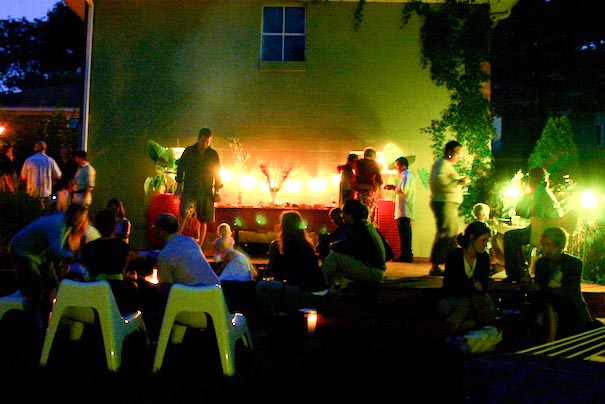
It is a fact that many who have purchased impressive outdoor cast iron fire pits have come to enjoy the warm glow only when they have cracked this code. Many unsuspecting folks who visit the city often find themselves asking their host about the sole package of hot dogs and shiny grill grate that sit close to the host. Psst: the only way you can avoid the fine is to quickly toss the grate on the roaring fire as your guests assist in getting the weenies out of their hermetically sealed packaging. And voila: you’re using your fire pit to cook food. (Wink.)
The GRFD Captain, like the clerk at city hall, was not only aware of my position here at Rapid Growth, but he had also heard about the loophole used among many urbanites since the passage of the ordinance just a little over a decade ago.
According to Acosta, whom I spoke with prior to the captain, the flame must be extinguished immediately after the hot dogs are done cooking. I was thinking that my hot dog defense might be finally lost when Captain VanderHyde tossed a bone on the fire to potentially save me.
“Now, if you were smoking meat…” said VanderHyde. He slowed down on the word “smoking” just long enough for my mind to wander into another direction..
I thought to myself, “Why not address root matters and just get rid of the ordinance?” Then it hit me. This ordinance, as written, is not filed under the category I expected to find such a law.
“Am I correct as I read the language, that this ordinance is not authored as a fire hazard,” I asked, “but is in fact written as a city nuisance?”
Bingo! A new foothold emerged in my mind. I felt like a young law clerk in a bad Tom Cruise movie. This explained why I had heard that folks getting busted for an outdoor fire pit would be issued a first-time warning instead of a fine. Suddenly, the possibility of dismantling this rule became a little more likely.
My detective work for the day was not yet done, however: a new urban hen policy would take a bit more effort. So I decided to explore a different direction based on a conversation I had in the clerk’s office. One member of this office shared that a city inspector once visited a house with the doors to the kitchen cabinets dismantled so that the homeowner’s hens could roost in them. This novel approach created a twist on the all-too-popular concept of farm-to-table food delivery that some affluent folks are willing to pay a hefty price to enjoy today, and I wondered if it could be a solution.
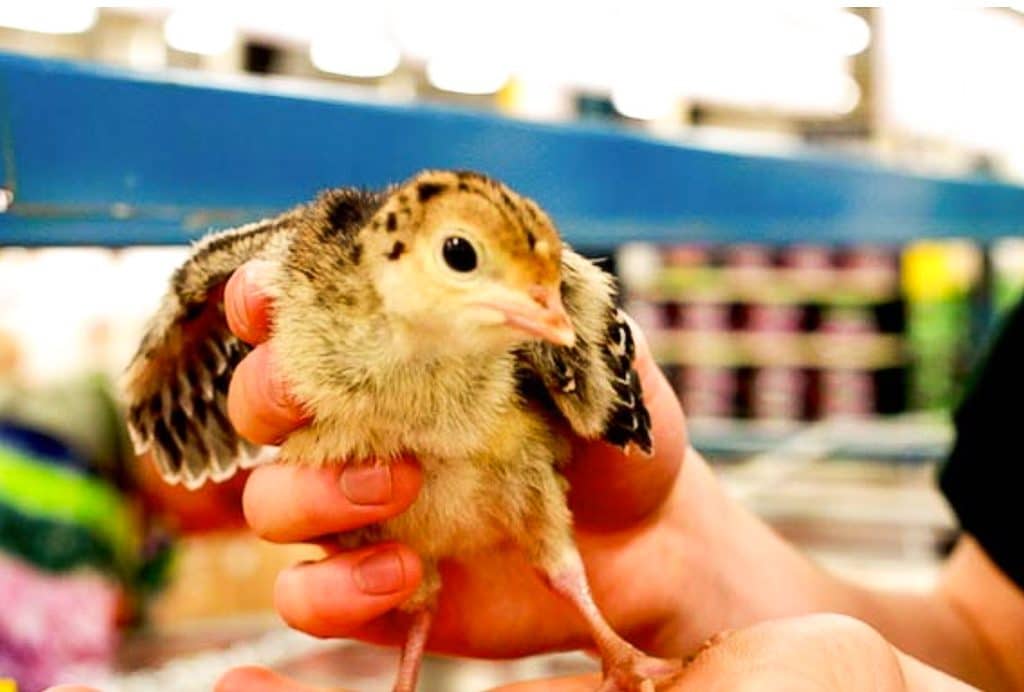
“I would never recommend bringing chickens in the home,” says Family Farm & Home’s Brandon Beukema. He raises hens on his farm when he is not working at this north end store. “When you invite a hen to roost in your home environment, you are inviting all sorts of interesting bacteria into your living space.”
I was quickly reminded by him that these animals are not domesticated, or, in layman’s terms, not potty trained. The house is the last place you want to place these egg machines.
Beukema walked me through the process of what it would take to set up my own little urban ranch. Chickens would require a very small footprint compared to the demands of other animals. He even helped me calculate how many chickens I would need to satisfy my family’s needs.
Inventing a family of three, who were seeking to enjoy eggs within a meal every other day, it was determined that my family would need just three or four hens to produce as many as 28 eggs a week.
As I listened to Beukema talk about the qualities of these very quiet omelet makers, I could not help but be won over by the gentleness of these creatures. You have to pick the right ones, because not all chickens are created equal, but the right creatures serve up something truly remarkable and beautiful at the same time.
For example, selecting a chick like an Isa Brown or a Rhode Island Red will produce a very reliable line of brown eggs daily, while the Araucana Ameraucana strain will light up your urban farm imaginations, as this breed produces white, pink, blue, brown, and green eggs.
“The Araucanas are referred to as the Easter Egger,” says Beukema. “But avoid the Guinea hens, who produce very few eggs but act as the watchdogs of the coop should a disturbance ensue. They are loud, but they serve a purpose to signal us when there is trouble in the roost.”
I was warned not to freak out about the cost to get started, which can be as much as $380. This ready-to-farm cost includes the chicks, feed, self-watering containers, a fence, and a beautiful, spacious hutch complete with an easy-to-access cleaning rack and a roosting box addition. To ensure that predators do not penetrate the hutch, you will want to enclose your space with additional chicken wire.
“It might seem like a lot at the start, but it really is a wise investment,” says Beukema. “Once you have made the commitment to raise chickens, the cost for what you want to do in creating access to fresh farm eggs, which are amazing to taste compared to those in the stores, you are looking at spending only $15 every three months for a new bag of feed.”
Beukema assured me that, while there are those who complain about the smell, the best way to ensure this was not the case would be by following a strict cleansing of your hutch area every three months. Every three months! That is certainly doable, since once you have cleared the poop out of the coop, you can dump this energy booster in your urban compost bin to really start a new circle of life with the addition of your hens’ waste.
A nagging question remained: What happens after a hen stops laying? Beukema offered a very noble concept.
A hen will only produce eggs for about three or four years, so you could slaughter them, but their meat is not that tasty. Beukema also took a more humane twist, saying, “Or you could just let them live out the last few months of their life within the pen.”
As urban farming becomes more popular, it is interesting to see many cities returning to these historic practices as an alternative to mass production. It’s a move that can be healthy for our families as well as for the planet.
In addition, when smart, future-focused policies in the urban center are enacted, not only does the urban farming movement create jobs, but it can also be a source of true sustainability – a concept word tossed around in boardrooms but rarely seen in action.
In France, more than one-sixteenth of the land within the city limits of Paris was set aside for agricultural purposes, resulting in not only a truly sustainable year-round delivery of food but also in extra bounty that was exported to England. And that was possible in the mid-1800s. Just imagine what we could accomplish today with all our advances.
And those who are fearful of the possibility of avian diseases should be placing their focus more on the large (and increasingly hard to penetrate with a media badge) corporate big box farming facilities, which have produced far more fertile opportunities for infections to cross over than a small farm.
“When it comes to bird flu, diverse small-scale poultry farming is the solution, not the problem,” according to a 2006 report by GRAIN – a small international nonprofit organization working to support small farmers and social movements struggling for community-controlled and biodiversity-based food systems.
More than three years have passed since our commission voted on (and narrowly defeated) the urban hen ordinance. I was drawn to revisit the issue here in G-Sync after a photo walk through a SE neighborhood. I discovered a faded sign on the side of an old brick storefront advertising that this Division Avenue shop carried supplies to serve those raising hens in our region.
Looking at that faded sign, I wondered if maybe the ability to raise our own food or the permission to build a warm glowing fire in our own backyards are issues that deserve to be considered anew.
They say you have to break a few (backyard fresh) eggs to make an omelet (over a backyard fire pit). Maybe it is time to become serious and revisit the reality on the ground, with many families enjoying farm fresh eggs produced in our city (via their illegal farms) as well as those late-night, non-food-serving fire pits filled with neighbors and friends.
We are on a roll to dismantle outdated and silly laws. Maybe with a little nudge from others, our Grand Rapids commission will get this right. Let’s hope that a fresh look at these two matters occurs soon so we can finally join other urban centers far and near, many of whom have figured it out and are now literally touching our city’s border. It’s time for a revote, my fellow Grand Rapidians.
The Future Needs All of Us.
Tommy Allen
Lifestyle Editor
rapidgsync@gmail.com
We are featuring two weeks’ worth of events, including our spring break guide, in G-Sync Events: Let’s Do This!
EVENTS:
Editor’s Note: If you would like to know more about the food justice-focused Urban Laying Hens group of West Michigan, please consider reading about their efforts on Facebook. For those seeking to impact change or simply raise your voice on the urban hens, backyard open fire pit ordinance, or any matter concerning the city of Grand Rapids, please visit the city’s site here. The Chick Days sale at Family Farm & Home ends on April 6.
Related Articles
How are Michigan’s families doing?
Rising costs, child care shortages and barriers to health care are straining Michigan families. What could help?

#RG20LookBack: 20 years after Grand Rapids bet on a new generation
In his 28th #RG20LookBack column celebrating Rapid Growth’s 20th anniversary, Publisher Tommy Allen revisits a 2006 story about former Grand Rapids Mayor Rosalynn Bliss and her start on the City Commission as its youngest woman ever elected.
Childcare fraud myth misses the larger story
The disproven allegations have burdened providers and threaten access as fewer seek to enter the field.


