
#RG20LookBack: Power of art as a community convener
For his ninth #RG20LookBack, Publisher Tommy Allen revisits his 2013 story, written while he was Lifestyle Editor, about the Division Avenue Arts Collective’s eviction from Avenue for the Arts just days before its 10th anniversary.
Reflecting on Grand Rapids and the influence of art, I see it’s not just about beauty. It’s also about enhancing visibility, preserving memory, strengthening neighborhood identities, and fostering deeper mutual understanding. All factors, too, in community-building.
Since I arrived here in 1981, I’ve observed that truth manifest through those small but essential communities that shaped this city, particularly in this story via its vibrant arts center, the scene they were nourishing. Reflecting on grainy film footage and early low-res cellphone photos, I realize that the image was never as important as the scene itself: the magnitude of what we were creating collectively.
Over time, through analyzing over 2,500 G-Sync and G-Sync Events stories from 2008 to 2020 and connecting historical context to both emerging and established art happenings around our city, I reached a clear conclusion: a city’s cultural vitality isn’t solely formed by its major festivals or headline events. These often mirror something more profound—serving as reminders to focus on the smaller spaces where exploration is fostered, and community starts.
Over time, I realized that the community many of us desire often forms in smaller venues—artist-run spaces, pop-up shops, neighborhood gatherings, tiny rehearsal rooms, and recurring invitations via postcards and flyers before social media emerged. These spaces encouraged people not just to experience culture but to participate in its creation.
As artists, we understood that simply making art wasn’t enough; we also had to cultivate the community around it. This is the essence of emerging movements during transitional periods, and this story exemplifies it: the loss that occurs when a community-focused space is destroyed or allowed to vanish.
As G-Sync gained popularity and many newspapers scaled back local arts coverage to prioritize larger events, I observed a quieter truth. Well before major events with sponsors, cameras, and crowds emerge, artists and small creative groups are already actively developing their audiences. A city’s true success quite often hinges on creating third spaces—venues where individuals with common interests can gather, connect, and want to return.
These spaces are significant and are deeply missed when gone, as they serve more than just cultural purposes. We discover in their wake with comments that essentially say, “We never knew what we had until it was gone.” These spaces help build trust, promote a sense of belonging, give neighborhoods a voice, and teach people how to engage actively rather than just consume. They also encourage showing up for each other when the need arises at their door.
What artists have long understood is now backed by research. A 2021 report from the National Endowment for the Arts and the Kresge Foundation found that arts and culture can strengthen social cohesion and community well-being, especially when they are rooted in place, relationships, and sustained presence. The report highlights that social cohesion can facilitate coordinated community efforts and enhance overall community well-being.
Looking back at Rapid Growth’s arts archive, I see more than just a list of openings, performances, and events. I find proof of how culture truly develops in Grand Rapids: not through a single large event, but through countless smaller communities that become stronger as art provides opportunities for people to come together, share space, and grow collectively. In 2013 when I was the lifestyle editor, I wrote G-Sync: The Right to the City, about how the arts collective on the Avenue for the Arts was booted to the curb with just 10 days’ notice, just shy of its 10th anniversary.
Reflecting on this story amid the city’s rapid growth prompts us to consider how we safeguard the spaces vital to communities, regardless of how those communities are defined. While development when it was written may not yet be today’s pace, the story of an arts group now in its third official location, migrating over time like a nomad, remaining vital to a community, highlights the deep love and need for such spaces and underscores the importance of protecting them from marginalization. As former Mayor Bliss’ artwork strongly proclaimed in her City Hall office, “The People Are The City.” These spaces build the city we have come to love and welcome so many today.
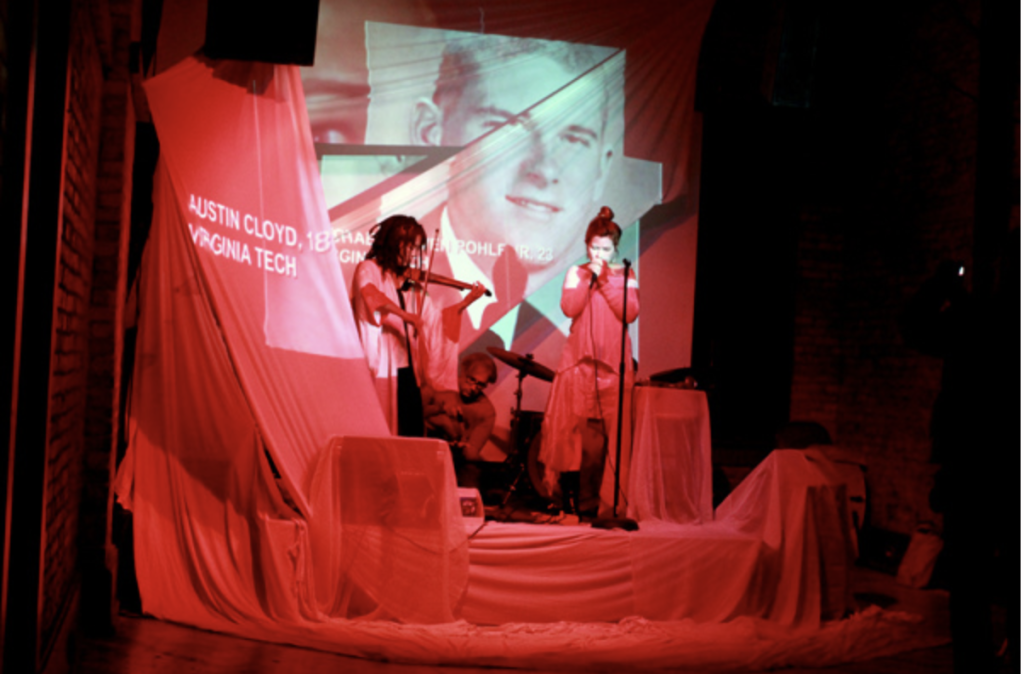
G-Sync: The Right to the City
Last week, an arts collective on the Avenue for the Arts was booted to the curb with just 10 days notice, just shy of their 10-year anniversary. Lifestyle Editor Tommy Allen decided to revisit the space and discovered insights worth discussing as we move forward.
Within the art community, there is a movement afoot that is looking at the role of art and the artist and their impact beyond the premise that art is simply a commodity to be bought and sold. I often begin to wonder if the arts in our community deserve their moment in the spotlight.
Last week, we just did experience that spotlight locally. The Division Avenue Arts Collective, an arts anchor with nearly ten years on Avenue of the Arts (also known as South Division), was evicted from their storefront with just a 10-day notice. This act garnered headlines akin to those generated by auctions of fine art, albeit locally.
I do not have the word count to talk about expansive topics like the commoditization of art, nor can I unpack the complexities of what the future of Division Avenue could look like for the indigenous people of this neighborhood. They deserve our compassionate intellect focused on their needs as well. My column this week is simply to poise their questions and encourage dialogue.
Sharon Zukin, a professor of sociology at Brooklyn College and the Graduate Center, City University of New York and author of several books and journals, outlines in Naked City: The Death and Life of Authentic Urban Places how we can prevent some of the mistakes of the past by, well, looking at the past mistakes of places like New York City.
While many defenders of various communities are often at odds with each other, lovingly clutching the urbanist writings of Jane Jacobs or Robert Moses in what was probably the biggest battle in modern history over the role and life of the city, both are concerned primarily with the structures of the city.
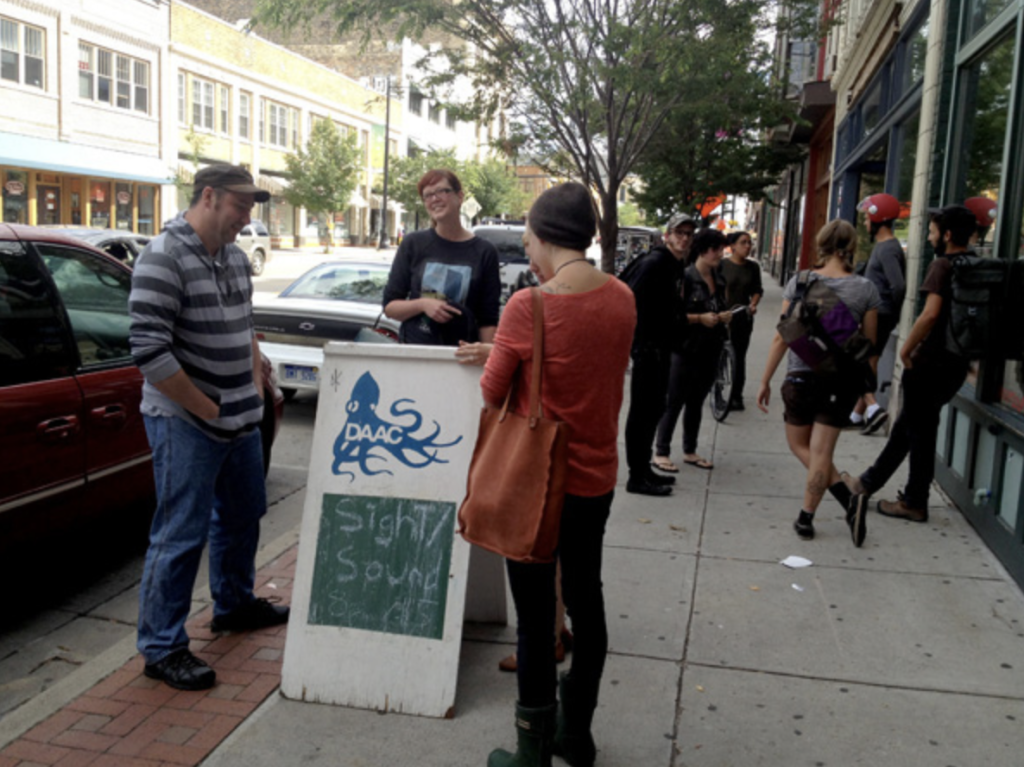
But I, like Zukin, am of the belief that the people are the city. Without the diversity of people, we are simple a parade of buildings for postcards. The people are the city.
Zukin’s writings illustrate that when a rundown area receives that first influx of settlers or attention, it is often artists (creative people without the means to afford the wealthier sections of a city) who come in and, through their sweat equity, work side-by-side with their neighbors to establish community. They begin to stabilize — not homogenize — the culture.
Over time, however, things do begin to change, and this is often when gentrification sets up shop on the street.
So what just happened?
Some would say it is unfair to cry gentrification so quickly over one space changing hands. That is a fair point that then has me asking at what point can we ask if it is at work? Do we wait until the third building is turned over and the residents are turned out? Maybe 10 is a better number for some?
Merriam-Webster defines gentrification as the “the process of renewal and rebuilding accompanying the influx of middle-class or affluent people into deteriorating areas that often displaces poorer residents.” Zukin seeks to broaden this definition of gentrification: “Gentrification, the conversion of socially marginal and working-class areas of the central city to middle-class residential use, reflects a movement that began in the 1960s, of private-market investment capital into downtown districts of major urban centers. Related to a shift in corporate investment and a corresponding expansion of the urban service economy, gentrification was seen more immediately in architectural restoration of deteriorating housing and the clustering of new cultural amenities in the urban core.”(Gentrification: Culture and Capital in the Urban Core, 1987)
Maybe in our rush to transform a street into a vibrant community for artists, we were a part of our own undoing.
This Avenue for the Arts concept grew out of a program created by then-Governor Granholm, who insisted on calling it a “Cool City” project. This opened the government checkbook to enable this chance to begin to happen in the first place.
The process here was different than in other places around the city as new models emerged. Some worked, some adjusted and succeeded, and others often failed, but the street provided an incubator for good ideas to be shared and enacted.
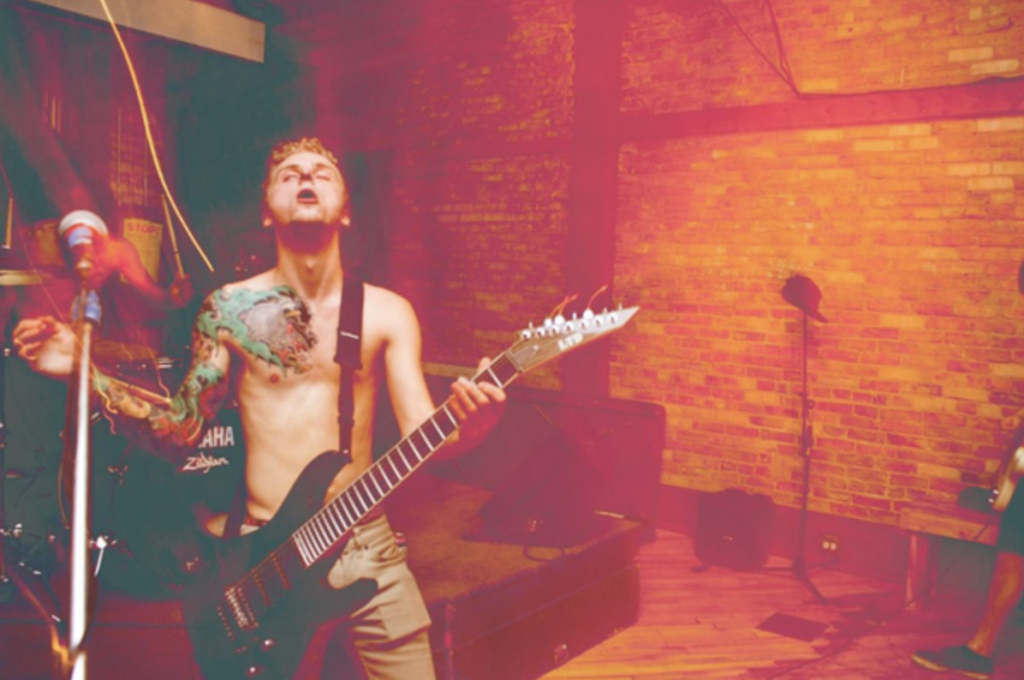
The DAAC is such a place where in their private space and with a volunteer-run collective they fostered art shows and also provided a musical stage to host everything from the local act to the internationally touring niche band — some would go on to bigger and greater venues. The DAAC provides a valuable service as arts collective first, but also as a way for artists to make money off their craft. It serves as a place where touring bands can get exposure to our market, and a place that attracts many outsiders who will speak highly of the venue to people in other markets. The DAAC is, in many ways, a great arts ambassador to the world for our city — and all accomplished with no real money.
I use the present tense here because even though they have moved out of their space, I know they will survive in many ways — .even if they are now homeless.
While they were at this space, we witnessed the power of an incubating arts collective to change our community.
The DAAC gave away more than $3,300 via their food-based, micro-granting arts program, Sunday Soup, an idea that Emma Heemskerk, one of the founders of The DAAC, feels had its roots in our city based on an experience she and her then-boyfriend Ben Schaafsma had with a local artist who would make homemade soup and deliver it to you for just $2.
Schaafsma would go on to create Sunday Soup — now international with 91 groups awarding over $75,000 to see individual arts and place-making projects have a chance to be funded and impact our world by their contribution. Schaafsma also would go on to create InCUBATE of Chicago before his untimely death.
The DAAC’s early leadership also made an impact on not only our community, but also our world. Their impact can be seen in the Emma’s RapidBlog this week.
We as a community must be willing to have those uncomfortable conversations where money does not rule the table.
The people of the Avenue have invested countless hours of their sweat equity in our community. This is why we must begin to talk of people and places like DAAC that create the rich cultural capital that eventually provides an opportunity for someone to just swoop in and pick that up along with the property. There must be a way that we can begin to value these contributions, especially when with all the tax breaks and incentives (and not just through your patronage), as a community we have encouraged and benefited from the development of this Avenue for the Arts.
We have to begin to encourage more community dialogue from the indigenous people of our city when we’re planning for the future. We must talk about the cultural capital that the people of a community create and others think they can pick it up and spend it freely. We must have this line item begin to enter the spreadsheet culture of our urban development talks as well within the walls of our city government. This is worth protecting just as much as Jacobs felt about buildings.
As a city obsessed with talk about creating B corporations, we need to begin to start putting into action these principles on a grander scale. We have to begin to invite those who inhabit the social space (the community or neighbors) into the capitalistic space (the new money). I am sure all parties will feel a little uncomfortable at the start, but increased dialogue will produce greater understanding between all parties.
If the time had been taken to understand the culture of our street, we would be not end up with buyers like Robert Dykstra who gave MLive’s Jeffery Kaczmarczyk the quote, “[The DAAC] were a nice niche in the community. But since Division is growing, they probably should find another place.” (Source: MLive.)
The issue for many in the arts is that they are a huge part of this growth. And those people are often exploited to attract others from the suburban chains
to bring the consumer dollars to our doorstep.
Sometimes the golden rule — and not the he-who-has-all-the-gold-rules idea — is all we need to know to succeed in the advancement of our region.
The Future Needs All of Us.
Related Articles

#RG20LookBack: Hungry for community? Step out; mingle.
In his eleventh #RG20LookBack column, Rapid Growth Publisher Tommy Allen revisits his 2014 story, “The Vegan Kitchen Takeover: Tip Top Deluxe Bar & Grill,” reflecting on how local restaurants can be spaces for connection and community.
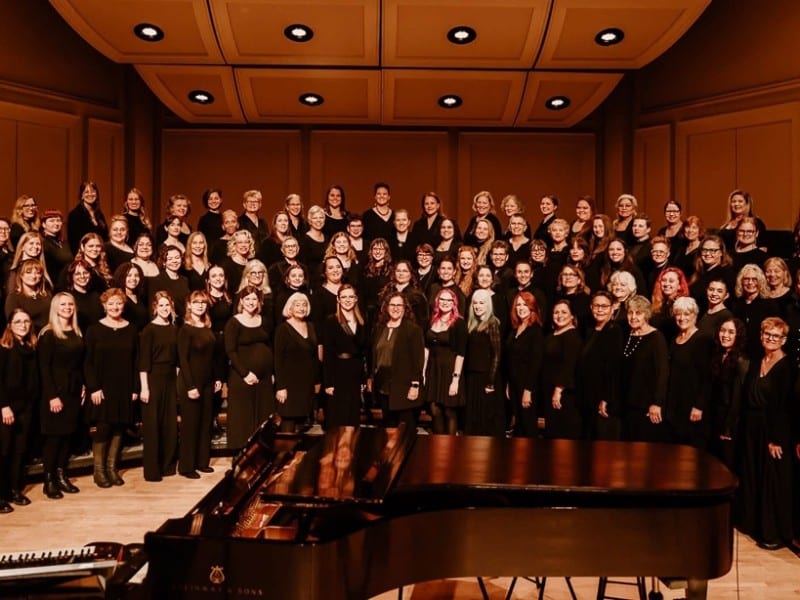
Grand Rapids Women’s Chorus to mark 30 years with powerful Michigan premiere honoring civil rights pioneer Pauli Murray
The Grand Rapids Women’s Chorus, a 110-voice ensemble, presents the Michigan premiere of Sincerely Yours, Pauli Murray, inviting the community to discover a civil rights trailblazer whose influence shapes discussions on justice, identity, and belonging.
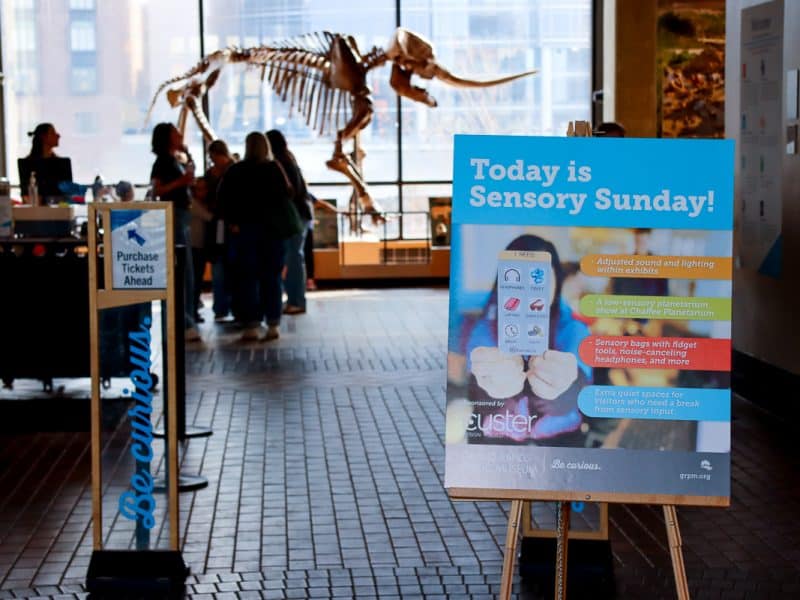
Grand Rapids Public Museum’s journey to Sensory Sunday built empathy into its infrastructure
On every second Sunday, the Grand Rapids Public Museum dims the sensory “noise” of a typical visit, enabling more families to experience wonder, enhance their learning, and foster a sense of belonging for everyone.


