The little vintage district that could
Nestled in the center of Grand Rapids, a group of fashion-oriented creatives is subtly turning South Division Avenue into a lively cultural hub rooted in sustainability, community, and shared goals.
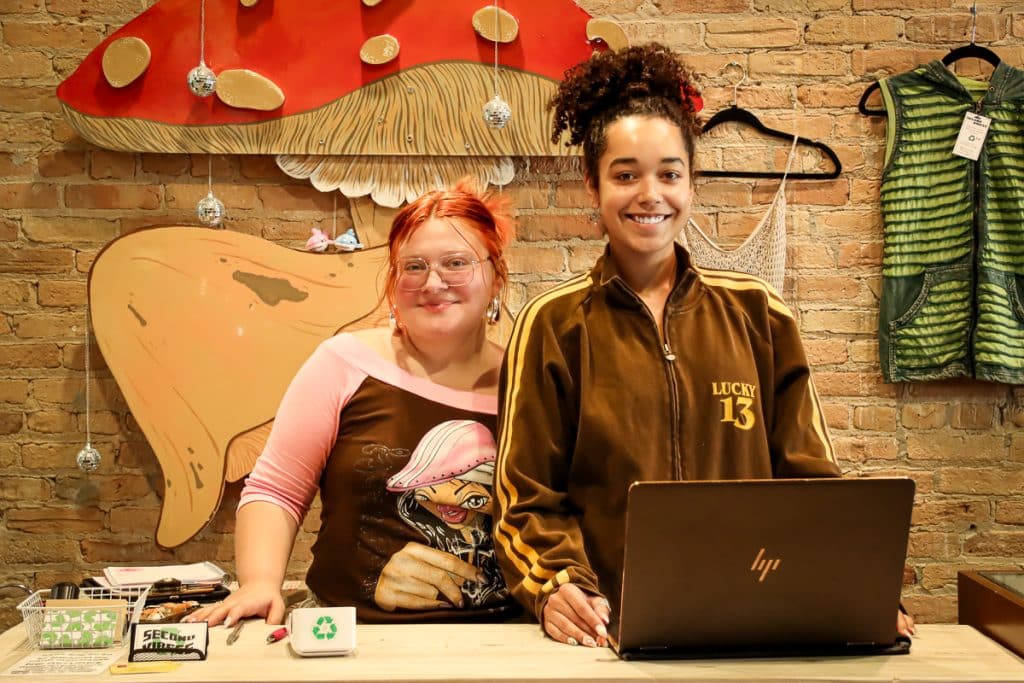
South Division Avenue has undergone many reinventions, but its latest chapter, led by a group of young fashion-focused entrepreneurs, is proving to be the most lasting because of how they are showing up for each other.
A vibrancy has emerged post-pandemic that locals haven’t experienced in years. Music from emerging artists echoes from Zabház Vintage, and a lively atmosphere builds as shoppers wander inside Second Vibes’ double-storefront up-cycled fashion studio. At Nido, a group of strangers turned friends huddle over paper scraps, creating collage art while fostering community.
A corridor with a complex history
For more than 20 years, the Avenue for the Arts has supported artists, small makers, and creative entrepreneurs. Initially, Dwelling Place, a long-time investor in this part of the city, invested in artist live-work spaces energized by the state of Michigan’s Cool Cities grants, delivered by then-governor Jennifer Granholm, producing several waves of DIY galleries over the years.
However, the journey has never been a smooth road: landlord turnover, economic downturns from recessions to a worldwide pandemic, and a persistent narrative, spread mainly by those who rarely visited, that claimed the area was unsafe. This story repeatedly hindered progress for decades.
I have observed this evolution firsthand. In nearly 20 years of reporting at Rapid Growth and almost five years more at On The Town magazine, I have seen how often strong ideas fail without the right combination of community mindset-shift and spirit, innovative programming, and lasting small-business support. And while Dwelling Place has been at the center of much of what has driven us to this forward motion through affordable, income-based rents to innovative educational programming, more investment attention is needed for these emerging businesses to leap.
Today, a new generation, including many Gen Z and younger Millennials, is taking a different approach. Instead of focusing on a single destination experience, as has been the case in the past, or creating an unimaginative, stereotypical art-centered scene, they are building, shop by shop, an ecosystem that is larger and more complex than anything seen before.
Nido: Building a third space for creatives
At Nido, owner Enrique Padilla stands among a curated mix of vintage clothing, local artwork, used records, and reworked upcycled garments that blur the line between retail and gallery. Padilla didn’t just want to open a shop. He wanted to create the kind of third space he couldn’t find elsewhere in the city.
“I wanted a space where people could come in and feel safe to explore things or have a real conversation,” Padilla says as he gestures toward the giant table where, the night before, the collage-making event took place. “You don’t get that experience at a bar or B-Dubs.”
Building on his community efforts, he is acting at a time when public health officials, such as former U.S. Surgeon General Vivek Murthy, highlight an “epidemic of loneliness” in their report, Our Epidemic of Loneliness and Isolation. In an age dominated by social media that fuels comparison and division, places like Nido and Grammotones (also on South Division Avenue) provide an analog-centered alternative, encouraging people to disconnect from algorithms, engage in person, and in the process foster genuine relationships.
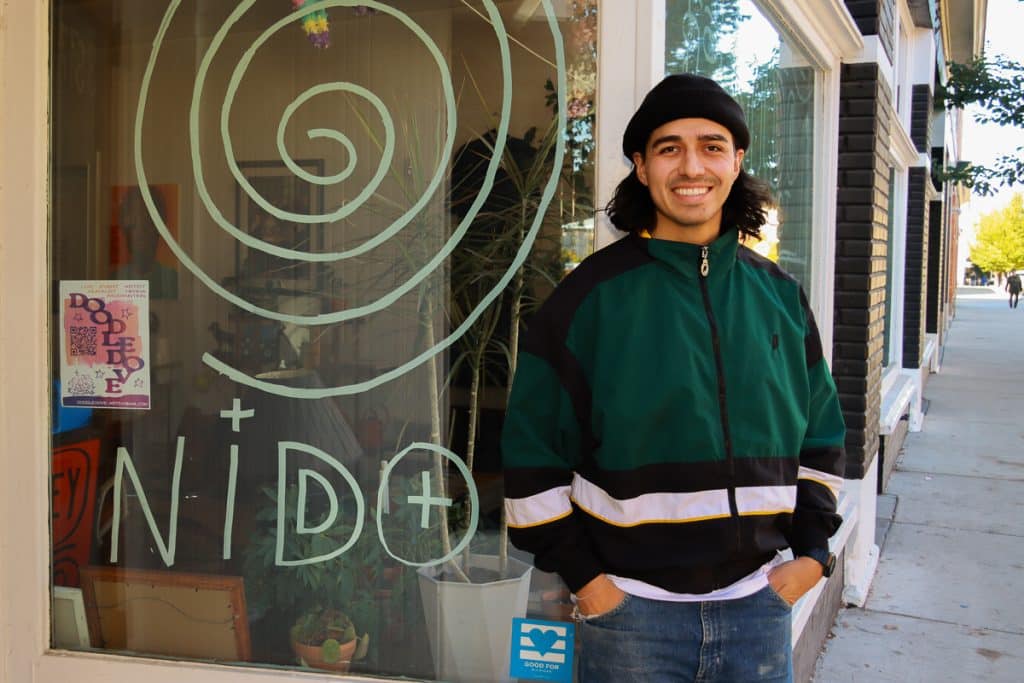
“Five of the people in here last night met at an earlier event we had hosted, and now they hang out all the time. That’s the kind of community space I wanted to build,” Padilla says.
On a street historically shaped by decades of reinvention and reinvestment, cycles of hope and moments of disappointment, this moment feels unique. The creative-focused businesses here are not copying retail trends from distant cities or chasing fast-fashion profits that depend heavily on cheap labor and cheaper import fees. Instead, these new economic- and buzz-generating leaders aim to create something more thoughtful, more personal, and rooted in real care. And they are building this together.
His personal journey – traveling, coming home, and prioritizing intention over escapism – is the core of Nido’s principles for engaging on the Avenue. This flexing of the model, evident in others as well, is showing signs of working.
“I thought opening a vintage shop here would be competitive,” he says. “But everyone (here) was like, ‘rising seas lift all boats.’ There’s no gatekeeping.”
In a district traditionally shaped by individual artists, his idea of a shared, collaborative space provides what the Avenue has been striving for. However, for those seeking prescriptive over organic growth, success today relies on more than just a single element, and a sea of new business players are doing it on their terms.
Zabház: A legacy of sustainability and belonging
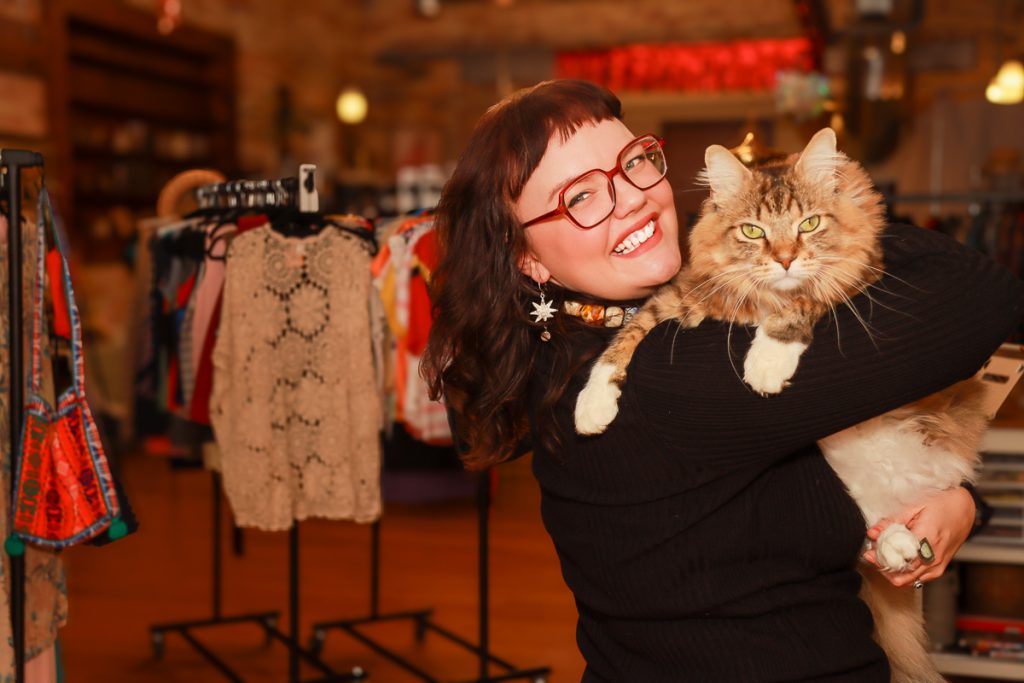
A few doors north, Janna Maris, who owns Zabház Vintage, follows a different but closely related tradition. Her shop is named after her grandmother, Gazella, a woman who transformed others’ discarded items into valuable treasures long before secondhand shopping became trendy.
“My grandma was a pioneer—she’d clear out estate sales, find value in what people threw away, and give everything a second life,” Maris says. “That’s the spirit behind my shop.”
For Maris, sustainability cannot be separated from inclusivity.
“I don’t want a store where only a few bodies fit,” she says. “I carry from small to 5X because everyone deserves to feel good in something.”
Her shop is designed to encourage conversation almost as much as browsing. Home goods are displayed alongside clothing, and during my visit, a microphone was being set up for an in-store pop-up performance—yet another 1990s trend making a comeback on the Avenue. These events provide a platform for emerging artists to reach new audiences, all within a space shaped by the community that brings life and economic investment to the shop.
“This isn’t just my store,” she says. “It’s everyone’s store. It’s really a community space first.”
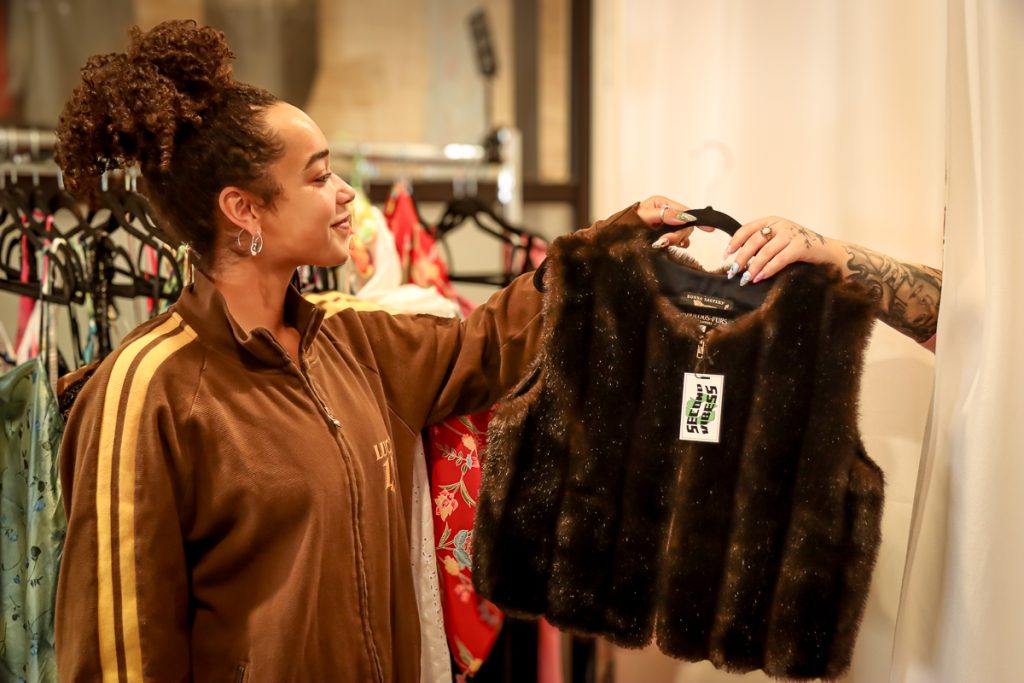
Zabház is also the place where inclusivity and collaboration with others on the Avenue are on display..
“If someone needs a men’s ’90s tee, I send them to Rewind (a shop just down the street). If they need tailoring, I send them to Nido,” says Amaris. “We all send each other customers. That’s how this works on the Avenue.”
Maris also advocates for additional improvements in the corridor, including more façade restorations through the city’s program, more internal infrastructure investment within these small businesses, and tourism support that recognizes and reflects the area’s growing cultural significance.
The fashion-focused, sustainability-driven shops on the Avenue for the Arts are ready for more to discover this corridor.
“Losing a Black-owned business on this street? That was devastating,” Maris says on the closure of GRNoir wine bar earlier in 2025 and the urgency many are beginning to vocalise more in the midst of an economically challenging year. “Losing [GRNoir], an anchor on the Avenue, showed us all just how fragile things are right now out there for area small businesses.”
Shifting the lens: A new generation emerges
Further north on South Division, just steps from Ferris State University’s KCAD’s Pamella Roland DeVos School of Fashion , best friends Camille Steverson and Caitlin Fitzpatrick, co-owners of Second Vibess, embody the youthful momentum of this movement.
Their shop started as an Instagram venture between (then) two GVSU roommates, transitioned into a pop-up circuit, and ultimately led to not one but two expansions via business investment grants, turning Second Vibess into a dual storefront with a dedicated rework studio.
“We started by selling our fashions on Instagram as students at GVSU,” Steverson says. “As we thrifted more, we saw how much clothing was being tossed. Upcycling fashions just made sense.”
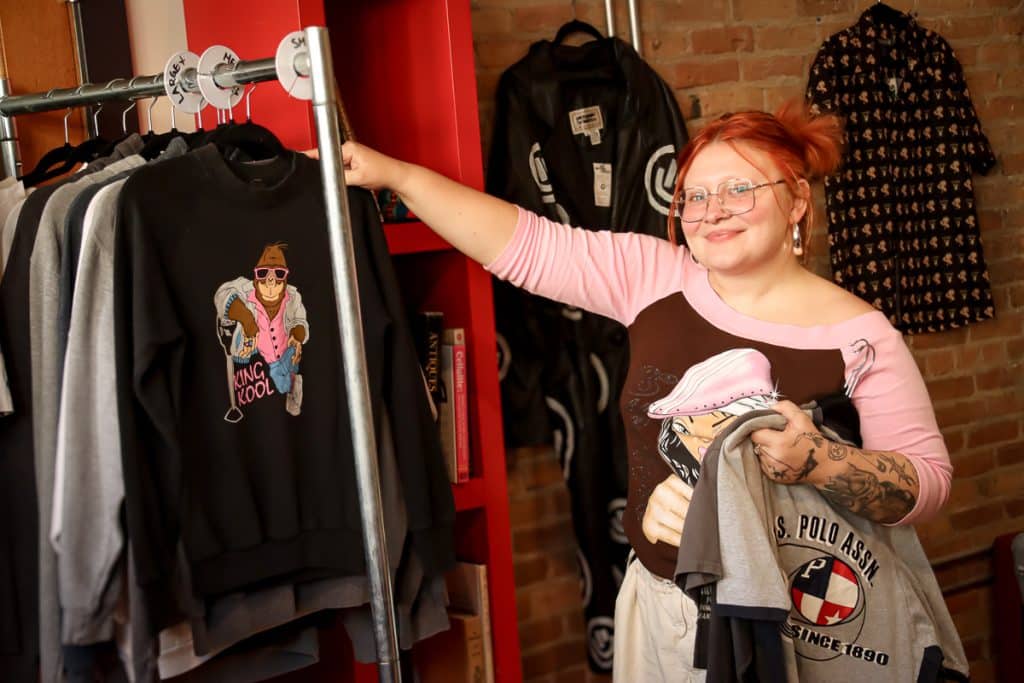
The rework studio is a vibrant mix of colors and textures – patchwork skirts, painted denim, and sweatshirts crafted from deconstructed materials. It’s fashion-forward, experimental, and uniquely theirs, making it a popular destination for both young and older fashion enthusiasts.
“Our reworked pieces let us express that high-fashion side we dream about,” Fitzpatrick says.
But Second Vibess isn’t only about clothes. It’s about skills.
“We host sewing nights where people can use our machines or learn basics,” Steverson explains. “It’s free, donation-based, you can just come hang out and make something.”
This change — from focusing on resale to active creative participation – remarkably enhances the district, as evidenced by the many businesses along the Avenue that are embracing this organic model of community-building.
Workshops for future skills development are attracting new visitors seeking a community beyond digital spaces. Furthermore, upcycling businesses like these reduce textile waste and spark creativity. Additionally, the collaborative atmosphere fosters the feeling that supporting a single shop in many ways benefits the entire community.
“A concentration of creative places on one street benefits everyone,” Fitzpatrick says. “It’s a positive, not competition.”
Vibrant youthful spirit alive with creativity
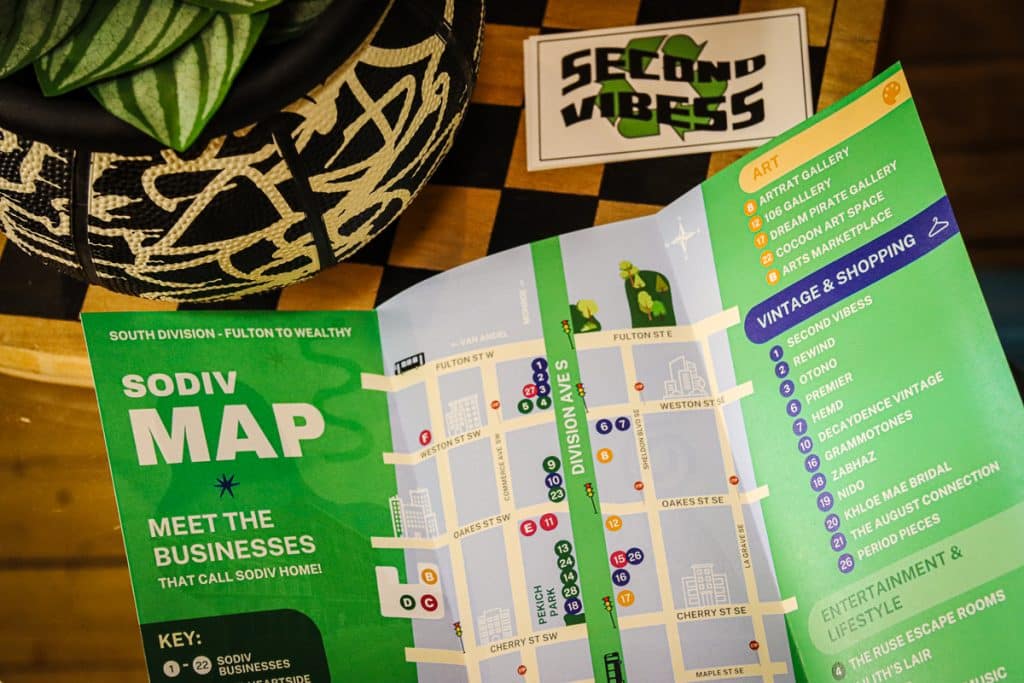
Across all three shops we visited, a shared story emerges: this district works because the owners uplift one another. Cross-referrals are constant. Programming overlaps intentionally. Second Vibess even produced a map showcasing the array of shops on the Avenue for the Arts, which they freely make available to all those on the corridor.
What’s unfolding here contradicts the early advice from more senior leaders in the area that many young entrepreneurs report receiving: “do something different from each other.”
Instead, by trusting their instincts, this new wave of creatives is generating a collective momentum—each shop’s niche seamlessly complements the next, enhancing the entire corridor. Significantly, they view themselves not as rivals but as collaborators in shaping a cultural district, rather than isolated businesses merely trying to survive.
This ecosystem bridges the gaps left by outdated programs that attempted to restore a bygone era now irrelevant. Their mindset stabilizes the corridor despite landlord shifts and public misconceptions, which society should have abandoned long ago as racist and now feel even more outdated when you experience the district’s vibrancy.
These shops uphold their origins and legacy, established by Dwelling Place and earlier artists. This includes previous art and music venues such as Nate Neering Studio and The Reptile House, as well as more recent spaces like Mexicains Sans Frontières and The Division Avenue Arts Collective, better known as The DAAC, where creativity, community, and experimentation thrive.
Still, the challenges are real. Grants expire. Rents rise. Façades fall into disrepair. Public narratives about safety persist despite lived experiences challenging our long-held, unchecked fears. For these businesses to thrive long-term, policy and investment must catch up to the work already happening on the ground.
“People talk about Division like it’s unsafe,” Steverson says, “but most of that is perception. Folks just need to come downtown and experience it.”
“There’s so much potential here. We just need people to continue supporting the spaces that make this city unique,” Maris says, then turns to greet a group of young adults who have come into her shop, located ironically in the former hip-hotspot The Reptile House, a 1990s club once legendary in Grand Rapids’ music scene and still cherished for the energy it contributed to the street.
Collaboration creates traction
Walking the corridor today, the atmosphere is unmistakably vibrant. The shared confidence among entrepreneurs we met stems not from economic security but from a sense of community they are creating.
These entrepreneurs are crafting a future rooted in a fresh, three-pronged approach of sustainability, collaboration, and creative freedom – values that strongly appeal to Gen Z and young Millennials. The energy has returned to the Avenue of the Arts.
What’s happening on Division isn’t just a passing trend or fleeting moment; it’s a new approach to neighborhood revitalization we should all be proud to embrace, where creativity isn’t merely a marketing tool but an authentic core principle guiding the community, wherever it is.
These businesses do more than sell clothes; they are shaping a future rooted in collaboration, care, and community, forming the foundation of this neighborhood and its residents now and for many years to come. For the first time in years, the Avenue of the Arts feels less like an aspiration and more like a vibrant, developing community—built gradually through workshops, welcoming events, and shared analog-based human-centered experiences.
Photos by Tommy Allen
This story series is made possible through the support of Dwelling Place, a nonprofit housing leader committed to building inclusive, resilient communities. Through this partnership, Rapid Growth Media explores how local solutions to housing, equitable access, and creative placemaking can shape broader national conversations from West Michigan.
Related Articles
Right Place report highlights Grand Rapids’ growth, resilience, and future competitiveness
A new Right Place report shows how decades of planning have positioned West Michigan for sustained economic growth and opportunity.
Michigan Municipal League collaborates, educates, and advocates for the state’s communities
Michigan Municipal League shares innovative programs, fosters collaborations, and connects communities with resources.

Innovation and advocacy: Building the early childhood workforce
If implemented, the many innovative solutions for building the early childhood workforce could have phenomenal results.