
Tiny steps, real change: At DAKC’s mock interviews, confidence grows – and so does employer empathy
DAKC’s mock interview day is an “empathy lab” where young adults with disabilities build confidence and employers make strides toward inclusive hiring – turning a practice session into possibility and stability.
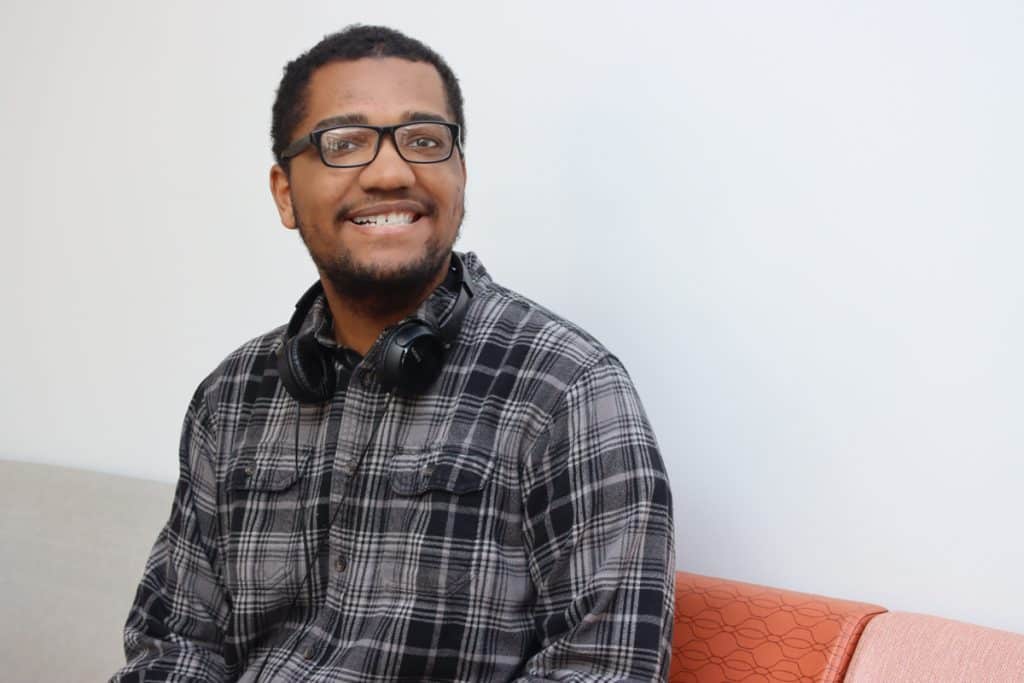
The room has a kind of courage – one you can’t fake. Young adults sit across from strangers, discussing themselves, their skills, hopes, and learning goals. At Disability Advocates of Kent County’s (DAKC) mock interview day, confidence visibly grows from conversation to conversation.
“Watching them move from one table to the next, their confidence increases and skills are built,” says Ella Bonner, DAKC’s workforce development manager.
Mock interview day isn’t just for students; it is also a practice space for employers. In this temporary empathy lab, our unconscious hiring habits are challenged through real human interaction. West Michigan must ensure both sides continue to participate so we can build opportunities and create stability for these individuals who will be stepping up into our community.
“We need to conform to them”
Bonner describes mock interview day as an intentional “bringing together” of two groups: young adults practicing for the real world, and employers learning to see what they may have been missing.
“Interview day is about bringing both individuals together, helping, number one, the employers understand that there are skill sets that individuals with disabilities have that fits into your world,” she says.
And on the other side? It helps the interviewees realize, with confidence, “I can do this.”
Bonner says the mock interviews can create both a challenge and a blueprint for our community to consider.
“We have to stop trying to make individual disabilities conform to us,” says Bonner. “We need to conform to them.”
For these young adults, the stakes are high. Their support systems change dramatically around age 26, when much of their specialized programs fall away. They then must enter a larger system where the previous hands-on approach is rare.
To Bonner, this means that real-world readiness at this age is essential, not optional, and that employer readiness is crucial.
Designed to build real skills
Bonner says mock interview day isn’t a one-off event that starts the day of. It’s built through weeks of preparation with youth and their partners.
DAKC’s team spends seven to eight weeks helping with interview preparation, working on resume-building, handshakes, and pre-interview skills that build students’ confidence.
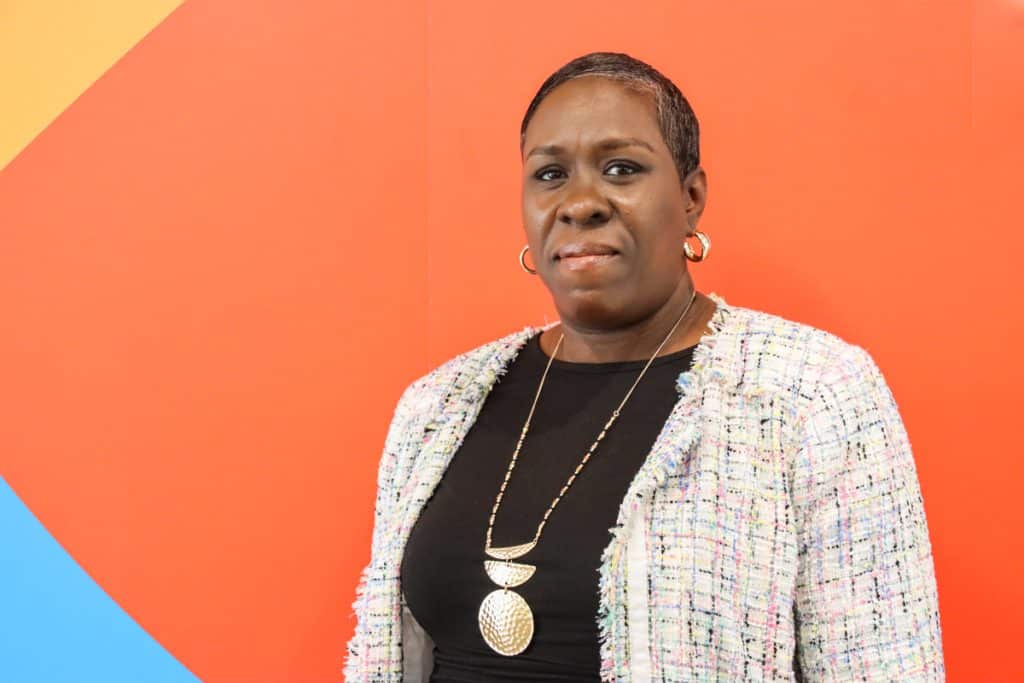
Most importantly, DAKC discovered a straightforward but effective lesson: avoid capping the number of interviews. When they set a limit, students reached it and mentally disengaged, thinking, “Oh, I’ve done, and I’m done.”
Now, interviews continue until time expires. We could clearly see this momentum in real time during the last mock interview, as many students got back in line to keep the experience going.
Feedback isn’t just a formality, either. The interviewers complete feedback sheets, and DAKC sends them back to the teacher, who then reviews them with each student. This year, DAKC plans to take it a step further by focusing on the specific skills flagged in those forms during the remaining classes.
This is what solutions look like when they’re developed from the ground up: practical, repeatable, and capable of improvement over time.
Exposure turns into understanding
Jeni Groen, a community outreach specialist at Northpointe Bank, has observed the effects of employers returning year after year. Northpointe has been involved since 2022.
Groen says this work aligns with her focus on financial education and work readiness skills. What she finds notable isn’t just that students arrive prepared, but also what occurs when students feel safe enough to openly share their experiences.
She tells of students who begin by openly expressing their nerves or sensory issues, saying things like, “I’m really nervous, I’m autistic,” or “It’s very loud in here,” or “the lights are very bright. … I’m having trouble focusing.”
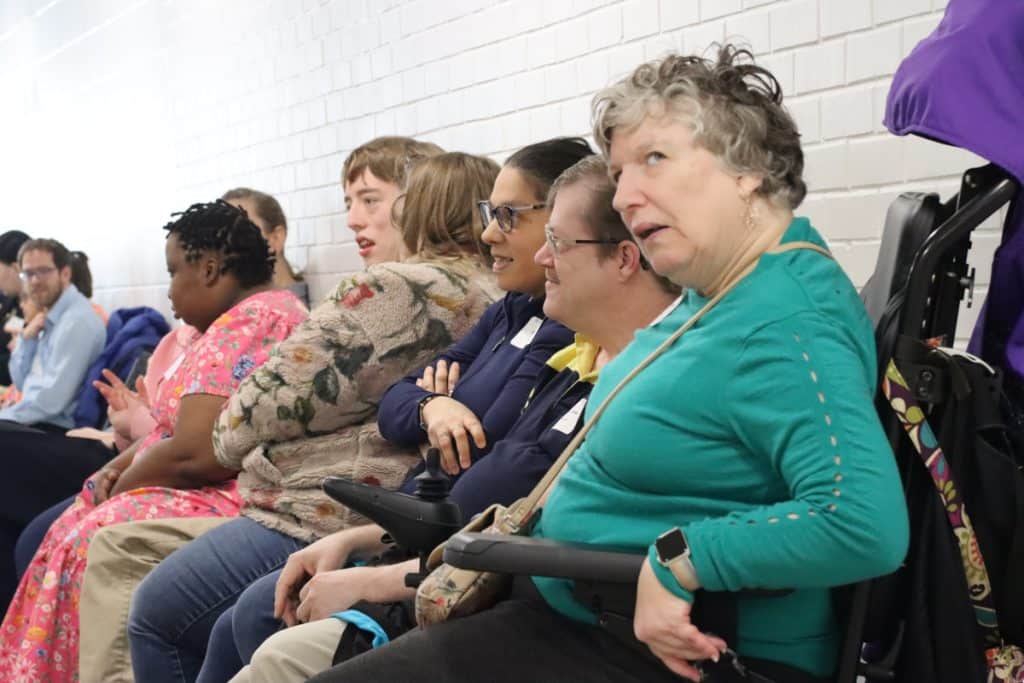
She views that openness as a gift, as it encourages the interviewer to consider the student’s perspective rather than follow the usual script of the interview.
Groen shares that mock interview experiences help her reframe behaviors often misunderstood in professional settings, such as lack of eye contact, fidgeting, or looking away. She notes that not making eye contact doesn’t necessarily indicate rudeness or a lack of work ethic; it might simply mean that eye contact is challenging. Groen uses this insight to assist her coworkers in “getting out of our own heads and our own way of thinking.”
This is the ripple effect that DAKC hopes to spread through the workplace: a new perspective, a gentler assumption, or a clearer understanding of a person.
Empathy rooted within the lived experience
Acrisure employee Austin Mohamed Ali says he came to the mock interviews with something many families understand firsthand: a sibling with autism. He’s seen how experiences like the mock interviews shape confidence over time, and he linked his sister’s job at Subway to such programs.
“Getting that experience has shaped her to be the person that she is today,” Ali said.
Ali, who was at his first mock interview day, shared what others have said: that this day is transformative for both sides, and that it helps employers learn from interviewees to become better people and advocate for members of the disability community.
He stressed that people with intellectual disabilities aren’t “other” but have unique skills that add value to a company’s bottom line. He hopes to bring back to his company what he learns, foster open conversations, and help more “yes” moments happen.
How access unlocks bigger dreams
For an authentic and unvarnished view of hope, spend a few minutes with Charles Meyers.
Meyers attended mock interview day to gain experience and learn what not to do in an interview.
Recently, he worked at Fat Boy on Division, hired by the owner because of his strong work ethic. He was a dishwasher and enjoyed engaging with new people every day. Now, he is unemployed but continues to move forward, using the mock interviews as a chance to brush up on his skills.
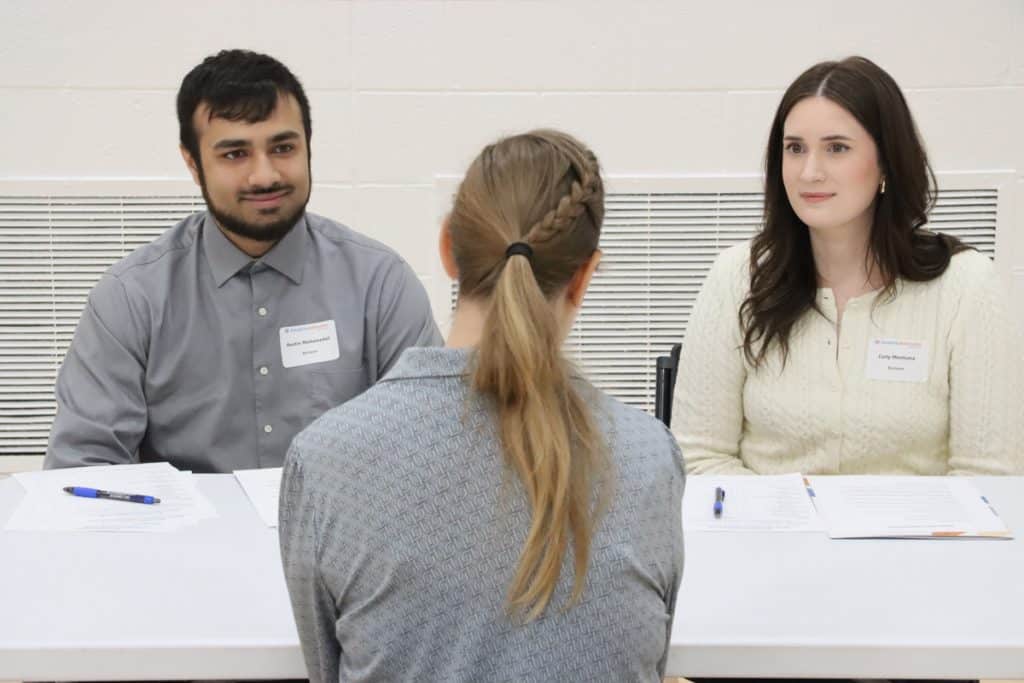
He’s a fan of dragons and has already envisioned a book series called “The Forbidden Seven,” featuring seven beings created by magic “that people couldn’t understand.” (If that isn’t an unintended metaphor for how often the world misunderstands disability, I don’t know what is.)
Meyers then showed how he prepares for interviews using an app called Seeing AI, which reads the printed questions to him.
“It’s a program that helps me learn how to read. It reads the words to me directly,” he says.
He not only uses it for interview preparation, but also to read books (which he enjoys), such as the “Goosebumps” series. He says he “didn’t know this app existed” before, and now, because of it, he has the opportunity to read beyond picture books.
It can even be used to scan handwriting, something he insisted on demonstrating. Because of this technology, he can understand notes or what’s written on a chalkboard.
That’s why our Disability Inclusion reporting focuses on practical tools: the “right” accommodation isn’t charity, it’s access. Access can transform how someone perceives their future potential.
When asked what advice he would give to someone nervous about mock interviews, Meyers acknowledged that fear is a real concern.
“(The future) can be scary, but you have to face your fear,” says Meyers. “You can’t let it take over you.”
What about employers?
Bonner openly states the magnitude of what she thinks must be done. Her message for hiring managers is clear and direct.
“Open up your eyes to new opportunities,” Bonner says, “for the future is the young adults who we’re working with, (and) you have the ability to make that change happen.”
DAKC is also looking ahead. Bonner explains that mock interview experiences have sometimes led to connections, such as mentors or interest from specific young adults. She says a long-term goal is to host an event featuring actual job openings, bringing them closer to a hiring model.
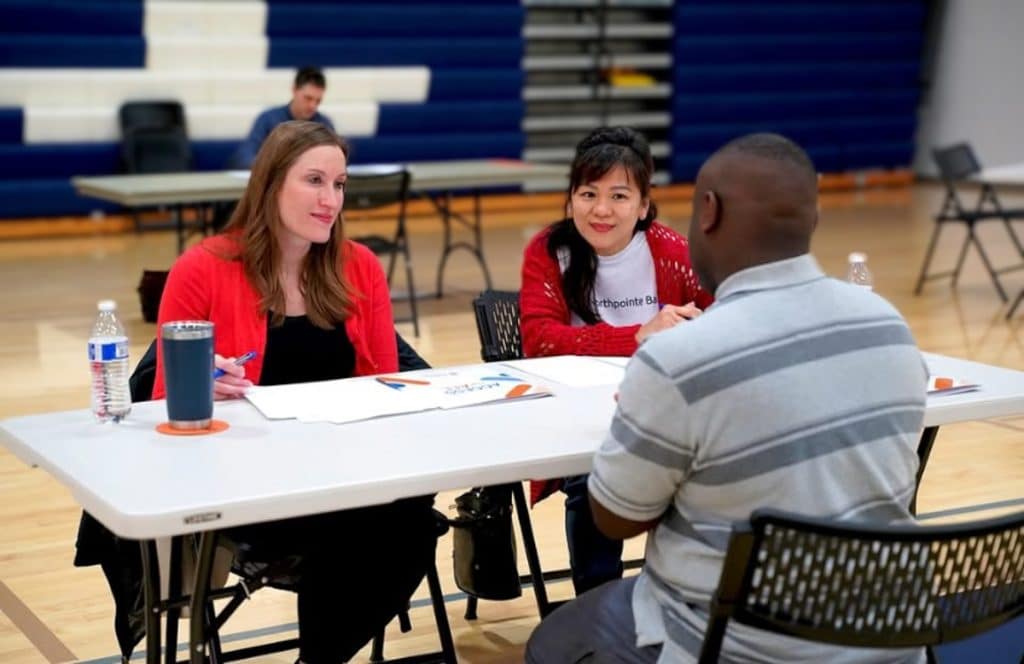
To an employer who wants to start tomorrow, her response is practical: contact DAKC, meet with a trainer to gain disability awareness and practical advice, and keep seeking support, because DAKC also will assist the young worker and can provide training for the organization.
Moving the needle for greater impact
If you want to help create change but don’t know how to begin, here are some practical steps from Bonner that can initiate meaningful progress.
- Volunteer for mock interview day, or send a colleague who handles hiring. Exposure can shift our assumptions.
- Rewrite a job posting in simple language. Clearly explaining the job responsibilities, detailing the training offered, and describing what success looks like at 30, 60, and 90 days is a good start.
- Organize your interviews with consistent questions, clearly defined expectations, and a quieter environment when possible. Remember, sometimes the room, not the person, can be the barrier.
- Establish an “accommodations pathway” by designating a specific HR contact or team, and include a new one-sentence statement in your hiring process that normalizes asking about accommodations. If you need assistance, contact DAKC for support.
- Call DAKC and ask what getting started could look like in your workplace.
Significant change typically doesn’t come with a loud announcement. Usually, it starts with a small act – like someone sitting at a table, hearing differently, and returning to their workplace with a more open mind and a broader perspective. This is how hope transforms into a concrete plan.
Photos by Tommy Allen
The multi-regional Disability Inclusion series is made possible through a partnership with Centers for Independent Living organizations across West Michigan.
Related Articles
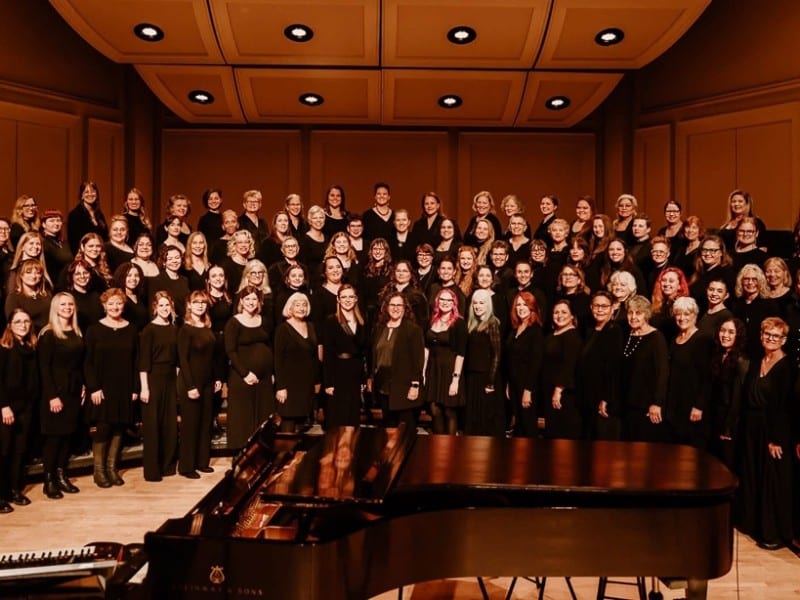
Grand Rapids Women’s Chorus to mark 30 years with powerful Michigan premiere honoring civil rights pioneer Pauli Murray
The Grand Rapids Women’s Chorus, a 110-voice ensemble, presents the Michigan premiere of Sincerely Yours, Pauli Murray, inviting the community to discover a civil rights trailblazer whose influence shapes discussions on justice, identity, and belonging.
Grand Rapids consortium launches youth sexual health toolkit addressing care gaps
New online resource provides evidence-based sexual health guidance for youth, families, and clinicians, aiming to reduce misinformation and barriers.
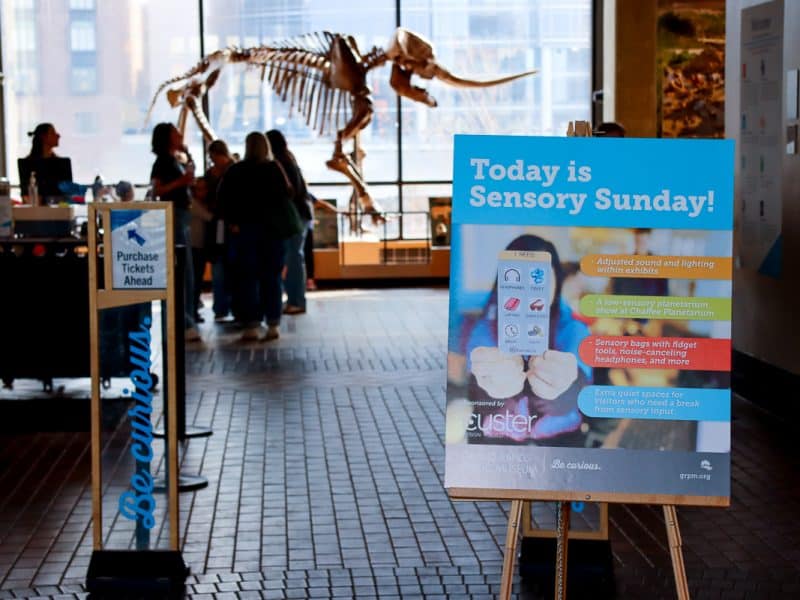
Grand Rapids Public Museum’s journey to Sensory Sunday built empathy into its infrastructure
On every second Sunday, the Grand Rapids Public Museum dims the sensory “noise” of a typical visit, enabling more families to experience wonder, enhance their learning, and foster a sense of belonging for everyone.


