
“People are defined by the water in Michigan, and access to it is really a deep value and a fundamental right.”
Today, Maple Bay Natural Area offers a half-mile of gorgeous, undeveloped frontage on East Grand Traverse Bay, fully open to the public as a Grand Traverse County park. But just 20 years ago, the 400-acre plot’s former owner was primed to sell the plot to eager real estate developers.
Instead, the Grand Traverse Regional Land Conservancy (GTRLC) and Grand Traverse County moved swiftly to preserve the land and open it to public use. The county applied for and received a $6.8 million Michigan Natural Resources Trust Fund (MNRTF) grant in 2001, representing the lion’s share of the purchase price. Jennifer Jay, GTRLC’s director of communications and engagement, says the Maple Bay project is just one of numerous examples of how MNRTF grants have expanded public access to the region’s iconic waterfront.
“I think the Natural Resources Trust Fund has preserved the best parts of northern Michigan and made those parts open to the public in a way that has really transformed this region and is in large part the reason for our economic resilience as a region,” she says. “People love to come here because of those amenities, many of which were protected because of the Natural Resources Trust Fund.”
The story is the same across Michigan, as countless MNRTF grants have expanded public waterfront access everywhere from rivers to Great Lakes, small projects and big. Helen Taylor, Michigan state director for The Nature Conservancy (TNC), notes that legally, “the water belongs to the people.” But the challenge is establishing a robust network of public access sites for them to reach it.
“Public access has always been an enormous priority and hallmark of the Trust Fund,” she says. “And it’s great, because people are defined by the water in this state and access to it is really a deep value and a fundamental right to most people.”
Larger acquisitions
MNRTF has invested heavily in some of the largest and most popular publicly accessible waterfronts in Michigan. We previously reported on the $58 million the fund has spent on the Detroit riverfront, and millions more on the Flint riverfront. Another prime example lies on the other side of the state in Saugatuck, where the fund spent over $10 million in 2010 and 2011 to acquire what is now the Saugatuck Harbor Natural Area. The 173-acre property lies just north of another popular tourist site, Oval Beach, along the Lake Michigan shoreline at the mouth of the Kalamazoo River.
As with Maple Bay, the site had been privately owned for years, and development plans for it were underway just before the Land Conservancy of West Michigan and the city of Saugatuck swooped in to acquire it for public use.

“It would have created this enclave of wealthy homeowners right next to this small beach, Oval Beach, and public park,” says April Scholtz, land protection director for the Land Conservancy of West Michigan. “… Now that Saugatuck can say that those thousands of front feet on Lake Michigan in an undeveloped natural condition are protected and open for public enjoyment, it’s really enormous.”
Jay says MNRTF represents an unparalleled funding source for such large acquisition projects, where public bodies might otherwise be financially unable to make the purchase.
“The type of access that that acquisition allows is not just about swimming,” she says. “It’s everything. It’s the views. It’s the wildlife corridors. It’s the water quality. It’s swimming. It’s trail connections. It’s all the things that help build the community.”
Smaller developments
MNRTF has also funded numerous smaller waterfront access projects that may not have the visibility or tourist draw of Detroit, Flint, or Saugatuck, but that has still reshaped their communities and expanded outdoor recreation opportunities in positive ways.
“The benefit of the Trust Fund to Michigan, in general, is that its proportional impact is equally as important on the smaller scale as well,” says Jonathan Jarosz, executive director of Heart of the Lakes, a nonprofit that serves and advocates for Michigan land conservancies.
While those projects may seek acquisition funding from MNRTF, they also frequently take advantage of the development grants the trust fund offers to make public waterfront land accessible and attractive for residents to use.
“Almost always, if you’re talking publicly held land, especially on a riverfront, you’re going to need development dollars to then create some functional access that will benefit a lot of people,” Scholtz says.
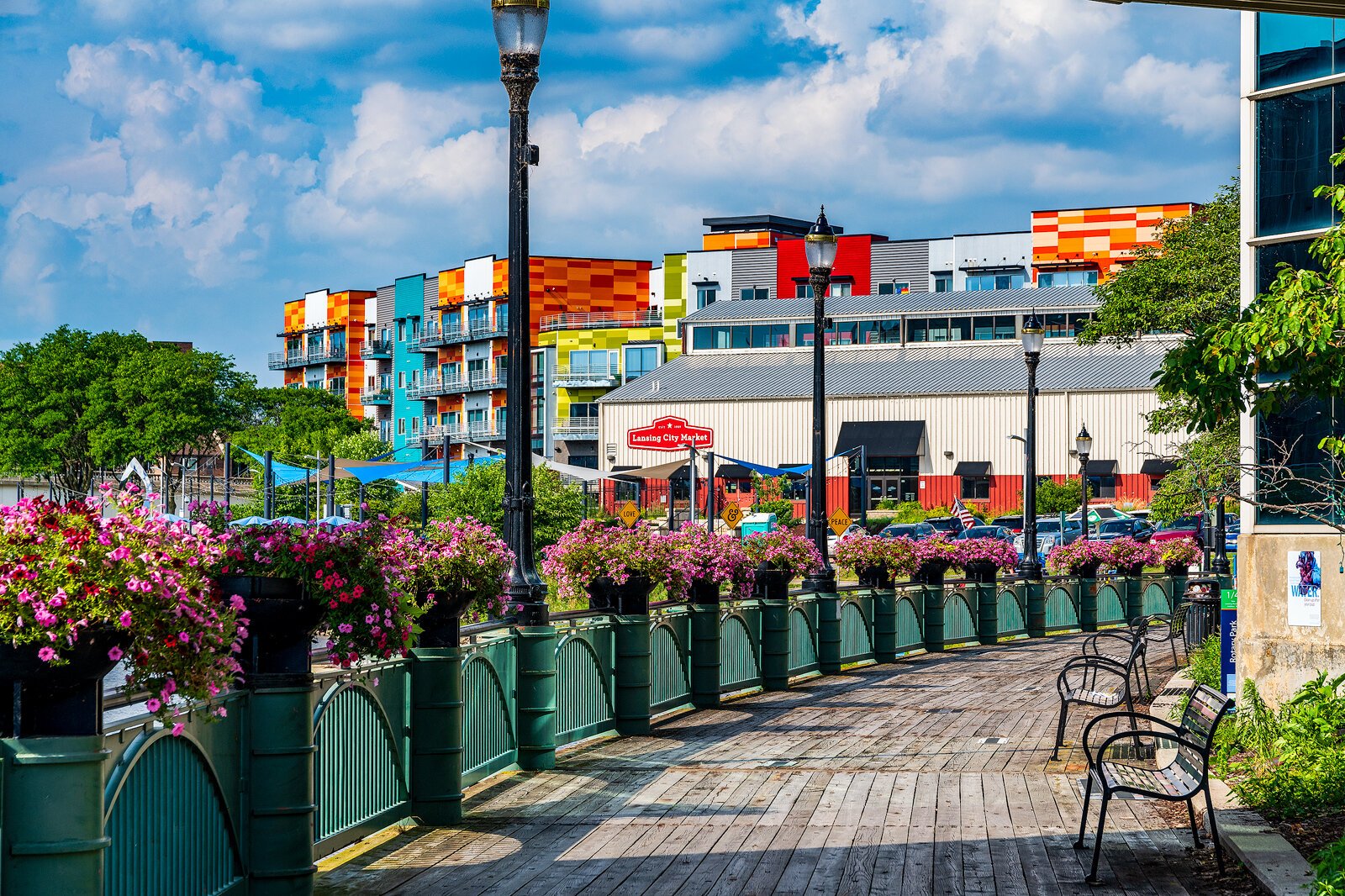
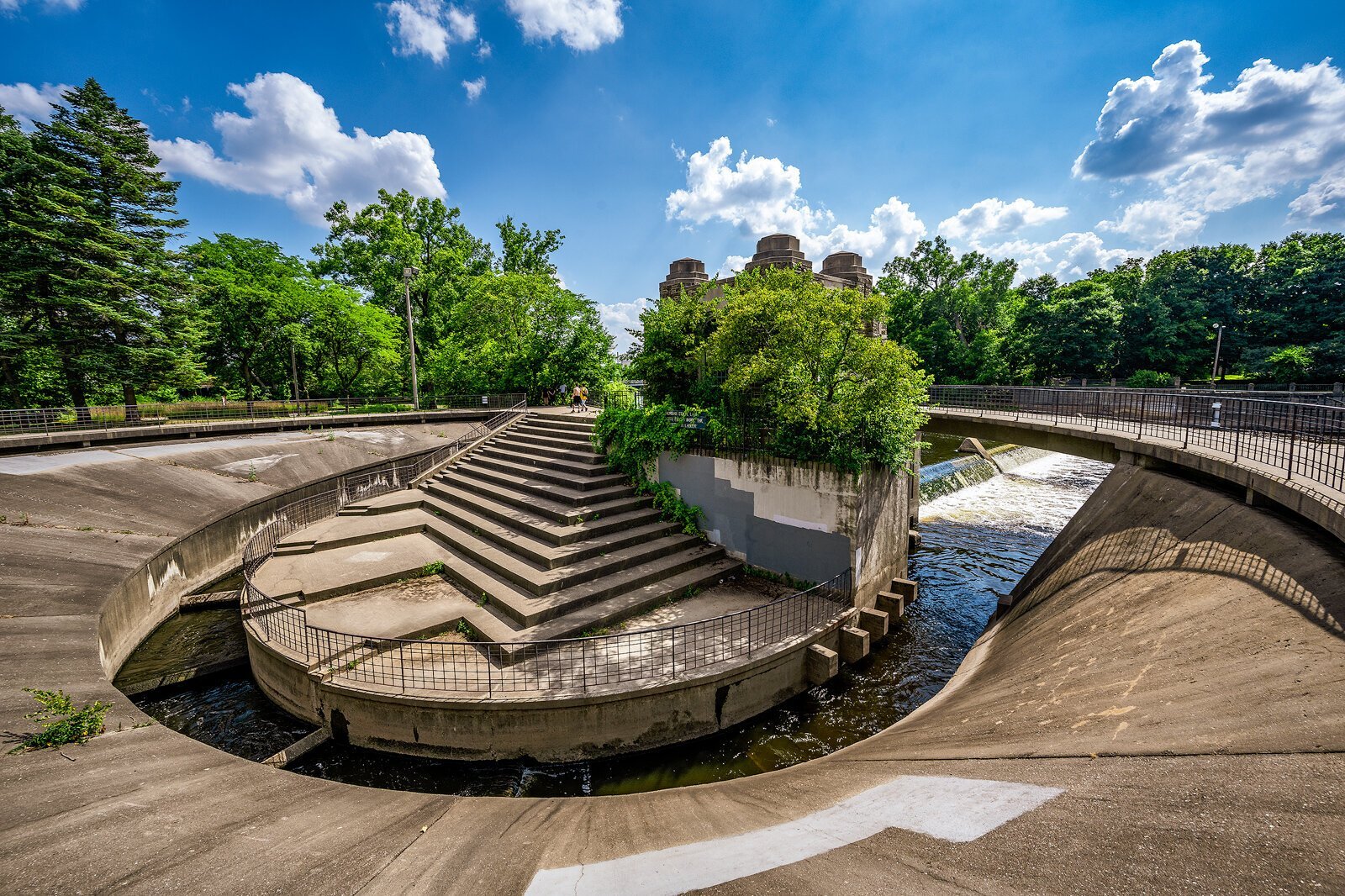
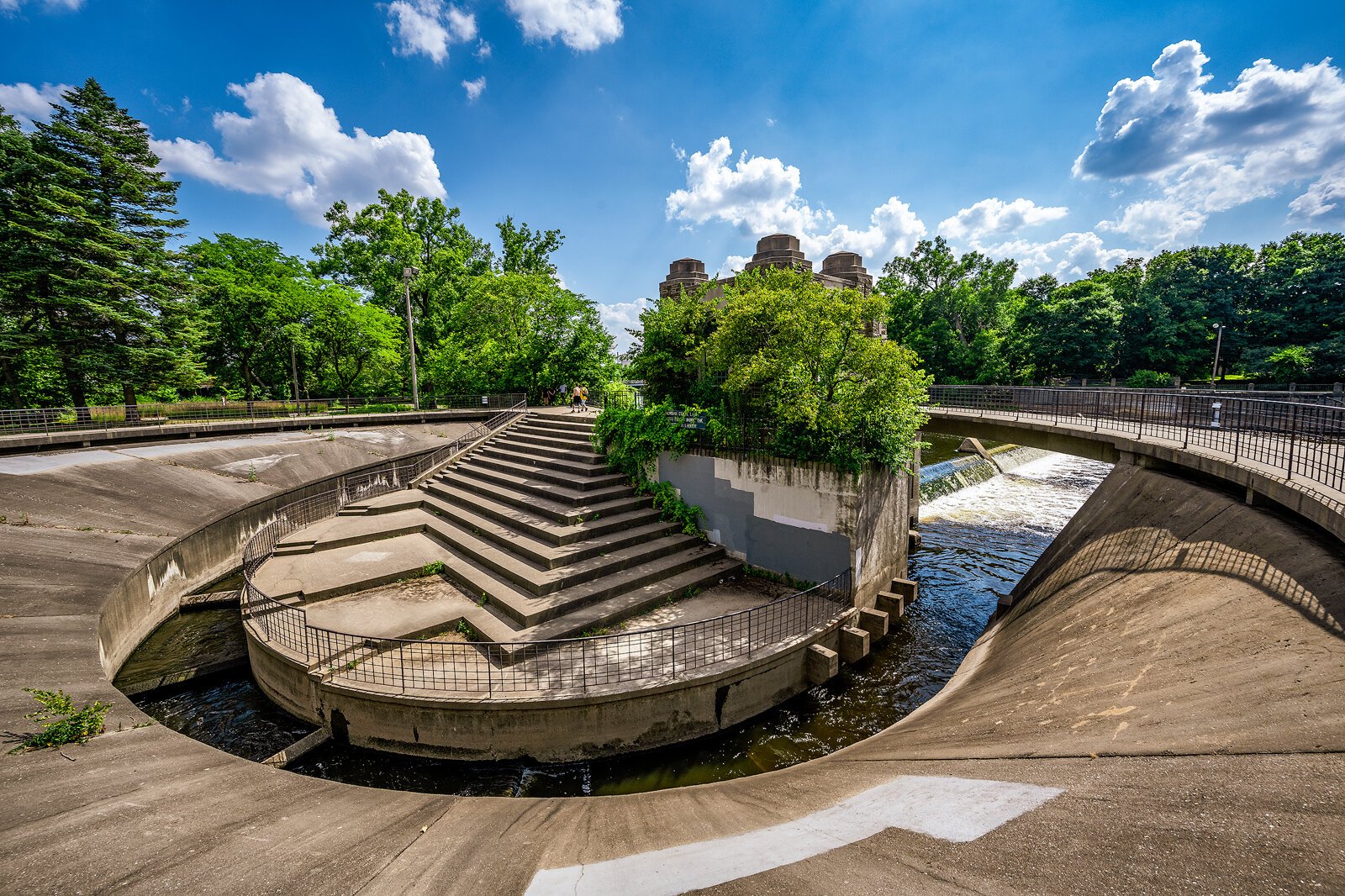
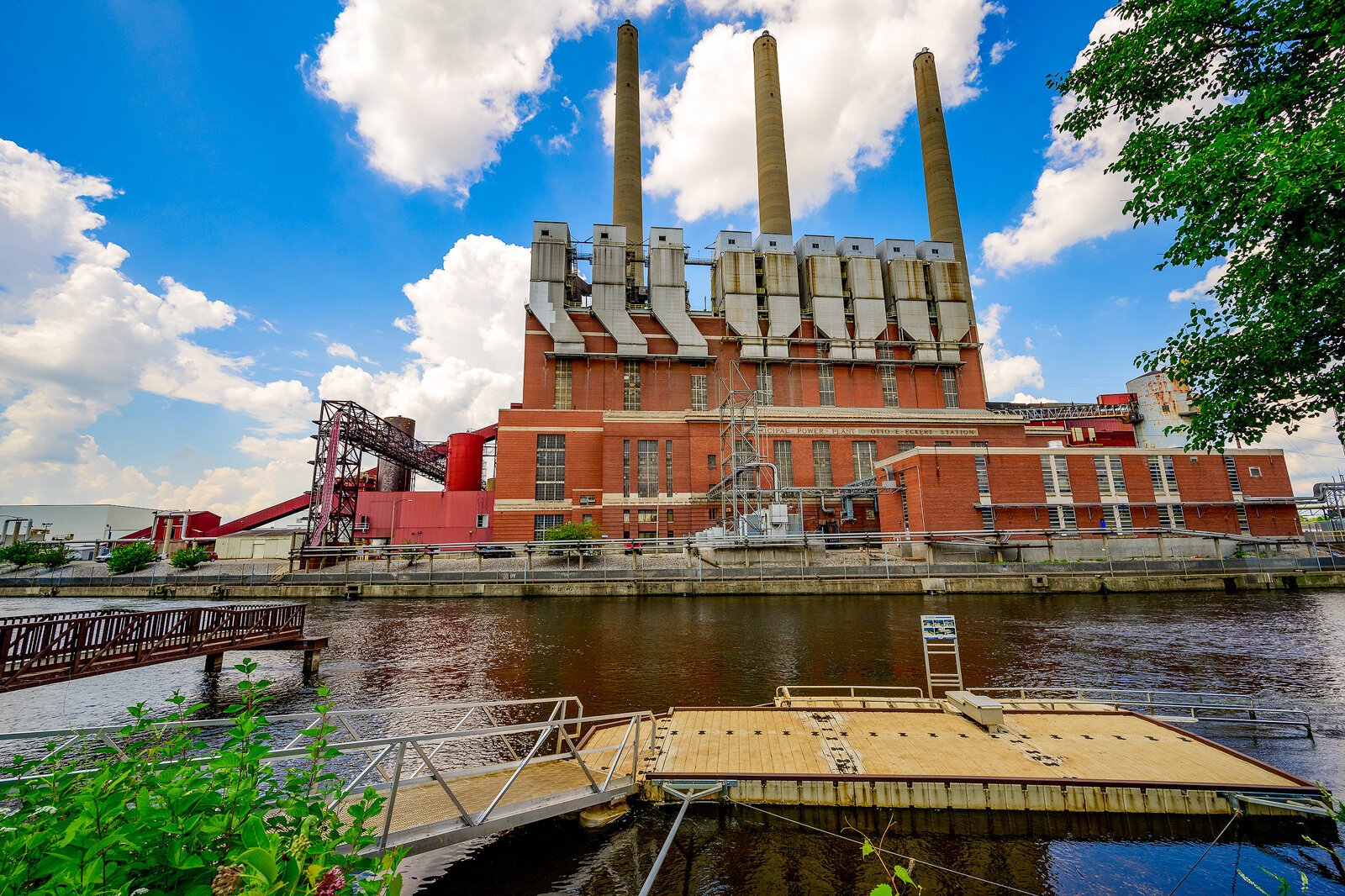
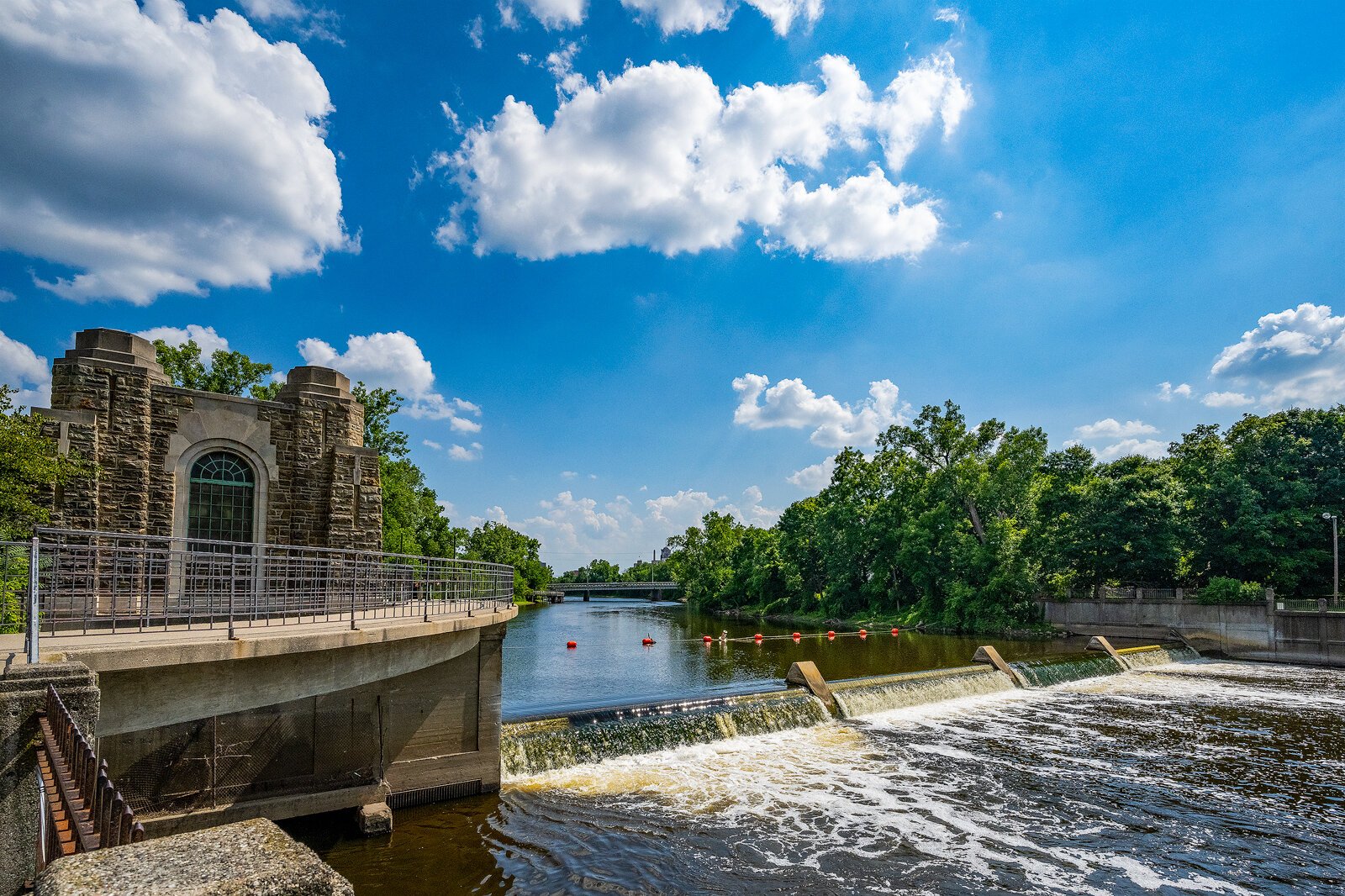
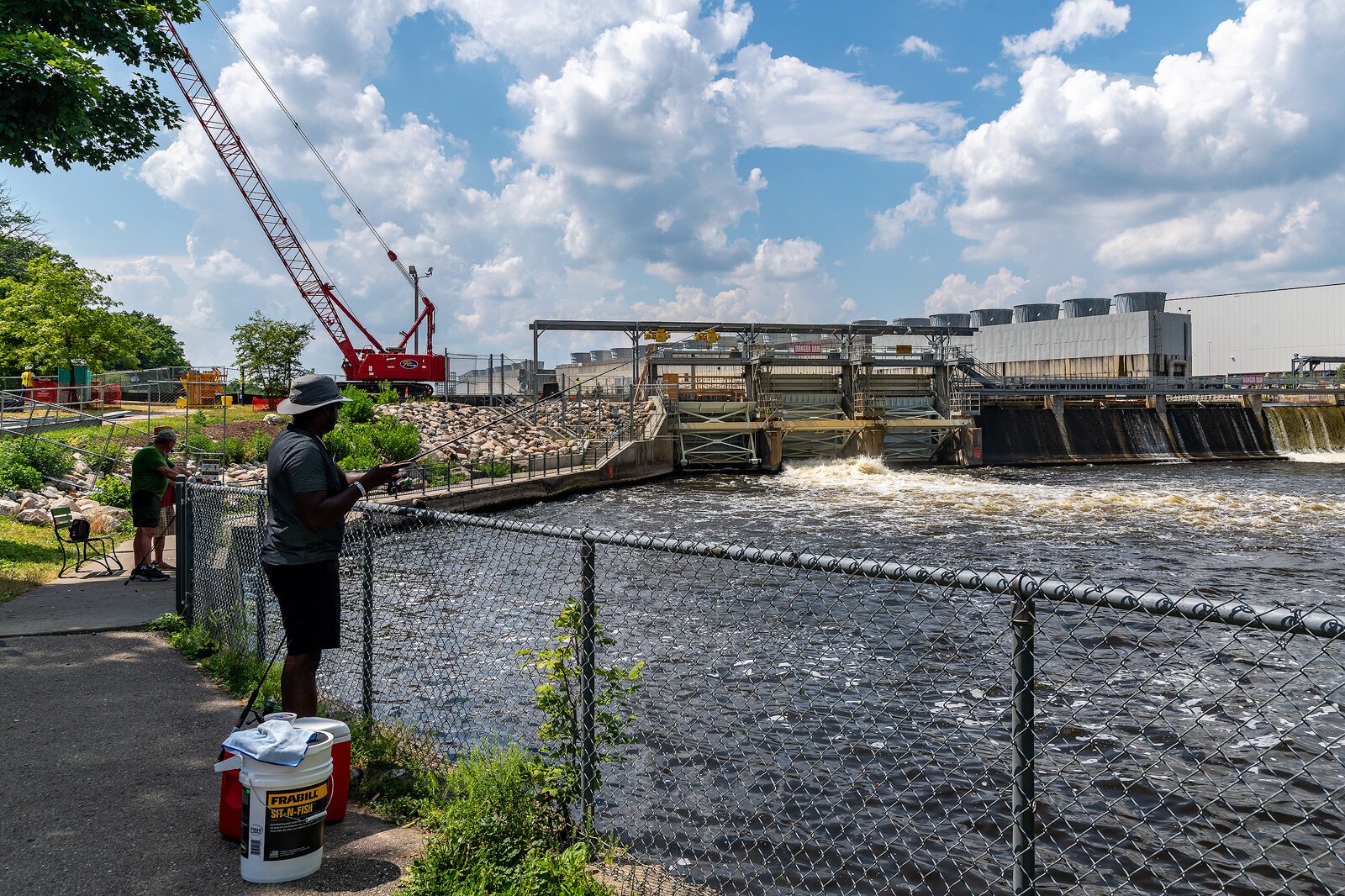
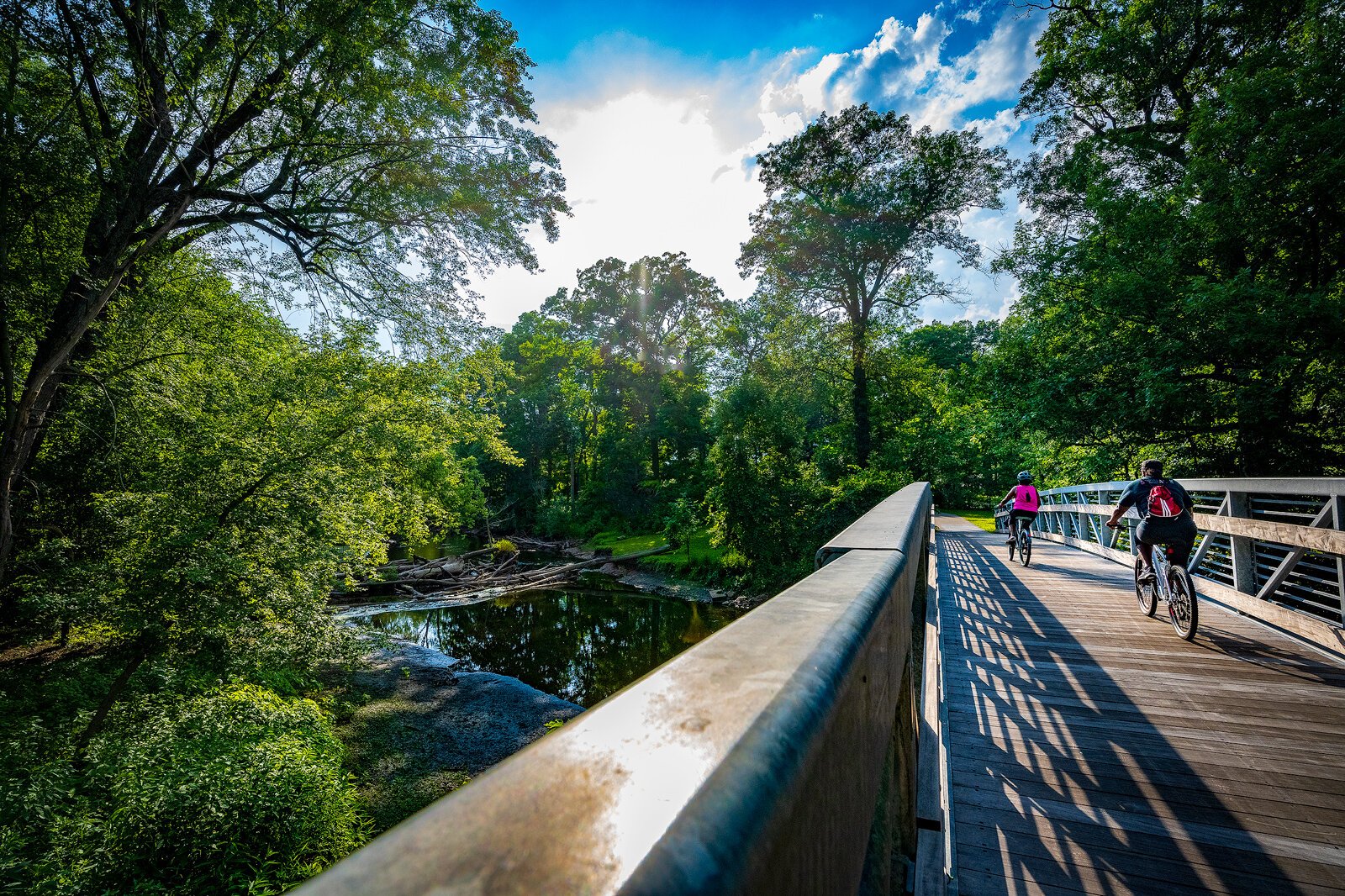
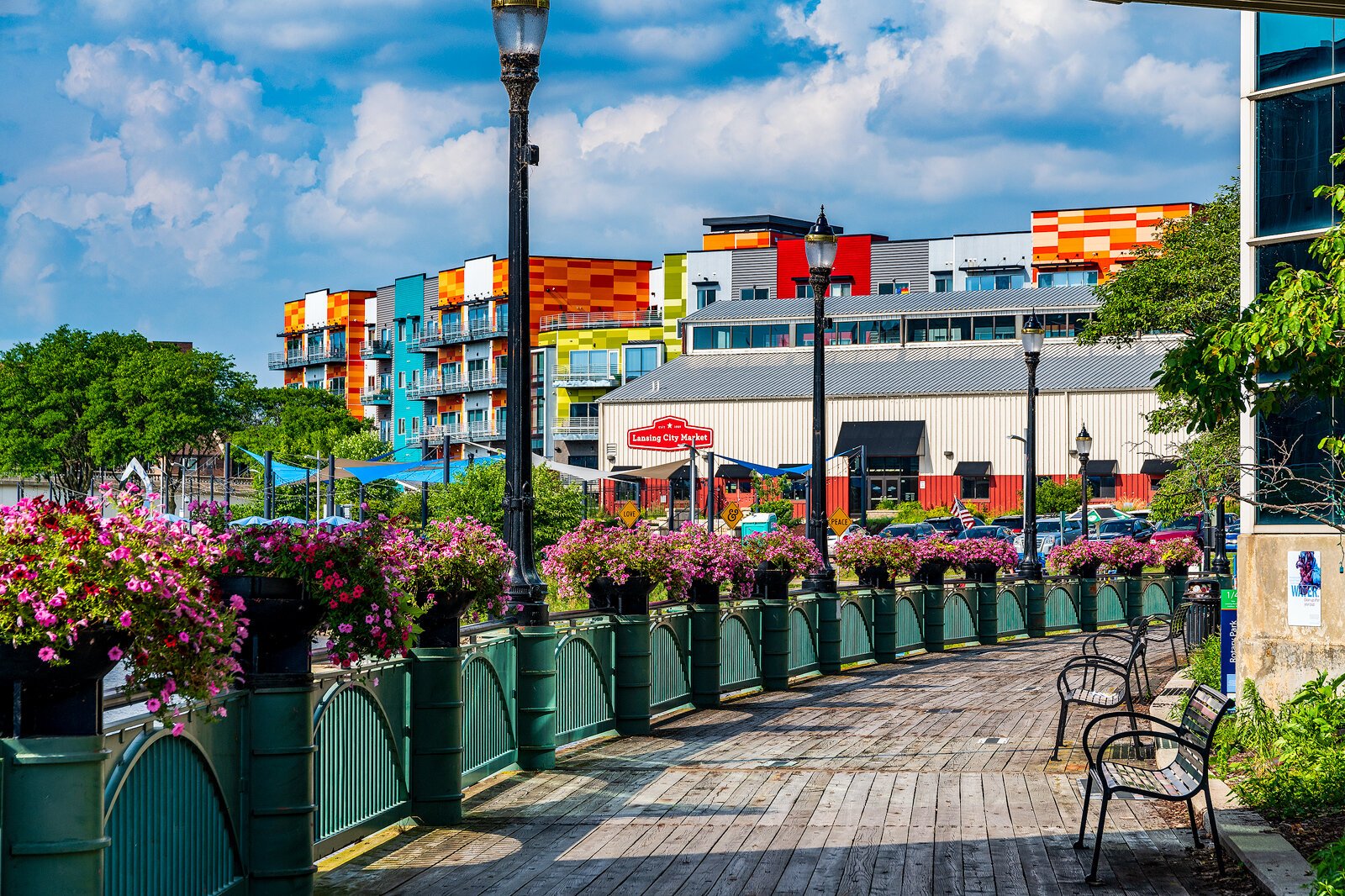
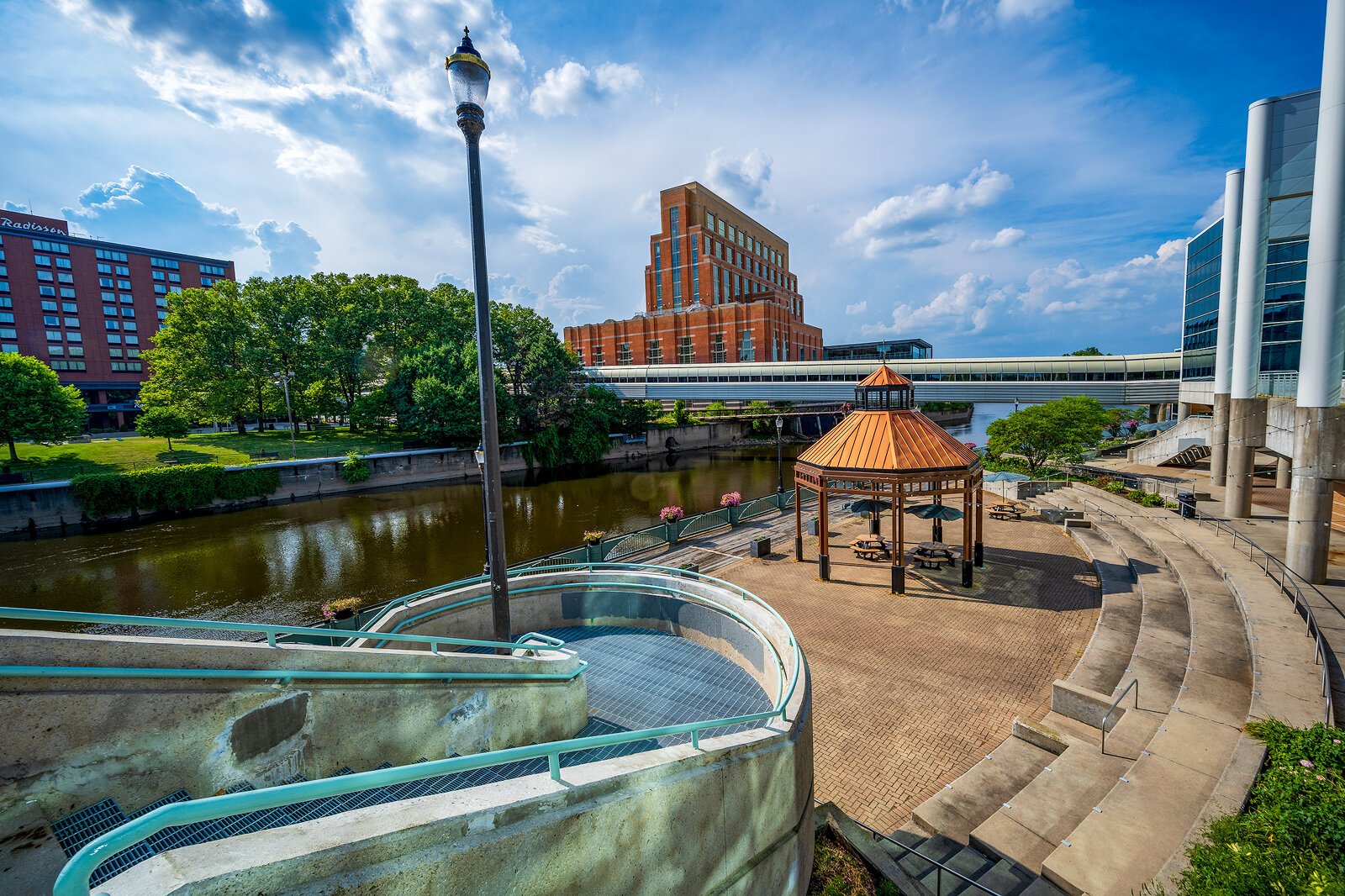
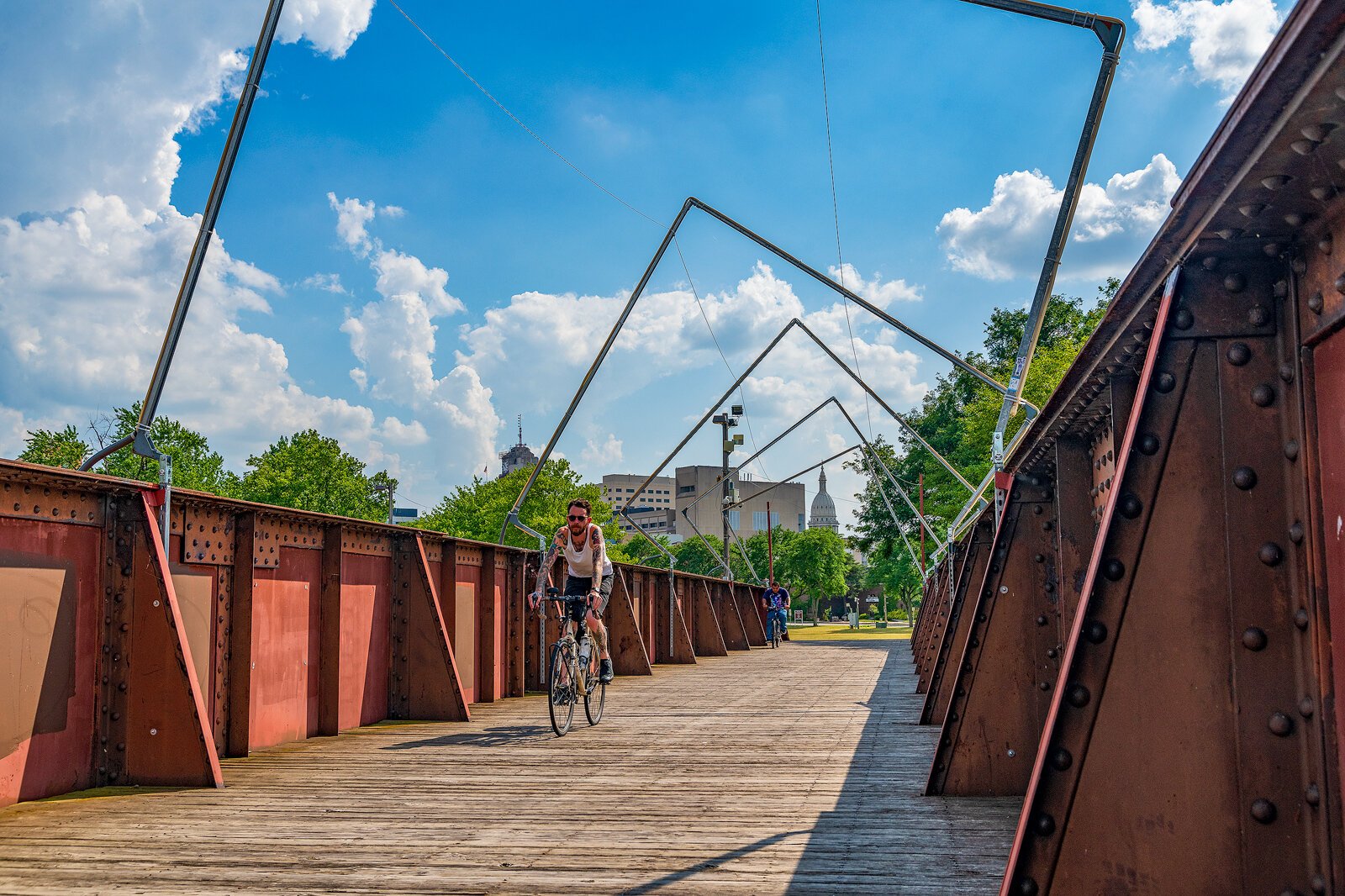
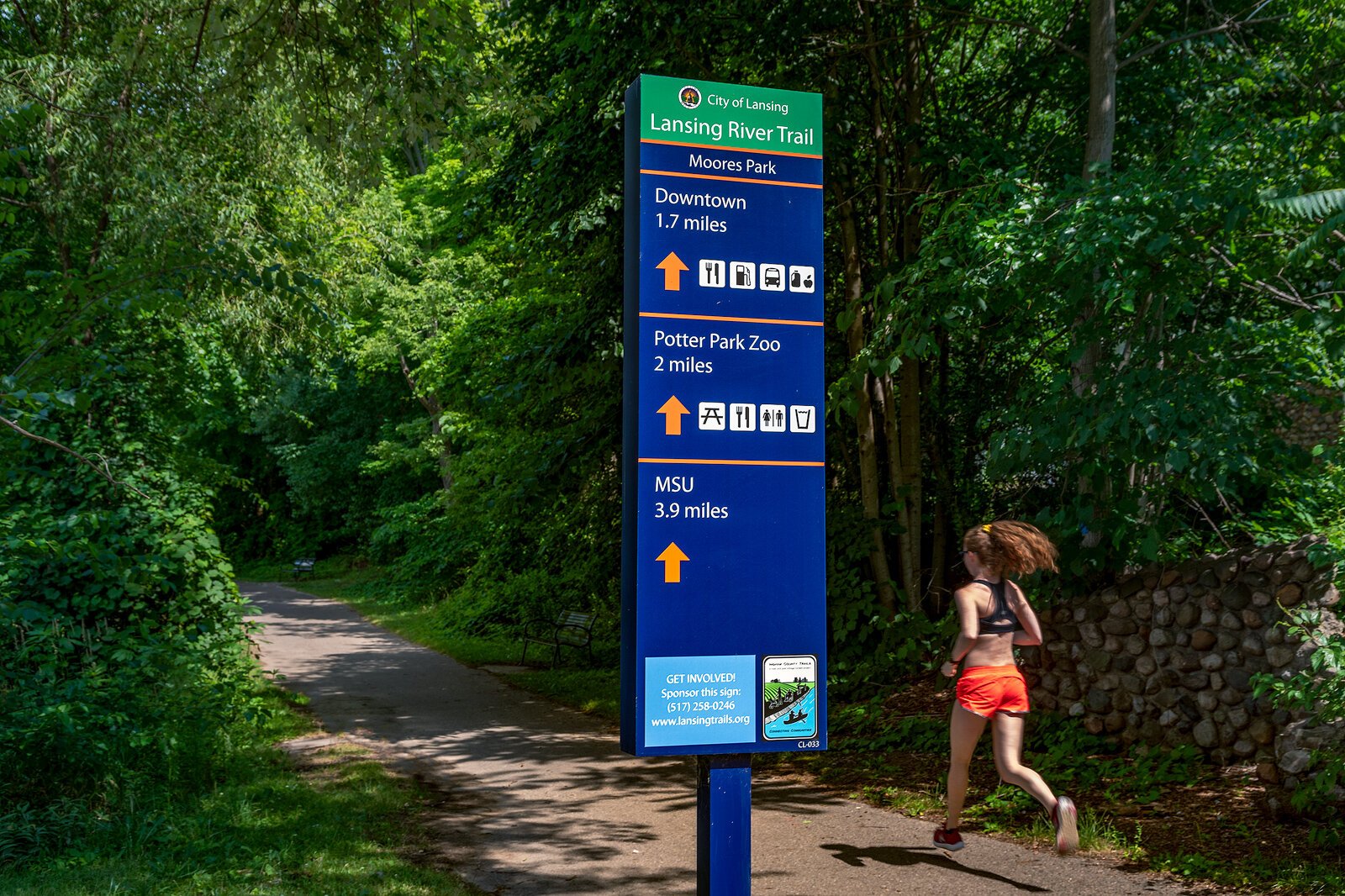
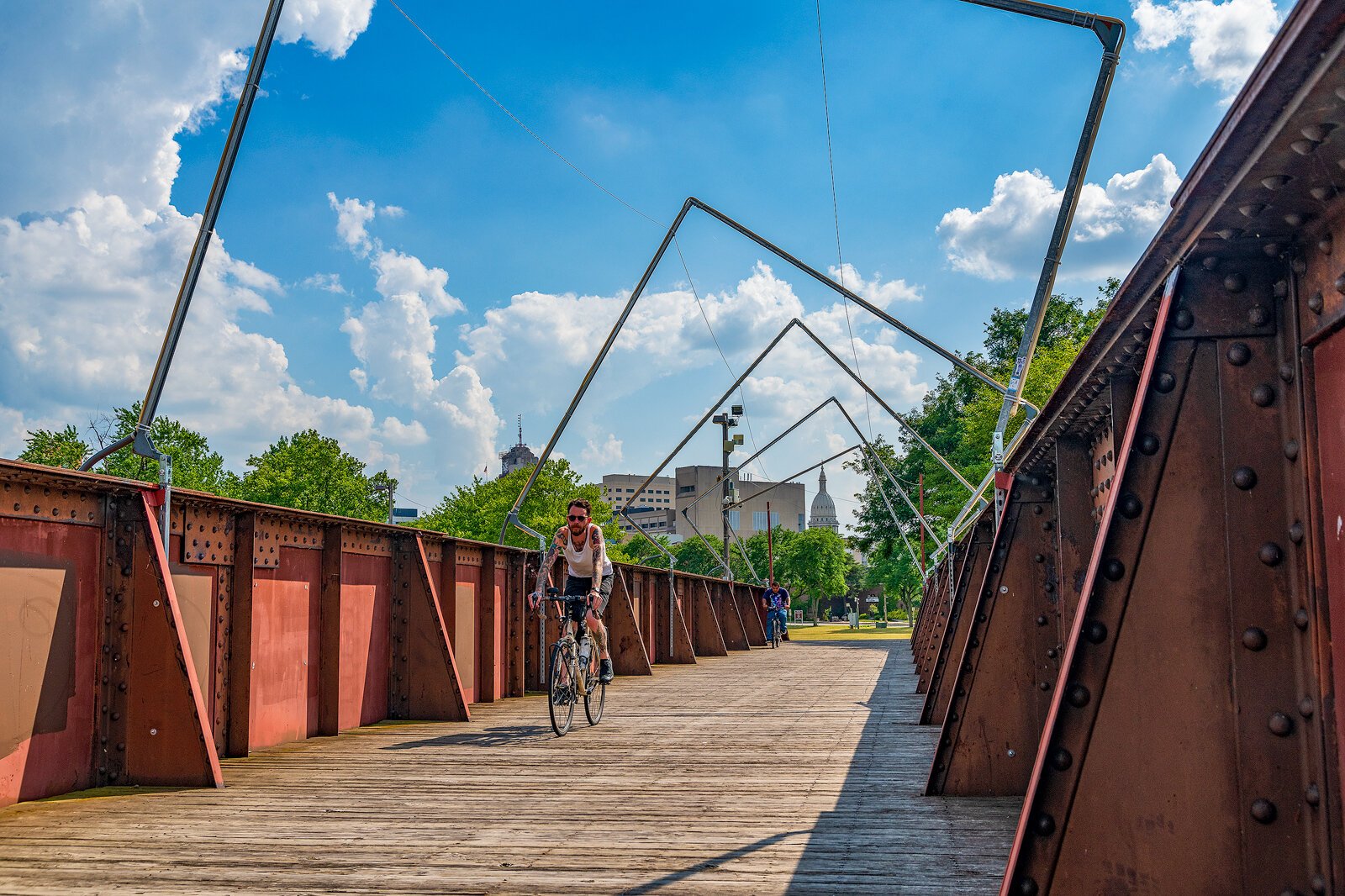
One such example is in Lansing, where MNRTF has invested over $4 million since 1986 into the 16-mile Lansing River Trail. Grant funds have been used to develop observation decks, canoe and kayak access, fishing docks, and the physical trail itself along the Lansing River.
“Any time that we have done a trail expansion, it has involved Trust Fund dollars,” says Brett Kaschinske, director of Lansing Parks and Recreation.
At times, MNRTF-funded development projects can be truly transformative. A decade ago, Midland’s Emerson Park sported a great location on the banks of the Tittabawassee River, but the site was marred by a long-abandoned water pump house at the water’s edge.
“It had a huge concrete footing and we knew that taking it out would be a nightmare in terms of controlling erosion,” says Karen Murphy, Midland’s director of public services. “We really wanted to repurpose it as a piece of our community’s history.”
People would occasionally scale down the riverbank to fish off part of the structure’s concrete foundation, which gave city staff the idea to provide a safer and more accessible option. The city sought and was awarded a $295,000 MNRTF grant in 2017, which has been used to transform the pumphouse into a river overlook topped with a distinctive red trellis. The city also added an accessible fishing dock, a boardwalk to the river, and a new parking lot.
“People who have lived in Midland for several years have always watched that little brick building on the edge of the river and have always wondered what was going to happen to it,” Murphy says. “Now we’ve repurposed it into this awesome destination where people can get closer to the water and it’s a vantage point that we typically don’t get.”
Working together to overcome obstacles
While MNRTF has repeatedly helped to remove the crucial financial barrier to these and many other waterfront access projects in Michigan, that doesn’t mean they’re easy to accomplish. Those who have worked on these initiatives say the biggest challenge is identifying parcels that are well-suited for public acquisition and negotiating with their existing owners. Scholtz notes the lengthy and difficult negotiation processes that went into the Saugatuck Harbor Natural Area purchase and other waterfront acquisition projects she’s worked on.
Even when a conservation-minded landowner is inclined to sell their property for public use instead of just selling to the highest bidder, assembling matching funds can also be a challenge. That’s where collaboration between municipalities, land conservancies, local conservation groups, and other interested parties is crucial. Scholtz notes that the Saugatuck Harbor Natural Area project involved a coalition including not only the city of Saugatuck and the Land Conservancy of West Michigan, but also TNC and several foundations.
“The Trust Fund really had to dig deep and stretch itself in a bold way, and so did local leaders,” she says.
Scholtz cautions that even with a coalition of willing local leaders, “you don’t always win.” Projects sometimes fall through, but she says the work is worth it for the many, many cases where public waterfront access has successfully been preserved and expanded. Jay echoes that sentiment, noting that the benefits of public waterfront access go far beyond a fun day on the lake or river.
“This is what roots us to our community,” she says. “This is what creates greater stewardship of our natural resources. I often say that people won’t protect what they don’t love, and they won’t love what they don’t know. And the only way you can get people to know and love something is to give them that access.”
“Preserving Michigan” is an ongoing series exploring the history and impact of the Michigan Natural Resources Trust Fund on the people and communities of Michigan. The series is underwritten by the Michigan Environmental Council. Issue Media Group maintains editorial independence for all of our underwritten content. Please review our editorial underwriting policy for more information.
Related Articles

Library classes help residents learn skills, build community connections
At Kent District Library, in-person classes help residents learn practical skills while meeting neighbors and building connections in their community.
Gentex engineers help nonprofits improve efficiency
Gentex engineers apply manufacturing skills to streamline donations, boost volunteer impact, and expand services at Community Action House and Kids’ Food Basket.

The Established Home mother-daughter designers launch children’s book to help families navigate life transitions
West Michigan design duo Jean Stoffer and her daughter, Grace Start, share a new children’s book offering families practical, faith-centered strategies to help children cope with moves and change.


