West Michigan groups unite to feed families amid SNAP pause
Local nonprofits expand meal programs and launch emergency funds to help families facing hunger while federal SNAP benefits are suspended.
Across West Michigan, food organizations are moving quickly to fill the gap left by the suspension of federal SNAP benefits, mobilizing volunteers, donors, and community partners to make sure families don’t go hungry.
The Supplemental Nutrition Assistance Program (SNAP) helps 1.4 million Michiganders afford groceries each month. It is the nation’s largest anti-hunger program and one of the most effective tools for reducing food insecurity.
The U.S. Department of Agriculture announced that benefits would be disrupted beginning Nov. 1, leaving thousands of households scrambling to make ends meet. The benefits are being paused because of a federal budget impasse in Congress that has delayed funding for several nutrition assistance programs, leaving states temporarily unable to distribute payments.
Nonprofits and food banks across the region are responding with new initiatives and emergency measures to keep food on tables while providing long-term solutions for families already stretched thin.
In fact, more than 80 people from over 50 organizations across Kent County met Oct. 30 to discuss the impact of the government shutdown on SNAP benefits and coordinate food distribution efforts.
Take-home meal packs for kids
At Kids’ Food Basket (KFB), based in Grand Rapids, staff and volunteers are scaling up their meal distribution. The organization, which delivers 11,000 sack suppers daily to 66 schools, is preparing larger take-home meal packs with shelf-stable food for students and families affected by the benefit pause.
“Kids’ Food Basket has a couple of different ways we’re responding right now,” says Austin Roelofs, vice president of programming. “We’ve reached out to the 66 elementary schools that we already serve sack suppers, and we are offering additional meals. We know there are some kids and families who don’t typically get sack suppers, but now with the SNAP pause, they may see their needs change a bit.”
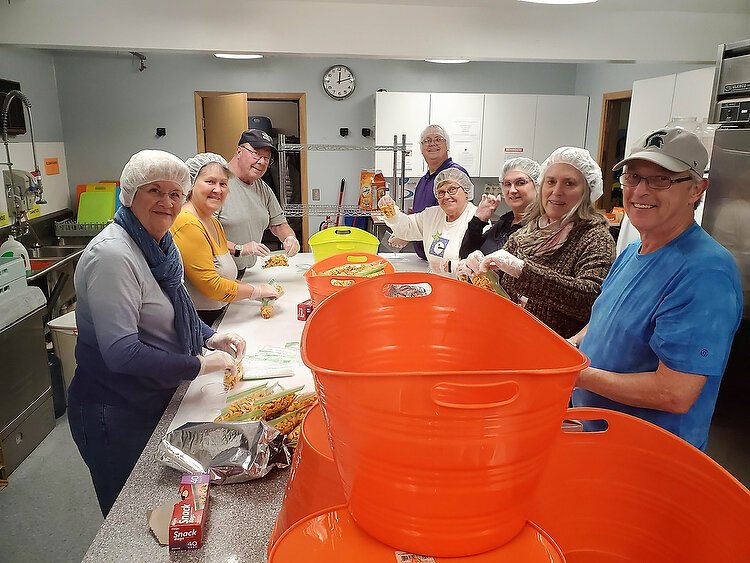
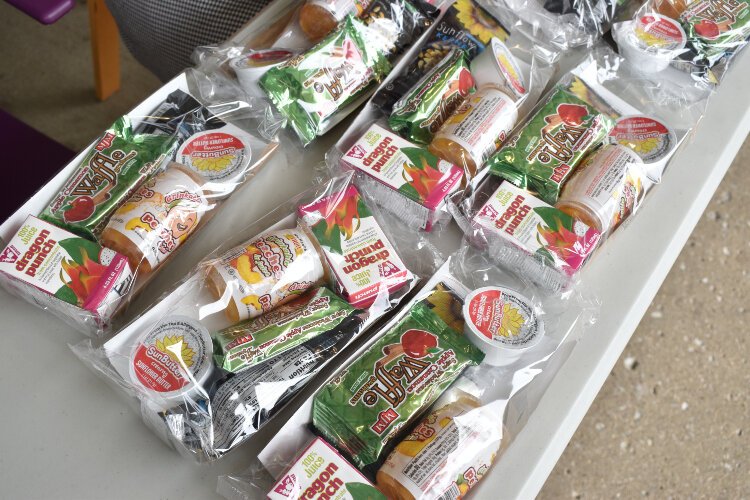
KFB is working to deliver “nutritional support bags” filled with about 15 items, including grains, proteins, and fruits and vegetables. Roelofs says this could mean more than 11,000 additional meals distributed each week across Kent, Muskegon, Ottawa, and Allegan counties.
It has also heard from schools expressing deep concern about the effect of hunger on students.
“We are continuing to hear a lot of anxiety from schools,” Roelofs says. “Teachers continue to tell us that the lack of food in schools can cause a lot of anxiety and cause students to potentially act out if they’re hungry.”
He says consistent access to meals improves attendance, test scores, and classroom behavior.
“When kids have access to healthy meals, they are able to learn better,” says Roelofs, who has been with Kids’ Food Basket for 17 of its 23 years, overseeing food delivery programs and the organization’s farm-based initiatives.
“We grow over 50,000 pounds of produce on our 20 acres of farmland every summer,” he says. “That food goes directly to our 18 food pantries across our counties to make sure that families have access to fresh fruits and vegetables when they’re using the pantry system.”
The model reflects the organization’s focus on sustainability and community partnership. Rather than acting alone, KFB coordinates with schools, pantries, and local farms to multiply its impact.
Roelofs says donations are critical.
“Somebody makes a donation, and we can go and purchase fresh produce and healthy proteins at a reduced rate from our partners,” he says. “We want to see individuals continue to write and call their legislators and urge them to end the SNAP pause. The priority is making sure kids and families have the food they need to thrive.”
Even after years of responding to crises, including the COVID-19 pandemic, Roelofs says this situation feels different.
“This one really seems like something that could have been avoided,” he says. “Families that were struggling the most already are going to continue to be hit harder than ever right now.”
He adds that the strain forces painful choices.
“It’s going to really make families make decisions around keeping the lights on, or between paying rent or being able to feed themselves and their kids,” he says. “It’s just a choice that no kids or family should ever have to make.”
Coordinated response
The Heart of West Michigan United Way is stepping in to help coordinate resources. In response to the SNAP disruption, the organization launched the United Response Fund, which directs emergency dollars to food pantries and nonprofits working on the front lines.
“We were hearing from our nonprofit partners and community members wanting to donate, trying to figure out how they could help,” says Becki Postma, chief impact officer at United Way. “We set up our United Response Fund, which allows donors to donate money. We’ll focus on the fundraising piece and let our food pantry and food bank partners really focus on working with community members and trying to source more food for their shelves.”
Postma says the goal is to simplify giving and make sure the money goes where it’s needed most.
“The money that we raise will go directly back into programs and services throughout local nonprofits in West Michigan that are doing food work,” she says. “This gives donors one place to go, versus trying to figure out which pantry needs it most. We can do that legwork for donors to get the right money to the right place at the right time.”
Financial donations, Postma adds, stretch further than food donations.
“If you donate what you would spend on food to our fund or to the local food banks and pantries, the money goes a lot further because of the bulk buying and them being able to buy from places like Feeding America at a much lower rate,” she says. Pantries also purchase items from wholesale distributors, farms, and other outlets at prices that are lower than what donors would pay at a retail grocer.
The United Way expects to keep the fund open as long as the need continues.
“We’re all hoping that this resolves itself before the benefits stop,” Postma says. “But if that’s not the case, then we’re here for as long as the community tells us we need to be here to assist.”
United Way also helps connect families to services beyond food. Residents can call 211, a free hotline that operates year-round, to find resources for housing, utilities, and transportation.
“It’s 24/7, 365,” Postma says. “You can get a live person who can help connect you with food resources and other support.”
The organization’s volunteer center, Volunteer West MI, is listing opportunities for those who want to donate their time.
“There are all kinds of volunteer opportunities for people looking to assist during this time,” Postma says.
Regional network responds
Feeding America West Michigan (FAWM) is leading a large-scale regional response. It serves 40 counties across West Michigan and the Upper Peninsula. It has a network of nearly 800 food pantries, meal programs, and community partners.
FAWM started Bridge the SNAP Gap campaign, a food and fund drive aimed at keeping pantry shelves full and meeting record demand.
“With benefits paused, those families now face an urgent need for community support,” says Ken Estelle, president and CEO of Feeding America West Michigan. “More than 1.4 million Michiganders rely on SNAP each month. In our service area alone, that’s more than 160,000 households that receive $19.1 million in monthly food assistance.”
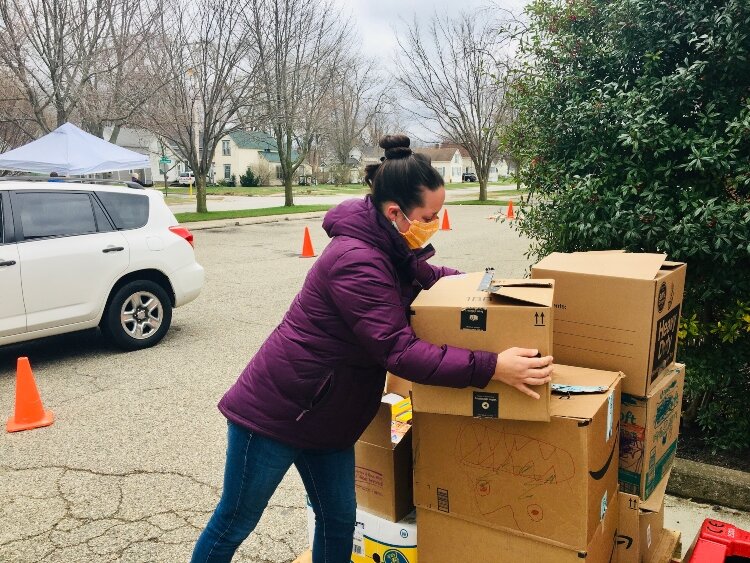
The campaign includes emergency food collection events and donation drives. FAWM is also hosting mobile food pantries at locations such as Kentwood Community Church to distribute fresh food directly to families. The organization’s drop-off sites in Kentwood, Benton Harbor, and Cadillac are accepting shelf-stable, high-protein foods such as canned meats, peanut butter, beans, and pasta.
“Our partner pantries are the heart of our hunger-relief network, neighbors serving neighbors,” says Danielle Sheffield LaPorte, board chair of Feeding America West Michigan. “They’re the first place families turn to when they need help. By donating to your local pantry, you’re helping keep shelves stocked and doors open for those most in need.”
Feeding America emphasizes that even small contributions make a big difference. Every dollar donated provides the equivalent of five meals to neighbors in need.
“While the food bank network stands ready to help, it cannot replace federal nutrition programs like SNAP,” Estelle says. “That’s why community support is essential.”
Teamwork bolsters response
The Allegan County Food Pantry, for example, is expanding how often residents can ask for assistance through November, from monthly to weekly.
“We understand how this SNAP lapse is affecting families across our county,” says Alex Wilkening of the Allegan County Food Pantry. “By allowing weekly visits, we hope to make it a little easier for households to keep food on the table during this challenging time.”
The pantry depends on community generosity to meet the higher demand. Residents are encouraged to donate or volunteer as the organization works to keep up with new families seeking help for the first time.
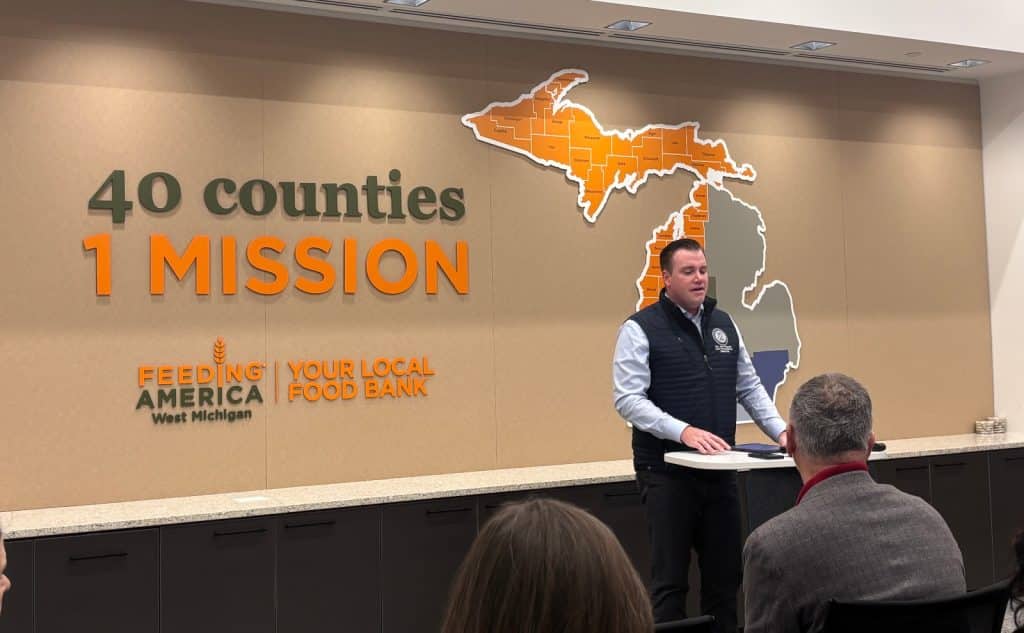
Leaders say West Michigan’s response shows how collaboration can strengthen communities in times of crisis. KFB, United Way, and Feeding America are coordinating closely, sharing information about supply shortages and family needs to avoid duplication and speed up distribution.
“When our systems falter, our shared humanity must not,” says Bridget Clark Whitney, KFB president and founding CEO. “At KFB, we’re called to respond with compassion and action, making sure children and families have fresh, nourishing food every day. We invite everyone to stand with us and step forward in service this month.”
Roelofs says the teamwork is inspiring.
“This has really brought people together,” he says. “It’s a family dropping off applesauce or a business filling a truck. Every act of generosity adds up.”
Related Articles

#RG20LookBack ‘A Family Loving Environment’
As Rapid Growth marks its 20th anniversary, we’re revisiting archival stories that captured cultural shifts in our community. The 2010 snapshot of Rachel Hood and Dave Petroelje, brand-new parents making climate, clean energy, and public health relatable to families, still resonates today.

Letter from the publisher: On 20 years of listening and the sharing of solutions rooted in community.
As Rapid Growth marks its 20th anniversary, publisher Tommy Allen reflects on what the publication’s solutions journalism model has meant for telling the stories of Grand Rapids. While he has not led the organization for its entire history, Allen has spent two decades as one of its key storytellers, much of that time as a photographer.

KDL’s Let It Snow reading challenge turns winter into connection
At Kent District Library, longtime readers and librarians show how Let It Snow keeps patrons engaged through winter reading. The program runs through the end of February.