
West Michigan schools respond as families face “new hunger cliff”
As the new ‘hunger cliff’ approaches, schools and nonprofits are working together to help families facing rising hunger and uncertain food assistance.
Ashley Phillips knows hunger does not always look obvious. Sometimes it shows up as a tired student, a child acting differently, or someone worried about dinner at home.
As a Kent School Services Network (KSSN) coordinator at Kent Hills Elementary in Grand Rapids Public Schools, Phillips helps families find food, housing support, and other help.
Her work has become even more important as more families in West Michigan struggle to afford enough food. Some leaders call this problem the “new hunger cliff.”
“We’ve had an uptick every month in families receiving food assistance,” Phillips says. “Food insecurity has been a thing for years, but we’re definitely seeing more families needing help.”
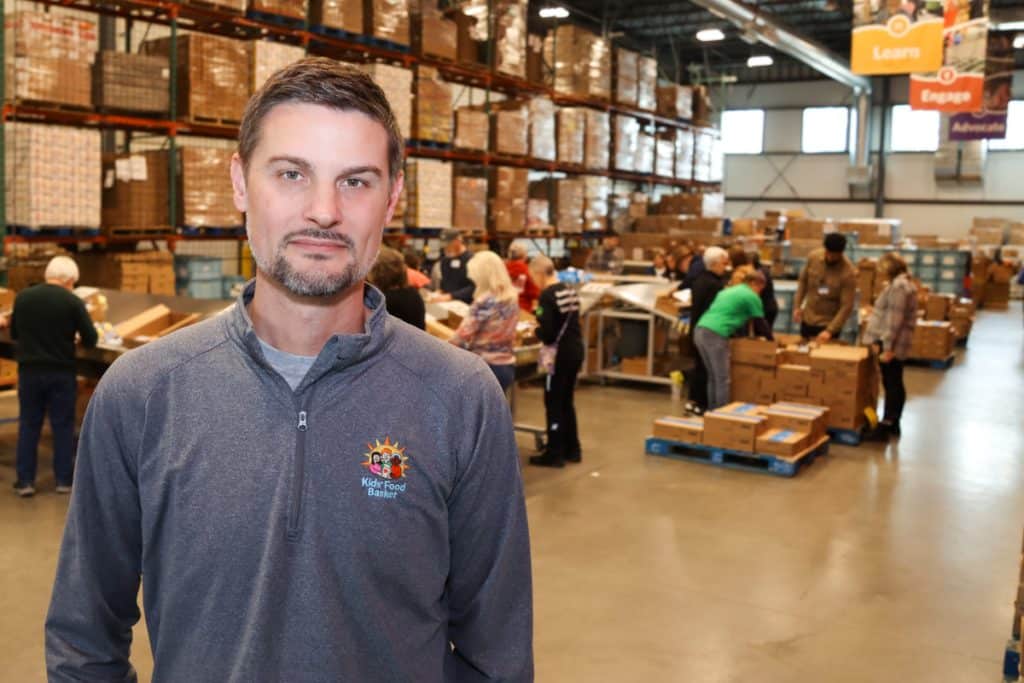
Austin Roelofs, vice president of food access and agriculture at Kids’ Food Basket, says this situation is happening all across the region.
“We’ve seen increased need across the board,” Roelofs says. “Grocery inflation, housing costs, and utilities continue to rise, and families are being forced to make really hard choices.”
He says schools that had rarely requested support in the past are now reaching out.
“There’s a whole new segment of families relying on food resources who never expected to be in that situation,” Roelofs says.
New regulations, paperwork
U.S. Rep. Hillary Scholten, a Democrat who represents the Grand Rapids area, says new rules are making life harder for families who are already struggling. She worries that confusing requirements could cause some families to suddenly lose the help they need.
“The additional work requirements are so confusing, so draconian, that people who are working and otherwise entitled to benefits may accidentally miss out because they don’t fulfill a paperwork requirement,” Scholten says.
She says the people most affected already understand the stakes.
“You don’t really have to explain to constituents what the loss will mean,” Scholten says. “Those who rely on SNAP benefits to put food on the table every single week, they already know what it means.”
When families do not have enough food, she says, it can affect health, learning, and future financial stability.
“This is brain development, which will impact you for the rest of your life; the ability to focus in school, which will impact your economic outcome,” Scholten says.
More families seek help
Kent Hills Elementary serves about 420 students from prekindergarten through fifth grade, most from low-income households. Rather than waiting for families to seek help elsewhere, the KSSN model embeds coordinators like Phillips directly inside schools, where families already are.
Phillips describes her job as doing whatever it takes to help students be ready to learn, even when their families are juggling job schedules, unstable housing, transportation issues, or the daily math of stretching groceries to the end of the week.
At Kent Hills, that includes coordinating daily food distribution through Kids’ Food Basket, a nonprofit that delivers what it calls “sack suppers,” evening meals students can take home.
“We started the fall with around 180 to 200 kids receiving food bags,” Phillips says. “Now we’re at about 310.”
The increasing requests for help at Kent Hills reflect what is happening across the region. Kids’ Food Basket now helps 68 elementary schools in Kent, Muskegon, Ottawa, and Allegan counties. The group gives out more than 11,000 evening meals every school day, Roelofs says.
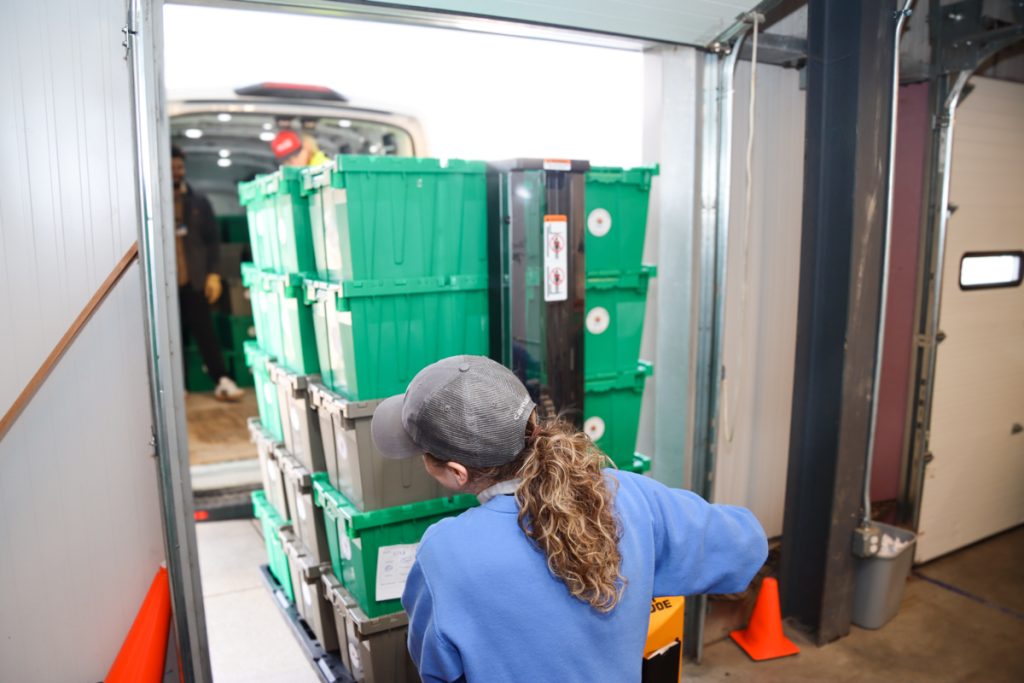
“Just a couple of years ago, we weren’t even serving 10,000 meals a day,” he says. “Some schools have dozens, even 100 more students needing meals this year, and we continue to say yes whenever possible.”
The nonprofit has a waiting list of about 25 elementary schools that want help. Kids’ Food Basket adds new schools when it has enough money, volunteers and space to serve them, but need is outpacing capacity.
“Food insecurity isn’t a far-away issue,” Roelofs says. “It’s happening in every neighborhood and every pocket of our community.”
Impact on school performance
The KSSN program focuses on addressing hunger before it affects attendance, behavior, or learning. At school, Phillips watches for small signs, like a child asking often about snacks, a sudden change in mood later in the day, or behavior that shows stress.

“You can often tell when there is food insecurity at home,” she says. “It affects kids behaviorally and emotionally. Kids may not know exactly what’s happening, but they can feel the tension.”
Roelofs says educators also report shifts when students receive consistent meals. He sees evening food access not as charity but as learning support.
“How can we ask kids to focus on reading when they’re hungry or worried about whether they’ll have food at home?” he says. “When kids know they’ll have a healthy meal waiting for them, anxiety goes down and they’re able to focus on being kids.”
To illustrate his point, he shares a story of a teacher who works with KFB.
“One teacher thought she had a major behavior issue in her classroom,” Roelofs says. “After we started providing sack suppers, she realized within a month it wasn’t a behavior issue, it was a hunger issue.”
Phillips says hunger shows up most sharply during school breaks, when families lose access to school breakfasts and lunches. When she can, she sends students home with extra bags.
“During our longer breaks at Thanksgiving, Christmas, spring break, if we have extra food bags, I will pack extras in their backpack,” Phillips says, “because I know that they may not have three meals a day at home. We do what we can.”
Phillips also acts as a connector beyond the school walls. Families ask her for help with EBT questions, for food pantry locations, and for community meal schedules. Phillips shares resources through school communication tools and word-of-mouth networks, directing families to nearby pantries and free meals.
“We definitely have families utilizing it more than I have experienced recently,” she says.
Roelofs says community partnerships are essential when a family’s need does not match a single program’s design. When Kids’ Food Basket is not the right fit, he says, his team tries to connect schools to other nonprofits and food access agencies.
That is part of the solutions model, Roelofs says. Schools identify need early, coordinators like Phillips connect families to help, and nonprofits coordinate to prevent gaps.
Broader than just schools
Scholten sees the situation as a policy and public health issue as much as a classroom issue. Childhood hunger connects to health care costs and long-term outcomes.
“It’s going to create so many more problems,” Scholten says, referring to unstable access to healthy food. “The No. 1 way we can address chronic disease and obesity is through preventative measures, especially a healthy diet that starts in young people.”
She calls food access “the best investment,” and she underscores how small SNAP benefits can look against real grocery bills.
“In fiscal year 2024, the average SNAP household in Michigan received $335 in SNAP benefits a month,” Scholten says. “About $173 per person per month, or $5 a day.”
She compares that with her own household.
“As the mom of two teenage boys, we’re throwing down about $300 a week to get these boys fed,” Scholten says. “So $300 a month to feed an entire family, it’s unbelievable.”
Scholten says shifting policies make it even more important for families to know where to turn if benefits are interrupted.
“The work requirements already started Dec. 1, 2025,” she says, adding that it may take time before families realize something has changed. “It’s going to take a while before folks really start seeing the impacts, ‘Oh shoot, I forgot to fill out this form. Why isn’t my card loaded?’”
She urges residents who face unexplained lapses to seek help.
“If individuals experience a lapse they don’t understand, our casework team in our office can help them,” Scholten says.
Volunteer support
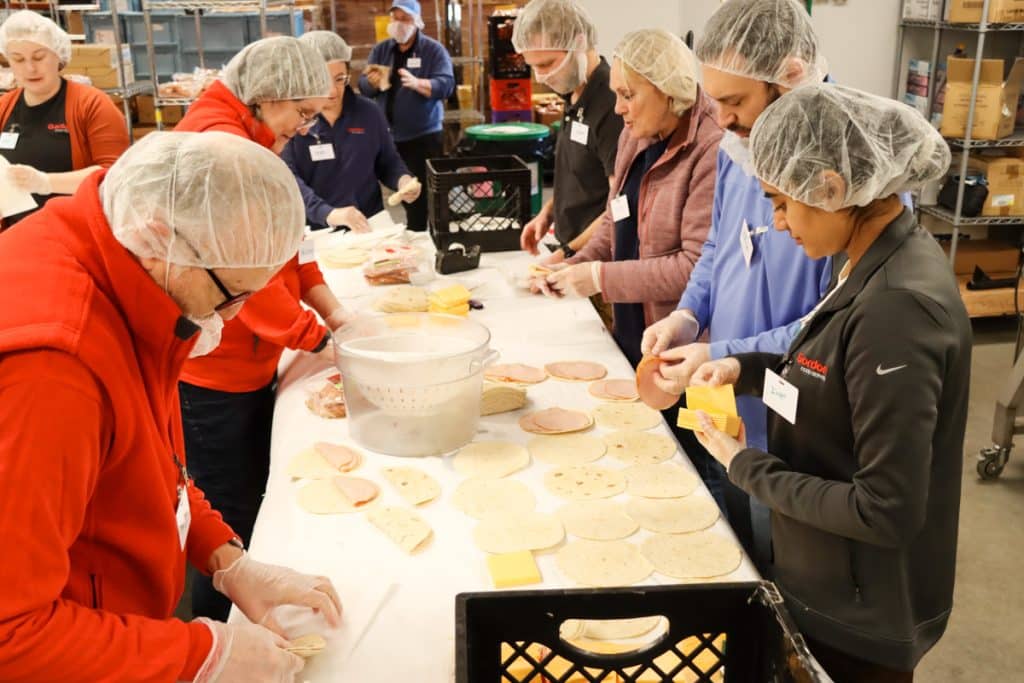
Roelofs says Kids’ Food Basket depends heavily on volunteers and on community buy-in that goes beyond writing checks.
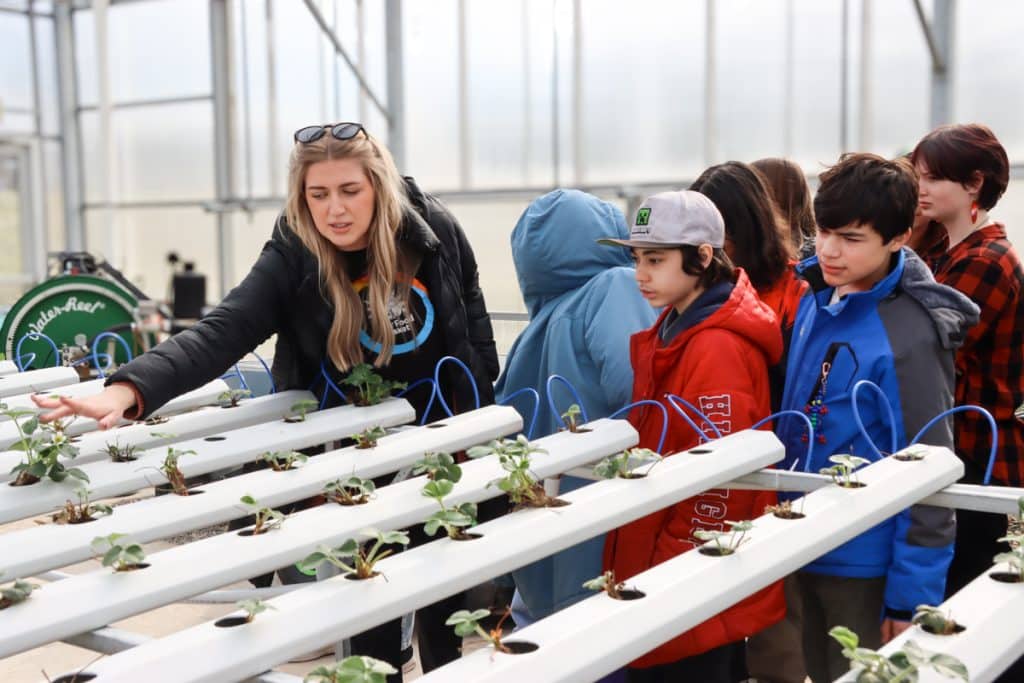
Scholten says Kids’ Food Basket stands out for its focus on connecting children to healthy food and how it is grown.
“They do something really unique, which is connecting kids to their food source,” she says. “They’ve always had an organic farm that students can work and participate in, help pick the food, plant the food, grow the food.”
She says the approach makes healthy food feel accessible and normal, not distant or abstract.
“We utilize 250 volunteers a day across our organization,” Roelofs says. “That saves the organization a tremendous amount of money that we can then put into buying healthy produce and dairy and meats.”
“What young child doesn’t love to play in a garden, plant a seed, and watch it grow,” Scholten says. “They are bringing kids back to their food source in a healthy, nutritional, and affordable way.”
Phillips sees that intentionality in the food itself, which often includes items students may not otherwise try at home alongside kid-friendly favorites. She says Kids’ Food Basket accommodates common school restrictions, including peanut allergies.
“They include foods that will actually sustain kids,” Phillips says
Roelofs says small touches also matter, such as the decorated bags volunteers make.
“We call that a touch of love,” Roelofs says. “What that tells students is that somebody cares about you.”
He says he has heard families describe children saving the bags as artwork, a sign that the gesture lands.
“It brings this sense of community and belonging to everyone,” Roelofs says. “We’re all in this together.”
Community challenge
As leaders talk about funding for food programs and families continue to feel money pressures, Phillips, Roelofs and Scholten all see the same problem: more families need help, and communities must work together to respond.
“The vast majority of people who are on SNAP are already working,” she says. “This isn’t a handout. It’s simply a supplement.”
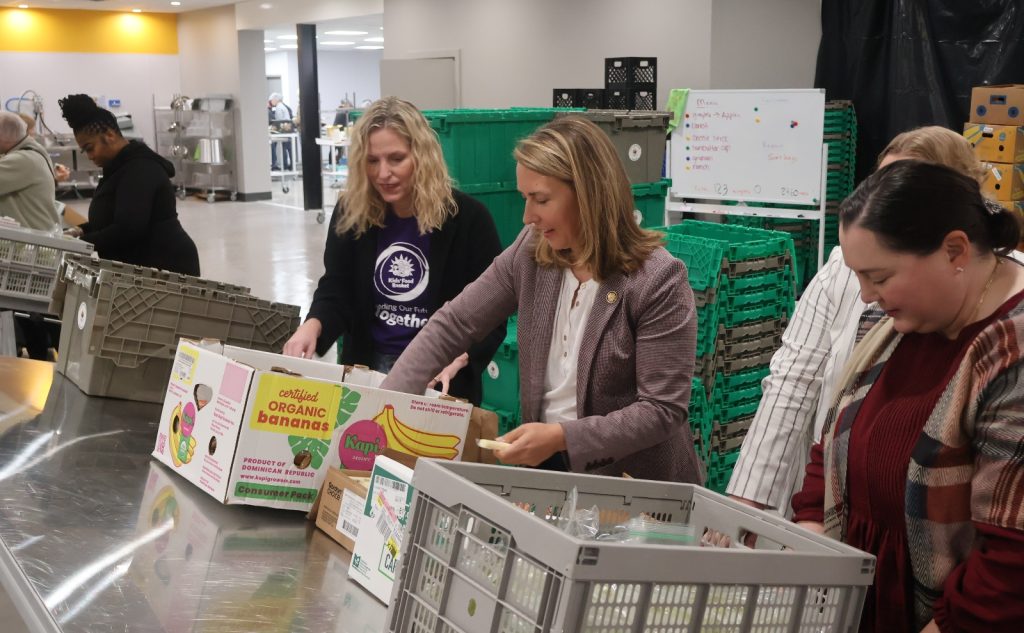
Roelofs says people may talk more about hunger during a crisis, but hunger is not a new problem, and families still need help even when it is not in the news.
“Food insecurity has been an issue for a long time,” he says. “The attention right now is important, but the reality is this work has always been necessary.”
Scholten says community support will be important as nonprofits work to help families when benefits change or shrink.
“It’s going to be important now more than ever that you support your food banks and organizations like Kids’ Food Basket to make sure that they have the resources to fill the gaps,” she says. “Volunteering of time, talent, treasure.”
She also encourages residents to make their voices heard.
“Make sure that you let other elected officials know how you feel about this,” Scholten says.
Photos by Tommy Allen; the photo of Congresswoman Scholten provided by her office.
Nourishing Futures: How food builds thriving youth and stronger communities explores the many ways food nourishes young people, strengthens families, and supports healthier communities. This story series highlights innovative programs, collaborative partnerships, and the lasting impact of food access across West Michigan. It is made possible through the support of Kids Food Basket.
Related Articles

Using social media to match those in need with someone who can help
Abby McKiernan turns personal struggle into community action, creating platforms that connect neighbors, remove stigma and make asking for help easier.

Hope Starts Here stabilizing early childhood services in wake of policy changes
Long-term perspective keeps Hope Starts Here imperatives relevant despite policy changes.
GVSU’s Johnson Center report forecasts 11 trends shaping philanthropy in 2026
The annual Johnson Center report explores key trends influencing nonprofits as leaders navigate uncertainty, technology, trust, and evolving community and donor expectations.


