
Michigan coaches lead student mental health support beyond the game
Michigan coaches recognized by the Coaches Who Care program for commitment to student mental health.
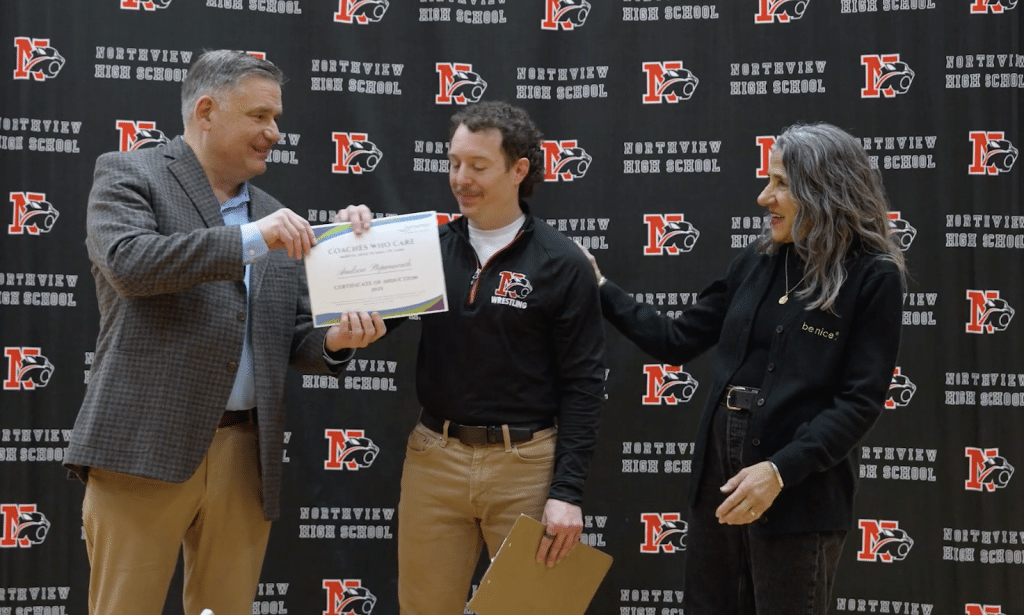
For Andrew Stepanovich, the most important victories don’t show up on a scoreboard.
“Athletes have got to know that they’re more than their win-loss record,” the Northview High School wrestling coach says.
Inside his wrestling room, that belief shapes everything – from how practices are run to how conversations unfold after the mats are rolled up.
“We try really hard to make sure our wrestlers know that they can come talk to us about anything,” Stepanovich says.
And they do.
“It’s actually a really common occurrence that a kid will come in after practice … about what they’re struggling with.”
In a sport defined by grit and endurance, Stepanovich is redefining what strength looks like.
“It’s OK to not be OK, and it’s OK to talk about it.”
That approach has earned Stepanovich statewide recognition as an inaugural member of the Coaches Who Care Mental Health Hall of Fame, an initiative that highlights coaches who prioritize student well-being alongside athletic performance.
“Usually, awards are focused on results,” Stepanovich says. “But this is about what’s really the most important thing: mental development.”
Stepanovich’s coaching philosophy isn’t theoretical; it’s personal. As a teenager, he struggled to find his place after entering a new high school. Wrestling changed that.
“Joining the wrestling team made such a huge difference in my life,” he says.
The team became more than a sport. It became a support system, a second family, and a place where he felt seen and valued.
Beyond wins and losses
Now, as a coach, he’s committed to recreating that experience for his athletes.
“My biggest enjoyment just comes from getting to create that same kind of experience for the next generation,” he says.
That commitment extends beyond performance. Stepanovich and his coaching staff actively look for signs that something might be off, whether it’s a change in mood, energy, or behavior.
“If we notice something is off here, we’ll get that conversation started,” he says.
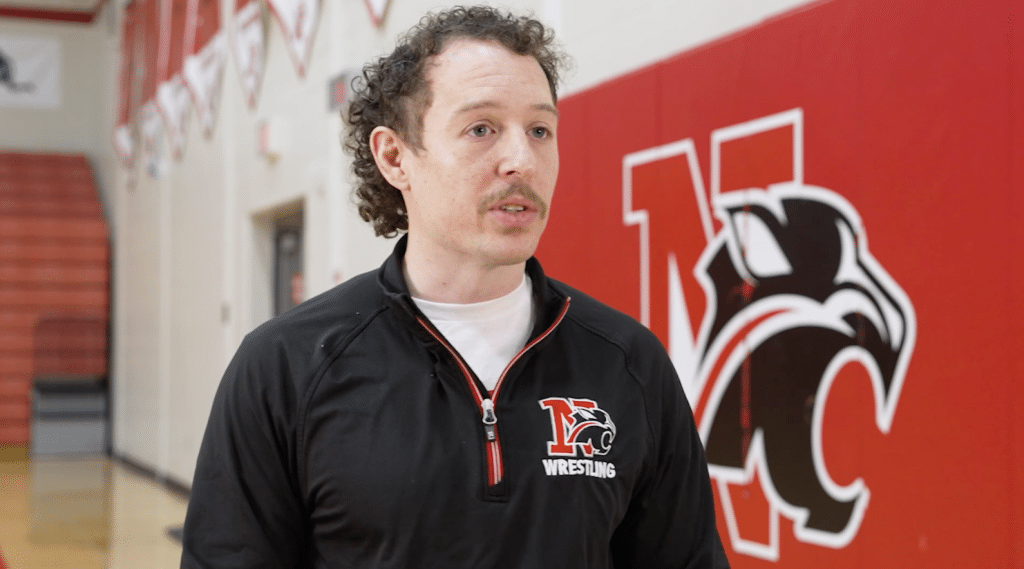
It’s not about confrontation. It’s about care.
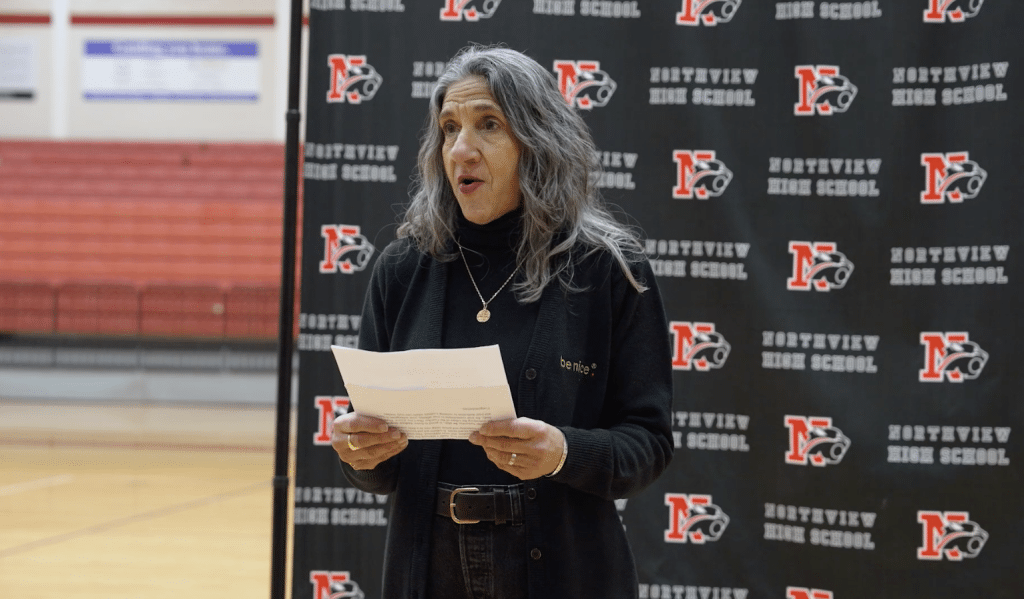
The Coaches Who Care program is led by Samaritas and the Mental Health Foundation of West Michigan’s be nice. initiative. Now entering its second year, it calls on communities across Michigan to nominate coaches who go beyond the scoreboard. The effort reflects a shift in how success in youth sports is defined.
“It’s really about recognizing good coaches, those folks who really are taking care of kids’ mental health,” says Christy Buck, CEO and founder of be nice.
For Buck, recognition isn’t about trophies; it’s about impact.
“A win is when your players want to play for you, when they have a coach who cares about them,” she says.
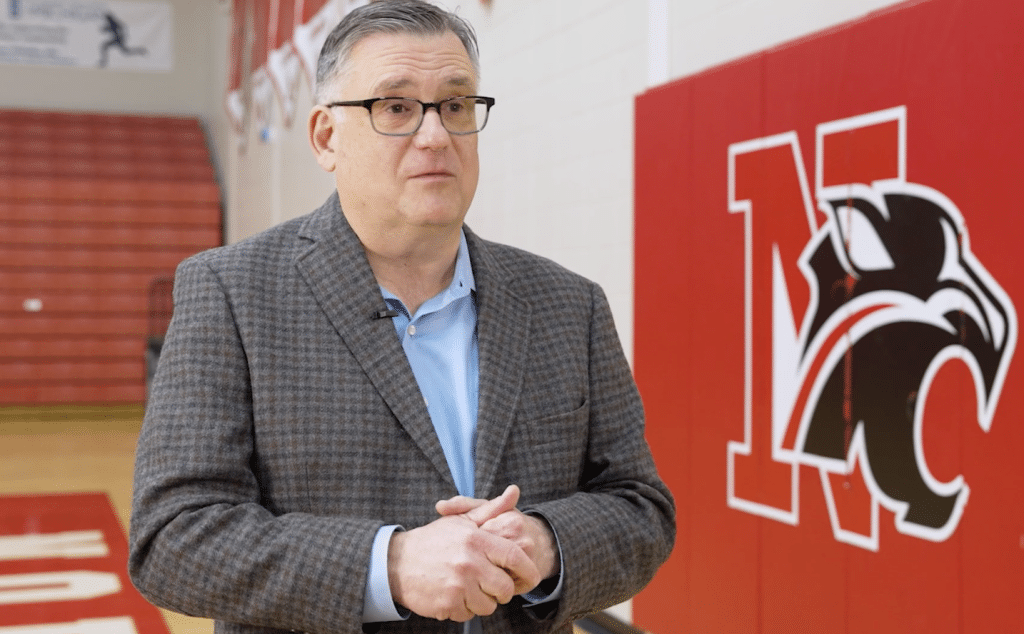
That perspective is echoed by Dave Morin, CEO of Samaritas, who sees coaches as critical figures in addressing youth mental health.
“They don’t just coach sports skills and win games anymore – they’re on the front lines,” Morin says. “It’s not just supporting a young person to be successful on the field, but in life.”
In position to help
Young people are facing increasing pressures, from academic stress to social media and personal challenges. Coaches, who often spend hours each week with students, are uniquely positioned to notice when something changes.
Buck agrees that coaches can be the first to recognize warning signs.
“The first step is noticing something is different and reaching out to talk to that individual,” she says.
That idea is central to the be nice. action plan – Notice, Invite, Challenge, Empower – which trains coaches to identify changes in behavior and respond with care.
“What am I looking for? What could I notice in my player if they were struggling?” Buck says.
For decades, sports culture has often emphasized toughness, resilience, and pushing through adversity, sometimes at the expense of emotional well-being.
Stepanovich sees that tension firsthand, especially in wrestling, “where you’re constantly challenged to be tough,” he says.
But he believes the definition of toughness needs to evolve. Encouraging athletes to speak up, ask for help, and support one another isn’t a sign of weakness; it’s a sign of strength.
“It’s very much encouraging a culture of support rather than a focus on results,” he says.
Buck says that shift is essential if schools want to address students’ growing mental health challenges.
“When it’s OK to talk about mental health, then you can be that first person who starts the conversation,” she says.
And those conversations can make all the difference.
“One of the biggest hurdles is for kids saying it’s OK to go talk to somebody about this,” Buck says.
Stories about caring
The impact of this approach became clear during the Coaches Who Care inaugural year, when more than 40 nominations poured in from across Michigan. Each nomination told a story not of championships, but of compassion.
“Amazing, heartwarming stories – ‘My coach helped me, was there to listen and support,’ ” Morin says.
These were stories of coaches checking in after practice, noticing when a student seemed withdrawn, or helping them get help.
“This is about a coach that’s going to go above and beyond and help that person connect with resources,” Buck says.
In many cases, those small moments had an impact that changed the trajectory of a student’s life.
For teenagers navigating identity, relationships, and pressure, connection can be everything.
“It is so important that kids get an experience of being connected, and oftentimes it is sports,” Buck says.
That sense of belonging can help prevent isolation, one of the key risk factors in mental health struggles. Stepanovich sees this daily in his program, where team culture is built around support and inclusion.
“The biggest thing really is getting to help kids be part of a group that supports you, encourages you,” he says.
But when that connection breaks when a student withdraws or feels disconnected, it can have serious consequences.
“That’s a sad thing when someone quits the thing that they love, and then they don’t have anything,” Buck says.
Mental health training
The Coaches Who Care initiative is expanding, with support from the Michigan High School Athletic Association, which works with be nice. to bring training and awareness to coaches statewide. Michigan has already taken a leading role by requiring mental health training for coaches – something Buck says is critical.
Each year, coaches receive updated training to help them recognize signs of distress and respond. The awareness isn’t a one-time effort, but an ongoing commitment.
As nominations open for the next class of Coaches Who Care, organizers hope to uncover even more stories of coaches who make a difference, often quietly, without recognition.
“There are some heroes out there. We got to let the world know about them,” Morin says.
For Buck, the definition of a successful coach is clear: “A coach who’s invested in the whole person, not just their athletic ability.”
For Stepanovich, the goals are simple: create a space where athletes feel supported and know they matter, and help them succeed, not just in competition, but in life.
Because in the end, the most meaningful victories aren’t measured in points or titles—but in the lives changed along the way. Nominations for the 2026 Coaches Who Care class are open to students, parents, school staff, and community members across Michigan through Sept. 30. Organizers say the process is designed to surface stories from those who have seen a coach’s impact firsthand.
Related Articles
When everyone is welcome: How Michigan’s CCBHCs are changing care
CCBHCs have been improving access to quality mental health care for Michigan residents since 2021.
Health center trains local residents as dental assistants to fill workforce gaps
HealthLinc, a federally qualified health center, covers training costs while preparing local residents for dental assistant jobs, strengthening workforce pipelines and expanding access to care.

The Davies Project expands care by connecting families to oral health
With Delta Dental Foundation’s support, The Davies Project, based in Lansing, removes transportation barriers, helping families access dental care as well as critical medical appointments for seriously and chronically ill children and expectant women.


