
UIX: Treetops Collective celebrates newcomers, helps refugees thrive after resettlement
How can West Michigan do a better job of welcoming refugees? The Treetops Collective and other organizations in the area are answering this question by working to create an inclusive community where new residents are supported.
It feels good to be home.
For many in Kent County, the word “home” has a local definition and a warm feeling. There’s no mistaking its importance in our lives as we live, work, and play in West Michigan. But for those transplanted into our neighborhoods–and, moreover, the United States–for the first time, finding “home” may begin with great uneasiness.
At least 1,000 refugees, without including undocumented minors, began new lives in West Michigan in 2016, according to the Kent County Health Department (KCHD). The largest number of displaced individuals came from the Democratic Republic of Congo, where perennial war and hunger have driven millions from their homes. More than 550 refugees came to Kent County from African countries in 2016, along with nearly 150 people from Burma, almost 100 Cubans, and a comparable amount of Middle Eastern-born individuals.

They come from all over the world, hoping to escape violence, slavery, natural disaster, and inexplicably poor living conditions. They come looking for homes, of course, but along with that, jobs, educational opportunities, and a chance to thrive.
Here in West Michigan, a number of organizations help refugees get acquainted with the area, place them into homes, match them with employers, and otherwise get them started on a stable path toward success. Upon arriving in Kent County, refugees go through the KCHD’s health screening process. Joan R. Dyer Zyskowski, the Program Supervisor for the KCHD’s Community Wellness Division, says health department nurses are often the “first face” of the healthcare community for refugees.
From there, either Bethany Christian Services or Samaritas New American Services help resettle the individuals and maintain case management responsibilities for three to six months after. BCS also handles employment services for refugees, while the Refugee Education Center can help them enroll in school, and Senior Neighbors provides support for elderly individuals.
Justice For Our Neighbors, led by director Raquel Owens, assists refugees by helping them apply for Green Cards, U.S. citizenship, or renew work authorizations. The organization has been in operation since 2004, guiding transplants through the immigration system.
Working together, organizations like these helped resettle the nearly 85,000 refugees who came to the United States in 2016, Owens says. And while the 2017 fiscal year was set to accept 110,000 refugees under the Obama administration. Executive orders from President Trump has reduced that number to 50,000. No matter the number of new arrivals to Kent County, their welcome will be assured with the help of these collective agencies.
“Some have a specific niche; others provide overarching and long-term support,” Dyer Zyskowski says. “We all work together to assist and empower the refugee families as they transition to their new home in the United States. We want them to succeed.”
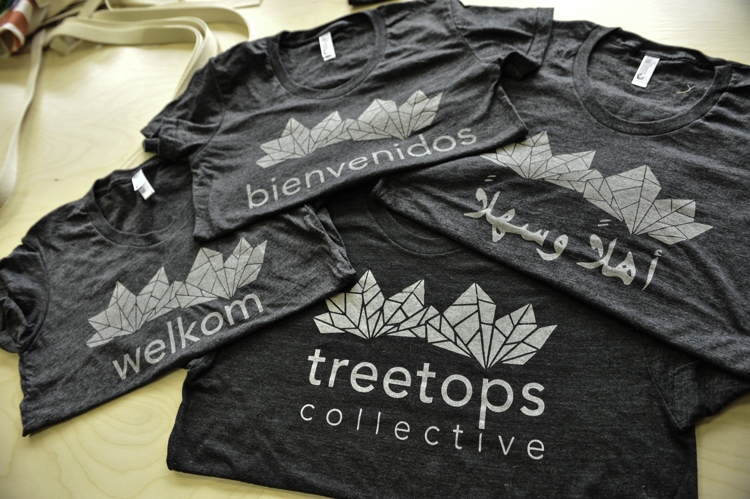
Of the various community partners, including clinics and healthcare providers, churches and volunteers, colleges and universities, interpreter services, school districts, legal aid, and other organizations that support and provide assistance to refugees, the Treetops Collective puts its focus on women coming in to the country. The project’s mission is to connect refugee women with people and opportunities in their new community so they can flourish for generations to come — standing tall and impacting others. It all begins with a single question, “how does a refugee woman make this community her true home – a place where she and her family can flourish for generations to come?”
Starting with gifts
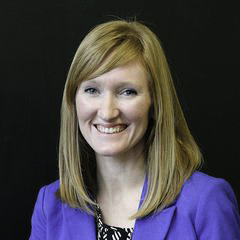
“There is a place for recognizing challenges and working together to overcome them, but we think there is a lot of power in asking, ‘What are you good at? What are the gifts and skills you have come with? How would you like to use those?'” Doll says.
When refugees come to the Treetops Collective, women in the organization’s Sister Circles program help new Americans create a future by leading with these questions. It’s the same idea the organization was based on, Doll says, asking women what they’re good at, what has been hard about making West Michigan their home, and how it could be made easier.
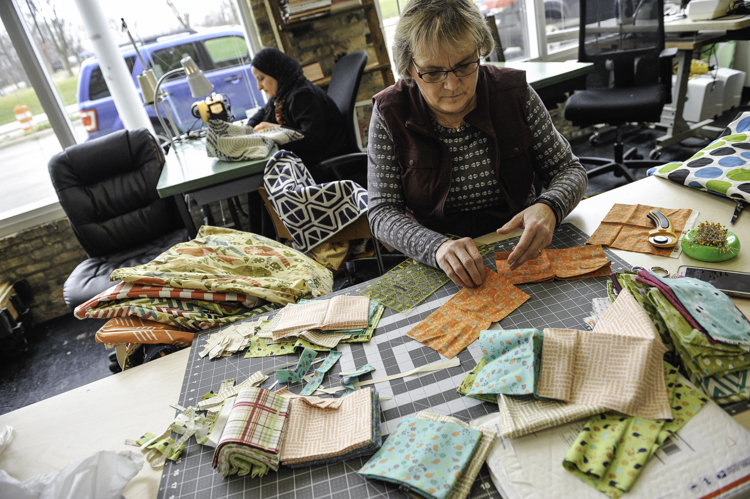
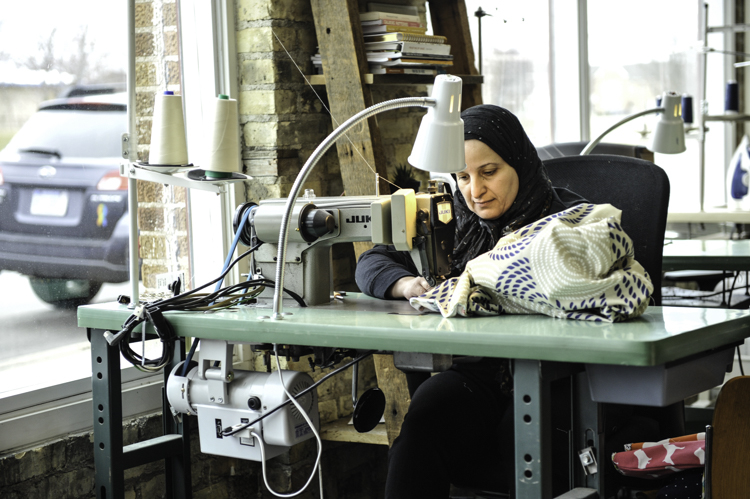
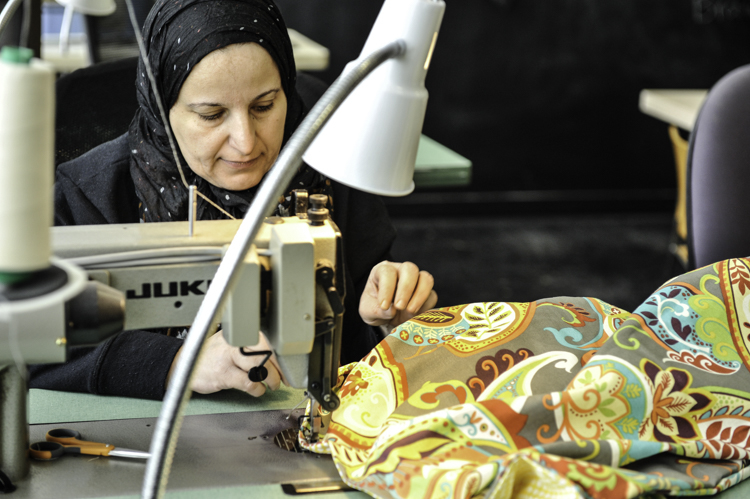
Within the collective’s makerspace at 906 S. Division, skills from various cultural backgrounds are demonstrated and shared. Refugees and local artists have access to craft and sewing resources that help them generate community awareness, and a little income, through pop up shops, story-sharing, potlucks, and other events. Outside of Treetops’ downtown neighborhood, the organization sows the seeds of cultural preservation by partnering with different refugee groups in the community. Most recently, Treetops staff helped a Rwandan dance group apply and land a grant to fund their traditional artistry.
“Though I’ve had quite a few different experiences, Treetops seems to pull a lot of it together, and I’m still in awe that it’s finally a real thing,” she says. ” I love working with refugee women because I know what it’s like to feel welcomed in a new place. I love the culture I get exposed to here in my hometown because of my friends at Treetops. We love discovering the unique gifts and skills that newcomers are bringing to our city and we want to share those stories with those who haven’t heard them.”
Through conversations with the collective’s first board member, Shadia Mbabazi; Clementine Sikiri, now the teen girls program leader; and Edna Mbangukira, the women’s group leader, Doll saw the formation of a powerful new project emerge.
“Listening to their wisdom and hearing their desire to do something to impact their community was where a lot of the movement started,” she says.
At the same time, Doll and her cohort were connecting with sewing groups in the area that worked with refugee women. A consensus building workshop brought people in to share their ideas, and out of that grew the abstract for a shared textile business space. Lynda Roersma, of Little Orange Scooter, attended that workshop, and began renting space at Treetops Collective a few months later. Doll also met with Janay Brower, of Public Thread, which works with both refugee and non-refugee women.
“It was exciting to see both Janay and Lynda move their businesses from their kitchen tables to 906 Division and be able to sew in front of these beautiful windows,” Doll says. “They’ve also been wonderful partners in helping to sustain our community space where we hold meetings and creative gatherings.”
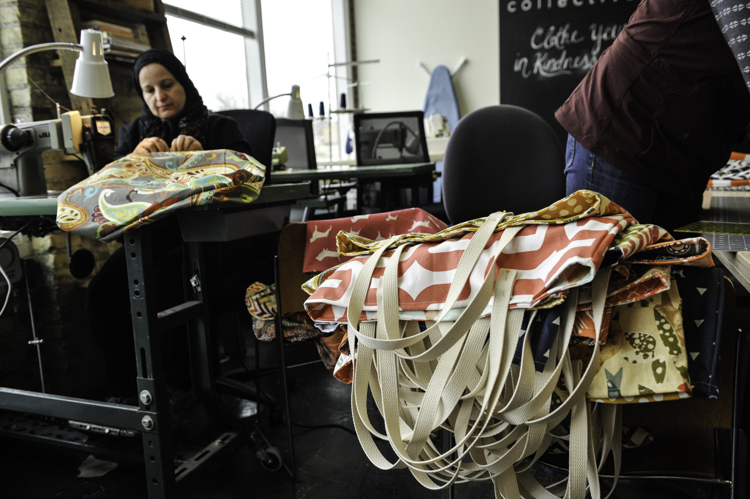
Along with Little Orange Scooter and Public Thread, a therapist from Samaritas’ refugee services who works with survivors of torture and trauma is also renting Treetops space regularly. The therapist provides a crucial service to the refugees who have escaped such horrific conditions.
Sustainability goals
“Treetops started slowly, but the meat of building what we actually see today is because of a committed board, a donor pool of mostly family and friends, a wonderful landlord, and an amazing roster of volunteers that have helped us design our website, transform our space, and signed up for things like Sister Circles,” Doll says.
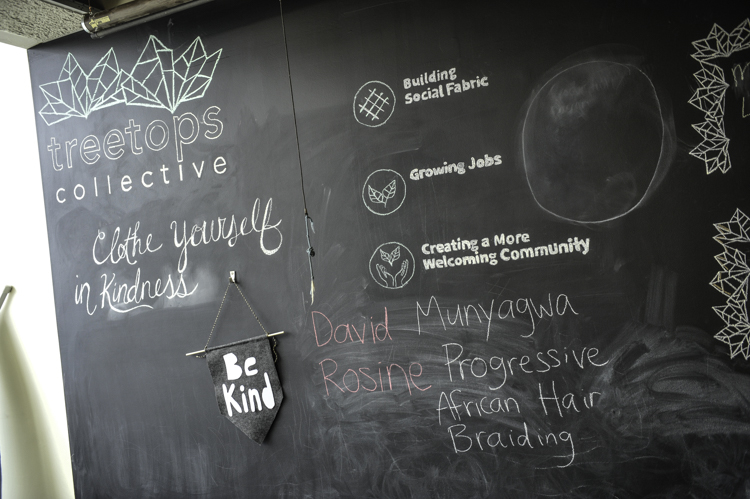
Volunteers from the area provide the Treetops Collective with photography, design, and writing talent, keeping the organization relevant and visible in the digital age. But beyond social media reach, Doll sees the Treetops Collective’s role in the community increasing in importance as policies issued by the Trump Administration have led to cut backs in federal funding for refugee programs.
“Sustainability is incredibly important to us, and it’s not easy,” she says. “Though we hope to receive funding from larger organizations, we never want to be in the position that everything could come crashing down because of one person or entity’s decision not to fund our work.”
In addition to building individual supporters who believe in what the Collective is doing, the organization plans to sell several new refugee-supported products created in collaboration with the small businesses in the space to bolster its funding needs.
It’s likely that West Michigan will see greater number of Syrian refugees in the KHCD’s health screening report for 2017. Those individuals will be welcomed into the community with a host of supportive programs available to them, and they may be anxious, but the fact that these hundreds of resilient people have come so far to find home is awe inspiring, Dyer Zykowski says.
Doll’s hope for the future is that the Treetops Collective will continue to play a role in this system of support, listening to the refugee communities who are making this city their home, and creating opportunities for them to truly flourish.
“We believe that as they flourish, our entire city will flourish,” Doll says. “We love Grand Rapids and believe this city has so much to offer as long as people are connected to the right opportunities that fit their gifts. We often talk in our teen girls group about the first Somali-American legislator who was elected in Minnesota this year and how we’re banking on one of them being a Rwandan-American legislator some day.”
Doll believes that refugee women are more than just clients of the organization. Doll says Treetops plays an important role in influencing non-refugee neighbors and fellow citizens that refugees deserve more than a simple classification of either “victim or villain.”
“We reject these boxes and are here to humanize this term that has been so politicized, she says. “Refugees are simply people. They’re people who were forced to leave their home because of violence. They want what most people I know want–to live in a safe place and raise their children to be contributing members of society.”
For more on the Treetops Collective, visit the organization’s website here.
Photography by Steph Harding
Urban Innovation Exchange highlights the people and projects transforming West Michigan through sustainable efforts. Matthew Russell is the editor for UIX Grand Rapids. Contact him at matthew@uixgrandrapids.com.
Related Articles
UIX: Closed loop manufacturing and the fight to save the planet
From the recyclables you put out on the curb each week to the roll cart that carries them, closed-loop manufacturing is redefining the way plastic products are created, and extending their lives far beyond a single-use.
UIX: The designers and retailers weaving sustainability into fashion
Fashion is a choice, one which these designers and retailers have made with an eye for sustainability. From choosing raw materials, to designing the garments, to sourcing them from overseas, the journey from fabric to fashion can be complicated, but these businesses are proving that it doesn't have to rely on human suffering and pollution.
UIX: Medical innovation is a group effort in West Michigan
The journey that medical products take from ideation to launch has been extended over the years by federal standards and regulations, but the basic outline remains the same: help people by making their lives easier, and call in whoever you need to make that happen.


