
For undocumented, queer immigrants, finding a safe space at the Grand Rapids Pride Center
Undocumented, queer immigrants in Grand Rapids face overwhelming barriers when accessing legal services, obtaining jobs and navigating resources. The Grand Rapids Pride Center is collaborating with Justice for Our Neighbors and Voices for Health to support and protect these valuable members of our community.
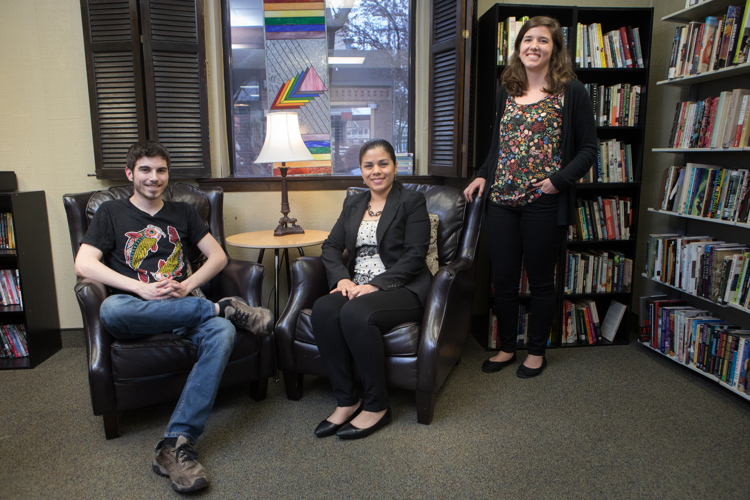
“Being trapped,” María Jose Baez utters nervously when describing her experience as an undocumented, queer immigrant. She follows that with, “as a queer woman of color I feel alone.”
The term ‘queer’ is used for individuals of marginalized gender identities and sexual orientation who are not cisgender or heterosexual.
Baez, who now lives in Grand Rapids, made the trek from Central America to Michigan two weeks after turning 18 years old.
“I was raised in a two-parent household in what I consider to be the busiest city in the country,” says Baez, whose name we have changed in order to protect her identity. We have not identified her home country for the same reason.
Baez came to United States on her own and was able to enter the country with a four-year student visa in 2008. In May of that year, Baez found out she had been the recipient of a prestigious scholarship for international students at one of the universities in West Michigan. Baez is one of the 1.7 million Central American undocumented immigrants who reside in the United States, according to the Migration Policy Institute, an independent, nonpartisan, nonprofit with a focus on world-wide immigration.
“I viewed the opportunity to come here as a way out of a toxic home environment,” explains Baez. When Baez left home, she was not even out to herself, let alone her family, but the pervasive homophobic environment left her feeling in a state she describes as, “a death of self.”
“I graduated from college and then came out to myself, and coincidentally that was the time when I lost my legal status in the country,” Baez says. By “coming out,” she’s referring to the process of accepting her own sexuality as fluid and queer.
In 2012, upon graduating from college, Baez attempted to obtain legal status. In the process of waiting for a renewal of status, her student visa expired, and months later, she received a denial letter from the United States Citizenship and Immigration Services.
“When I opened the letter, me sentí paralizada y confundidad (translation: I remember feeling paralyzed and confused). I was not sure what I could do next, so I stayed,” Baez says in Spanglish.
Baez doesn’t regret staying. Going home for the Grand Rapids resident meant going back to an environment of emotional abuse and seclusion, one that she didn’t feel capable of enduring.
During the four years Baez has lived as an undocumented immigrant, she has worked as a domestic worker, a survey distributor, a translator, a dishwasher, and a babysitter. According to the Migration Policy Institute, immigrants from Central America were involved in the labor force at a higher rate, 73 percent, than the U.S. born population, 62 percent.
The young immigrant has filed her taxes every single year since arriving to the United States in 2008.
Currently, Baez works three different jobs to be able to support herself.
“Nobody at any of my jobs know what my legal status is. There are days where I live in fear. Scared of what might happen if my boss finds out,” says Baez.
In West Michigan, the number of undocumented immigrants who are queer is unknown.
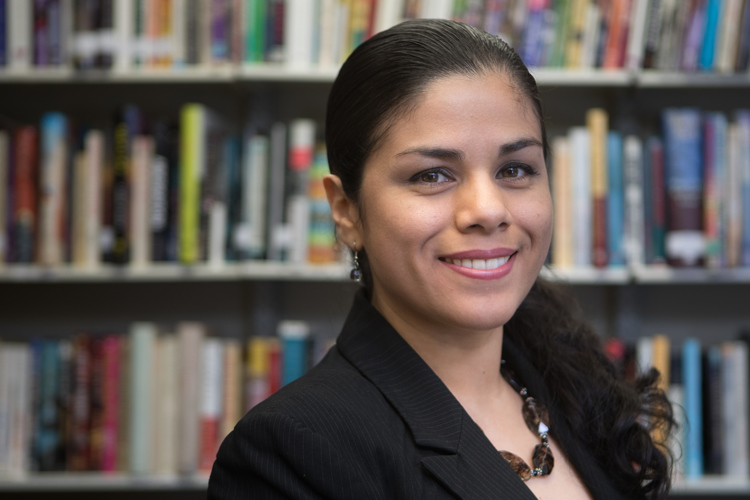
Elisa Pérez-Arellano, Director for Diversity and Inclusion for the Grand Rapids Pride Center, explains that the intersection of being queer and undocumented puts a human being in a very precarious position.
“They have to protect themselves. With the current political climate, more than ever people are scared of being themselves. The current president, (Donald Trump), has said very, very hurtful things about this community,” Pérez-Arellano says, referring to the queer and immigrant community.
According to Pérez-Arellano, undocumented queer immigrants face overwhelming barriers, including a lack of access to health insurance and medical services, housing and transportation. In terms of support, Pérez-Arellano says these individuals might face a lack of family support because they are discriminated by their family members for being who they are.
Unlike our neighboring county of Washtenaw, undocumented immigrants in Kent County are not able to get a driver’s license or a photo ID. In Washtenaw County, undocumented residents are able to obtain a “Washtenaw County ID,” which serves as an identity document when applying for a driver’s license and when dealing with law enforcement. It also provides access to county services and provides proof of identity and/or residency for library cards, medical appointments, employment, or for housing contracts and leases.
Undocumented individuals in the community of Grand Rapids experience high incidents of substance use, and many are suffering from addictions and anxiety, explains Pérez-Arellano. Added to that, queer individuals are more likely to be victims of assaults and crime than their straight, cis-gender counterparts.
“We need to shine a light that they are here, and they are worthy, and they deserve to be acknowledged,” says Larry DeShane, Operations Manager for the Grand Rapids Pride Center.
To address some of these barriers, the Grand Rapids Pride Center is offering high-quality immigration legal services to undocumented, queer individuals who are at or below 200 percent of the poverty level. The purpose of offering these specialized services at the center for this population is to try to connect individuals like Baez to resources and services in a place where all of their intersecting identities are not only welcomed but celebrated.
“If you can’t be 100 percent honest about who you are in your life, then you won’t get the services you need. With the immigrant population who is already pretty marginalized in our society, we offer them a safe space,” says DeShane.
DeShane admits that the Pride Center has not always been inclusive for queer people of color.
“For a long time the center was very white, and we are trying to overcome that barrier,” DeShane says. “But, we have to take steps for queer people of color to be able to trust the Pride Center, and offering these services is one way.”
The Grand Rapids Pride Center provides support and services to anyone.
“Even though we provide services for anyone, we have to pay attention and understand people from our community come from different cultures, have different communication styles and needs. We are not all the same,” says Pérez-Arellano.
The legal services offered at the Grand Rapids Pride Center have been made possible thanks to a collaboration with Justice for Our Neighbors West Michigan, an organization providing immigration legal services, and Voices for Health, a local organization offering service for language interpretation for individuals who are not English speakers.
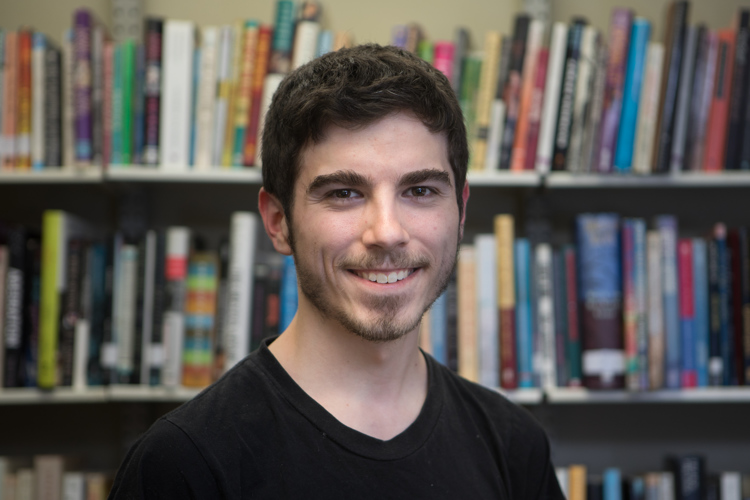
Alex Gillett, an immigration lawyer at Justice for Our Neighbors, explains the services they offer at the Pride Center are for all immigrants in the community. The organization focuses on family and humanitarian-based cases, including refugees and victims of crime and domestic violence. “Those individuals on the most marginalized sections of society,” says Gillett.
During the initial appointment, an individual can expect an hour consultation. “This initial intake appointment serves to help hash out through what sort of status the client might qualify for,” says Gillett.
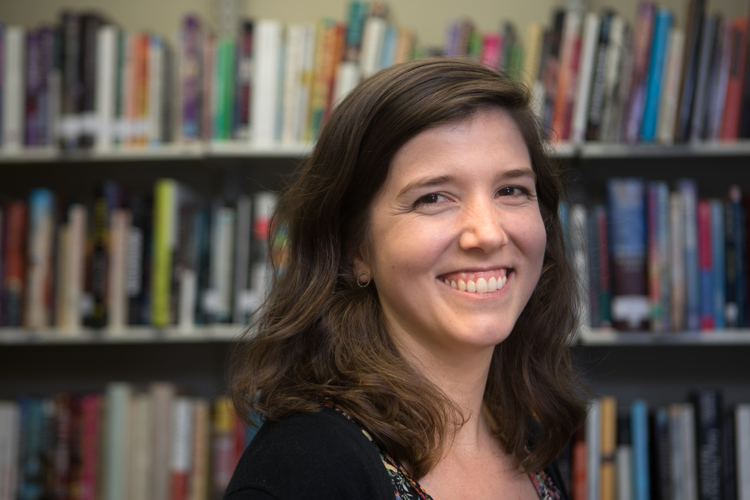
For those individuals who may not be English speakers, interpreters and translators from Voices of Health will be available.
“Our services that we provide are always free to the clients. No one should have to pay for an interpreter,” says TJ Kimball, New Talent Specialist at Voices for Health.
The immigrant rights movement has been very cis-hetero, explains Pérez-Arellano. In other words, individuals who are queer and immigrants are forced to decide between being queer or being an immigrant to be included.
“LGTBQ+ communities may not have been included in this movement due to stigma, homophobia, or lack of awareness. It is important to start acknowledging that LGBTQ+ undocumented, refugees, asylum seeking, or victims of crimes also go through the same legal issues as their heterosexual counterparts. Deportation can happen to anybody who may be at risk of it, not only to certain communities, ” explains Pérez-Arellano.
When not going from job to job, or volunteering at one of the local Grand Rapids public schools as a Spanish tutor, Baez spends her days dreaming of what it might mean to be documented with a full time job, health insurance, and paid time off.
“I am not sure when that day will come, but I long for it,” – Maria Jose Baez, an undocumented, queer immigrant living in the city of Grand Rapids.
Legal service consultations are offered at the Grand Rapids Pride Center the second Thursday of every month from 1-4pm. The Grand Rapids Pride Center is located on 343 Atlas Avenue SE and is on the number 6 bus line.
To get involved with immigrant and advocacy rights, please contact volunteer_gr@jfonwestmichigan.org or visit their website to fill out a volunteer application.
The Grand Rapids Pride Center is currently taking clothing and basic need donations that help support members of the LGBTQ+ community who may have difficulty meeting these basic needs. To find out more, please call the GR Pride Center at 616-458-3511 or email info@grpide.org.
Photography by Kristina Bird of Bird + Bird Studio.
Related Articles
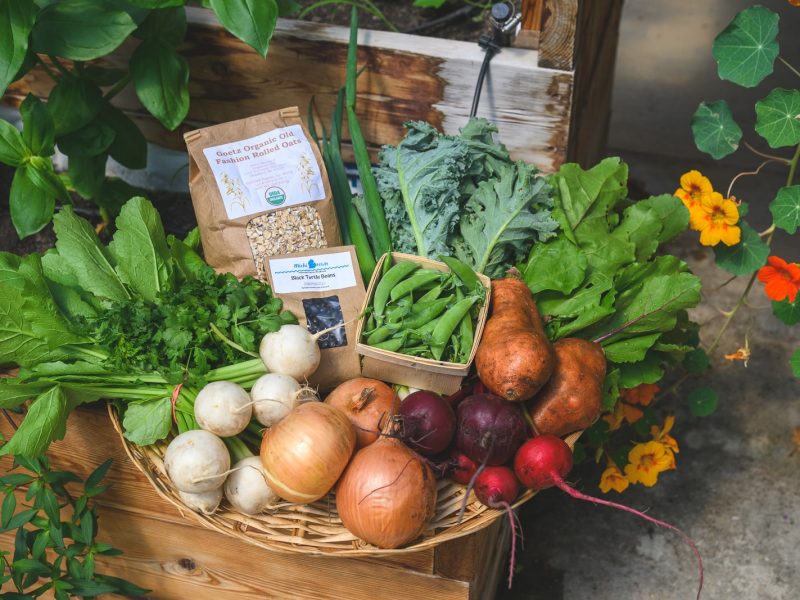
Trinity Health and Michigan community groups will make fresh, local food a Medicaid benefit
A new Trinity Health initiative will allow people in the Ann Arbor, Detroit, and Grand Rapids areas to access fresh, affordable produce from local organizations through their Medicaid health plans.
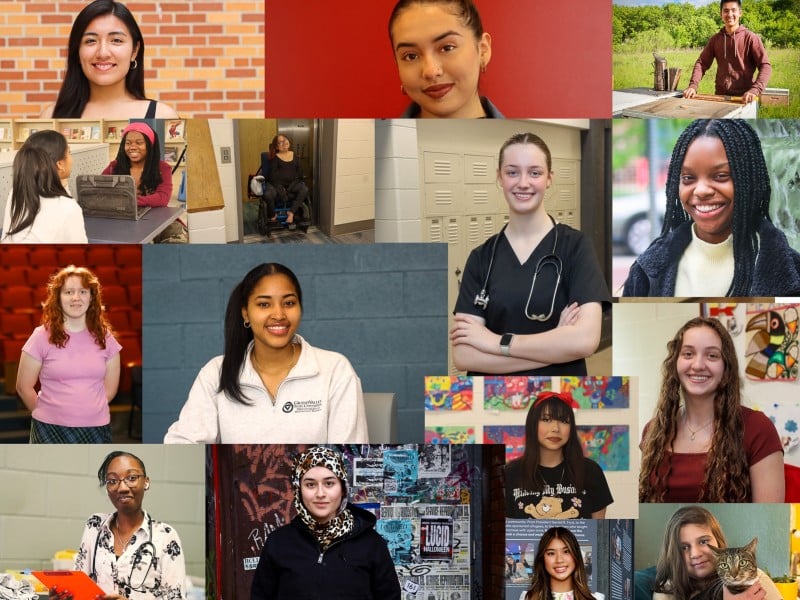
Voices of Youth: Lessons learned from listening to young people
Over the past three years, Voices of Youth has shown us that by actively listening to what young people want, we often develop better ideas. Here, Publisher Tommy Allen reflects on the achievements and lessons learned over three years with Voices of Youth.
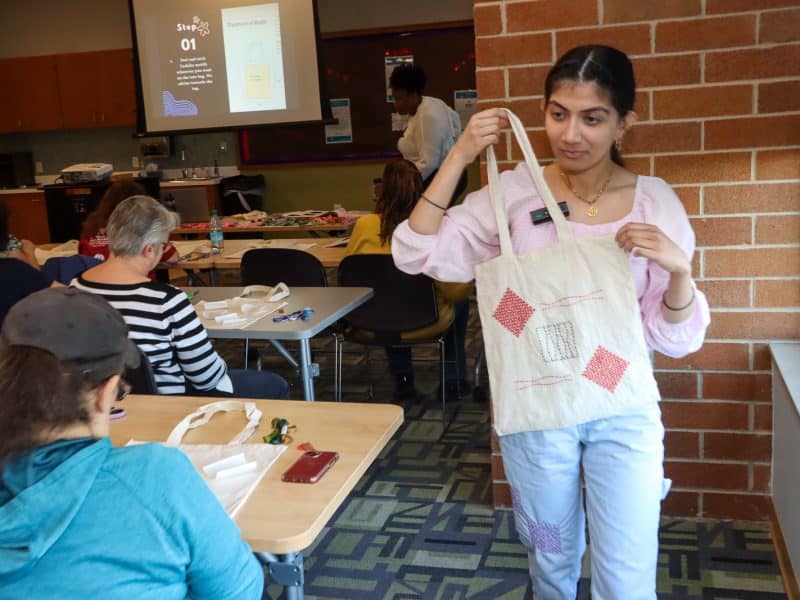
Library classes help residents learn skills, build community connections
At Kent District Library, in-person classes help residents learn practical skills while meeting neighbors and building connections in their community.


