
#RG20LookBack: Young voices given room to grow
In his 29th #RG20LookBack column celebrating Rapid Growth’s 20th anniversary, Publisher Tommy Allen celebrates the work of student journalists in the Voice of Youth series.
Evenings are getting shorter, mornings are a little cooler, and if you’ve got kids of any age, you already know what that means — back-to-school season is basically here. Pre-K, high school, college, doesn’t matter. Everybody’s attention starts drifting back toward classrooms this time of year.
That’s got me thinking about something that’s still pretty new in Rapid Growth’s 20-year history, but that’s become a real part of who we are: giving young people an actual seat at the storytelling table, not just a guest appearance.
Since we launched Voices of Youth in 2023, we’ve published 53 entries — 42 of which are original stories and creative work by young people in the area. It’s a paid journalism program that pairs teens and young adults with professional mentors and gives them real, hands-on experience in writing, reporting, and illusttration/photography, whatever form the storytelling takes.
Those numbers are solid. But they only tell you so much.
So this week I want to share with you about one writer, because her path through this program says more than any stat I could give you.
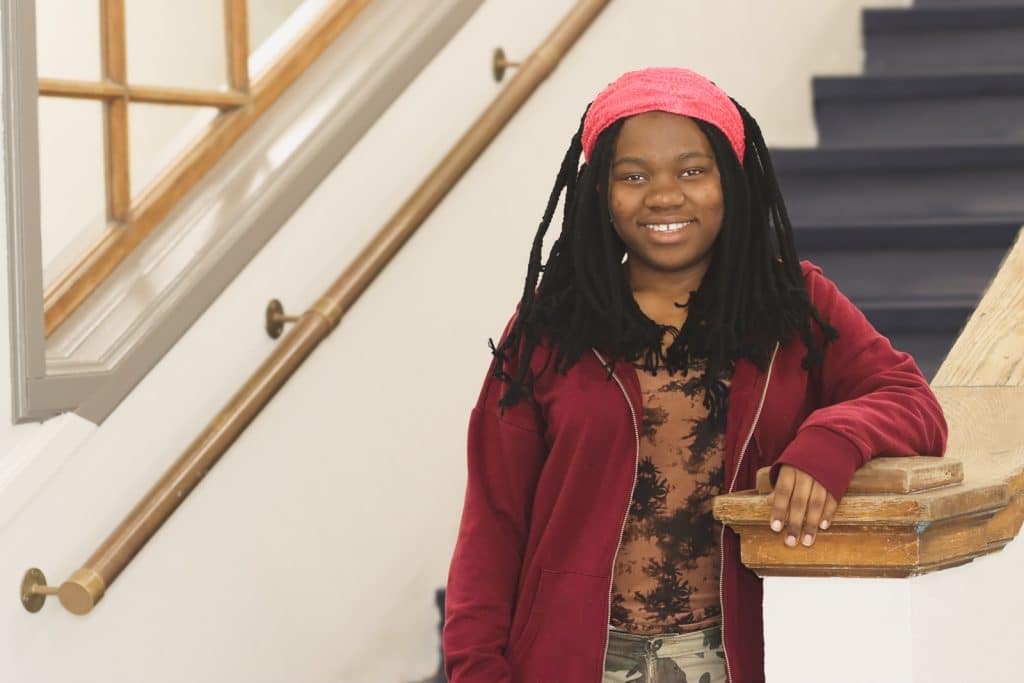
Solange Sifa’s first byline for us ran back in June 2024, when she was still a student at Lee High School in Wyoming. She wrote about period poverty and Michigan’s decision to drop the sales tax on menstrual products.
I’ll just say it — as a man, I wasn’t exactly the intended reader for that piece. And honestly, that was the point. Solange was writing about something well outside my own experience, and reading her reporting was how I came to understand why it mattered. That’s what good journalism does at its best. It hands you somebody else’s world for a few minutes.
And while some youth are quite fine with a one-and-done story, Solange didn’t stop there. Over the next two years, she kept coming back, and her range kept growing.
Over time, she has sat down with a Grand Rapids city official to discuss their sustainability policy. She wrote about how high school athletics build confidence and friendship. She profiled a 19-year-old beekeeper who began his business at age 12, a Lakeshore sixth grader whose litter-picking habit landed her an appearance on The Kelly Clarkson Show, a workforce program helping young adults figure out their next step, students pushing back on bullying through affirmations, and a Jenison program placing bilingual students in community internships to assist Spanish-speaking members of society.
Eight stories, all told. Eight times she had to walk into a conversation, ask good questions, listen, and then figure out how to turn someone else’s experience into something a reader could follow.
Honestly, what sticks with me isn’t the number she wrote. It’s what she brought to each story. Shandra and I agree that we could watch her get more confident, assignment by assignment.
Along the way, Solange kept seeking out more — applying for programs through Kent ISD and participating in two summers with the Wege Prize High School Collaborative Studio at Ferris State’s Kendall College of Art and Design. Journalism isn’t going to be her career. But the skills she built—learning to ask questions, listen, make sense of complicated information, and explain it clearly—those go with her wherever she lands.
This spring, Solange graduated from Lee High School, the same school where we embedded Voices of Youth in 2024 (another first for us). This week, she emailed our managing editor, Shandra Martinez, and me, dropping this update in our thread: this fall, she, like many of our former youth, is headed to college, with Solange choosing Michigan State University.
It captures not just her feelings as she prepares to begin her college chapter, but also the universal realization that education is a lifelong journey to be met with excitement:
“I am very nervous to be away from family for the first time, but I know it’s the right thing to do and can’t wait for it! I decided to attend Michigan State University. I fell in love with it and felt like it was the one for me. My major is biochemistry and molecular biology, and although it sounds really hard, I love science and I absolutely love being challenged.”
I kept returning to that last line all day.
“I absolutely love being challenged.”
Maybe that’s the thing young people keep trying to teach us, if we’re willing to actually hear it.
We, as adults, often build youth programs around what we assume kids need. Voices of Youth has pushed our team to flip that around: give youth access, pair them with real mentors, compensate them for their work, and then let the explorative journey begin.
It’s changed our publication as much as it’s changed the writers and meteors within it. In the past year alone, the program has outgrown its original cohort model—young contributors making illustrations, animation, and visual storytelling, taking on solo assignments, (some) coming back for more, and working directly with professional editors. We’re not really running a journalism class. We’re building a pathway that helps us see the power of community storytelling.
Solange, like other Voices of Youth contributors, shows where that pathway can lead.
Twenty years into covering West Michigan, here’s what I keep learning over and over: one of the best ways to understand where our community is headed is to ask the people who are about to inherit it and let them answer.
My RG20LookBack story this week is “Teen beekeeper builds buzz with sustainable honey” by Solange Sifa. I selected it because it is rare to meet a young entrepreneur whose journey began at age 12. We hope you will be inspired, as we have been by Solange’s contributions.
Teen beekeeper builds buzz with sustainable honey
By Solange Sifa
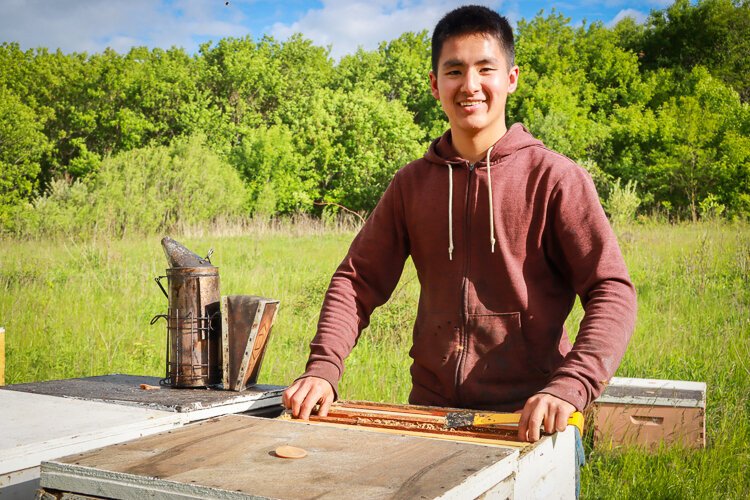
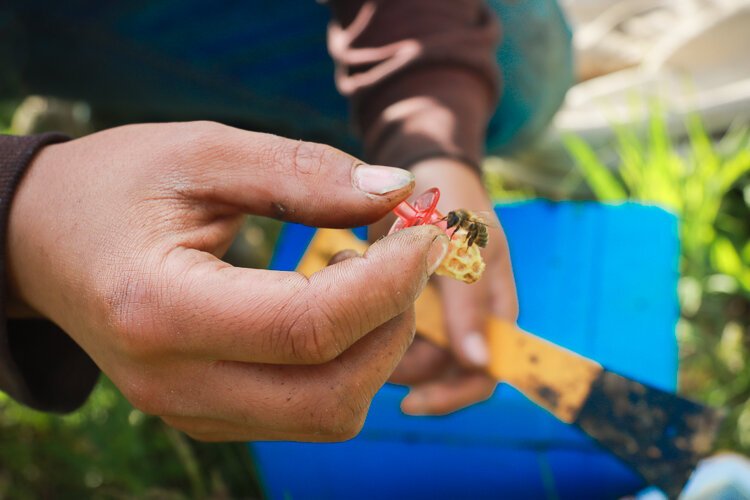
For 19-year-old Zack Sporte, beekeeping comes with a sting – sometimes more than 50 in a single day. But he says the rewards far outweigh the pain.
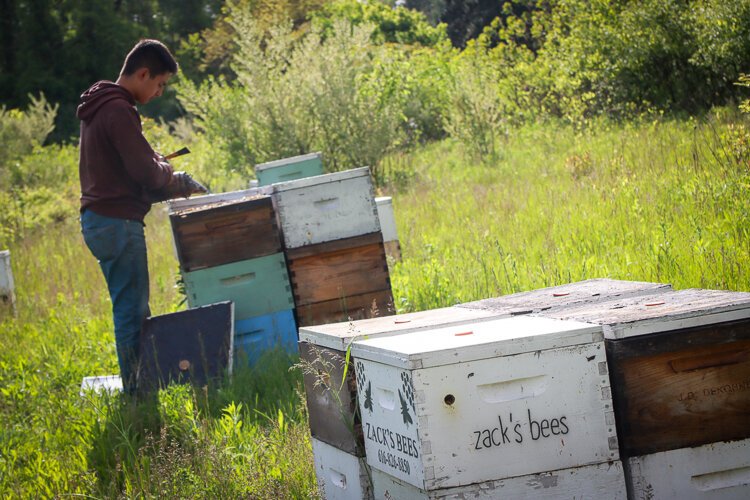
As the founder of Zack’s Bees, he began his journey in agriculture by making maple syrup. That curiosity quickly led him to honey production and a growing business in Walker.
“When I started, I was actually doing maple syrup,” Sporte says. “I tapped about 300 maple trees and thought I’d turn that into a business. But once I got my first hive, I realized I really liked working with bees.”
What started as a backyard hobby has grown into a small business with a mission: producing high-quality honey while promoting pollinator health and environmental sustainability. Sporte sells honey and other bee-based products and advocates for the role bees play in food systems and biodiversity.
“I was about 10 when I started with maple syrup and 12 when I got into beekeeping,” he says. “We were homeschooled, so I had free time to explore the woods. I loved being outside and learning by doing.”
Learning the business
Beekeeping in Michigan’s climate hasn’t been easy. Honeybees face constant threats from pests, disease, and extreme weather.
“Trying to understand how to keep bees alive through winter was the hardest part,” Sporte says. “They’re really susceptible to problems, and Michigan winters are especially rough.”
To market his products, Sporte leaned on help from his dad and Facebook.
“My dad would take jars to work and sell them to coworkers. That helped spread the word,” he says. “I also posted on Facebook asking if anyone had property where I could place hives. In exchange, I give them a share of the honey.”
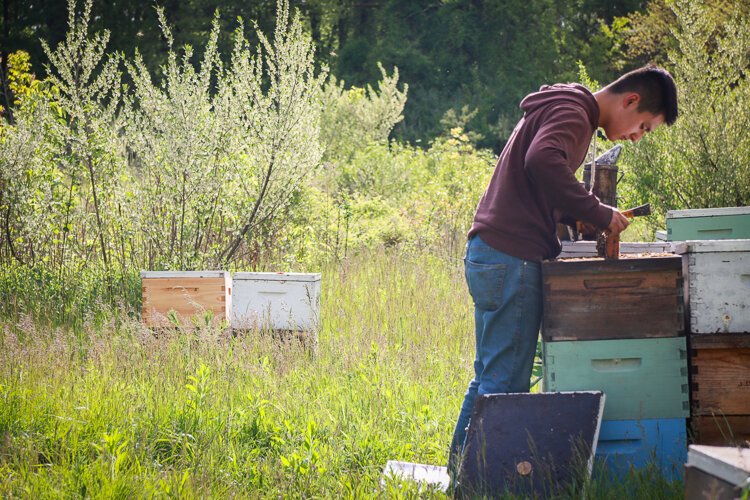
Working with bees every day means getting stung is normal.
“I get stung at least once a day, sometimes more than 50 or 60 times,” he says. “I used to swell up badly, but now I’ve built up an immunity. It doesn’t really bother me anymore.”
His advice for young people considering beekeeping: don’t give up too soon.
“Beekeeping is hard, especially the first year. If your hive dies, try again. But also, don’t just get a hive and ignore it,” he says. “If you don’t take care of it, diseases can spread and hurt other hives.”
Still, the rewards are worth the effort.
“Extracting honey in August is the best part, seeing all your hard work in one place and then watching it go out to stores or get shipped across the country. It’s really fulfilling,” Sporte says.
Honey sold locally
Zack’s Bees products are sold at several West Michigan locations, including Martha’s Vineyard, Greenville Farm in Coopersville, Chicken Bacon Ranch, Peters Gourmet in Grandville, CC’s Market in Grand Haven, and the West Michigan Farm Link in Grand Rapids.
“I always wanted to grow something big. That’s what motivates me, seeing the scale of what we can build,” he says.
Sporte credits his family for supporting the business.
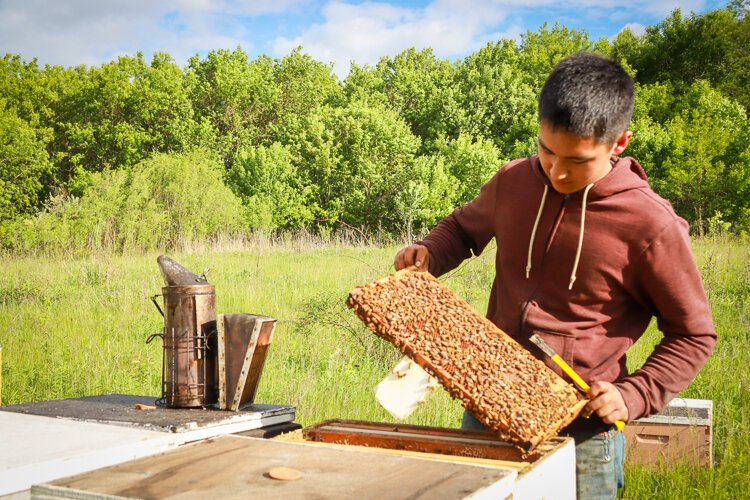
“My parents helped create different products like candles and lotions. My sister makes beeswax candles. My younger brothers help extract honey in the fall,” he says. “I also work full-time for a commercial beekeeper and run my business part-time. He lets me use his facility to extract honey.”
Sporte says the taste of honey depends on what flowers are blooming at the time.
“That’s why we call it wildflower honey. It’s a mix of everything the bees find from spring to fall,” he says.
As his business grows, so does his commitment to sustainability.
“If you’re passionate about something, don’t give up, even when it gets hard,” he says. “And please limit the use of pesticides or herbicides. They harm the bees. We’ve lost hives from chemical sprays. Also, plant bee-friendly flowers; it helps more than you think.”
Part of bigger picture
Zack’s efforts align with broader sustainability goals promoted by the Wege Prize High School Collaborative Studio at Kendall College of Art and Design of Ferris State University. The program encourages students to find local solutions to global environmental challenges using the triple bottom line of People, Planet, and Prosperity, guided by the United Nations’ 17 Sustainable Development Goals.
“What the needs and opportunities are in West Michigan may not be the same everywhere, and our climate zone is unique to us,” says Gayle DeBruyn, a professor at KCAD and chair of the school’s Collaborative Design and Master of Arts in design programs.
DeBruyn also is the college’s sustainability officer and is part of the team behind the international Wege Prize design competition.
She points out that the West Michigan region’s proximity to the Great Lakes, which contain 20% of the world’s fresh surface water, makes environmental responsibility even more urgent.
“Zack understands that our ecosystem is carefully balanced,” DeBruyn says. “Nature has evolved best practices, and bees are essential. They pollinate our orchards and crops, support biodiversity, and help feed our communities.”
With pollinators under threat from colony collapse disorder, she says efforts by beekeepers like Sporte are vital for understanding the drivers of bee population decline and for preserving biodiversity and economic resilience.
With pollinators facing serious threats, including a 42% loss of managed honeybee colonies in 2022, according to a 2022 U.S. Department of Agriculture report, efforts like Sporte’s are increasingly important.
“Biodiversity, including the diversity of pollinators such as honeybees, is crucial for ecosystem stability and sustainable development,” DeBruyn says.
Addressing these challenges requires collaboration between educators, businesses, and youth leaders. DeBruyn notes the importance of interdisciplinary collaboration in addressing sustainability challenges through organizations such as the Michigan Sustainable Business Forum.
“All business is better when people connect to share best practices and work together,” she says. “Collaboration is what helps like-minded organizations scale their impact.”
DeBruyn believes that young entrepreneurs like Sporte can inspire change.
“Young people bring energy, passion, and bold ideas,” she says. “Our role is to support them. They have the vision and the potential to create a better future for all of us.”
Photos by Tommy Allen
Solange Sifa is a sophomore attending Lee High School. She likes learning new things. She’s extremely passionate about literature and archaeology. She hopes to one day inspire people to pursue their dreams.
To learn more about Rapid Growth’s Voices of Youth project and read other installments in the series, click here. This series is made possible via underwriting sponsorships from the Steelcase Foundation, Frey Foundation, PNC Foundation, and Kent ISD.
Related Articles
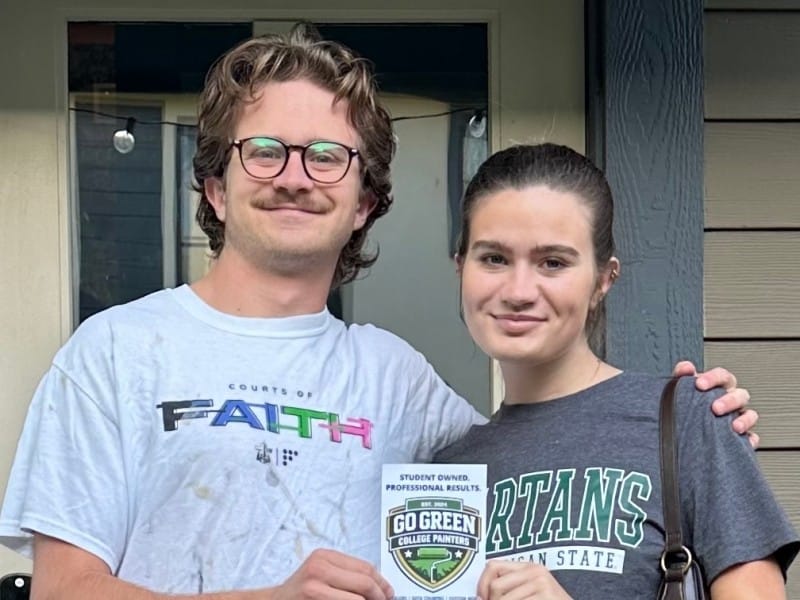
How one family instilled children with values of hard work, entrepreneurship
Four siblings launch businesses as parents encourage creativity, resilience, and responsibility through hands-on lessons in entrepreneurship.
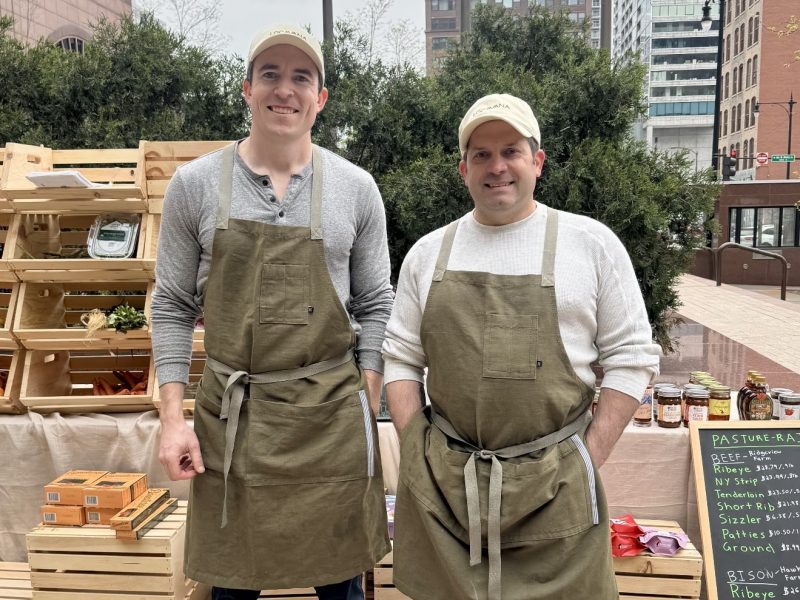
Startup tackles food system inefficiency with direct farm-to-home delivery
Zeeland-based Locavana expands delivery, helping residents buy local food easily while increasing farmer earnings and improving access across West Michigan communities.
#RG20LookBack: Building a bridge to a culture of opportunity in Grand Rapids
In his 18th #RG20LookBack, Rapid Growth Publisher Tommy Allen revisits Ashley King’s 2023 story, reminding readers that starting a business here has never been only about individual drive. It also requires education, access, mentorship and the relationships that help turn ideas into sustainable ventures.


