
How community training prepares future doctors to serve all Michigan communities
MSU medical students gain hands-on experience in local hospitals and clinics while learning what keeps patients from getting needed care.
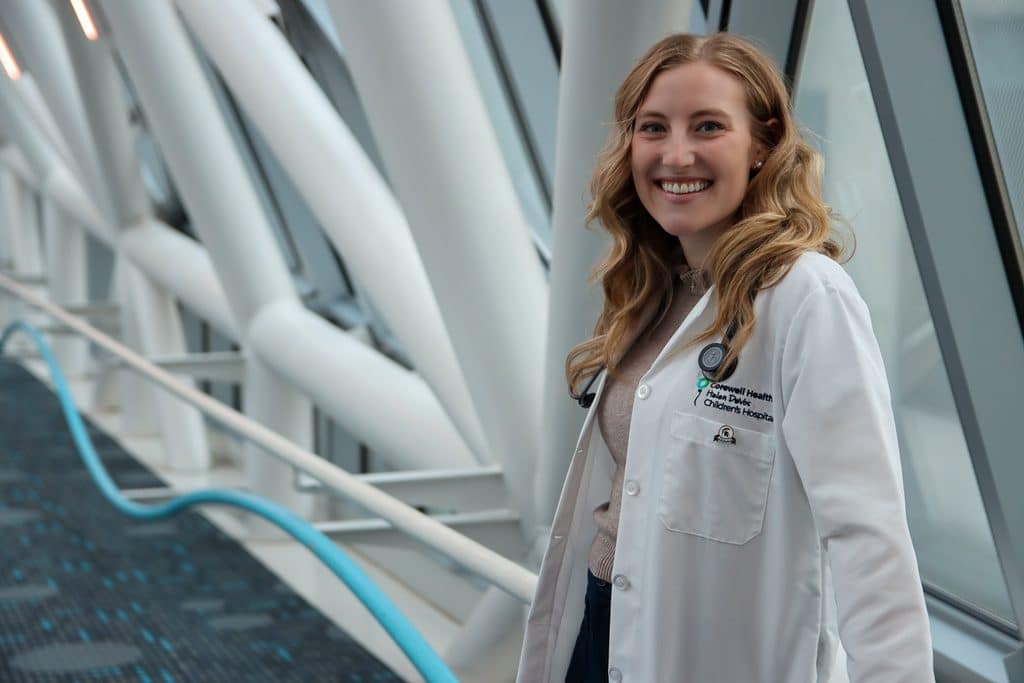
When Dr. Karmyn Vickery began her clinical training in Marquette, she found herself standing beside surgeons helping with procedures that she might have watched in a traditional medical school.
Without surgical residents between her and the attending physician, the medical student had opportunities to participate directly in care. She says that experience prepared her for her residency.
“When I was done with medical school, I felt like I had already gone through an intern year,” says Vickery, now a second-year pediatric resident at Helen DeVos Children’s Hospital in Grand Rapids.
Michigan State University’s College of Human Medicine trains future doctors in communities across the state. Students work in city hospitals and clinics, regional hospitals and nearby smaller communities, and rural areas. At larger teaching hospitals, they may see a larger number of patients and learn about less common health problems.
In all cases, the goal is to help doctors understand local needs and help patients overcome obstacles to getting care.
Vickery’s training helped prepare her for residency. Now she faces another challenge: finding a way to practice the type of medicine she loves in the rural communities she hopes to serve.
Small-town roots
She grew up in Houghton in the Upper Peninsula. Her interest in pediatrics began when serious health complications as a teenager required treatment at Mayo Clinic. The physicians who helped her recover are models of the doctor she seeks to become.
“They brought me back to doing the things I loved, and that’s who I wanted to be,” she says.
The experience also taught her what it means to need care far from home.
“It was a struggle to get a diagnosis, to get the care I needed, and that matters,” Vickery says. “That’s huge in prognosis and your outlook and your trust in medicine.”
Vickery is the third of three sisters to graduate from MSU’s College of Human Medicine. Her older sisters, Caitlin and Noelle Polakowski, also completed their third and fourth years at the Marquette campus. Their experiences helped her see what education could offer. All three share an interest in serving rural communities.
Vickery graduated from Michigan Technological University before entering the MSU medical school. Her first two years were in Grand Rapids, and then she completed her clinical years in Marquette through the college’s rural training program.
“I did not consider any other school, and it was because I could go to Marquette,” she says.
Vickery says working directly with the doctors in charge there gave her many chances to build her skills.
“There is no surgical resident. There is one medical student at the side, and it’s you,” she says of her surgical experience.
The setting came with trade-offs. A smaller community meant fewer opportunities to see some procedures. But Vickery valued her level of participation when those opportunities arose.
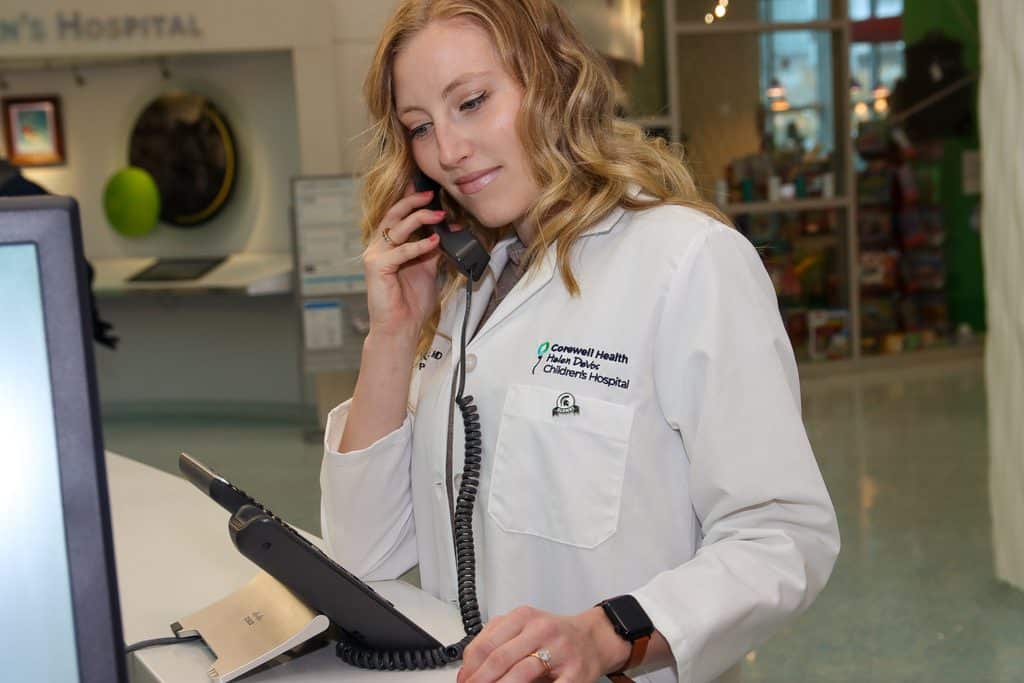
“You can be at an institution where there are numerous deliveries, but if you’re not the one delivering the baby or having the opportunity to be right next to the attending, it doesn’t really matter,” she says.
Community training appealed to Dr. David Buzanoski for similar reasons.
Buzanoski, the community assistant dean for the college’s Midland campus, grew up in a Maine town of about 3,000 people. When he visited MSU while choosing a medical school, he felt a connection.
“I remember thinking these are my people,” he says.
He spent two years in East Lansing and his third and fourth years at the Marquette campus. In this setting, he says, students learn from communities so they can better serve them.
Non-medical obstacles
Dr. Matt Emery, community assistant dean for the college’s Grand Rapids campus, says students learn what can make it hard for patients to follow a care plan. A doctor needs to know more than the diagnosis. Does the patient have a ride? Can they take time off work? Do they understand the care instructions?
“You need to understand your patients,” Emery says.
An emergency medicine physician by training, Emery helps third- and fourth-year students plan clinical schedules and works with community partners to maintain training sites.
Clinical exposure begins early. First-year students perform some duties similar to those of medical assistants, he says.
As a fellow in the college’s Learning Academy, Emery met regularly with small groups of students to discuss those experiences.
“They immediately understand what things are making life hard for the patients,” he says.
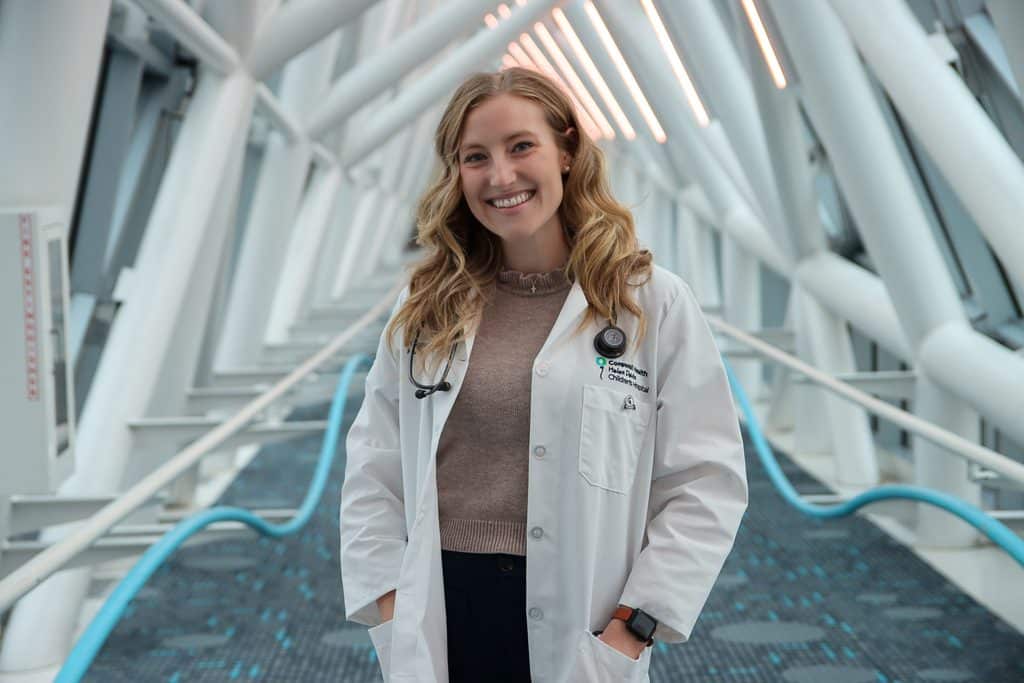
at Michigan State University College of Human Medicine. (Photo by Tommy Allen)
Buzanoski explains how students learn these lessons in rural areas. A patient with headaches that won’t go away may need a specialist in Grand Rapids or Ann Arbor. But first, the patient needs a ride and time off work. Students watch doctors help solve these problems. That might mean finding an appointment time so the patient misses fewer days of work.
“The social determinants of health are no longer a checklist to answer on a test,” Buzanoski says. “They’re actually seeing how a rural health provider navigates those.”
Community training also gives students opportunities to learn what matters to people outside an examination room.
Buzanoski says rural students meet with health departments, chambers of commerce, and community members. Those encounters help students understand local needs and begin building relationships.
“Community partnership builds trust,” he says.
Smaller communities face another obstacle to building trust with medical providers: high turnover among doctors.
When Buzanoski was growing up, doctors came to his town to get help paying their school loans. Many then left after a few years when their obligations were up. When he started working in Midland, his patients asked if he would stay.
Vickery recognizes the same frustration.
“You just can’t get used to the same person, which I think is also part of the draw of why I want to go back,” she says.
Challenges in every community
In Grand Rapids, students also encounter patients facing transportation problems, limited resources, and language barriers.
“Obviously, even in a big city, if you don’t have a car, you know, getting around on the bus is not always a piece of cake,” Emery says.
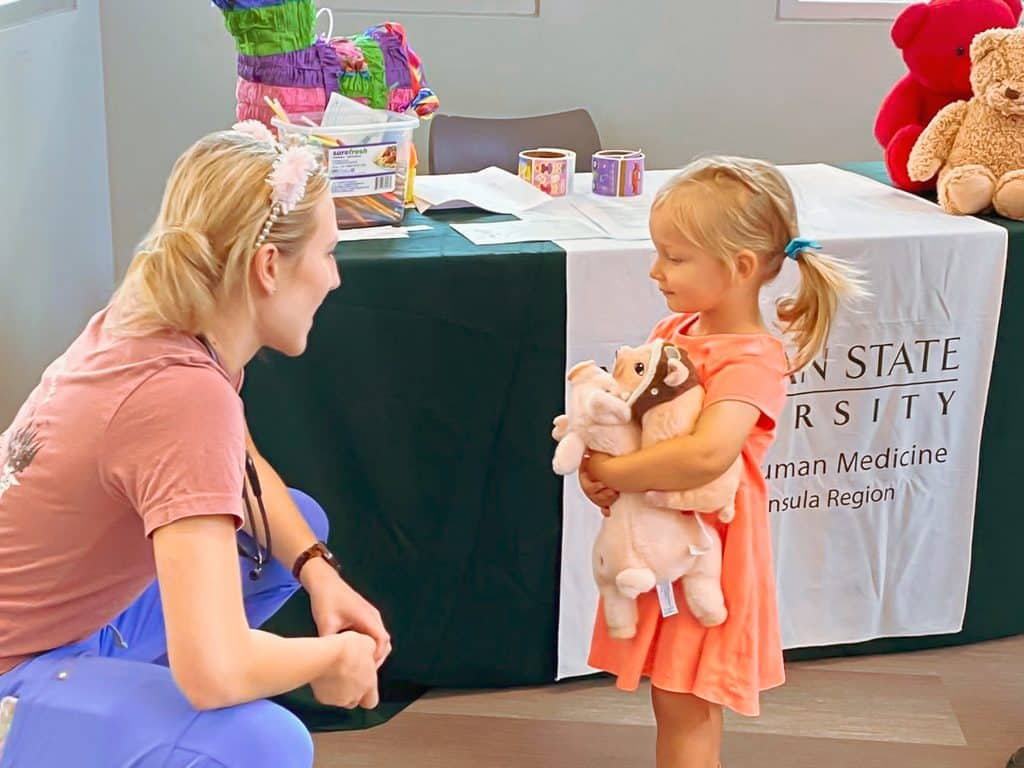
They can also volunteer with Grand Rapids Street Medicine, a student organization under physician supervision that cares for people experiencing homelessness. Emery says students often identify these experiences as formative when applying for residency.
One teaching experience still stands out to Buzanoski.
During consecutive appointments in Midland, he and a medical student worked with patients whose needs differed sharply.
The first visit was with highly educated parents who asked detailed questions in another language about their child’s care. It showed the challenges of practicing medicine with a language barrier.
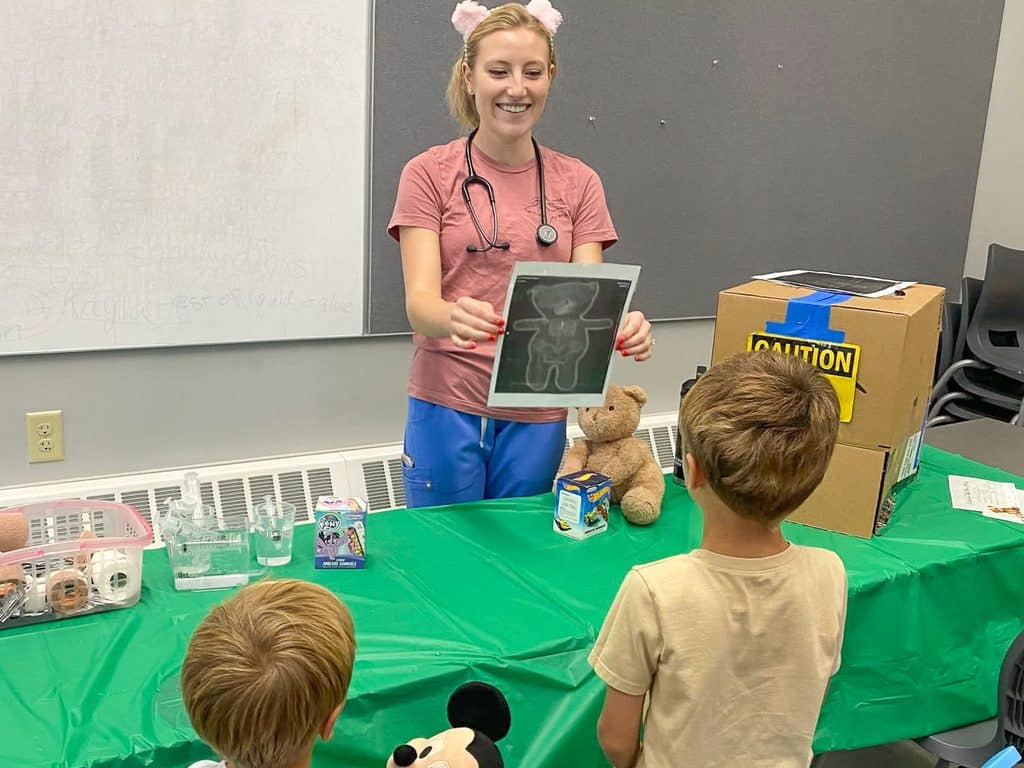
But the next patient, an adult coming in for blood pressure follow-up, was struggling with retirement and a loss of purpose. As they talked, Buzanoski learned that the man could not read and worried that this would prevent him from volunteering.
These encounters required different communication approaches. Written resources that might help one patient could be unusable for another.
“The things that are important to person A are completely different than person B,” Buzanoski says. The lesson is learning to recognize a person’s needs and adapt care accordingly.
Back to roots
The college’s strategy includes attracting students interested in underserved communities, including those who grew up in them.
“They know those communities. They’re comfortable in those communities,” Emery says.
Buzanoski’s own path brought him back to Michigan after residency in Maine. He and his wife, also an MSU rural program graduate, settled in Midland, where both could practice and he could reconnect with the medical school.
Vickery hopes to find her own way back north.
At Helen DeVos Children’s Hospital, she cares for patients who travel from rural communities for services unavailable closer to home. Their experiences reinforce her interest in helping close that gap.
“It’s quite large, so I know I won’t completely fill it, but make a dent at least,” she says.
Yet she is also considering a fellowship in pediatric nephrology, which focuses on kidney care. A rural community may not have enough patients to support that subspecialty, she says.
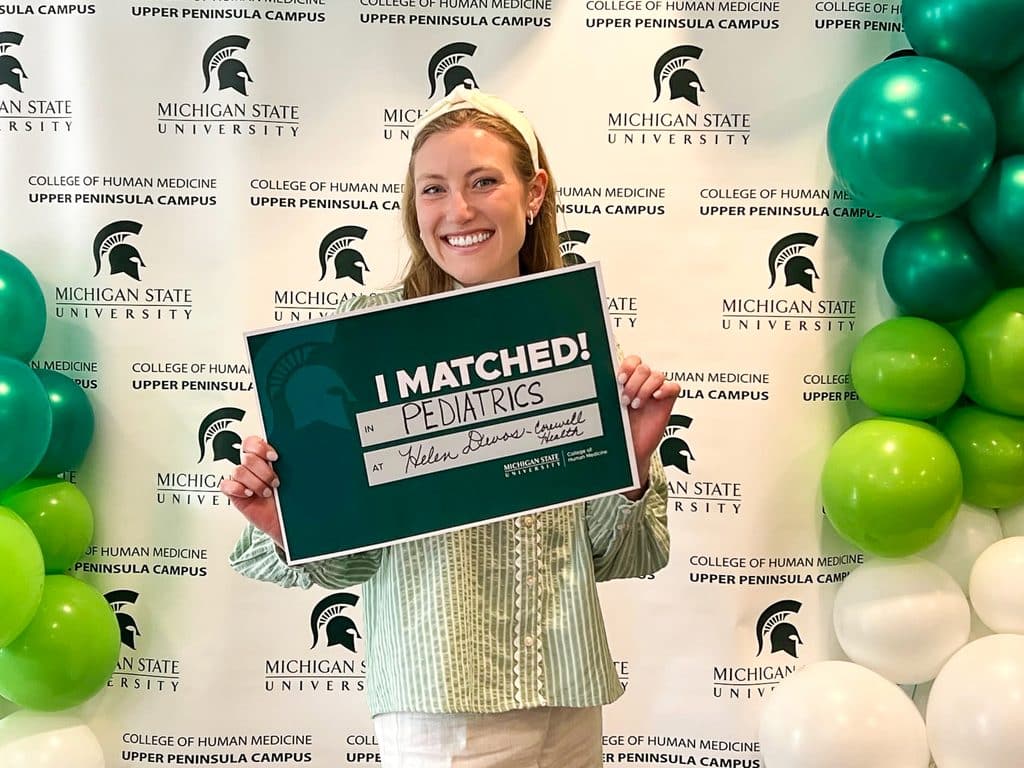
“I think there is a world where I could make a subspecialty work in a rural area, but I’m working on that,” Vickery says. “We’ll see.”
Her decision captures both the potential and the limits of community education. Training can build skills, local knowledge and a desire to return. But available positions, patient populations, and resources still affect where graduates can practice.
Vickery’s goal remains connected to the care she received as a teenager. Before she reached specialists at Mayo Clinic, a physician near home recognized that she needed more help.
“It goes back though to the pediatrician in Houghton who said something’s not right,” she says.
Photos by Tommy Allen and courtesy of Karmyn Vickery.
Medicine Across Michigan looks at how MSU College of Human Medicine’s community-based approach to medical education is expanding access to care, strengthening our state’s physician workforce, and meeting the needs of rural, medically underserved, and emergent communities. Through editorially independent reporting, Rapid Growth digs into the people, partnerships, and practices helping build healthier communities across Michigan. This series is underwritten by Michigan State University’s College of Human Medicine. Learn more at humanmedicine.msu.edu.
Author
Related Articles
Who tells the story matters: Anishinaabek returns to the Grand Rapids Public Museum
After more than three decades, a reimagined exhibition puts Indigenous voices, lived experience, and community collaboration at the center of how West Michigan meets the original people of this place.
Kent District Library lets neighbors borrow, discover and explore together
From birdwatching kits to local music, KDL helps people try new things, save money, and share experiences.
MSU medical school programs aim to alleviate shortage of rural physicians
By encouraging students like Elizabeth Phelps, the College of Human Medicine tackles the need for doctors in small communities.


