
2 GR tech companies’ experiences show value of connections, investment and support
SxanPro’s sale and Array of Engineers’ expansion show how West Michigan businesses grow with help from the region’s tech community.

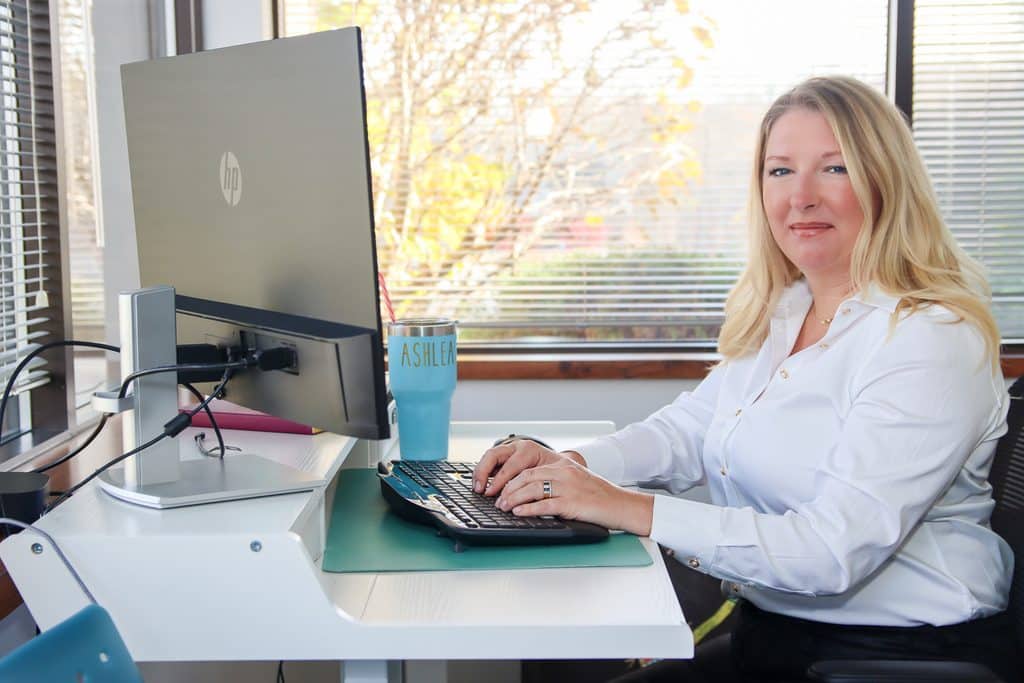
Ashlea Souffrou’s idea for a startup began with a need. She wanted to spend less time counting hospital supplies and more time at home with her sons.
She was required to record product information by hand, including manufacturers, expiration dates and barcodes. At one hospital, she faced about 5,000 items.
“I needed a way to inventory faster, and there wasn’t anything that was out there,” Souffrou says.
That problem led her to start SxanPro, a Grand Rapids company that helps hospitals scan and track supplies with a phone. On Sept. 17, health care services company Vizient announced it bought the business. SxanPro’s team will keep serving customers and growing the business.
The acquisition and Array of Engineers’ planned downtown expansion offer examples of the growth discussed during September’s Tech Week Grand Rapids. Behind those milestones are approaches other companies can learn from: solving customers’ problems, finding technical expertise and building networks of support.
Jennifer Wangler, vice president of technology at The Right Place, says the region is making progress.
“Although we’re not growing at the pace that we thought we would, we are still punching well above our weight,” Wangler says.
Scaling a solution
Souffrou’s idea grew out of years working in health care.
She started at Stryker in 2006 and left in 2013. She later operated a distributorship representing companies that provided services to hospitals, including reselling unused supplies and equipment.
But before products could be resold, someone had to document what was there. The work exposed a need for a faster inventory process.
Souffrou researched a technology solution and developed a prototype. She worked on the business at night and developed prototypes and a business plan while on maternity leave with her third and youngest son.
The company launched in early 2020, just as the COVID-19 pandemic disrupted hospitals. Souffrou describes 2021 as a fresh start. The company took on small projects, then secured investor funding that helped it grow.
Souffrou says SxanPro now works in 16 states and the United Kingdom. Its technology tracks medical supplies, including when they expire or have been recalled.

Souffrou starts by asking what a hospital needs.
“I’m not trying to sell them a product,” she says. “I’m saying, ‘What’s your problem? What are you trying to solve for?’”
Souffrou understood hospital inventory, but building the technology required skills she did not have.
“I’ve never written code,” she says.
West Michigan companies helped her grow the business. Agathon helped build the first version of the technology. Atomic Object worked with SxanPro later, and Elevate helped create a system to store and organize data.
Souffrou is named as the sole inventor on at least four U.S. patents for technology that helps hospitals track medical device inventory. The World Intellectual Property Organization found that women were the only inventors named on 4% of international patent applications from 1999 through 2020. patents.google.com
As the company grew, these connections helped Souffrou find the help she needed. She recalls the kind of questions her growing business encountered: “Hey, I need to build a data warehouse. Who should I call? Because I didn’t need one six months ago, but I need one now.”
Finding life balance
As the business grew, Souffrou faced challenges that technology could not fix.
She traveled 42 weeks last year and missed some moments at home. She and her husband, Bill Souffrou, who owns a landscaping business, had to figure out how to share family duties.
“I’ve had to really put up some guardrails and some non-negotiables, and there are things that I’ve missed,” Souffrou says.
Each Sunday, she asks her boys what they need her to be there for that week. It might be a soccer game or a night helping them study for tests. Each month, she also plans time alone with each son and a date night with her husband.
“There’s definitely sacrifice that comes with this, especially when you’re at an accelerated growth stage, and you have to be really intentional,” she says.
She stays calm and focused by writing in a journal, praying and talking with women she trusts. These things helped her through hard times, too. Her mother was in the hospital, and four of her grandparents died in two years.
“The business isn’t the No. 1 or the only thing that happens,” Souffrou says.
Her experience offers a reminder that business growth requires decisions about time and support at home, as well as investment and staffing at work.
Deals prompt more growth
Wangler says successful acquisitions like that of SxanPro can help draw investors’ attention to other companies in the region.
“What happens is the venture and the capital follow those stories,” she says.
The Right Place’s 2026 Tech Report documents increasing investment. Venture capital investments reached $101 million in the first eight months of the year, surpassing the full-year 2025 total by 48%. Average deal size increased from $2.5 million in 2024 to $3.6 million in 2025 and $7.2 million in 2026.
The report estimates Greater Grand Rapids will have 38,326 tech jobs by the end of 2026. That is nearly 3,000 more than in 2022, when the region began its plan to grow tech jobs.
Tech job ads rose 25% from 2025 to 2026. The middle salary listed in those ads rose 8%, from $95,100 to $102,800. This shows that employers want more workers. But the ads do not tell us how many people got jobs. The year-end job total is still an estimate.
“You start getting some traction, and then you really have to run it as a business,” Wangler says.
Array of Engineers is preparing to move into a new office downtown after growing from six people working in a basement to more than 40 employees, according to the company.
Wangler sees the move as part of a broader interest in downtown Grand Rapids.
“The third trend or signal that I’m starting to see is this push towards the urban core,” she says.
The engineering company also used Tech Week to share ways to support workers as a business grows. Its “Culture That Compounds” event included chances to learn, team activities and help with workers’ needs outside work. The company also stressed that workers should help decide how these efforts work.
Wangler points to Root Functional Medicine’s new downtown headquarters as another example of a business using technology to expand. Technology allows its doctors and dietitians to serve patients remotely and coordinate lab results, care plans and patient progress, supporting growth beyond Grand Rapids. The larger downtown headquarters accommodates its growing team.
“We’re seeing this push towards the urban core in bringing tech companies back to downtown Grand Rapids, which is exciting for our city,” she says.
The Right Place’s 2026 Tech Report lists 160 Tech Week events and more than 15,000 attendees for September’s Tech Week. Visitors came from 37 states. “Shark Tank” investors Daymond John and Robert Herjavec were among the main speakers.
Wangler says attendees talked about what businesses need as they grow.
“How do we create a culture that is supportive of companies at all levels? How do we come together to share our story bigger and broader?” she says.
Other programming introduced young people to technology careers.
“We do a couple of events for the younger generation so that they can see what the future of tech looks like,” Wangler says. “In those particular events, we see thousands of kids come through the door.”
Souffrou’s experience shows that having helpful connections does not make building a company easy. She also needed money to grow and advice on running the business.
Mentorship is another part of the support available. Wangler says Coffee Circle, a monthly gathering launched two years ago, brings women in tech together to hear speakers, exchange experiences and build relationships.
Souffrou credits Wangler with being a mentor. Now, she hopes to share her own experience with other entrepreneurs, including women navigating business ownership and family responsibilities.
That includes discussing hardships and difficult decisions alongside the acquisition.
“I really want to be able to focus and spend time working with founders,” Souffrou says.
In 2027, the Tech Council plans to emphasize helping businesses use AI safely and discuss rules for its use. It will also work with leaders who make products and medical tools and move supplies.
Tech Week Grand Rapids is scheduled to return Sept. 13-18, 2027.
Photos by Tommy Allen
This series, West Michigan Tech, aims to spotlight tech organizations and employers in the Greater Grand Rapids area that are delivering innovative programs, addressing talent pipeline challenges, and striving to develop, attract, and retain top talent in West Michigan. This series is underwritten by The Right Place.
Author

Related Articles

Why early childhood belongs on every Michigan voter’s ballot
Why Michigan voters should pay attention candidates’ stands on childcare and early learning.

La crisis de la fuerza laboral en el cuidado infantil en Michigan impulsa la búsqueda de reformas salariales permanentes
Los bajos salarios siguen impulsando la inestabilidad laboral.

أزمة القوى العاملة في قطاع رعاية الأطفال في ميشيغان تدفع نحو إصلاحات دائمة للأجور
انخفاض الأجور يواصل دفع عدم استقرار القوى العاملة


