
Kent ISD’s planned CTE Center in Caledonia highlights the exciting surge of career-connected learning sweeping across the state
Kent ISD’s second CTE center in Caledonia is more than a new building—it’s a bet on opportunity, supported by an already impressive 96.7% graduation rate for Kent County’s CTE students and a countywide goal to welcome 10,000 students annually to the power of CTE by 2030.
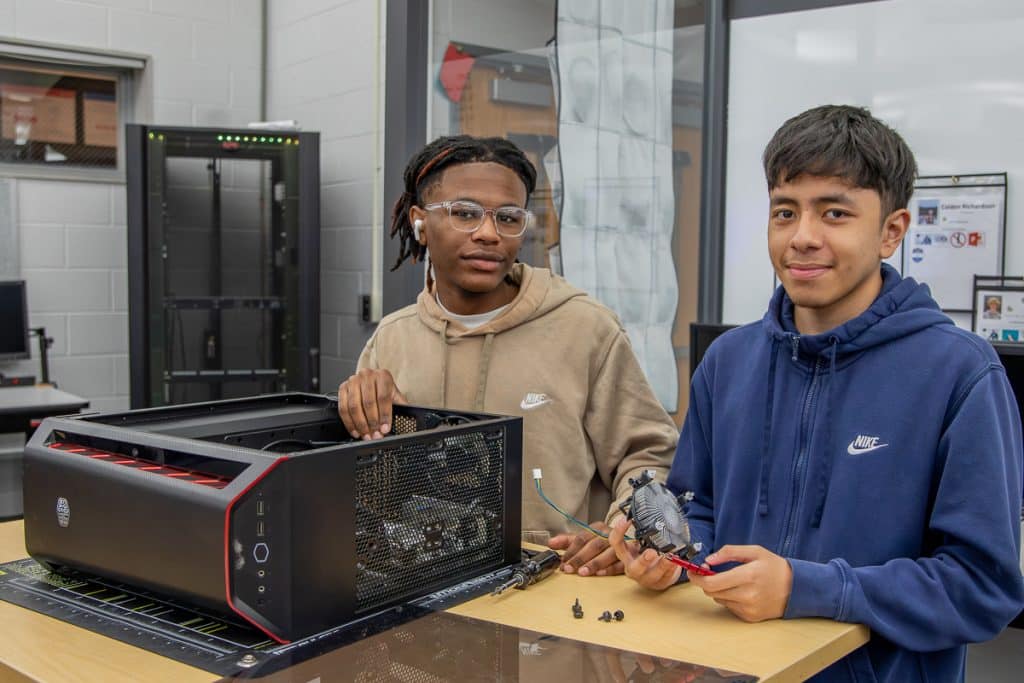
In a world where practical skills and hands-on experience are increasingly vital, Kent ISD is stepping up to meet the rising demand for Career and Technical Education (CTE) by establishing its second CTE center, planned for Gaines Township.
With this expansion to the south end of the county, Kent ISD is not just responding to demand; it is embracing a compelling vision to empower the next generation and ensure that every student has the opportunity to thrive in a dynamic, ever-evolving job market. Together, Kent ISD is building a brighter future, one where dreams are realized through education and opportunity.
The planned CTE center is on 68th Street SE on the site of Caledonia Community Schools’ former Dutton Elementary School building, which is scheduled for demolition this year. The timetable for completion is not yet set, though groundbreaking is expected in fall 2026.
Kent ISD officials say plans are for a flexible space that will serve about 500 students in the morning and 500 in the afternoon. It is expected to host about a dozen programs, providing expanded access to training that combines classroom learning with practical skills, professional certifications, and work-based learning experiences.
However, the bigger picture extends beyond the opening of a new building. This expansion embodies a statewide shift in how “rigor” is defined in high schools and explains why Michigan increasingly emphasizes programs like CTE as key to improving graduation rates.
Graduation rates and ‘rigorous’ programs
Michigan’s latest data show the four-year graduation rate rising to 82.8% from 81.8% last year, its highest level since the state adopted the federal calculation method. The report by the Center for Educational Performance and Information, a state agency that collects education data from early childhood through postsecondary education, attributes this progress partly to increased participation in rigorous secondary programs such as CTE.
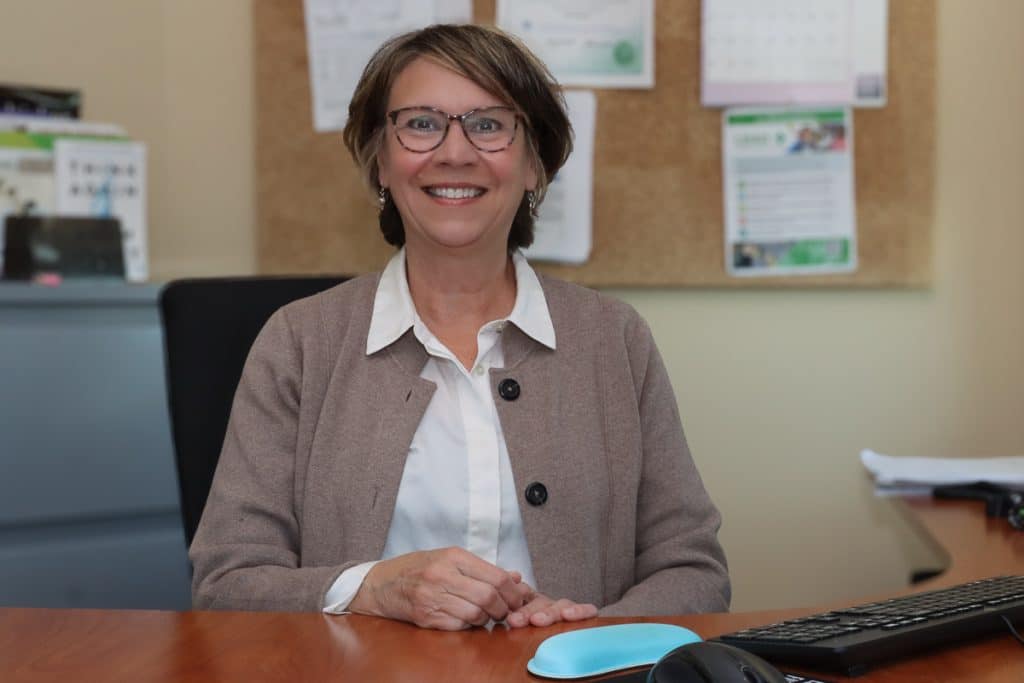
While statewide data indicate that Michigan’s four-year graduation rate was 81.77% in 2022-23, Kent ISD reported a 96.7% rate during the same period for students who completed a CTE concentration. Local education leaders believe this shows that career-connected learning boosts student engagement and helps students progress toward graduation, thereby improving their postsecondary outcomes and helping them meet their goals.
On the state level, proposals intended to boost high school graduation rates are moving through the state Legislature, including the kind of career-connected pathways that have led our area’s students to success.
CTE in plain terms
In response to families who view CTE as just a narrow track or a “plan B,” Kent ISD Assistant Superintendent Sue Gardner explains the program’s modern, comprehensive approach: an applied learning pathway that combines rigor with practicality. Students within CTE can explore different careers, build technical skills, and earn industry-recognized credentials during high school. This often opens doors to paid work-based learning experiences and additional postsecondary options.

“The way you can define it is what it offers a student,” Gardner says, highlighting CTE’s combination of academic learning and real-world skills. “And that is rigorous learning, hands-on training, certification opportunities, and work-based learning.”
In other words, the aim isn’t to restrict a student’s future but to expand it, while also decreasing the costs and uncertainties that frequently follow graduation.
Expanding access and reach
Kent County’s steady population growth is putting pressure on local systems that support youth and the workforce. The U.S. Census Bureau estimates the population at 673,002 as of July 1, 2024, a 2.3% increase since 2020. Regional officials note a longer-term trend: The Right Place’s 2025 economic report notes a 6.1% population increase over the past decade, exceeding the statewide average.
Kent ISD provides nearly 30 CTE programs through the Kent Career Tech Center on East Beltline Avenue NE, along with additional options through partners such as Davenport University, Grand Valley State University, the West Michigan Construction Institute, and Next Steps of West Michigan. Gardner says the high demand for these programs has led to long waiting lists.
Gardner notes that expanding programs often leads to even higher demand. For instance, when a district introduces a new pathway, such as a health-focused program, more students become aware of it, connect with it, and become enthusiastic about it. This usually causes a longer waitlist, not because the program is less effective, but because broader access reveals greater student interest.
This situation highlights the importance of establishing a second center, which will ease pressure on the existing campus, broaden access, and support additional programs that align with student interests and meet the region’s modern workforce needs.
Kent ISD leaders say that the Caledonia expansion is a strategic component of CareerPrep 2030, a countywide initiative involving Kent ISD, 20 public school districts, businesses, industry, and community leaders. Its goal is to significantly boost student participation in career-connected learning by the end of the decade.
“We aim to reach 10,000 students in CTE in Kent County by 2030,” says Gardner, emphasizing that the efforts extend beyond state-approved pathways within the career center. The program also supports districts in strengthening “CTE-like” programming by helping them provide opportunities such as certifications and work-based learning, which are vital for high-quality CTE.
Additionally, establishing a common understanding of CTE terminology and its scope is crucial as technology and emerging fields continue to reshape our workforce and daily lives. Knowledge is power in this scenario for anyone navigating the future, even if CTE is not on one’s path to their educational goals.
Kent ISD leaders say the addition of the Caledonia site is a response to the population growth in southern Kent County. It offers a countywide presence, facilitating a more balanced distribution of opportunities while still enabling the system to function as a unified entity.
Gardner points out that regional cooperation on such programs can go beyond county borders. Such cross-county collaboration can increase access for students and align program capacity with demand.
Kent ISD as a connector
Buildings and labs are important, but relationships matter too. Gardner describes Kent ISD as a facilitator linking local districts, students, higher education, and industry partners. These connections shape the programs available, the necessary equipment and certifications, and the current workforce landscape.
Each CTE pathway must have a program advisory committee made up of members from business and postsecondary education. These committees evaluate curriculum and program strategies to ensure that offerings align with current labor-market needs and industry developments.
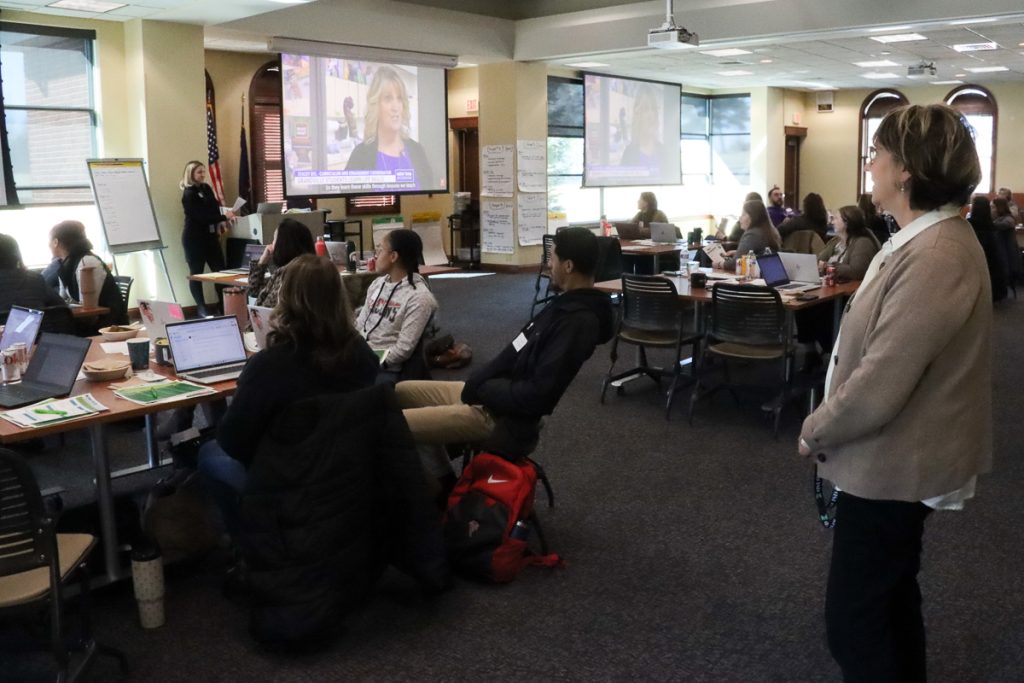
Krista Harmon, a workforce development consultant at Kent ISD, primarily focuses on building and maintaining relationships that connect employers with educational institutions and translate education into real opportunities for students.
Harmon observes a clear pattern: students who struggle in traditional classrooms often build confidence through practical, hands-on learning. This boosts their test scores as curiosity and interest – the foundation of all education – drive their learning. In a career-tech environment, students see the real-world relevance of their lessons, practice skills directly, and achieve success in ways that support their regular school experience.
She considers CTE as “career exploration for free,” providing students with an opportunity to sample a career before they invest in tuition or commit to a profession after graduation. For many families, this isn’t just an educational benefit; given the increasing costs of higher education, a strong CTE program also offers a significant financial advantage.
As part of her mission to engage as many people as possible with the CTE program, Harmon has established an alumni network of former Kent ISD CTE students at TheTechCenter.org/alumni.
Growing pains and the next big challenge
Expansion raises another concern: how will students get to the new center, particularly those without reliable transportation? Currently, districts offer bus service to the existing center, and some students drive themselves. However, access becomes more complicated as programs grow and geographic boundaries expand.
Gardner notes that Kent ISD is waiting for the results of a transportation study aimed at understanding future needs and options, including those of the Caledonia site. The location near M-6 is a major reason this site was selected as the second CTE location in Kent County.
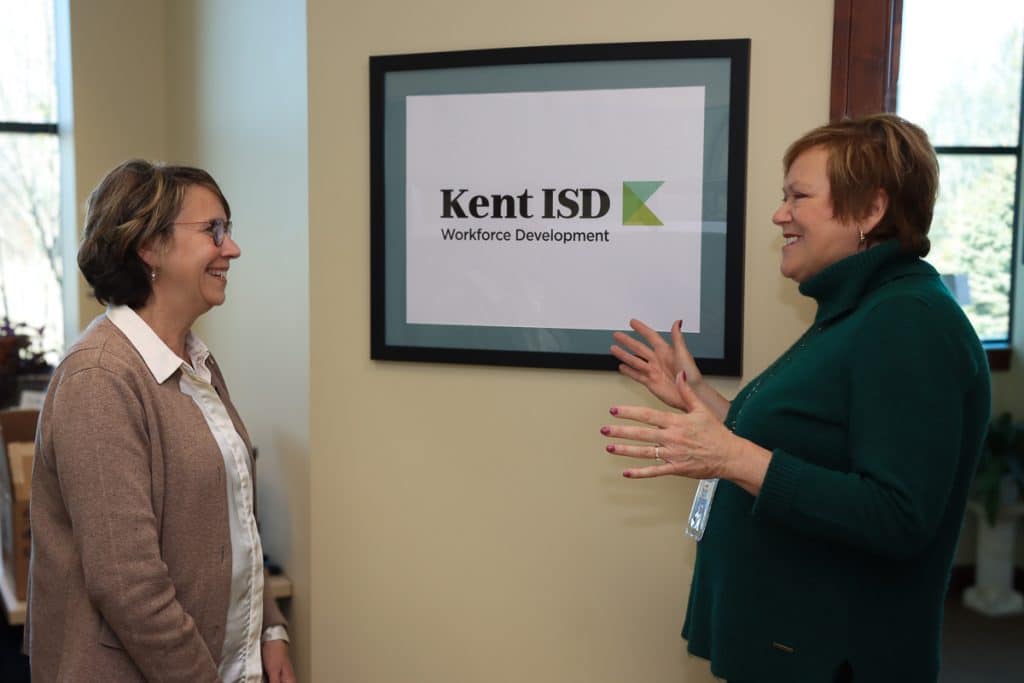
However, the availability of public transportation may be key in determining if the extra seats in DTE programs genuinely offer opportunities for all. Our history shows that addressing public transportation challenges in West Michigan is feasible, as evidenced by the regional alliance’s efforts to add public transit upgrades over the last 40 years.
Meanwhile, Gardner and her team find their case for expansion compelling, as studies show students are more likely to graduate when they can see a path to a successful future. Additionally, she has seen that regions offering accessible, high-quality career and credential pathways become more attractive for attracting and retaining talent, particularly for families and employers assessing opportunity within West Michigan.
Photos provided by Tommy Allen and Kent ISD.
Related Articles

#RG20LookBack: The Grand River is having the moment we imagined—together
In his 12th #RG20LookBack column, Rapid Growth publisher Tommy Allen revisits the 2008 story, “A River Runs Through Green Grand Rapids,” which now reads like an early spark for everything unfolding along the Grand River today.
How a sisterhood of dentists is expanding public health across Metro Detroit
A collective of African American women dentists delivers public health care, mentorship, and trust to underserved patients across Detroit, Wayne County, and Macomb County.
Fewer options, fuller ERs: The behavioral health fallout of Medicaid cuts
MHA advocates for state funding that preserves behavioral health care and keeps rural hospitals open.


