
#RG20LookBack: Before the riverfront boom, a broader civic vision was inked by the community
In his 15th #RG20LookBack, Rapid Growth Publisher Tommy Allen revisits Nikos Monoyios’s 2008 article, “Why Civic Centers Matter,” which frames green spaces as essential to a thriving civic environment.
As Rapid Growth celebrates 20 years of community storytelling, we are revisiting stories that revealed important truths early on—truths we often recognized long before their full impact became apparent.
Reflecting on Nikos Monoyios’s 2008 article, “Why Civic Centers Matter,” we see a clear yet impactful point: our parks and green spaces in the city are not just ornamental. These communal areas, developed over the years, are essential to a thriving civic environment. They affect our quality of life, promote public health, foster economic development, and reflect how we come together and engage as a community.
Looking back on nearly twenty years, what stands out is how clearly our story defined a pivotal moment for our city that is now emerging. Green Grand Rapids, initiated during Mayor George Heartwell’s administration, which also appointed me to represent the second ward where I live, encouraged our city to see public space as genuine infrastructure.
More than just beautification—Green Grand Rapids aimed to connect neighbors more effectively with their neighborhoods and businesses and, most importantly, to sustain and develop future parks closer to residents. Over the 24-month process, through our community-sourced dialogue and engagement sessions revealed an unexpected insight: the Grand River could become a space where civic development flourishes, akin to how land is developed.
We also learned that our imagination can awaken possibilities.
Rapid Growth has long been at its best when we took notice of the groundwork being laid within our community, rooted in our imagination of what was possible, and later the report became the fuel for what we are seeing today, so much activity.
In the years since, the foundation laid then has continued to take shape in both practical and ambitious ways.
One major outcome of Green Grand Rapids was the creation of a new nonprofit, the Friends of Grand Rapids Parks, which emerged, resident-led, to apply their voices and sometimes even a bit of sweat equity to support our community’s vision for increased attention to our public spaces. This occurred during a difficult economic moment that began to emerge at the end of 2008 and would be felt in Grand Rapids well into the first half of the 2010s.
The river, too, emerged as a bonus item and has since evolved from a backdrop to a shared resource, sparking new energy around restoration, access, recreation, and long-term redevelopment. What once felt like an aspiration in the late aughts has increasingly become a visible part of city life.
Sharing this story now feels crucial because the values it emphasizes are still evolving around us: from investments in the riverfront and improvements to parks, to the expansion of the Grand Rapids Public Museum, the upcoming amphitheater opening in May 2026, and a new soccer stadium. It also symbolizes a broader reimagining of how the river can serve the public, benefiting both upstream and downstream communities in many exciting ways, as new public infrastructure is being built alongside commercial development.
If “Why Civic Centers Matter” still resonates, it’s because Grand Rapids continues to answer the question it posed almost twenty years ago: what occurs when a city finally prioritizes public space? (Today, we have a clearer understanding of that answer.)
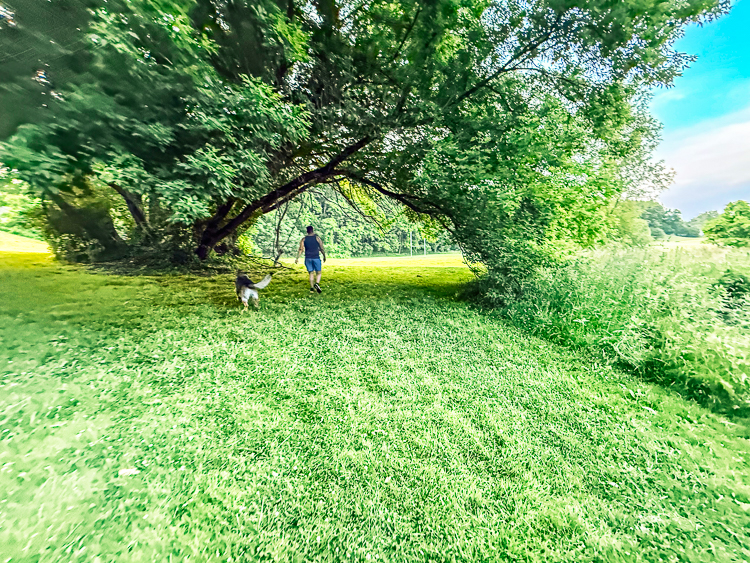
Why Civic Centers Matter
David Lorenz, a young architect and resident of the Eastown neighborhood, lives within walking distance of all the basic necessities of daily life. You name it he’s got it. A grocer. The post office. Pubs. Aquinas College. Several restaurants and coffee shops. Even a Blockbuster and a pharmacy.
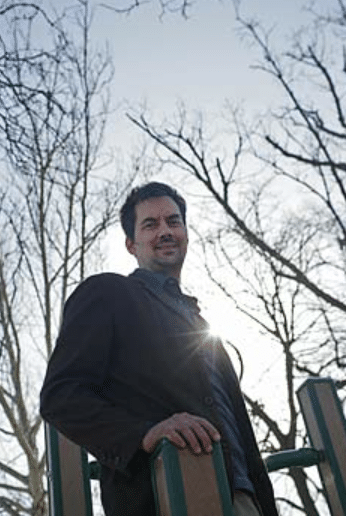
But Wilcox Park, that wide expanse of public green near the intersection of Robinson Road and Lake Drive, is the one asset that he says really sticks out. With playgrounds and picnic areas, a ball diamond and tennis courts, and wide open spaces for lounging or soccer, the park basically has become an extension of the Lorenz family front yard.
“Wilcox Park has not only been a recreational and social venue for me and my wife, but we look forward to sharing these benefits with our children as they grow,” Lorenz says. “With a limited backyard, having access to a playground and space for them to run around with neighborhood kids is extremely valuable.”
Parks and green spaces are the cornerstones of any strong, vibrant, and healthy urban area. They contribute significantly to the environmental quality, economic competitiveness, and social appeal of any city. Yet public space is severely inadequate in most metropolitan areas throughout the United States, including the City of Grand Rapids, according to the National Recreation and Park Association. Fortunately, Grand Rapids is formally taking steps to recognize, maintain, and enhance the underutilized parks and green spaces throughout the city.
People have an innate desire to gather outside of their homes and in their communities. Citizens have always shown a natural tendency to congregate around open public parks and spaces with fountains and statues. Especially as cities grow and modernize, green space provides a necessary refuge within the urban deserts of concrete and metal.
Places to Play and Commune
Aside from streets and sidewalks, parks and green spaces are really the only outdoor public assets that cities have. Neighbors such as the Lorenz family come to identify with these places and slowly grow as familiar with them as their own living room. Recognizably, urban green space can be seen as our public living room. From recreation to meeting and socializing with neighbors, parks and neighborhood green spaces solidify a community’s sense of place and belonging. Not surprisingly, then, the better designed and maintained a public green space is, the stronger the neighboring community’s ability to build social bonds, engage citizens positively in society, and establish a distinct identity of place.
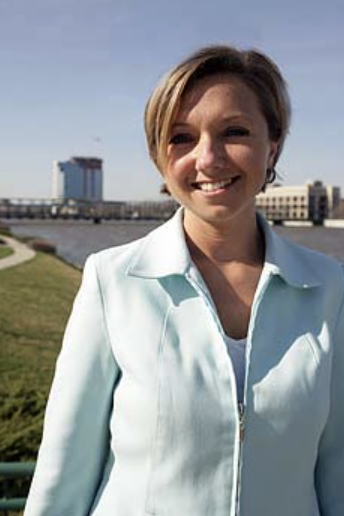
In public workshops across the country participants regular express the desire that parks should be more than just open green space and natural area. They want things to do, too. They want to interact with their surroundings. So successful parks incorporate a variety of amenities that encourage a variety of activities.
“Parks are where we connect with both nature and one another,” says City Commissioner Rosalynn Bliss. “It is where children play, where we gather as a community, where we go for recreation, and where we find solace in the midst of a stressful day.”
Put another way, one main threat to parks is if people only have one reason to go. The value of any park and/or public space increases as the amenities increase.
“The more powerful testament of the value of parks and green space is seeing children laughing and swimming in the city pools, people ice skating at Rosa Parks, kayakers on the Grand River, and families sitting in the park on outstretched blankets watching fireworks,” adds Bliss, a strong advocate for improving the city’s struggling network of parks and green space.
Two Shades of Green
Parks also play an increasingly integral role in shaping the economic success of cities and their citizens. Studies show that the existence of nearby parks and green space plays a pivotal role in where consumers choose to purchase a home. Well-maintained parks tend to increase the value of neighboring residential properties as people pay higher prices for a house in the vicinity of a public commons.
Commercial properties benefit as well. The primary way local economies flourish is if people are around. Green space, then, stimulates local business by enticing folks to walk around and engage in the city. Of course, these pedestrians are also known by another name to neighborhood businesses – customers.
The United States offers several compelling examples of the economic benefits that accrue to communities with vibrant green space. The successful design and implementation of Campus Martius, for example, a public park in downtown Detroit, has attracted retail, residential lofts, and a corporate headquarters to once desolate patch of urban landscape. Compuware moved 4000 employees from the suburbs and according to Bob Gregory, a General Motors executive planning the park, the company “would not have come downtown without the park. They didn’t want just a building. They wanted a lively district where their workers would have things to do.
Millennium Park in Chicago was built over downtown railroad tracks at a cost of $320 million, most of it from the private sector. Today, the expansive public space, complete with civic plazas, fountains, green lawns, art, and an amphitheatre all fronting glorious Lake Michigan, is one of the more inviting and lively urban landscapes in America.
Before Centennial Olympic Park in Atlanta was built, a square foot of adjacent property was $2 but by the end of the 1990’s, after completion of the park, the price per square foot rose to $150.
Closer to home, Rosa Parks Circle, located in the heart of downtown Grand Rapids, has become one of the most popular public gathering spaces in the city.
Grand Rapids Acts
Green Grand Rapids, an 18-month study committee appointed by Mayor George Heartwell, aims to establish more of these attractive places throughout the city. The effort, which kicked officially kick off this month, will focus on quality of life and the physical redevelopment of existing infrastructure as it relates to greening, connecting neighborhoods with business districts, parks, and job centers, restoring natural systems, particularly the Grand River, offering more recreation opportunities, and safeguarding public health.
The public outcry over the proposed sale of Indian Trails to private developers is one example that demonstrates how closely local residents value and guard green space. Clearly, they want more outdoors places and higher-quality places like Wilcox Park to relax, play, and gather. Not less. Citizens can expect ideas and imagination will flourish as Green Grand Rapids stimulates discussion and city staffers compile an appropriate city-wide plan to maintain and improve parks and green space.
The ability of vibrant parks and green space to accelerate the revitalization of central cities is readily apparent in Grand Rapids and urban areas around the world. They stimulate an excelling quality of life socially, environmentally, and economically. Grand Rapids recognizes these values. Not only will she be known for her LEED certified greenness, but for her green spaces and public parks. In numerous ways, Grand Rapids is on the path toward truly becoming a green city.
Photographs by Brian Kelly – All Rights Reserved
Nikos Monoyios lives in Grand Rapids and is the senior planner at the Rapid, the regional transit agency serving metro GR. He writes regularly for Recoil and Los Angeles-based Wide-Eyed Nation.
Related Articles
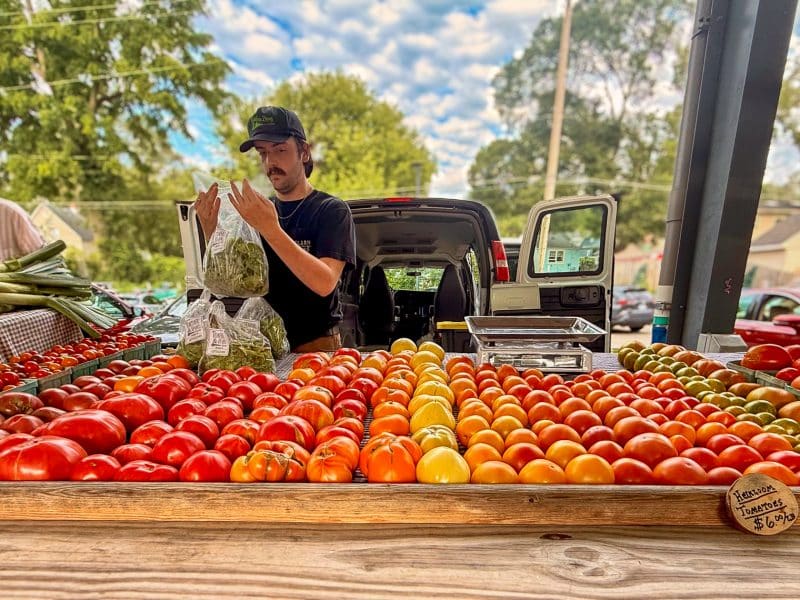
#RG20LookBack: A fresh food facelift…timely revisited
In his 26th #RG20LookBack column, Rapid Growth Publisher Tommy Allen revisits his 2013 story about the more than 50 farmers markets and fruit stands that connected West Michiganders with fresh, locally grown food.
Why early childhood belongs on every Michigan voter’s ballot
Why Michigan voters should pay attention candidates’ stands on childcare and early learning.
At KDL’s Summer Wonder series, literacy appears disguised as dinosaurs, bubbles, and, most of all, discovery
KDL’s Summer Wonder program turns reading into shared discovery, helping families build curiosity, strengthen relationships, and find community.


