
What a former popular Detroit Chinese restaurant can still teach us about belonging and the power of third spaces
Curtis Chin’s memoir about growing up inside his family’s restaurant becomes something larger than nostalgia, offering a timely reminder that everyday places can help communities practice belonging across differences.
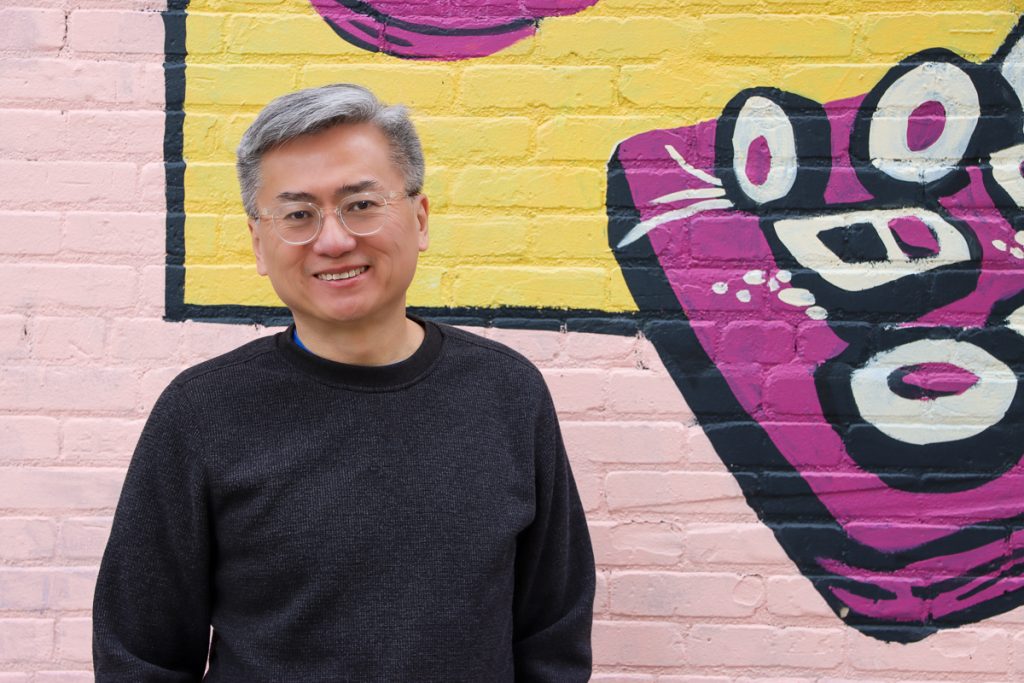
In a country increasingly sorted by politics, class, race, and unseen social media algorithms that keep us that way, Curtis Chin believes one of the most enduring places to experience an authentic shared public life may still be your neighborhood Chinese restaurant.
“We don’t talk to each other,” Chin says about how social media platforms over the last two decades have siloed us away from each other. “But Chinese restaurants are actually one of the few places where you can go and actually see people from a different race, class, sexual orientation, background, or whatever.”
This idea is central to Chin’s memoir, Everything I Learned, I Learned in a Chinese Restaurant, which has been chosen as this year’s Great Michigan Read, a statewide program by Michigan Humanities that uses a Michigan-focused book to bring readers together through discussions, public events, and community activities across the state.
As Rapid Growth shared a meal with Chin, our discussion underscored the significance of the book and its relevance to the cultural moment we are facing.
While the memoir begins as a loving account of growing up inside Chung’s, his family’s longtime Detroit restaurant, it gradually reveals itself as something larger: a story about the quiet civic work everyday places can do when they make room for people to gather, eat, linger, and, ultimately, see one another.
For Chin, Chung’s was not simply where his parents made a living. It was where a family built a life in Detroit’s Cass Corridor after older neighborhoods, including the city’s Chinatown, Black Bottom, and Paradise Valley, were wiped away by urban renewal and white flight. While at Chung’s as a child, he learned local history, discipline, humor, and the role of service. It was also where he began to understand that a restaurant can be far more than a business.
“Despite everything going on in Detroit at that time, I felt like I had a place to be, and that was this Chinese restaurant,” says Chin, who, when not in school, was often at the family business.
A joyful Detroit story with a civic lesson inside it
Chin is careful not to flatten Detroit into decline, as the city of his youth held a duality in which pain and possibility could live at once. Yes, the auto industry was struggling. And yes, violence and disinvestment shaped Detroiters’ daily lives. But opportunity also arrives, and the book beautifully reminds us of this duality found within this beloved neighborhood restaurant.
His memoir avoids the stereotypes commonly associated with Detroit. Chin aims to help readers understand, with honest wit and unflinching clarity, what he experienced firsthand: that the city is also a place where family, pride, and a sense of belonging can flourish.
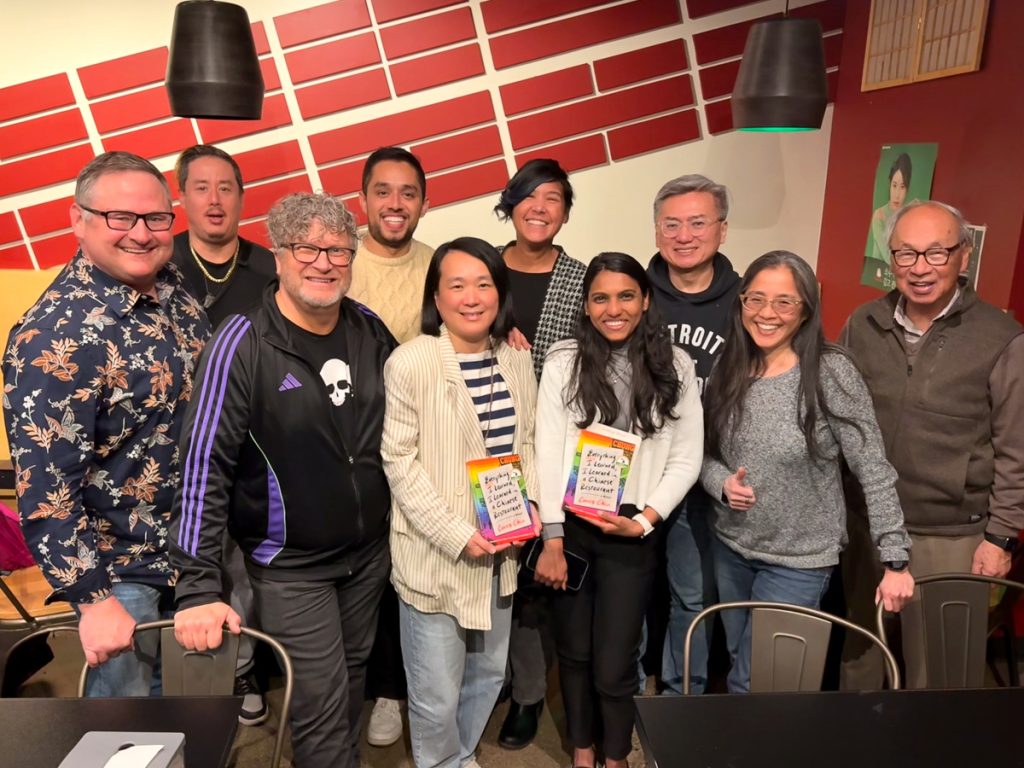
“I just wanted to show people that Detroit was a great place to grow up and to raise your family,” says Chin, countering the doom narrative often assigned by outsiders to the Cass neighborhood.
That decision imparts a warm and approachable tone to the book. Chin acknowledges the cracks within his community but rejects the notion that hardship defines the entire story. Instead, he provides a more complete civic picture in which ordinary individuals persist in forming bonds with their environment and deriving meaning, even as institutions falter.
His family’s history in Michigan spans multiple generations, covering the periods of Chinese exclusion, laundries, groceries, and restaurants. This extensive background is significant because Chin is not just sharing his personal story but also framing Chinese American life within Midwestern history, emphasizing that this region’s identity has always been more complex than many realize.
“My family succeeded because of America, but America also succeeded because of us,” Chin says about the role immigrants have always played within society.
More than a family business
As Chin traveled across the country discussing the memoir, he often met former customers who shared insights that deepened his understanding of Chung’s. One remains particularly memorable.
A woman from Massachusetts stood up at a reading and said her family visited Chung’s every Sunday night while she was growing up in Detroit. When she told her mother, who has dementia, that she was about to hear from one of the Chung children, her mother suddenly recalled the restaurant’s dishes vividly. For her daughter, it was as if she had her mother back just for a moment. This encounter enhanced Chin’s understanding of the significance of what his parents had preserved.
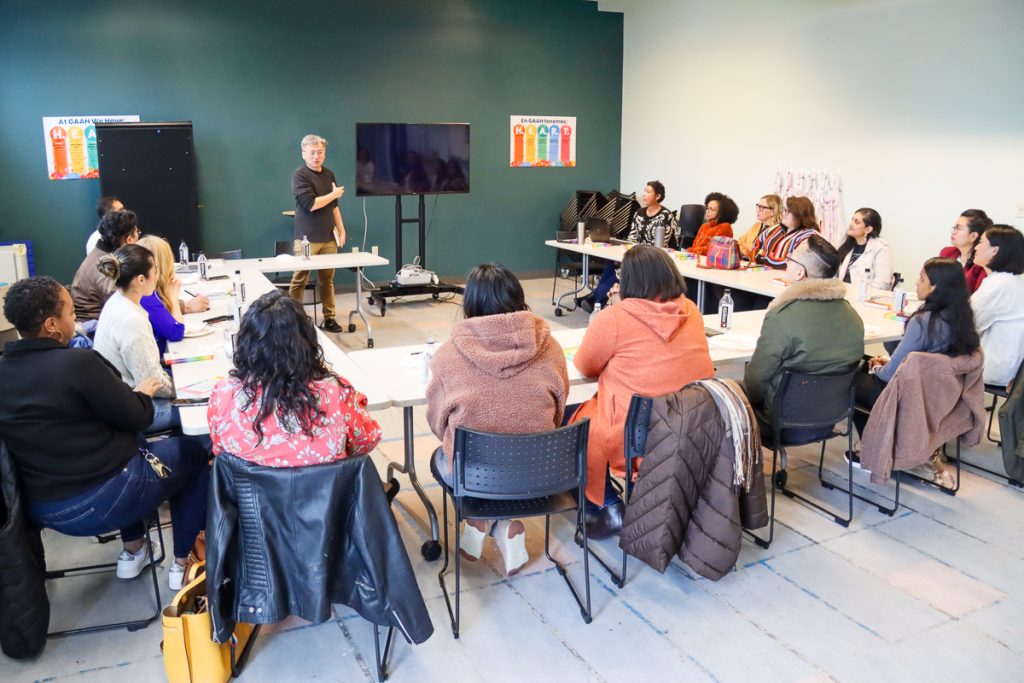
“It wasn’t just a family business,” Chin says. “It was also a neighborhood business, a community center, and a city business.”
He recalls that as a child, he understood his parents’ sacrifices for their six children. Over time, he realized they were also sacrificing for the city. As many sit-down restaurants closed, Chung’s continued to be one of the few reliable spots where families could gather for a simple meal.
Chin’s memoir is particularly helpful for readers reflecting on community life today. Amid concerns about loneliness, polarization, and the disappearance of “third spaces” – public areas outside of home and work where people gather – Chung’s story reminds us that public life is often maintained not just by institutions, programs, and policies but also by simple places with regular hours, friendly faces, affordable food, and welcoming entrances.
What food reveals about adaptation and exchange
Chin even contemplated the significance of the popular entree, almond boneless chicken. In Detroit, the dish has long been considered a regional staple, and Chin has researched its history. What interests him is not just whether his family invented it but what the dish reveals about how culture evolves, adapts, and becomes unique to a place.
“Authenticity is still a tricky word when you come to talking about food,” says Chin.
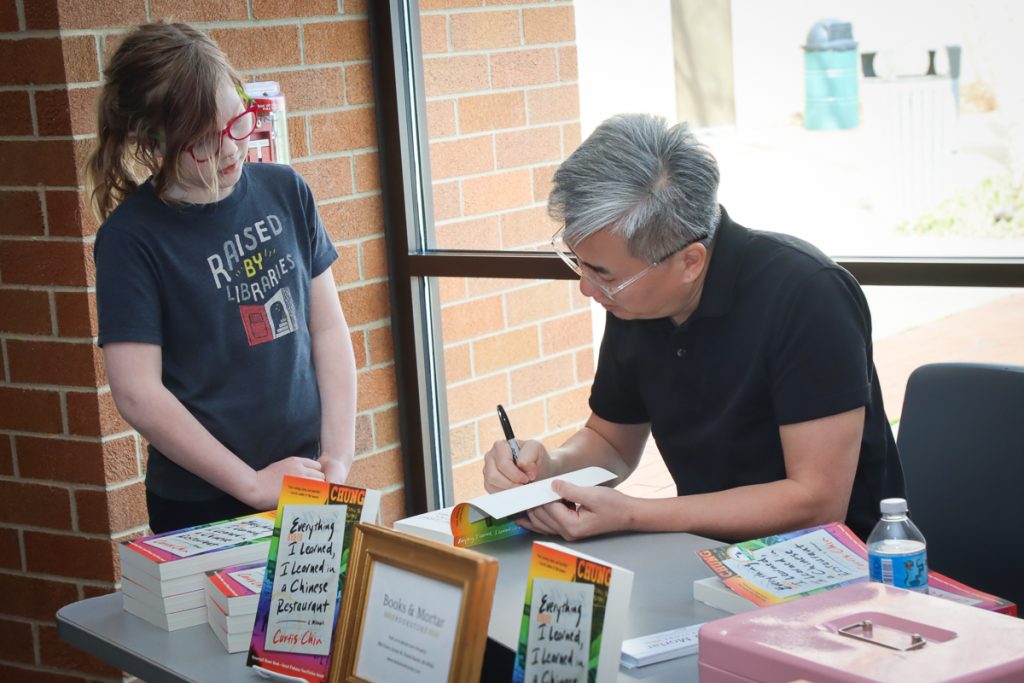
Chin views culinary change not as a loss but as a cultural strength. He highlights how almond boneless chicken became popular in Detroit during the 1960s, when Black and Chinese communities in the Cass Corridor were reshaped by displacement and proximity. He says the dish embodies this interaction: Southern fried chicken combined with Chinese gravy and topped with chopped almonds, resulting in a unique, locally rooted creation.
For Chin, the beauty of food lies in its ability to evolve alongside the people it serves. In American Chinese restaurants, that evolution often becomes part of a shared experience that invites diners into a broader exchange of culture, memory, and community. Their decor, service, and atmosphere have long helped make these spaces feel immersive and welcoming, offering many Americans an early, everyday encounter with lives and traditions beyond their own … and without having to fly to China to experience it.
Belonging is work, not magic
Chin does not consider food or nostalgia as remedies for division.
“If you fundamentally buy into the concept of the United States of America, we have to figure out and respect each other enough to have these conversations,” says Chin.
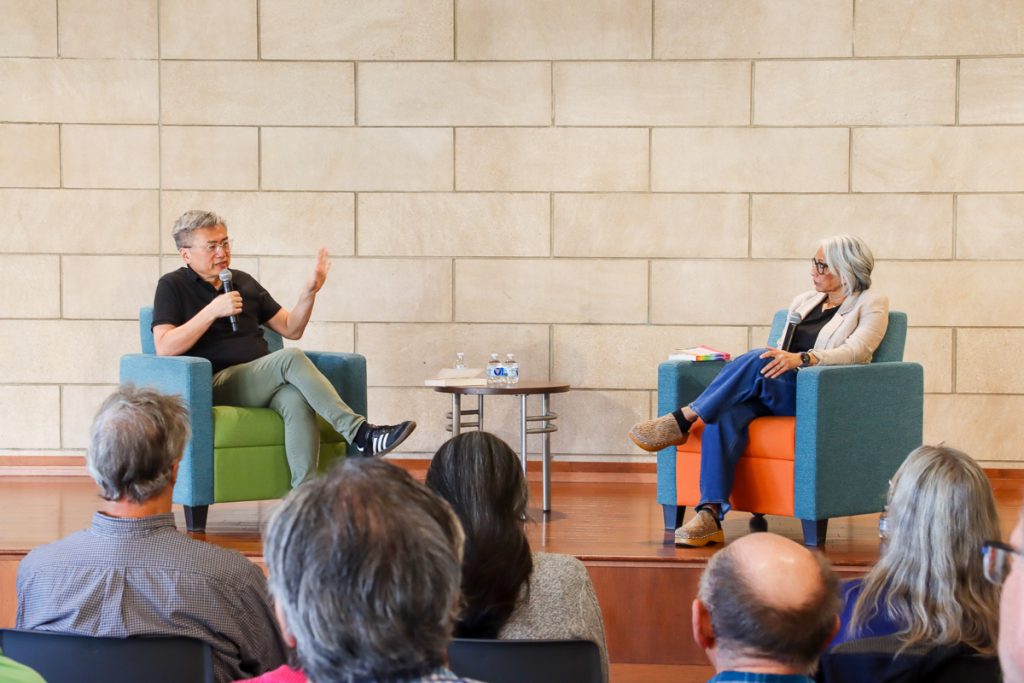
Chin’s perspective on Chinese restaurants feels both optimistic and realistic. He does not claim that a simple meal can heal the country’s divisions. Instead, he suggests in the book and in his lectures that shared spaces foster opportunities for connection, and that these opportunities can be meaningful steps forward.
Often, the initial step can be as straightforward as leaning over and asking the person at the next table what they ordered. The more profound relationship-building may only begin after that initial act of curiosity. But it begins by skipping the DoorDash order, choosing instead to leave one’s abode for a community adventure.
Looking forward through film
Chin is also expanding these questions beyond the page. When asked how he prefers to be described, he calls himself a writer, though he is also a producer and director. His latest documentary continues to explore themes of identity, migration, creativity, and the search for belonging.
His new short film, Warren King: King of Cardboard, features artist Warren King, who transforms cardboard into sculptures that reflect on family history and Chinese American identity. This 16-minute documentary premiered at DOC NYC and is set to air in May on PBS’s American Masters. (King’s work, along with the new documentary, will be a part of the Grand Rapids Art Museum’s summer programming in July 2026.)
That sense of forward movement is important. Chin’s memoir reflects on the Detroit restaurant that influenced him, yet his broader project remains ongoing. Through memoir, public dialogue, and film, he repeatedly emphasizes the idea that people require spaces and stories that allow them to understand each other better.
In that sense, Chung’s was never just about food. It served as a vibrant social hub in an urban environment, allowing not only his family but also the community to coexist and learn from each other. It was a third space where Detroit families, workers, outsiders, regulars, and curious newcomers all met. If Chin is correct – and we agree he is – cities today still need places like that – not out of nostalgia, but because they help maintain civic life that is human-sized, accessible, and genuinely flavorful.
Author’s note: Chin recently joined Meena Ariagno on Eavesdrop with Meena for a conversation about art, ancestry, storytelling, and his PBS short Warren King: King of Cardboard.The episode, Lost & Found: Art, Ancestry, and the Stories We Inherit,is available here on iHeartRadio.
Photos by Tommy Allen
Related Articles
From ‘Unseen Oceans’ to GVSU, exploring the Great Lakes anew
Grand Rapids Public Museum’s Unseen Oceans reveals the hidden wonders of the sea, while Grand Valley State University’s Water Resources Institute, just 40 miles away, brings that exploration closer to home on the Great Lakes.
Passing it forward: At GRPM, volunteers of all ages teach history and get taught right back
With 46% of its volunteers under 50, the Grand Rapids Public Museum is challenging assumptions about who volunteers and showing how interaction across generations transforms objects into shared understanding.

How public murals will transform downtown Lowell
Work on four new murals across downtown Lowell will begin in August, launching the city’s first coordinated public art initiative.


