
#RG20LookBack: A fresh food facelift…timely revisited
In his 26th #RG20LookBack column, Rapid Growth Publisher Tommy Allen revisits his 2013 story about the more than 50 farmers markets and fruit stands that connected West Michiganders with fresh, locally grown food.
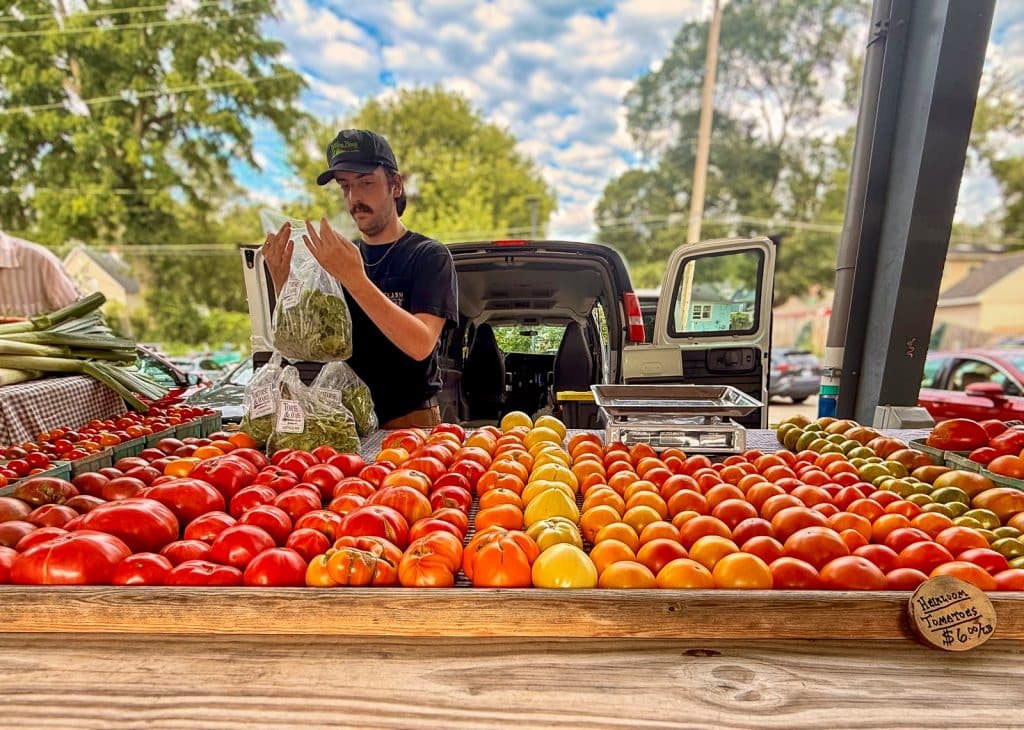
Back in June 2013, I wrote the story, “A Fresh Food Facelift,” that within 30 miles of downtown Grand Rapids, you could find more than 50 farmers’ markets and fruit stands connecting West Michiganders to fresh, locally grown food.
Thirteen summers later and after a stretch of hard economic years passing from a pandemic to ongoing inflationary moments, I’m happy to report that claim still holds up.
While the website I relied on in 2013 is less informative today, by my latest count, counted at least 53 publicly advertised spots within that same radius: 21 recurring farmers markets and 32 farm stands or farm markets.
And honestly, that number is probably low, as I’ve personally seen firsthand just how many tiny urban farms are tucked within our Grand Rapids neighborhoods as well as the many roadside stands that pop up all over Kent County (and neighboring counties). Counting these is trickier, as these stands tend to come and go with the harvest..and many without ever making it online. By my estimation, our real number could be much larger than 53.
And our lookback and this news couldn’t come at a more fitting time.
As of the latest federal update, more than 4,100 laboratory-confirmed, domestically acquired cases of cyclosporiasis had been reported across 41 states, resulting in at least 308 hospitalizations.
Public health agencies also have another 7,400 reports that they are investigating, which suggests more than 11,500 Americans may already have been affected as the numbers continue to rise.
Zooming in closer to home, Michigan alone has recorded more than 8,100 cases. According to Michigan’s latest state dashboard shows 8,176 reported cases and 160 hospitalizations as of July 23. Locally, we know now that Kent County has had 98 cases, Ottawa County 93, Muskegon County 245, and Allegan County 55.
Cyclospora isn’t subtle nor anything anyone should be glib about, as it brings on relentless, watery diarrhea, and without treatment, it can drag on for a month or longer, lead to hospitalizations, and in some folks fade as a symptom only to then come roaring back. Talk about the guest who would not leave!
I personally felt the ripple effects myself this past weekend. At a drive-thru window in Muskegon, I placed my order and added “no lettuce” to my sandwich, and the restaurant replied, “We do not have any lettuce right now due to the outbreak.”
All of that points to one big problem if you’re trying to keep a healthy diet right now: fear is driving the green out of our diets despite being on one of the nation’s fresh farm belts in the peak of our season.
So this week it is a good reminder of why our local food-growing systems, of all sizes, matter even more a full decade after our original story. The number of farmers’ markets and food stands is not just numbers on a chart.
Locally produced food gives people a safer, more trustworthy alternative when fears about industrially produced lettuce and other fresh produce start pushing folks away from fresh food altogether.
Make no mistake, as none of this means local produce is somehow immune to contamination. As we learn the causes of cyclospora, food safety matters just as much at a farm stand as it does at the supermarket, and fresh produce should always be washed and handled properly. What we are discovering is that massive food-producing systems often place workers in unsanitary conditions or don’t provide proper worker-hygiene amenities, which can lead to the mess we are experiencing right now.
However, our local markets offer something our long, tangled food supply chains often can’t: a shorter path from soil to table, clearer traceability, and the chance to actually ask the person who grew your food how it was raised and picked.
Farmers markets aren’t some quaint holdover from another era. They’re vital food infrastructure within our community. They’re neighborhood gathering places, where real dialogue can lead to answers you can’t get from a bag of lettuce on a shelf that was most likely shipped across the country. Farmers markets and food stands are some of our oldest small-business incubators and a living, breathing testament to West Michigan’s agricultural roots.
And if your schedule doesn’t leave room to visit one of the region’s many farmers markets, don’t worry. You can still order fresh, local farm food through places like FarmLink – an easy-to-use platform connecting food-conscious shoppers with area farms and food producers across West Michigan. (Writer’s note: FarmLink only sells locally produced products.)
Thirteen years after we published this look back story, the lesson hasn’t changed. Supporting local growers isn’t just a nice trend to follow. It’s one of the ways we in West Michigan build a healthier, more accessible, more honest, and ultimately more resilient region, one basket at a time.
Grand Rapids still has lip-smacking goodness to enjoy. Who knows, maybe this moment is the one where one can start a new, local fresh food revolution, one grounded not just in health but this time out of concern for food safety that supports locals over billionaires.
G-Sync: A Fresh Food Facelift
We have much to celebrate here, and often, the warmth of the summer sun inspires these weekly festivities. These unique events tend to focus on the West Michigan holy trinity: Live music, fresh art, and of course, hometown craft beer.
There is something that is present almost every time. In bold and not so bold ways, it can be found during any season, in and around our celebrations. Food, like deep fried mac-n-cheese on a stick, is the glue that binds.
As we ramp up our season of outdoor festivals, backyard parties, and Sunday runs to the lakeshore, the topic of food is on everyone’s mind. So, it is a good time to talk about the options of the season that just keeps getting better and better.
Some West Michiganders contort their faces in a rapture-like elation akin to Woody Allen exiting Orgasmatron in Sleeper whenever a farm-to-table entrée is presented by any number of the restaurants that have jumped on that culinary bandwagon. For others, they feel this level of access is at best a special occasion, or just an out-of-reach option.
Not so. The summer sun is a welcome change agent here, leveling such barriers to fresh food. The black soil of our region’s farmland lights up with fresh green, heralding the start of growing season.
Sure, we have read plenty of stories over the last year focusing on the remodeling of Grand Rapids’ oldest open-air market, the Fulton Street Farmers Market. We’ve read about the addition of a brand spanking new, multi-million dollar Downtown Market. But what is often missed by local folks are the other famers markets.
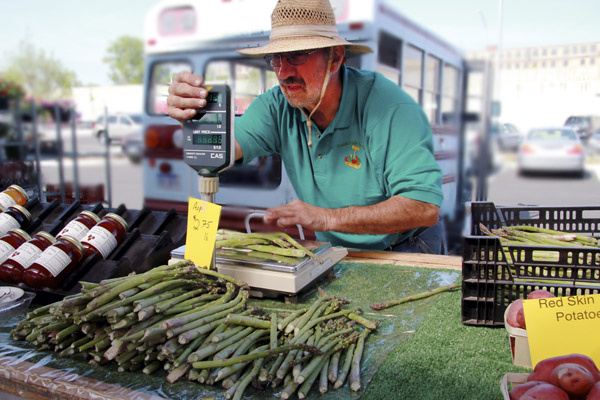
In fact, within a radius of less than 30 miles of downtown Grand Rapids, on empty lots, medical centers, and educational complexes, there are more than 50 markets and friut stands to purchase fresh produce.
South East’s Metro Health and North East’s Spectrum Health both have weekly farmers markets with plenty of fresh produce and artisan products.
Even unexpected places, like Grand Valley State University’s Allendale campus, host weekly farmers markets. The market at GVSU is a unique way to present regional food to students and residents. Markets like this one showcase the ability of a facility to harness what they do to expand healthy options to the community.
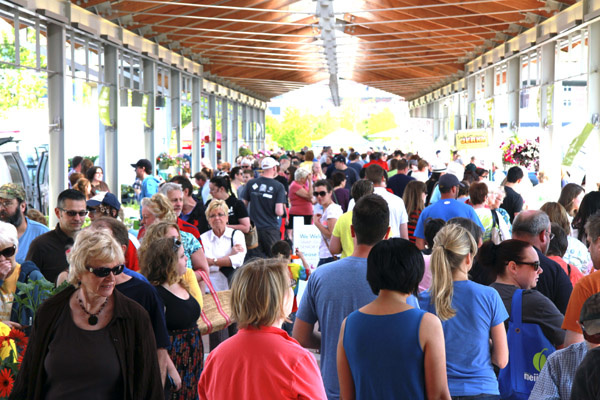
For those who seek to eat on-the-go and need more of a one-stop shopping experience, then the West Michigan Co-op, one of the nation’s first online farmers markets, is just what you need to add speed and convenience to connect your diet to the best of the area. There are more than 30 vendors supplying this local favorite.
This is great news for someone moving here, or a resident looking to connect more with his or her community. Everyone wins.
Let Them Eat Books
Grand Rapids is also becoming known for our food in unexpected places (and I am talking about more than just the Cakabakery‘s appearance on Food Network’s Cupcake Wars last month).
Last year, we saw a new book debut from former Grand Rapid Press food critic, Jaye Behler. Tasting and Touring Michigan’s Home Grown Food is a lovely book devoted to the pleasures of eating the fresh food of our state. The locations and food are artfully photographed by Dianne Carroll Burdick.
This year, two new books are already turning heads because of their focus on our region. When Founding Editor of MIX magazine Martha Holmberg’s book, Fresh Food Nation: Simple, Seasonal Recipes from America’s Farmers, debuted in April, few even noticed that only two local farmers, Mud Lake Farms and Schuler Farms, were featured in this cookbook devoted to favorite recipes.
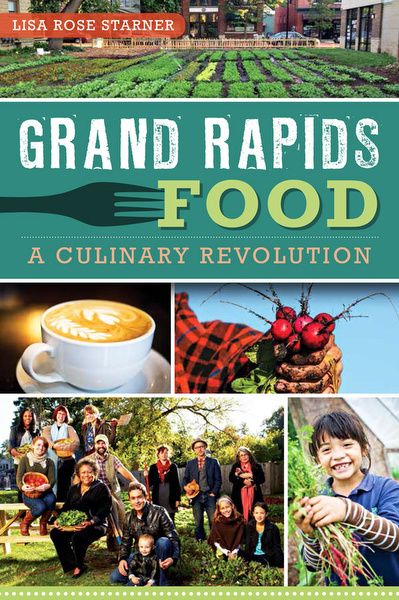
The other book, Grand Rapids Food: A Culinary Revolution, is by author Lisa Rose Starner, who is profiled this week in Rapid Growth and will be hosting a book-signing event Tuesday, June 25 from 7 – 9 p.m. at MadCap Coffee. Starner sees this facelift of Grand Rapids as part of an on-going history of our region devoted to issues surrounding food. (Hint: It is more than just farm-to-table.)
“This is no longer just a foodie conversation. It is going deeper than that,” says Starner. Her book is a first in our region to explore the deeper connections of food in our history. “And the end result — which is still way off in the distance — I hope will be a rich quality of life for people in our community.”
Starner is passionate about educating people about the power of food and how access to good eating is often in unexpected places, as evident in the subject matter of her second book already in production, The ReWilded Kitchen: A Forager’s Guide to Edible and Medicinal Plants of the Midwest, due to be released in 2014.
The Trend’s End and Beginning
And like all good things, summer will come to an end. But no worries, because you have options to help make the offseason a bit tastier.
For those who have not yet discovered the joys of canning (or as my relatives in West Virginia used to say, “puttin’ up for winter”), you can always take a class from a new startup in our city, the Canning Diva in East Hills. That way, when the cold of winter covers our farmers’ fields, you will have a delicious jar or two of the goodness of our region to unscrew and serve to your family and friends. It is the fastest way to connect back to those happy memories of summer.
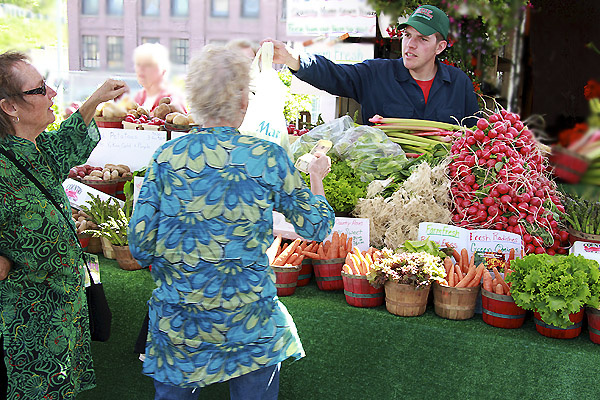
Our city has a lot of titles that we toss around liberally and sometimes without much thought. Cool, arty, and hot, to name a few, are at best general in their use. But with a little help from our area farmers, authors, and food preparers, we might just want to add a brand new descriptor that is totally tastebud-catching. Grand Rapids: Lip Smacking Goodness.
The Future Needs All of Us.
Related Articles
Certified Community Behavioral Health Clinics meeting Michiganders’ needs for integrated care
CCBHCs serve Michiganders no matter what their income or insurance coverage.

How are Michigan’s families doing?
Rising costs, child care shortages and barriers to health care are straining Michigan families. What could help?

Rx Kids အစီအစဉ်ကိုမီချီဂန်ပြည်နယ်ရှိလူမှုအသိုင်းအဝိုင်းပေါင်း၆၀သို့တိုးချဲ့ခြင်းကမိသားစုများ၏ငွေကြေးအခက်အခဲကိုလျှော့ချပေးပြီးပိုမိုကျန်းမာသောကလေးငယ်များမွေးဖွားလာစေရန်အထောက်အကူပြုပါသည်။
အနှစ်ချုပ်-မီချီဂန်ပြည်နယ်၏ဤအစီအစဉ်သည်နိုင်ငံအတွင်းအနာဂါတ်ကိုယ်ဝန်ဆောင် မိဘများအတွက်သတ်မှတ်ချက်မရှိဘဲငွေသားထောက်ပံ့ပေးသည့်အကြီးမားဆုံးအစီအစဉ်ဖြစ်ပါသည်။


