
Beyond the field trip: Public Museum’s Immerse program transforms how students learn – and see themselves
For most students, a visit to the Grand Rapids Public Museum is just a simple field trip. But for those in the museum’s Immerse program, the experience is more engaging and meaningful.
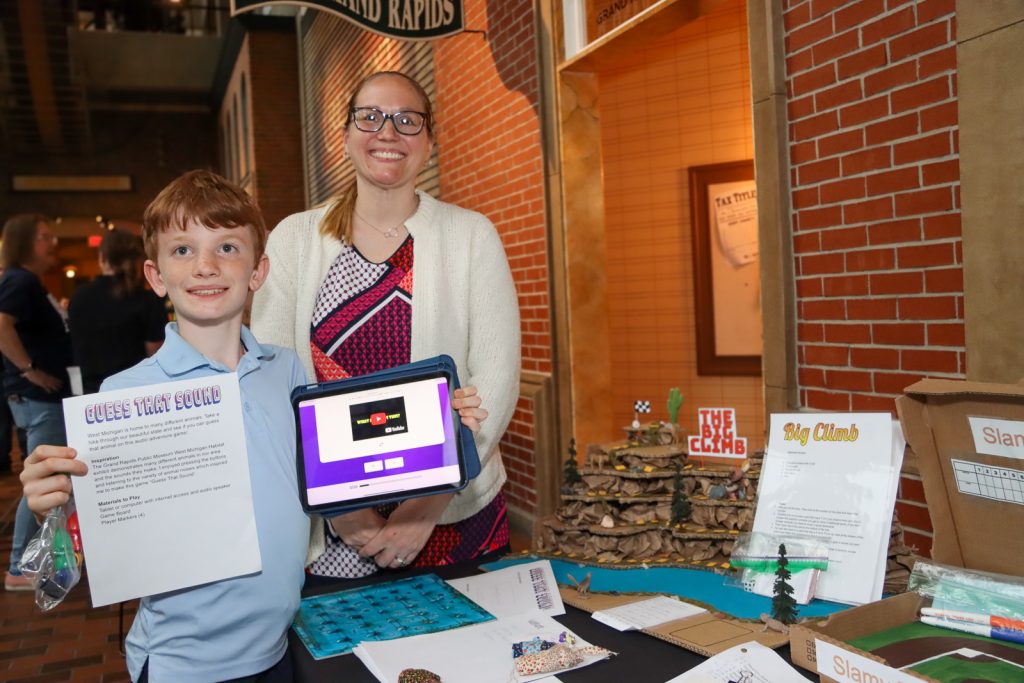
Most students would probably call a bus trip to visit a museum just a field trip. However, the Grand Rapids Public Museum is offering a broader perspective. The museum’s dedication to inspiring curiosity and opening minds has led to a program, Immerse, that offers youth a more immersive experience than a typical one-day visit.
Instead, students now spend an entire week at the museum, engaging in a richer and more meaningful educational adventure.
During this time, exhibits serve as classrooms, artifacts become learning tools, and curiosity is given room to grow. Through the Immerse program, more than 55 classrooms each year, drawn from public, private and charter schools. These groups come together for a week at a time to engage with a learning approach centered on the question: What if students are not just visitors but active participants who intersect with our vast collection?
Moving from a field trip to a ‘living textbook’
For Ashleigh Palmiter, the lead educator at GRPM, extending the visit from a single day to a five-day immersion transforms the experience.
“You just get a deeper learning experience when you’re here for five days,” Palmiter says. “They’re not rushing. They’re able to build on their learning every single day.”
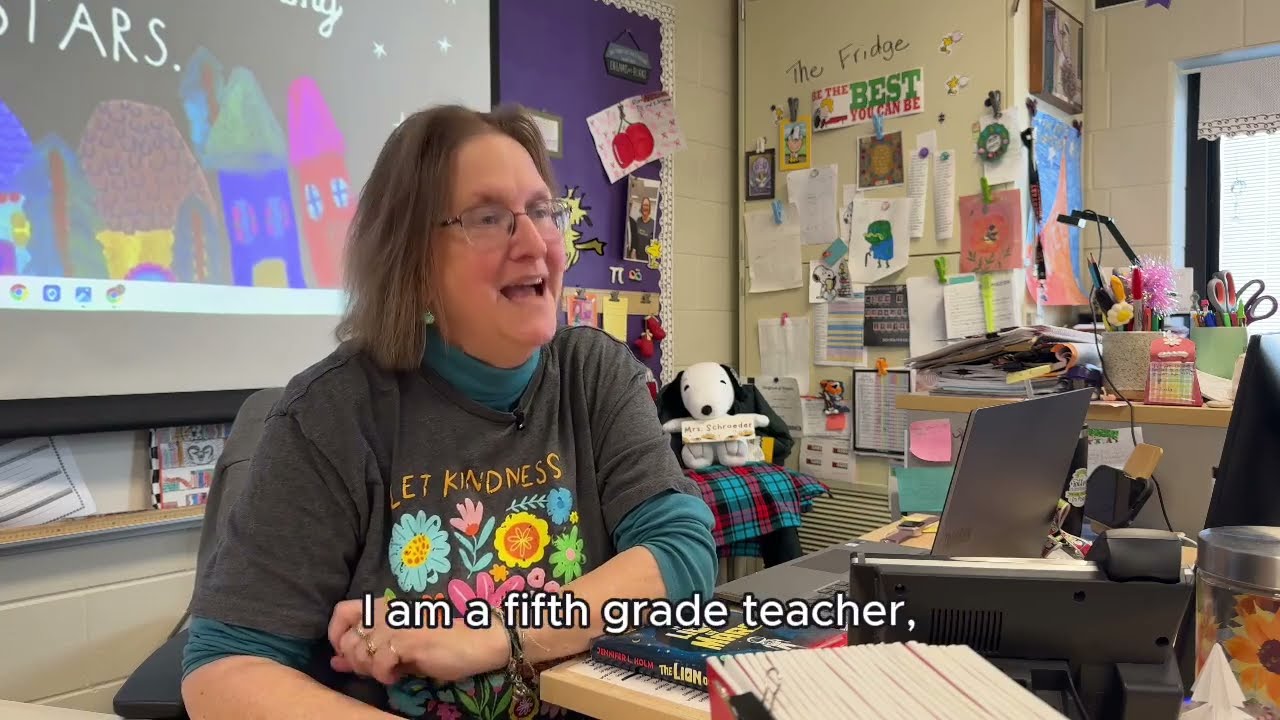
Palmiter describes the museum as a sort of “living textbook,” where students go beyond memorizing facts to genuinely connecting with objects, stories, and each other as they collaborate on a final project showcased at the annual Immerse student event.
This shift from coverage to connection is central to the program. In each classroom, museum educators collaborate with teachers to design a week that aligns curriculum objectives with open-ended exploration, allowing students to pursue their questions as they arise.
By the end of the week, those questions culminate in student-led projects, including historical timelines, creative writing, handmade artifacts, and original exhibits.
A legacy of experiential learning
For GRPM President and CEO Dale Robertson, the Immerse program signifies a broader institutional change—one that is grounded in the museum’s original mission.
“The GRPM is an educational institution at its core,” Robertson says. “It’s those visceral experiences that help create hooks… that help students make sense of their world.”
He traces the program’s roots to the rediscovery of old lesson plans, which coincided with the museum’s renewed focus on active, hands-on learning. This led to a bold choice: placing artifacts directly into students’ hands and trusting that experience to facilitate learning. The program had a beta run in 2012 and officially launched in 2013.
The program was first covered in Rapid Growth 2013’s story, ‘Grand History Lesson’ pilot project celebrates one year at GRPM.’
Robertson, who intends to retire later this year, reflected on his time at the museum and his last Immerse event at a reception before the student presentations.
“I can’t prove it,” he says, “but I’ll guarantee it anyway – the impact on these kids is going to be long-lasting. … They’re going to draw upon it for the rest of their lives.”
All teachers who attended the pre-event reception nodded in agreement.
Never the same classroom twice
For Jenna Compton, a first- and second-grade teacher at Northview’s West Oakview Field School who was experiencing Immerse for the first time, the surprise was not only how her students responded, but also how quickly the museum reshaped her sense of what the week could become.
“It felt like a new adventure, going to all the exhibits, watching the kids learn the questions that they had,” Compton says.
Her words reminded me of Rilke’s encouragement in his book Letters to a Young Poet, where he urges the student to live the questions themselves, trusting that answers often arrive over time.
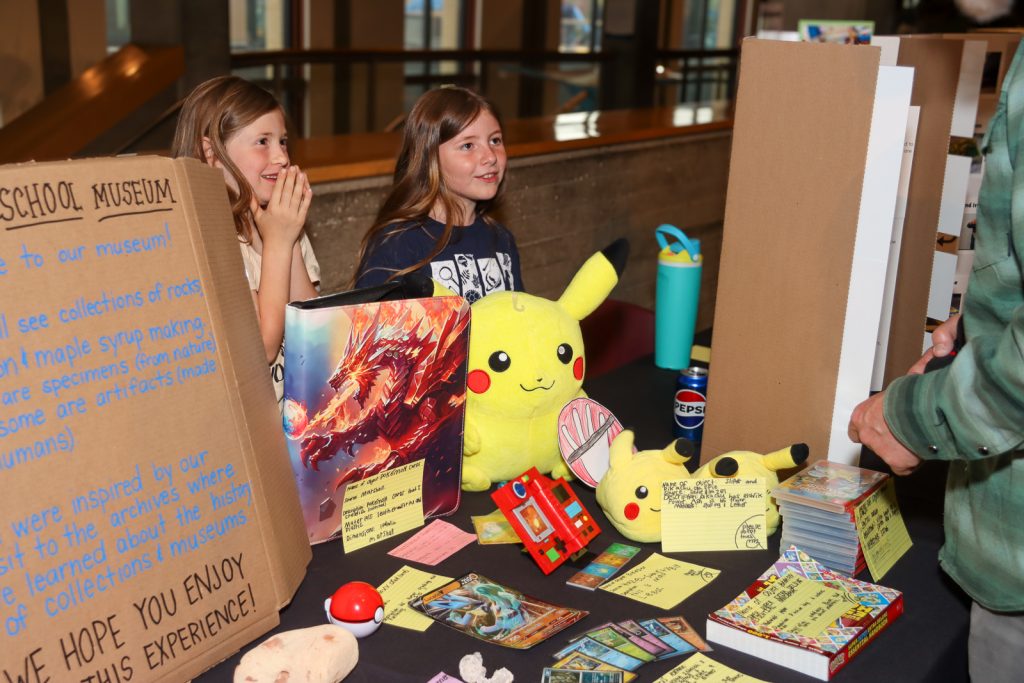
Like many educators in the program, Compton started the week with a plan. However, within days, that plan evolved into a more flexible approach.
“We had some structure to our day… but what we quickly learned based on what the kids were interested in, we had to make a change,” Compton says.
Her students ultimately created their own “museum,” drawing inspiration from GRPM’s exhibits to tell the story of their school and community.
For Compton, the value extends well beyond the museum walls.
“You get the opportunity to have real-world, meaningful life experiences, connecting to your community, your area’s culture, and then learning about who you are in relation to where you live,” Compton says.
Fostering connections across time and space
Michelle Holliday, who teaches grades four through six at Grand Rapids Montessori School, has been part of Immerse for more than a decade. She says the program’s true strength is in how it connects students to both the rich history and the vibrant present.
“It is the community connection,” Holliday says. “Seeing all the kids connect to their place … it just deepens that.”
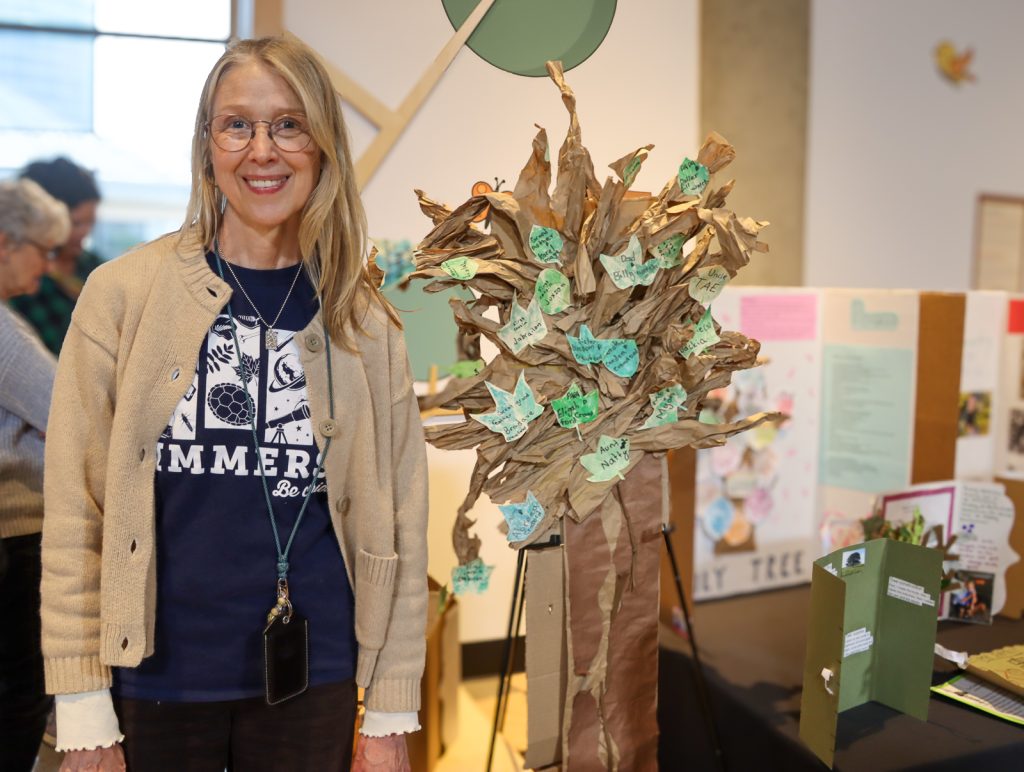
Her students often examine themes such as family history, the local environment, and cultural identity, using the museum’s collections to connect their personal stories with broader historical narratives before creating something original based on their week at the museum. One focus was creating family trees that give a sense of place while also being visually stunning and informative.
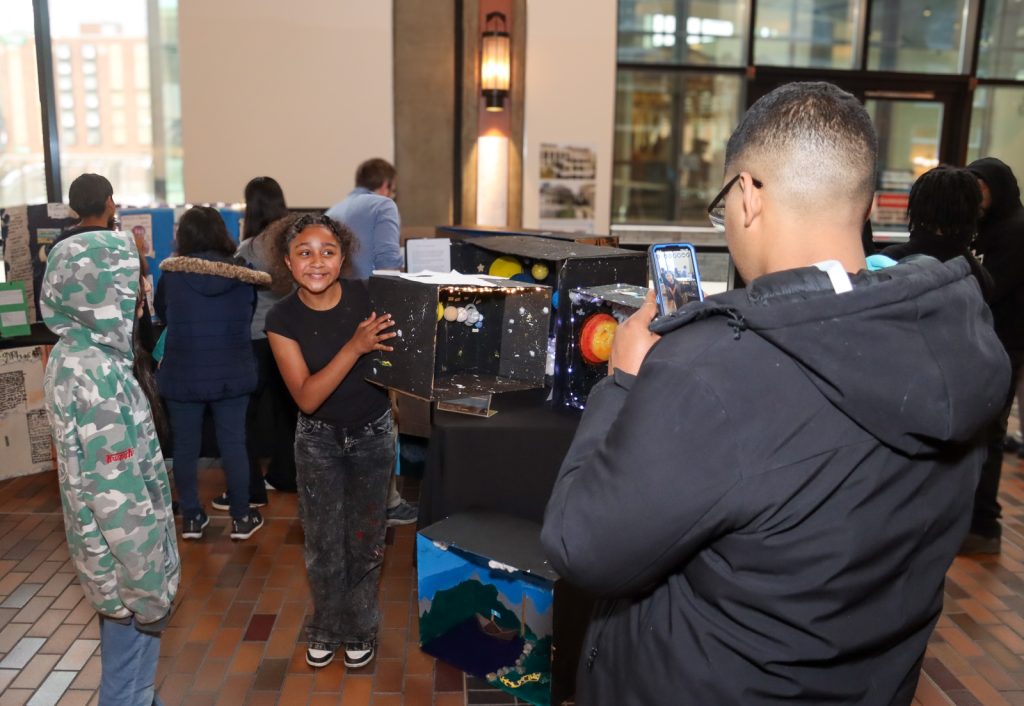
Such connections do more than just give students something to showcase; they also encourage students to practice empathy by understanding their own story as a part of a much larger community.
“I think empathy is the correct word,” Holliday says about Immerse. “This program is about learning about other people and empathy, hearing somebody else’s story… and taking challenges and turning them into celebrations.”
She has observed how that viewpoint influences her students well beyond the week itself.
“They just have a deeper connection to their place, their families … they investigate in ways that maybe kids don’t do as much anymore,” she says.
Learning as core memory
Amy Snodgrass, a fourth-grade teacher at Assumption of the Blessed Virgin Mary School in Belmont, in her third year with Immerse, notes that her most meaningful moments often happen during the less-structured parts of the day.
“They’ll be sitting… looking out at the Grand Rapids cityscape,” Snodgrass says of her students who, after touring the Streets of Old Grand Rapids exhibit, race out to view the present skyline. “And in their brains, they’re comparing and contrasting what they’ve seen in the museum with the world outside.”
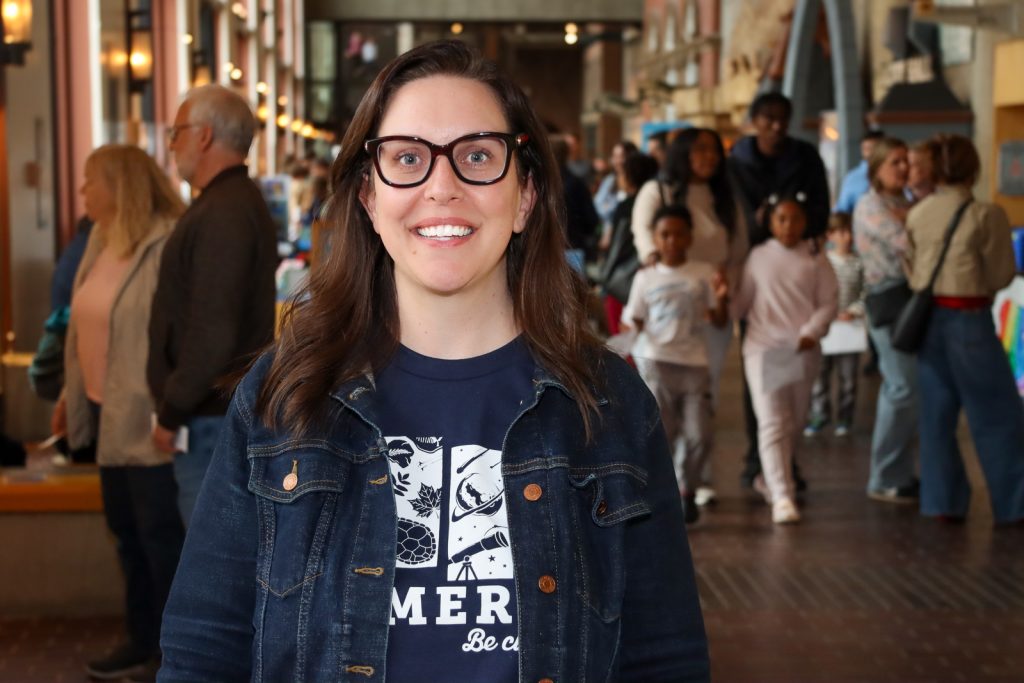
She loves this story because it reflects quiet, self-directed, and deeply personal observation, which she then brings into her classroom to encourage students’ learning beyond the week.
“It doesn’t have to end just because our week here ended,” she says. “They understand how to carry forward that deep level of learning and observation.”
For Snodgrass, the museum is more than just a destination; it serves as a reference point, a shared experience that continually influences her students’ thinking, questioning, and connecting.
Building a bridge to a welcoming city
The GRPM’s Immerse program understands that learning is more meaningful when students take time to slow down, observe, ask questions, and start forming their own connections.
Whether a student is building a family tree, comparing the Streets of Old Grand Rapids to the city just outside the museum’s windows, or taking extra time to observe and handle an artifact, they are doing more than just completing an assignment. They are developing lifelong learning skills and discovering their place within a larger community story that continues to unfold every day.
And for the GRPM, this is the real potential of Immerse: not merely inviting students to the museum for a week, but inspiring them to see the museum as a place they can return to, question, and weave into their personal story.
Photos by Tommy Allen
This story is part of the Bridge to Community Curiosity, underwritten by the Grand Rapids Public Museum. Through this partnership, we highlight GRPM’s mission to inspire curiosity, deepen understanding, and foster belonging by showcasing the transformative power of arts and education in West Michigan.
Related Articles
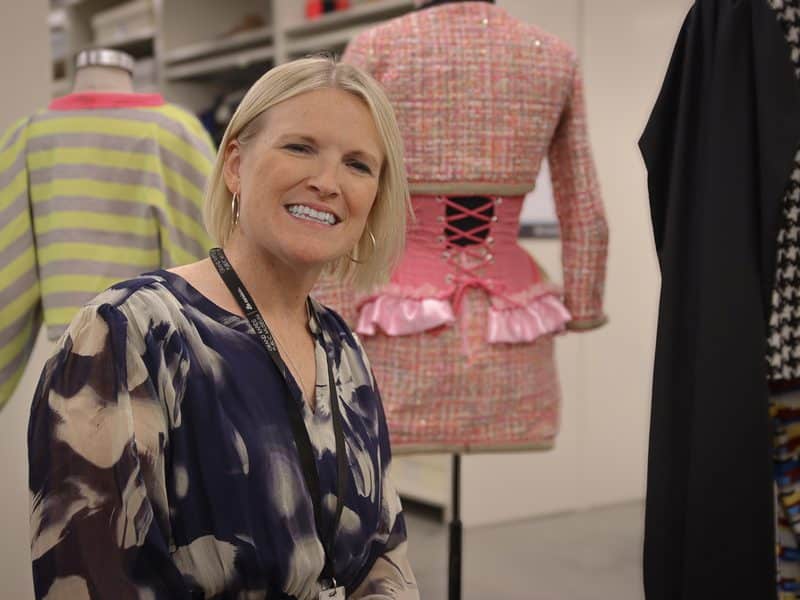
Something for every season: Fashion, curiosity, and community at the GRPM’s new archive center
Inside the Grand Rapids Public Museum’s new Archives Center, Kendall College of Art and Design students are turning decades-old garments into inspiration for their next designs.
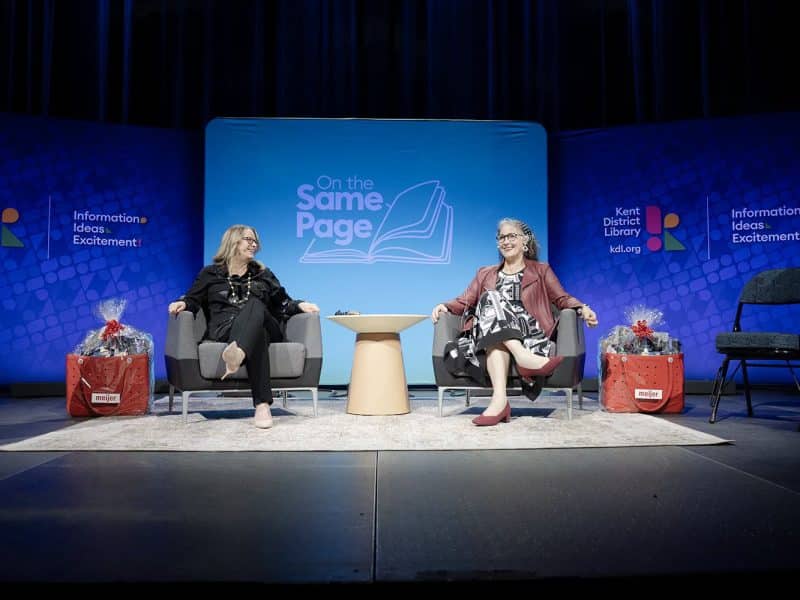
KDL event becomes world’s largest book club gathering
More than 6,000 readers filled Van Andel Arena as authors Kristin Hannah and Megan Chance discussed friendship, books and belonging during KDL’s On the Same Page. Those who missed the sold-out event can watch a recording through July 9.
#RG20LookBack: Placemaking’s missing piece is you
In his 19th #RG20LookBack, Rapid Growth Publisher Tommy Allen revisits the 2013 piece “RapidBlog: Reflections on the DAAC” by Emma Heemskerk, reflecting on one of Grand Rapids’ small but vital cultural spaces where culture was created through participation, not just consumption.


