
How partnerships help communities tackle hunger and grow food sources
Schools, farmers, food pantries, and local leaders partner with Kids Food Basket to fight hunger and improve access to food.
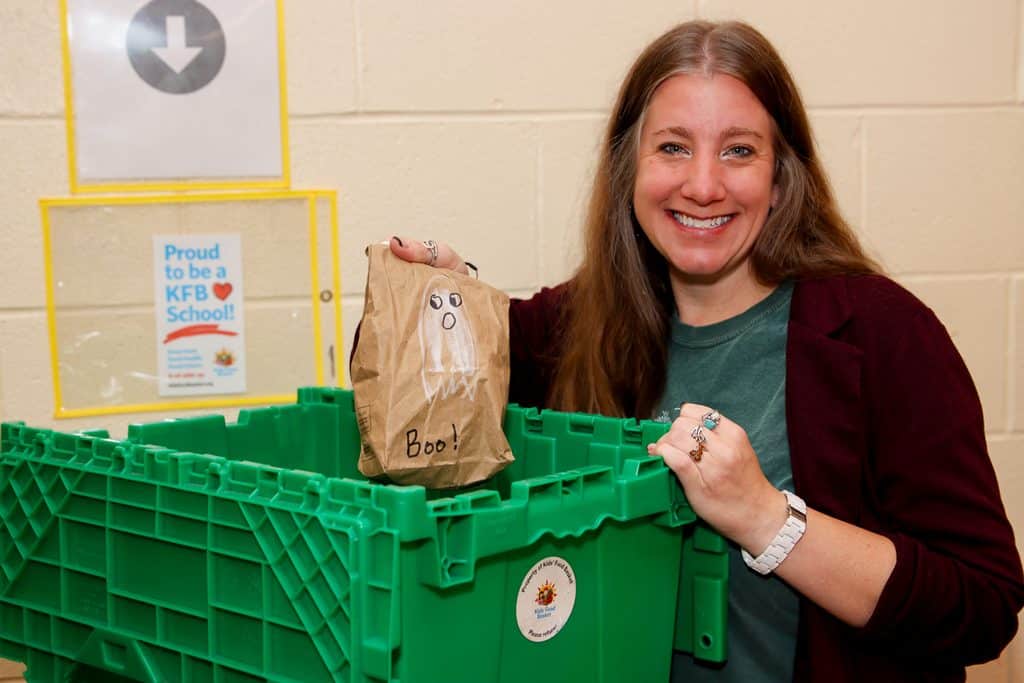
When a child is hungry at school, the family may need help with more than food. Providing food can be a first step toward helping with other problems.
“We know that when a family is struggling to afford food, there are a lot of other challenges that may be happening in their house,” says Cindy Redding, director of advancement at Kent School Services Network, a community school strategy. “Housing, transportation, healthcare, employment – a lot of other basic needs are associated with that.”
School coordinators learn what families need and help them find support. One partner, Kids’ Food Basket, provides food and shares knowledge about farming. It also helps local leaders find ways for more people to get food.
“The beauty of community school work is it’s not one size fits all,” Redding says.
Across Kent County, schools, food pantries, farmers and local government work together. They help families get fresh fruits and vegetables and teach children about healthy food. They also help the city plan ways to turn food scraps into compost and grow food in city spaces.
Each partner brings something to help. Schools know students and families. Farmers share fresh food and teach people how to grow it. Food pantries and county workers get food to people who need it. Local leaders listen to residents and use their ideas when making plans and reviewing rules.
Schools are key contact point
Redding says Kent School Services Network works in six districts and 46 schools. Kids Food Basket serves more than 18 of those schools, and the organizations’ relationship dates back more than a decade.
Coordinators work with school leaders to identify gaps and decide which partners can help. The network also works with Hand2Hand, which provides weekend food, along with churches and other community organizations.
“Food instability is definitely one of the things we see in our schools,” Redding says.
Kids’ Food Basket’s willingness to adjust its support helps coordinators respond as needs change, she says. Along with Sack Suppers, the organization provides larger bags of food for school breaks.
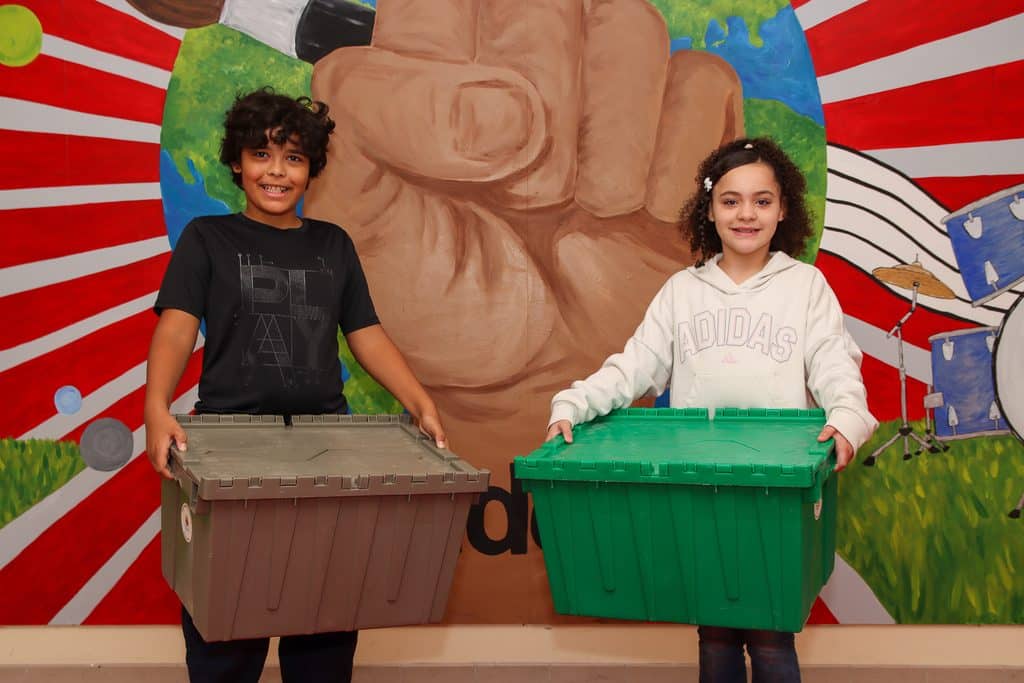
“I think Kids’ Food Basket is a great partner because they are flexible with us,” Redding says. “It’s not only just in the schools, but wanting to make sure that the kids are fed when they’re not inside of our schools as well.”
When school coordinators have new ideas, they can ask Kids Food Basket for help beyond delivering food.
“They are willing to be asked about any question, which we absolutely love because our coordinators are very creative when it comes to meeting the needs of our families, and Kids’ Food Basket is right there alongside us,” Redding says.
Before becoming director of advancement, Redding spent more than five years as the community school coordinator at Coit Creative Arts Academy in Grand Rapids.
There, second-grade teachers wanted someone with expertise to explain nutrition and how food grows. Redding helped connect them with a Kids’ Food Basket farmer.
During his visit, students explored plant parts and learned how plants provide food. He also introduced hydroponics, a method of growing plants without soil.
“It was really critical, and he did it in an interesting way,” Redding says. “And when you’re talking to second graders, that is absolutely key.”
The visit led to more lessons. Second-grade teachers started a project to grow plants without soil. School coordinators helped find money to keep it going.
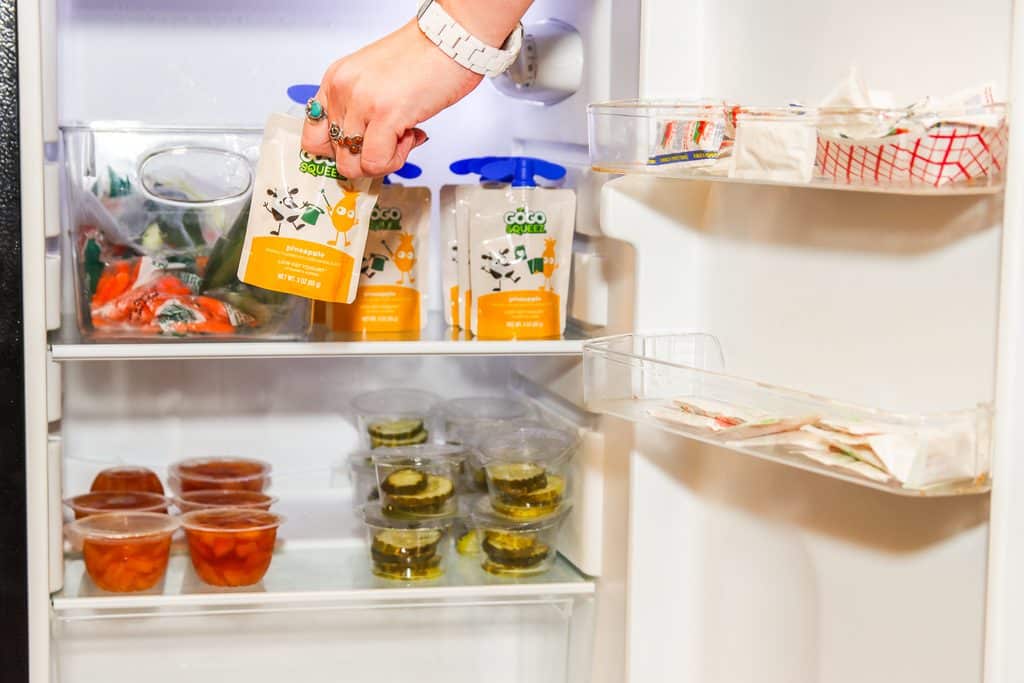
“Because of his inspiration, they do an entire project on hydroponics in second grade still to this day,” Redding says. “Our kids are learning more and more about nutrition every year.”
The project shows how a food group can help students learn. Teachers needed help with a lesson. A school coordinator found a partner, and teachers kept the lessons going.
School coordinators also find ways to use the food they already have.
“If they have leftovers, we try to do our very best to utilize the resource as much as we can,” Redding says. “We don’t want to be wasteful with the food that we are given.”
When teachers notice a student is hungry and does not have a snack, they can send the teacher to the coordinator to get a snack. This helps feed hungry students and keeps food from going to waste. Teachers also know where to send students who need food.
Providing healthy selections
Kent County Community Action works to give families different kinds of healthy food.
“It’s not just getting them food; it’s getting them food that’s good for them,” says Gustavo Perez, director of Kent County Community Action, a department of Kent County government.

Perez says the department can provide protein and dry goods, but fresh fruits and vegetables are not always available. Kids Food Basket’s farm helps fill that gap.
“Getting fresh produce ensures that we’re getting a well-rounded meal that’s good for the kids and good for the families,” Perez says.
At large distributions, 400 to 600 of households receive food boxes.
“We give them a box of food, and it’s got protein, it’s got canned goods, dry goods, and then we were able to supplement that with whatever the farm had available,” Perez says.
County staff adapt the food they distribute and prepare to the produce available.
The produce also supports the department’s meals for older adults. Kent County Community Action operates a kitchen and dining hall and provides meal delivery.
By connecting the farm’s supply with a kitchen that can prepare it and a department already reaching people who need food, “the partnership with Kids Food Basket just felt like it made sense,” Perez says.
The department also supports about 50 food pantries across Kent County. Its warehouse, delivery truck, and distribution team help maintain that network.
“We’re really trying to meet the need where people are when they need it, which is every day. So we work with our pantries to make sure that they have what they need.”
Determining food policies
Kids’ Food Basket does more than deliver food and teach students. It shares its farming knowledge to help Grand Rapids plan ways to grow food in the city and help people get it.
“We’re very lucky that Kids’ Food Basket is just a very active member in the community,” says Annabelle Wilkinson, the city’s chief sustainability officer, noting a Kids’ Food Basket representative is co-chair of the city’s urban agriculture committee.
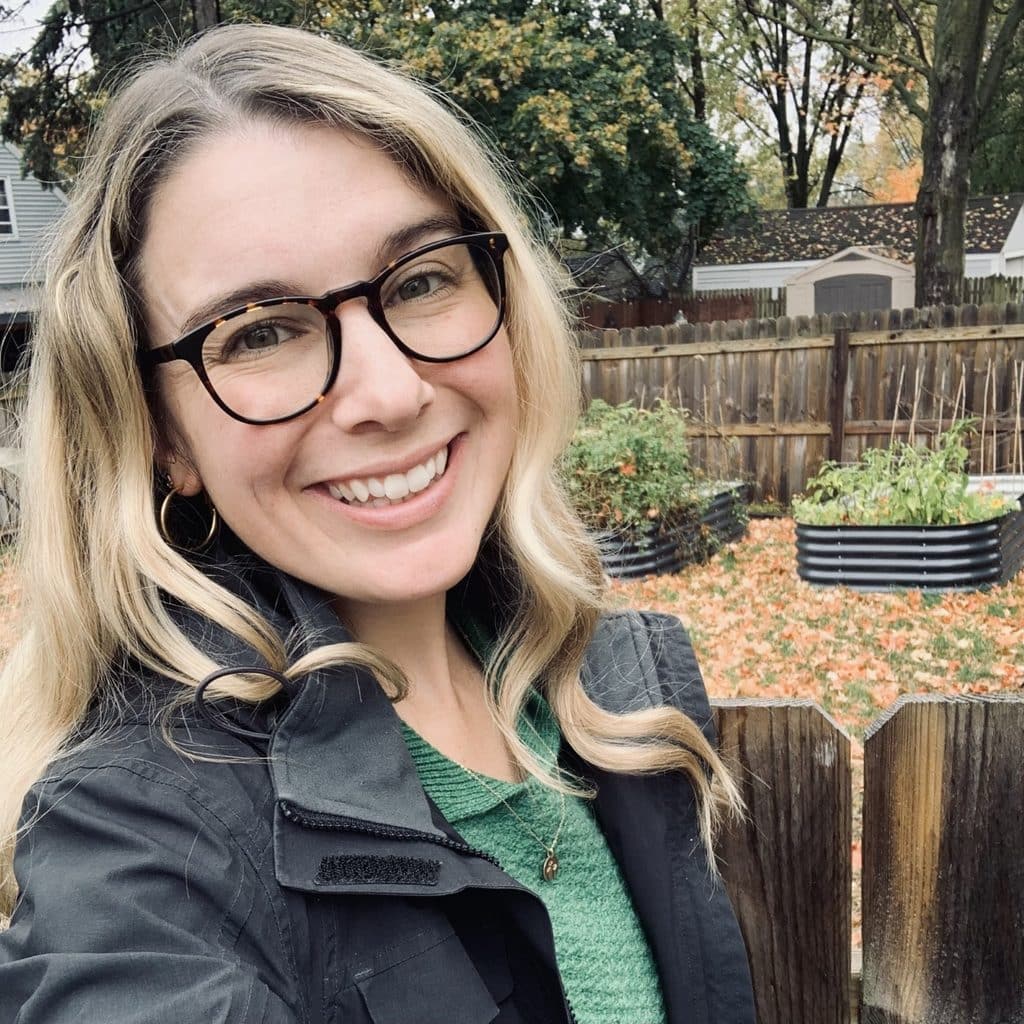
The committee considers residents’ concerns about policy issues such as composting and rules governing chickens, greenhouses, and hoop houses.
“How are we increasing access to composting for folks within our city boundaries?” Wilkinson says. “How are we reviewing the permit structure and what’s acceptable around livestock, chickens, as well as around greenhouses and hoop houses? Those are some of the larger kind of code issues that come up from a lot of the feedback that we receive from residents.”
The committee provides a route for that feedback to reach city policy discussions.
Residents also brought food concerns into the city’s climate planning.
“When we were surveying the community to understand what their priorities were for a climate plan, food systems was the second highest priority, which was pretty rare as far as climate plans go and what a community wants to prioritize,” Wilkinson says.
She says extreme heat and flooding can affect local gardens and harvests. Weather and growing conditions elsewhere can also affect the food reaching West Michigan.
“Climate change beyond our borders is also affecting the food chain and supply shortages and disruption,” Wilkinson says.
Wilkinson says the city’s response includes supporting local food access and examining services it provides, including waste collection, to increase access to composting and reduce solid and food waste.
Kids’ Food Basket shared its composting knowledge when Grand Rapids developed its ReNEW GR food scrap diversion pilot.
“Kids’ Food Basket acted as a great educational partner,” Wilkinson says. “They have composting at their facility for their 10-acre farm, and they really helped share that knowledge to increase how we can more holistically provide composting to the community.”
The pilot offers seven community drop-off locations. Residents can register online and bring food scraps to a participating site, and the public works department crews collect the material for composting.
The next step is to return the compost to residents for their use.
“Once that compost is ready and is cured over time, then we’ll be bringing that compost back to the community,” Wilkinson says.
The city also coordinates with the Kent County Food Policy Council on regional food needs. Wilkinson says the council examines food access, farmland preservation, conditions for farmworkers and nutrition education.
“And so they bring together residents, organizations, and businesses to advocate for and promote a good food system,” Wilkinson says.
Kent County Community Action participates in the Essential Needs Task Force, connecting its work with other organizations responding to hunger.
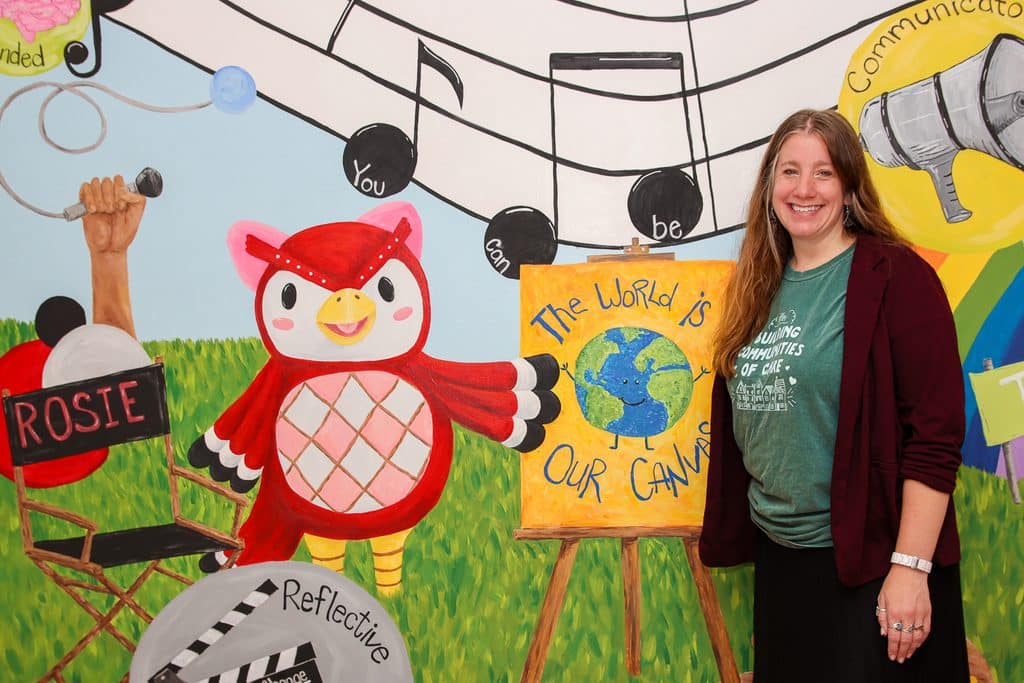
“We participate in conversations and roundtables so that we can collaborate,” Perez says.
The department’s advisory board includes public, private, and consumer representatives.
“Our consumer sector is folks with lived experience, or individuals that represent folks with lived experience,” Perez says.
“Everything that I have to approve goes through our advisory board, and then once it’s approved by the advisory board, the governing board then approves it after that.”
Funding and eligibility restrictions also leave gaps in assistance, Perez says. “We have gaps where folks don’t qualify, and so fundraising allows us to help meet every need, and so our board champions those efforts,” he says.
For Redding, the need for flexible support remains evident in schools.
“We know that the grocery bill isn’t stretching as far as it used to,” she says. “It’s about serving the whole student, not just when they’re inside our school doors. Supporting families beyond the classroom helps take one more thing off their plates.”
Photos courtesy of Annabelle Wilkinson and Gustavo Perez and by Tommy Allen
Nourishing Futures: How food builds thriving youth and stronger communities explores the many ways food nourishes young people, strengthens families, and supports healthier communities. This story series highlights innovative programs, collaborative partnerships, and the lasting impact of food access across West Michigan. It is made possible through the support of Kids Food Basket.
Author

Related Articles
Michigan’s free universal pre-K program could serve 70,000 4-year-olds this school year
Launched in 2023, PreK for All now has no income qualifications.

Is PreK for All meeting its goals?
Roadmap co-author encouraged by how the state is expanding its Great Start Readiness Program into universal pre-K.
#RG20LookBack: Sometimes hope looks like a kid picking up trash
At a time when hope can feel in short supply, #RG20LookBack returns to the story of Zoey Tice, a Muskegon sixth grader whose simple decision to pick up litter reminds us how one small act can inspire others to begin.


