
#RG20LookBack: The future we imagined, the city we built
In his 37th #RG20LookBack column, Publisher Tommy Allen reflects on the questions that shaped Rapid Growth’s earliest reporting, 20 years after it began documenting Grand Rapids’ transformation.
When Rapid Growth launched in April 2006, Grand Rapids was a city in transition. Closed factories that once lined our industrial areas were finding new purposes, neighborhoods were attracting investor interest, and a creative community with roots dating back to the 1970s was gaining traction. These were the folks who never gave up on the city, and they helped us imagine a different future for a region long defined by manufacturing.
I can still picture those early days: tables at downtown spots like Four Friends Coffee and Bistro Bella Vita, with Issue Media Group’s founding Co-CEO Paul Schutt, then-managing editor Andy Guy, our first Publisher Kayem Dunn, and a small team of local writers and photographers who wanted to document the region’s transformation. Our reporting approach was fresh enough that other Michigan cities soon borrowed it, and Grand Rapids’ street cred started to rise across the state.
This week we’re looking back into our first three years, 2006 through 2008, and what jumps out is that we weren’t only reporting on what was happening. We asked what Grand Rapids could become and listened for the answers.
With every story, we found out that those of us working in this city’s many silos weren’t alone.
Throughout those early editions, we dug into historic preservation, sustainable development, the “green” movement, neighborhood identity, and the role artists and entrepreneurs (a relatively fresh concept here) could play in a new, diversified economy—proving we could evolve into more than one thing.
In June 2006, just three months in, Andy’s story “A Wonderful Point of Transition” looked at the remarkable investment taking shape in Heartside around the Van Andel Arena’s 10th anniversary.
A few months after our launch, we published “Old Buildings, New Economy.” That one helped locals and people outside our city see how former furniture factories were becoming homes, offices, and creative spaces. I already knew this was happening. I was a newer member of the Tanglefoot Building Artists, a collective formed in 1989, but the stories showed reuse, recycling, and repurposing extending across a variety of sectors.
For us, it was never about the buildings. We always tried to give the work a human face, and as I still say to this day, “We don’t talk in data but in story, so let’s give locals a new narrative to push us forward.”
By 2008, as Rapid Growth reached its 100th issue, Guy authored “One Hundred and Counting…” about why we started in the first place: to move our civic conversation past the typical narratives of job losses, struggling cities, and economic uncertainty. West Michigan had more to offer than the headlines let on.
And if you remember those days, local news mostly ran on the old newsroom adage, “if it bleeds, it leads,” leaving little room to celebrate our successes in a tight media space.
Twenty years and 1,075 weeks of stories later, a lot of that imagined future is real. Downtown has changed dramatically. Former industrial spaces have new uses, public art is part of our civic identity, and sustainability, entrepreneurship, and creative placemaking have gone from emerging ideas to everyday conversation about our region’s future.
While not a bump-free journey, the power of placemaking and the creation of opportunities for change have taken hold here.
Anniversaries make me ask harder questions, too — ones I believe we still need to address.
Who benefited from this transformation? Who was invited to help shape it? And who, despite all this progress, is still waiting for the promises of revitalization to reach their neighborhood?
We’ve had tremendous growth in this city without everyone sharing in its benefits, so these questions are worth revisiting often. And if you’re like me and end up in a lot of rooms, you can see that these gaps, while evident, are less so than in times past.
Today, conversations about housing affordability, accessibility, displacement, transportation, and belonging remind us that a successful city takes more than investment. It takes an ongoing devotion to the people who call it home.
What strikes me most, revisiting these early stories, is how many of the questions are still live. The buildings have changed, the businesses inside them have evolved, and new generations of Grand Rapidians have arrived with ideas of their own, but the work of building a community is never really finished. In my opinion, it’s still the best road forward.
Maybe that’s what we most need to be reminded of this month, when giving thanks is so rooted in our traditions. It may be the most valuable lesson from our first three years.
We started with a simple belief: our region’s future wasn’t predetermined. As witnesses to our history and members of the Rapid Growth table since 2006, the more we listened, the more determined we became to lift up the things that could never be done in a vacuum and would deliver better outcomes if we shaped the future city together.
I still believe that, and I see it in how the City of Grand Rapids handled its first master plan in more than 20 years—a massive undertaking—and how that engagement helped all of us imagine what the city could look like in 20, 30, or even 40 years.
Perhaps the question isn’t how much Grand Rapids has grown. It’s whether we’ve grown into a city where more people can thrive, connect, and, as a result, feel part of a welcoming place that understands we’re all better together.
If we don’t hit those lofty ideals right away, my hope is the same as it was 20 years ago: that we build anything that comes next together.
One Hundred and Counting…
Every 100 years or so, West Michigan seems to undergo major changes in structure and appearance. And right now we’re in the thick of the biggest and most important transformation yet. Let’s review.
West Michigan 1.0 was about exploring the Grand River valley, chopping lumber, raising forts, trapping fur, planting crops, and settling a new frontier.
West Michigan 2.0 was about growing an incredible era of industrialization, building vital central cities like Grand Rapids, Holland, and Muskegon, establishing civic organizations, and defending the nation abroad.
Now we’re evolving to West Michigan 3.0. The region is steadily upgrading its operating system with a new set of economic, environmental, and social priorities to meet the challenges and seize the opportunities in a society going global.
That transition is inflicting adversity and hardship on our people and communities. But it’s never been West Michigan’s place to pine about the problems. We are dedicated to solutions.
So is Rapid Growth. The media project went live on April 11, 2006 to show and tell the story of the region’s move from the Industrial Era to the Digital Age. This week we celebrate our 100th issue.
Our goal from the beginning has been to document the imagination, innovation, investment, and improvement happening in our region. We shine a bright light on the cultural traditions, world-class institutions, natural resources, and hard-working people positioning this place for success for the next 100 years.
Or until the time for change comes back around again.
Thanks for reading along.
Related Articles

Shortage of affordable housing squeezes economic growth, report says
Developer Day report explores responses to housing shortages, industrial demand, and changing market conditions.
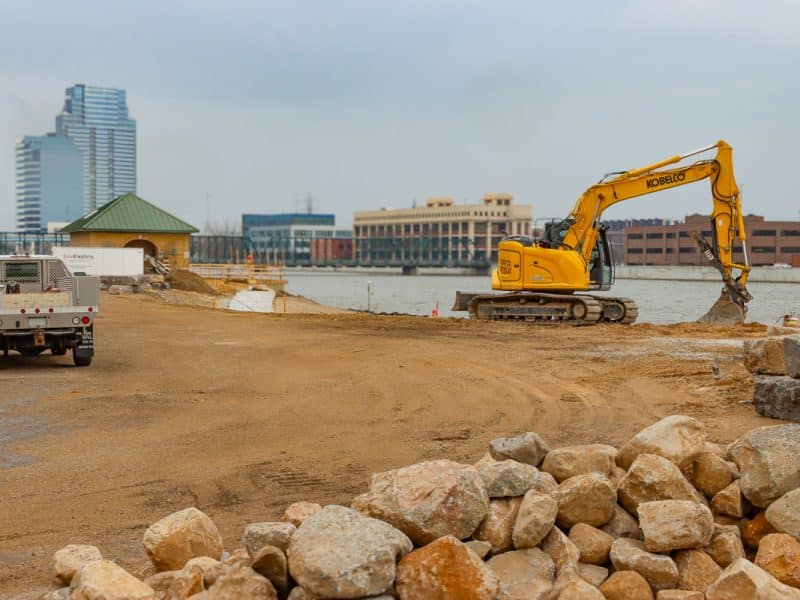
#RG20LookBack: The Grand River is having the moment we imagined—together
In his 12th #RG20LookBack column, Rapid Growth publisher Tommy Allen revisits the 2008 story, “A River Runs Through Green Grand Rapids,” which now reads like an early spark for everything unfolding along the Grand River today.
Bamboo Grand Rapids connects Michiganders by providing a third space that also combats loneliness
A once-vacant building in a creative Grand Rapids neighborhood now houses Bamboo’s expanded location, offering flexible workspace and connections to local and statewide innovation networks.


