

A new project called "The Power of Understanding" uses proven health literacy tools to empower participants to become engaged as advocates for their own health.
This article is part of State of Health, a series about how Michigan communities are rising to address health challenges. It is made possible with funding from the Michigan Health Endowment Fund.
Older adults living in Southeast Michigan have a new super power. PACE Southeast Michigan sites in Southfield, Detroit, Eastpointe, Dearborn, Sterling Heights, and Pontiac have launched a new project called “The Power of Understanding,” which uses proven health literacy tools to empower participants to become engaged as advocates for their own health.
PACE stands for Program of All-Inclusive Care for the Elderly. A federally funded program, PACE provides comprehensive medical and social services at low or no cost to older adults living at home. Most participants have both Medicaid and Medicare insurance coverage. Those who do not qualify for Medicaid can pay an out-of-pocket charge that is approximately half the cost of living in an assisted living or long-term care facility.
“PACE makes high-quality health care accessible to seniors in all communities,” says Laurie Arora, PACE Southeast Michigan vice president of public affairs, philanthropy, and organizational development. “The Power of Understanding exemplifies that by making health care even more accessible and understandable.”
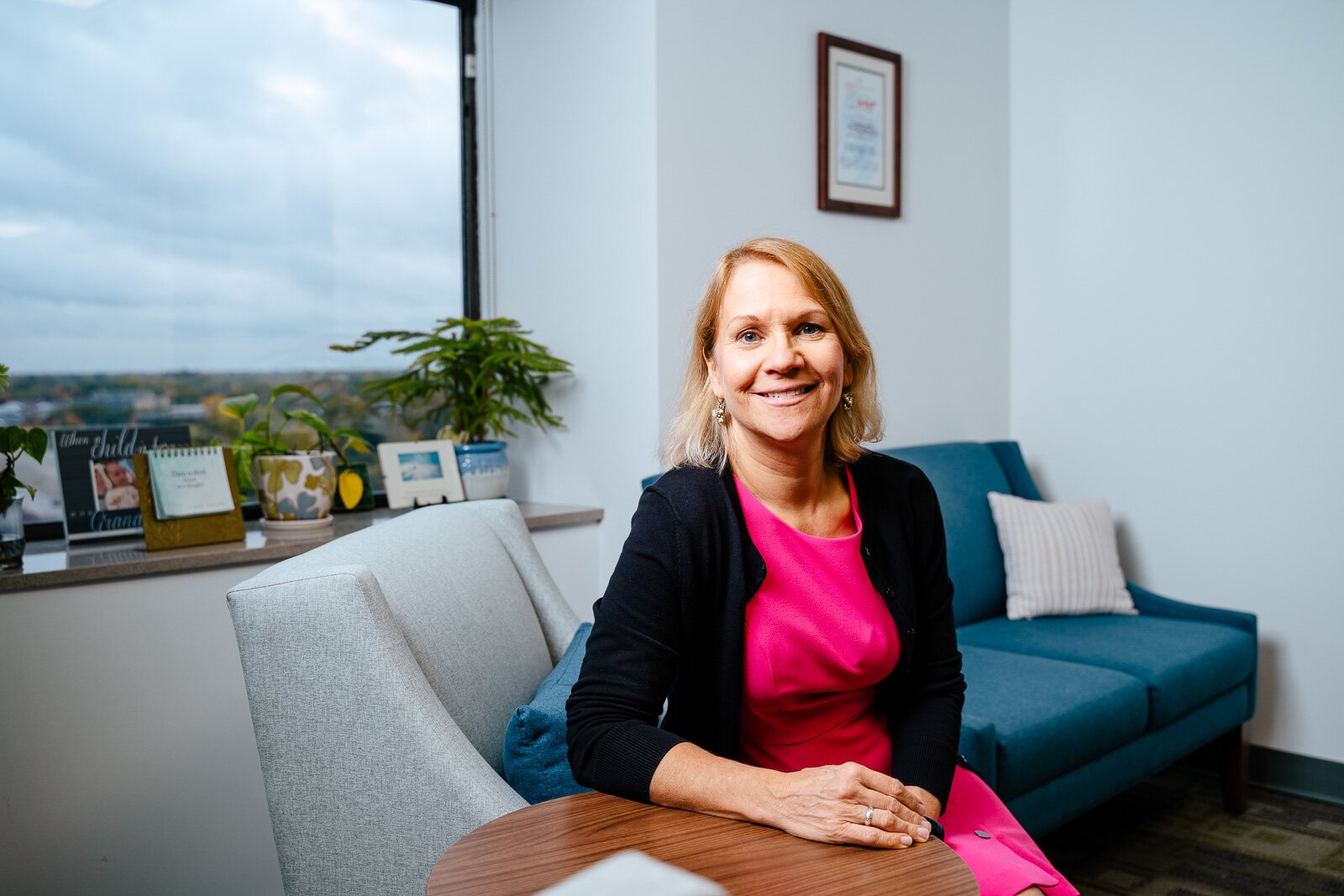
PACE Southeast Michigan began training all staff members to deploy The Power of Understanding in a series of sessions launched at its Eastpointe center in fall 2021. In early 2022, all six sites began actively engaging their participants in the program. A grant from the Michigan Health Endowment Fund is helping cover costs of the program. The National Institutes for Health defines health literacy as “the degree to which organizations equitably enable individuals to find, understand, and use information and services to inform health-related decisions and actions for themselves and others.”
“We are committed and we have trained all of our employees on health literacy — drivers, nurses, nurses’ aides, our physicians, and our administrators,” says Janis Rood, PACE Southeast Michigan director of pharmacy and integrated clinical services. “That’s so we all appreciate how making medical language understandable improves outcomes for our participants.”
Teach-back method empowers understanding
In preparation for training staff in how to better communicate with patients, The Power of Understanding program hosted focus groups with participants to develop common language and reviewed informational handouts to make sure they were inviting and easy to read. PACE Southeast Michigan also sought help from Henry Ford Health, a leader in health literacy, and gained permission to use materials that the health care system had developed to foster health literacy.
“Do you know that more than one in five Americans has functional illiteracy? That’s more than 43 million adults in the United States who cannot read or do basic math above a third-grade level,” says Nancy Combs, principal of Nancy Combs Communications, a PACE Southeast Michigan partner. “Henry Ford has already checked [its handouts] for readability, accessibility, understandability, diversity — everything that we know matters about patient education materials.”
The Power of Understanding training taught PACE Southeast Michigan staff to use the teach-back method to check understanding. When speaking with participants, PACE Southeast Michigan staff ask them to state in their own words what they need to know or do about their health in order to confirm that they understand what has been shared.
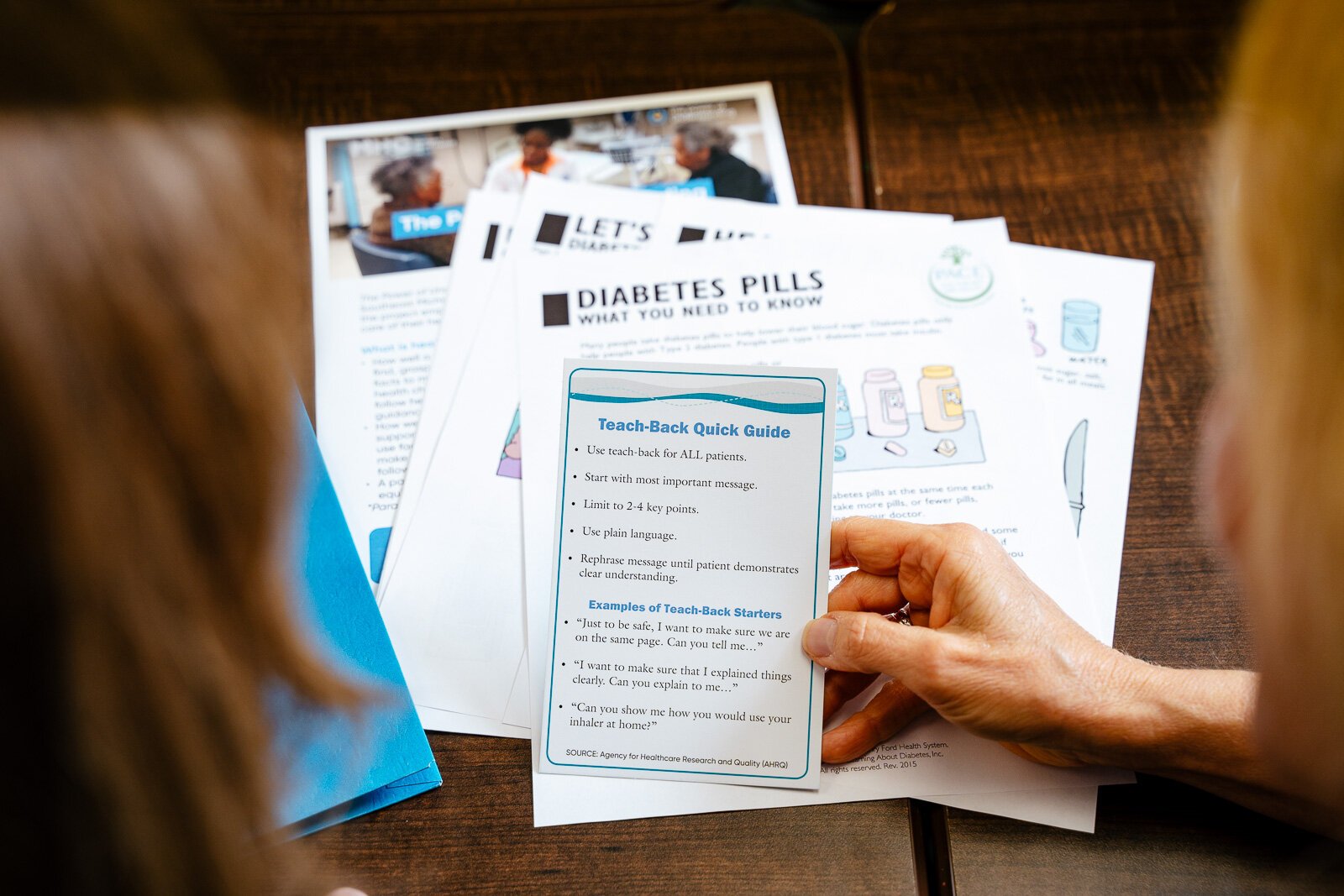
“It’s always on us to communicate clearly and effectively — and to check for understanding,” Combs says. “That is organizational health literacy. All the processes you put in place make sure that the patient has the tools to understand what they need to do to be healthy or to maximize their opportunity for health.”
In addition to Henry Ford Health, PACE Southeast Michigan has worked with many other partners in developing The Power of Understanding: the Michigan Health Council, the University of Michigan College of Pharmacy, the Wayne State University College of Pharmacy and Health Sciences, and PACE Association of Michigan. Rood says these collaborations are what she has come to appreciate the most about the program.
“It’s just an amazing thing to see unfold and be a part of,” she says.
Managing diabetes, reducing hospital visits, and enriching quality of life
Because nearly a third of PACE Southeast Michigan participants live with type 2 diabetes, The Power of Understanding has a key focus on empowering them to master the strategies available to control their condition: diet, physical activity, accurately testing blood sugar levels, and managing medications.
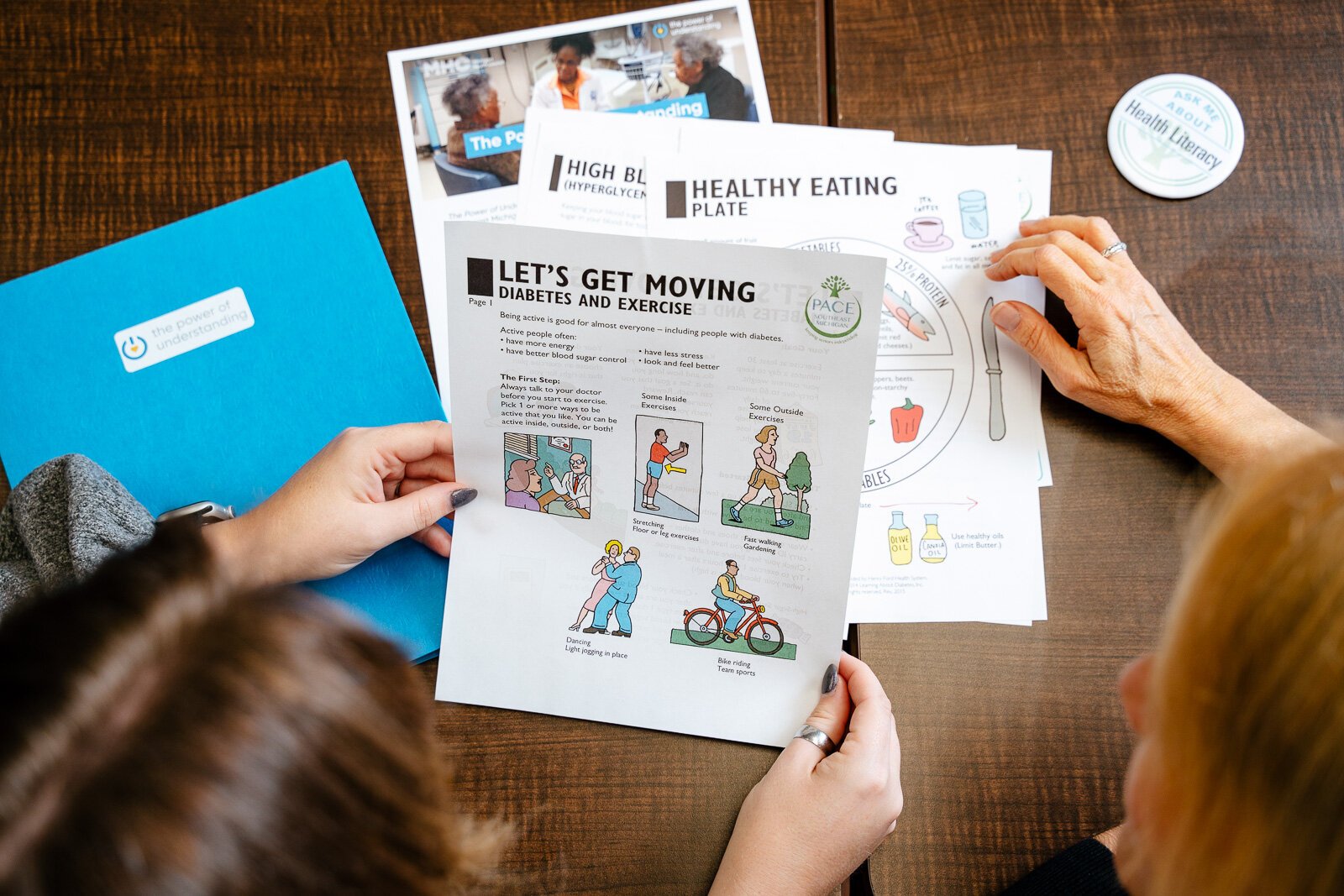
“Essentially, diabetes is not curable. So, focusing on it aligns with our mission to see someone all the way to the end of their life, to provide dignity, integrity, and high quality of care,” Rood says. “Also, diabetes is very complex, not a simple thing to manage. It requires that the participants really participate in their care in order to be successful.”
Those taking part in The Power of Understanding program are expected to improve HbA1c levels, be more satisfied with communications with their providers, and decrease emergency room visits and avoidable hospitalizations. According to research published by Journal of the American Medical Association, many hospitalized older adults develop complications unrelated to their reasons for admittance. These “hazards of hospitalization” include delirium, malnutrition, urinary incontinence, pressure ulcers, depression, falls, infection, functional decline, adverse drug effects, and death.
“Hospitals are great when you need to be there,” Arora says. “But we know our participants. We give them care daily. So we would prefer to be the ones providing that care if we can avoid a hospitalization.”
Caregiver confidence is crucial
The Power of Understanding also aims to increase the confidence of people caring for family members at home. With one in seven adults over age 71 facing issues with dementia, those living at home with a family caregiver can require total care that not only encompasses activities of daily living but also includes managing finances, home repairs, meals, transportation to appointments, and more. PACE Southeast Michigan not only shares the teach-back method so caregivers can make sure they are communicating well with their loved ones, but also hosts a caregiver support group and offers caregivers respite.
“PACE is working not only with the participants, but also with their caregivers,” says Stephanie Winslow, executive director, PACE Association of Michigan. “If we can help provide them with any tools they need, whether it’s education or support, it gives them a little bit of relief and they don’t feel as if they’re in it alone. This education that The Power of Understanding gives them does just that.”
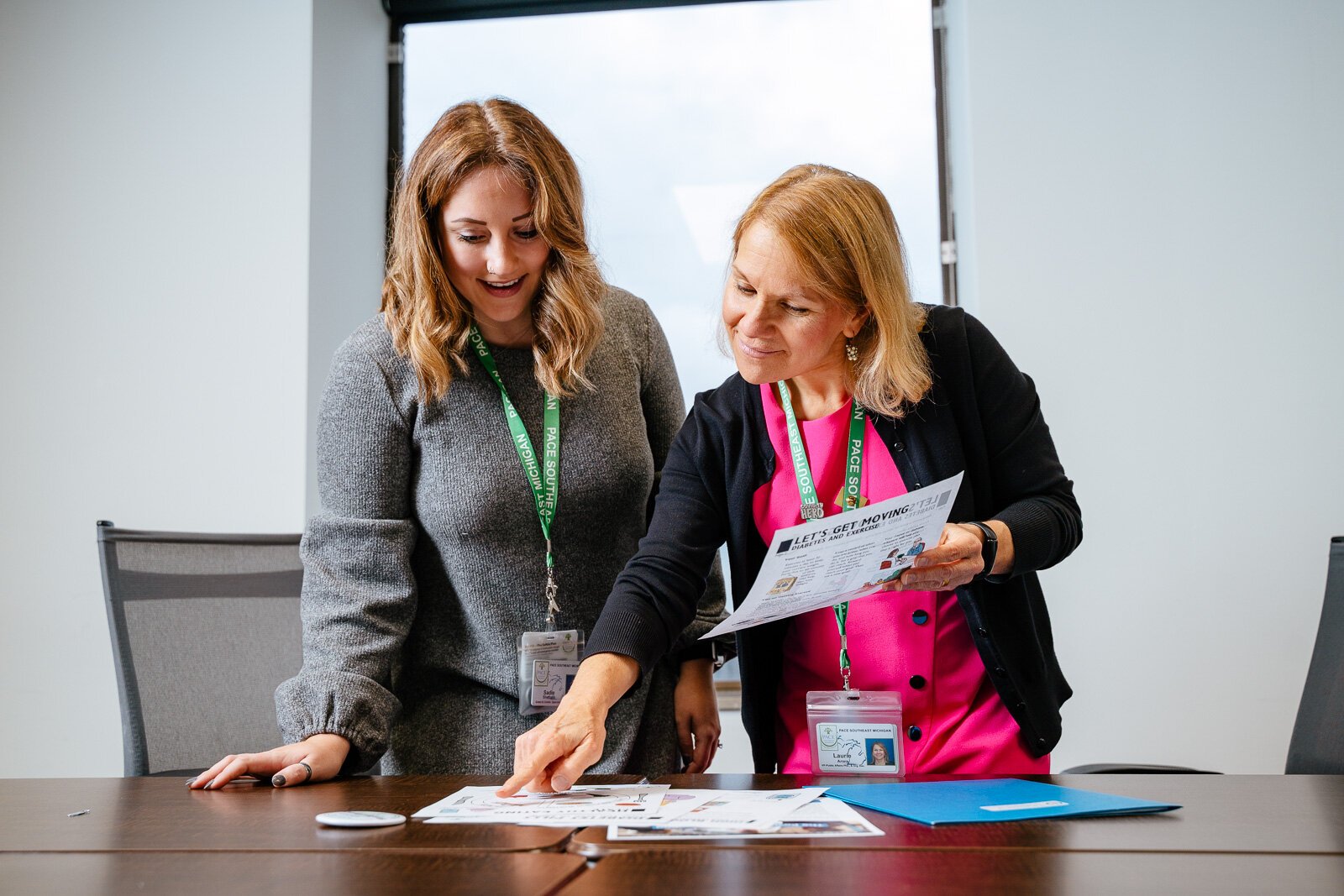
Arora and Rood say they’ve already seen the impact of The Power of Understanding. Arora says she’s heard from PACE staffers who have expressed being able to do their jobs better as a result of the program.
“Then, there are the experiences we had with individuals, hearing the staff members’ ‘Aha!’ moments, their stories about the personal impact they made with patients,” Rood says. “Our staff really understands how important The Power of Understanding is within their unique goals.”
Estelle Slootmaker is a working writer focusing on journalism, book editing, communications, poetry, and children’s books. You can contact her at Estelle.Slootmaker@gmail.com or www.constellations.biz.
Photos by Nick Hagen.
Related Articles
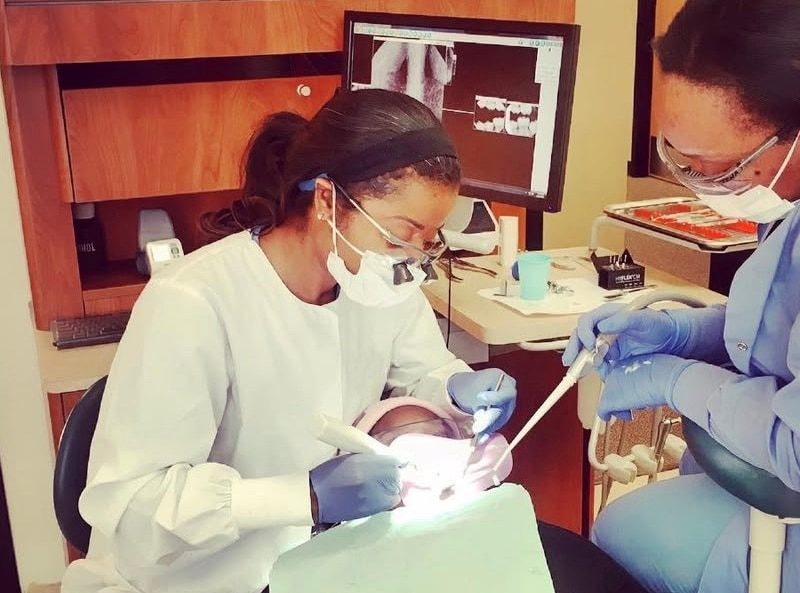
How a sisterhood of dentists is expanding public health across Metro Detroit
A collective of African American women dentists delivers public health care, mentorship, and trust to underserved patients across Detroit, Wayne County, and Macomb County.
Fewer options, fuller ERs: The behavioral health fallout of Medicaid cuts
MHA advocates for state funding that preserves behavioral health care and keeps rural hospitals open.

#RG20LookBack: From an “Atomic” moment to the present day
For his tenth #RG20LookBack column, Rapid Growth Publisher Tommy Allen revisits its 2007 “Atomic Object is People” story, tracing West Michigan’s thriving tech culture.


