
#RG20LookBack: What Burritotown taught us about lowering the cost of experimentation
In his 30th #RG20LookBack column celebrating Rapid Growth’s 20th anniversary, Publisher Tommy Allen revisits his 2012 story about the worker-owned restaurant, Burritotown.
I walked into Bartertown around midnight on a Saturday night in June 2012 and felt the nervous energy that comes with any startup’s first real test. Being there in person is the kind of test you can’t fake or phone in. Being there to immerse oneself in the experience is the thing.
Except in this case, Bartertown wasn’t operating as Bartertown that night.
The worker-owned vegan and vegetarian restaurant, formerly on Jefferson Avenue SE, had turned over its downtown kitchen and restaurant seating area to Dallas McCulloch, Brandon Hill and Lindsey Sanderson. From 10 p.m. to 3 a.m., the three of them tested a late-night concept called Burritotown, which aimed to offer locally sourced vegan burritos and tacos to people spilling out of downtown bars with nowhere good to eat.
And one line that I wrote in 2012 in the story headlined G-Sync: Burritotown Accomplished & The G. W. Bush’s Birthday Party, rings even more relevant today after a summer of food recalls: “People are concerned as to where their food is grown. They want to know that the food they eat when they are maybe a bit out of their element is still good for them.”
Bigger than a meal
At the time of my visit, I paid attention to the food, to the fact that workers were paid a living wage, and to the founders’ noticing that Grand Rapids didn’t have decent late-night options for people who didn’t want their “fourth meal” (as Taco Bell labeled this nocturnal activity back then) to be fast food. Fourteen years later, what sticks with me isn’t any of that. It’s the arrangement itself that still sparks my imagination of opportunities that sit right in front of us waiting to be activated.
You see, Bartertown was normally closed at that hour.
Instead of letting its kitchen and dining room sit dark, the owners handed the keys over to some community members who wanted to try something new. Burritotown, by showing up, got a working kitchen, an existing local food supply chain they could tap into, and, as a bonus, Bartertown’s co-founder, Ryan Cappelletti, as their informal mentor. More than anything, Burritotown’s founders got to test an idea without first committing to the cost of opening their own restaurant.
Looking back, I see this act as an experiment subsidized by generosity.
That first night went well enough that Burritotown soon announced it would run Wednesday through Saturday.
And while the fact that it happened is a win to me, like so many startups, it didn’t last. But a culture of experimentation began to take hold here at a time when we needed it as a city, as everyone from artists to young, emerging businesspeople were seeking to be worthy of our hypemen’s PR machine for our growing metropolis.
A short life doesn’t make an experiment a failure — that’s kind of the point of an experiment and a reality we often forget in the fanfare of its debut. You find out what works, what doesn’t, and sometimes what wasn’t even the right question to begin with. Looking back, permanence was never really the test.
Lasting lesson
What Bartertown offers us today is a working example of how a city builds a real culture of experimentation, not just talks about one. We’re pretty good at supporting entrepreneurs once an idea is polished, financed, de-risked. We’re much worse at building the places where someone can try something before anyone knows if it’ll work. This is something Rapid Growth knows well from our 20 years of reporting on this region as it transforms into a different city than it was.
Bartertown lowered the cost of failure for people who wanted to try something. It shared its space, sure, but also its relationships, its systems, its knowledge of how to run a kitchen at 2 a.m. A dark restaurant became, for a few hours a night, a small-business lab, and those who ventured were rewarded with amazing late-night fare.
That’s worth remembering now, when rent, equipment, insurance, food costs, and payroll can keep a decent restaurant idea from ever reaching a customer. Meanwhile, this city is full of kitchens, storefronts, offices, theaters, and gathering spaces that sit empty for hours or days at a stretch.
The question remains the same today: What if more of those dormant hours were treated as infrastructure rather than dead time?
A restaurant could host a pop-up chef on its slow night. A shop closed on Mondays could turn into a gallery for an afternoon. An office empty after 5 could hand its lobby to a neighborhood group for a meeting. None of that is simple — insurance, licensing, staffing, and trust all have to get worked out. In the telling of all of our stories over the last 20 years, we have helped lift up these dreamers who continue to arrive here seeking the opportunity to launch an idea, and a bevy of entrepreneurial organizations has met them seeking to clear the path for their success.
Take a chance
But Bartertown didn’t pretend those problems away. It just decided they weren’t reason enough to keep the doors shut, so they ventured into the unknown, fueled by the promise of boundless youthful energy and the belief that a good idea is sometimes enough.
You don’t build a culture of experimentation simply by branding a city “innovative,” either.
You build the culture when people who have space, equipment, or capital intentionally make room for people who only have an idea — and when everyone involved accepts that not every experiment needs to become permanent to be worth running.
Sadly, Burritotown is gone. And so, eventually, was Bartertown, which, before they left us, had opened another eatery, Cult Pizza, which offered community shares for folks seeking to invest in this new business just a few doors down from Cappelletti’s first restaurant, building on his vision of a street eventually filled with worker-owned co-ops.
But for a handful of nights in 2012, one restaurant unlocked its doors during the hours it would normally have stayed closed and let another idea walk in that I believe forever changed us as a city.
Now, looking back 14 years later on Burritotown, what resonates isn’t the outcome, but the invitation: the realization that meaningful change requires fertile ground and, occasionally, an adventurous owner to unlock the entrance so it can flourish. Whether our city’s next creative spark arrives as a late-night meal remains a question only we can answer, and whether we are willing to venture in support of our dreamers.
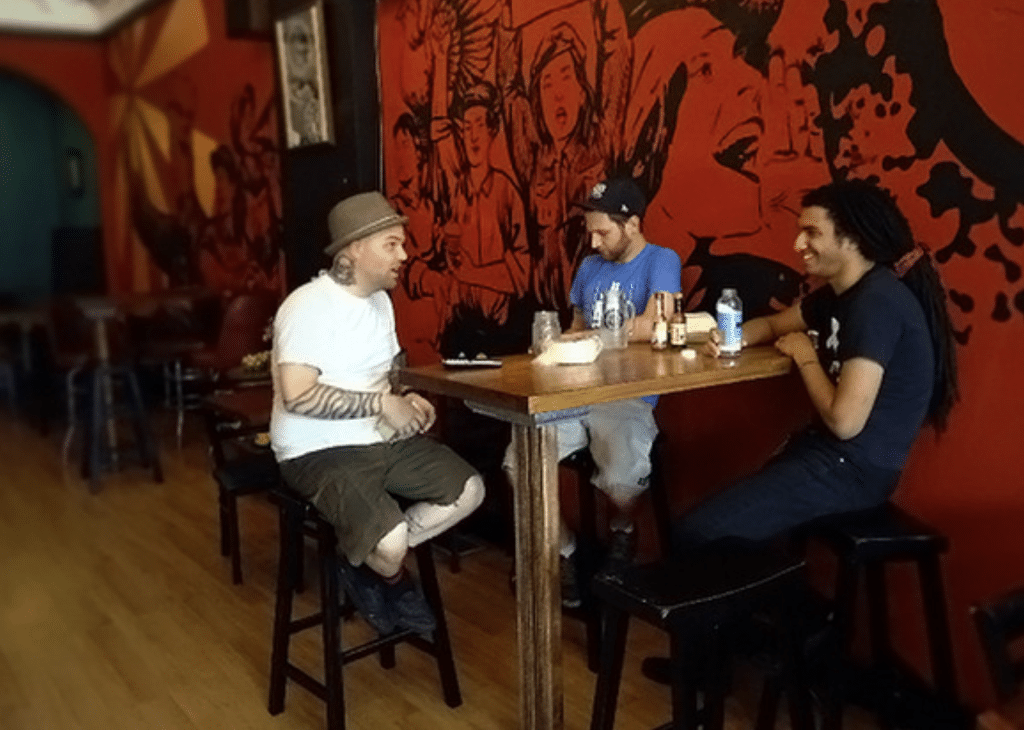
G-Sync: Burritotown Accomplished & The G. W. Bush’s Birthday Party
By Tommy Allen
A few nights ago while watching Anthony Bourdain’s No Reservations, Chef Eric Ribert remarked over a scrumptious meal that his philosophy of cooking is based upon a very simple premise: “We begin with the fish and from there, we elevate the fish with what we do.”
Last weekend, I experienced my own No Reservations moment when a member of the Bartertown, a workers-run vegan/vegetarian restaurant in downtown Grand Rapids, stopped by the table to mention that on Saturday, June 16, they were turning over the reigns of the restaurant to a team of eager startups who wanted to conduct an experiment night with the hope of launching a new latenight concept eatery appropriately called Burritotown.
As Ryan Cappelletti laid out the test run hours (10 p.m.-3 a.m.) and the team behind it (Dallas McCulloch, Brandon Hill and Lindsey Sanderson with Cappelletti overseeing the menu’s launch & quality), I instantly recognized some names as members of Bartertown worker/owners, High Five Co-Op Brewery organizers and even a familiar DJ. I was intrigued.
So, as I wrapped up my meal, I programmed the date in my already full weekend calendar. But before I dashed to my next appointment, I placed the event in my “we’ll see” category.
On Saturday, as I rounded the corner of Jefferson and Fulton to make my way back to the T-Rex Fest, I was impressed to see a healthy supply chain of eager customers waiting for their chance to sample this late night eatery’s fare. It was 10 p.m. and they had yet to open and a line had formed down the street.
Later when we arrived back at Burritotown to sample their offerings, High Five Co-op Brewery’s Dallas McCulloch was not only energetic, but also appeared to be beaming with excitement when he greeted me. He even demonstrated the charm of the upsell as I added two tacos to my black bean, rice and Dancing Goat cheese burrito order.
After finishing our late night bite — or as Taco Hell describes it, “the fourth meal” — we quickly made for home.
In the morning, all I could think about was my experience at the late night stop to partake in this experiment. There was a certain excitement in the air that only a startup can project as they nervously move about during those first moments of their launch. It was infectious to see it in action as each worker in the collective maneuvered through the motions of the various tasks.
So, I dropped a note to McCulloch inviting a few members to gather on Monday at Bartertown to discuss the results.
And of course, the big question on everyone’s mind besides how did it go was, “Why burritos?”
“Well, as one who has been on the road a lot, I found it difficult to find fast and yet good vegan food,” said Dallas. “But I have visited places that had figured out how to deliver vegan food quickly, so I looked at places like Denver, Nashville and close-to-home spots like Ann Arbor to see what [these cities] offered. In the end, everyone loves burritos, so as I surveyed the late night bite scene, I was actually shocked that no one had done it here yet.”
It was a fairly simple process for those worker collective/owners of Bartertown who wanted to start up something new. They already had the food supply chain down, which includes supporting and sourcing produce from local farms and Michigan businesses. Even the space, which, because of legalities of the banking system, is in Ryan’s name, was already prepped for a startup to assume late night hours — something he had tried in the past, but didn’t take.
“Burritos and tacos, the only thing we offer, are simple cuisine that we all identify with and cook many different ways,” said local DJ and fellow owner Brandon Hill. “We identified rather quickly that when we looked at the late night stops for those heading out from the bars, the food choices often involved lots of mystery.”
The team that worked to produce this fluid menu of tacos and burritos wanted to mimic Bartertown’s cooking philosophy of sourcing items in season. It would mean that while there are a few staples that would be able to be prepared year-round, the ability to have a menu that rotates would create excitement with the late night consumer.
And while opening one’s door to a fresh startup in the restaurant industry is something we have seen in bigger markets, this is something new here that I am sure has a lot of people scratching their heads about how one manages boundaries. Morning and lunch style delis under this “second shift” change over of cooks produces in some venues a whole new cuisine and often a fresh, new atmosphere with white table cloths elsewhere. So, why not here?
This new workable model in partnership with Bartertown was so successful last weekend that they have decided to go for it as they prepare to open Wednesday-Saturday starting July 6, 2012. “Or as we say, George W. Bush’s birthday,” says McCulloch, with a devilish laugh as I shoot back, “Burrito accomplished,” to even more laughter.
And in the traditional mentor-like model, Cappelletti will oversee at first by helping train fellow owners in the collective about how to be consistent with their product. This is something he stressed repeatedly as the key to any restaurant success. And while on the topic of Cappalletti’s plan for success, Bartertown leadership helped the team hit a low labor bill for the entire Saturday night launch of just 19 percent. This is not a surprise when you consider that Cappelletti’s bank loans will be paid back by August 2012 — just one year from when they opened.
In addition, Cappelletti sees a lot of positive from this launch and only one negative.
“This town is ready for this kind of a place,” says Cappelletti. It was evident by the behavior and level of response from the community on Saturday night. He continues, “And the only negative that I can see is that we are not across the street from a bar.”
This is a fact easily proved when you travel down our main entertainment districts. Nearly all bars have a late night bite stop and most with some form of encased meat, but very rarely something for vegetarians or vegans.
In the end, if Burritotown is successful, then according to McCulloch, we can expect this model to be exported by the worker collective members to other locations under this name.
But I can assure you this: if one other business sees this as a good opportunity, then other copycat late night burrito joints are sure to pop up and possibly at an unsustainable rate.
I just hope as others race to capitalize that they do not cannibalize on the real reason why Burritotown and Bartertown (and soon to be High Five Co-op Brewery) are gaining praise. People are concerned as to where their food is grown. They want to know that the food they eat when they are maybe a bit out of their element is still good for them.
And, another chief reason is that the workers are being paid a fair living wage and not just farmed into the restaurant business for cheap labor while they wait for a potential higher paying gig.
This last item’s focus in their business model gives those of us who have hope for and banked on the power of creating an innovation-based climate in West Michigan. If we want to retain the brightest talent, we must not only create fertile ground for them, but include a key part the equation devoted to investing in these startups. Which also includes allowing food trucks, but I digress.
That means all of us as a community, regardless of our financial status in our community, must step up to the plate. It cannot just come from one source or we run the risk of only one idea from a community advancing through time. We need a diverse chorus of voices and practices. This is one song that I think needs to be heard even more in our region. It just makes sense on so many levels, from retention to innovation, to even healthy advancement of our people.
So while Chef Ribert believes a piece of food is the start to a memorable path to greatness, then maybe in our region, a burrito is also a start to something greater as well?
And from there, it is up to us and those who follow in light of their endeavors to elevate this community to this excellence. And maybe one part of it will be via Burritotown.
On Friday night the High Five Co-op Brewery will host a benefit concert at Mulligan’s in Eastown at 10 p.m. It would be a great way to get to meet other members of this worker collection.
The Future Needs All of Us.
Related Articles
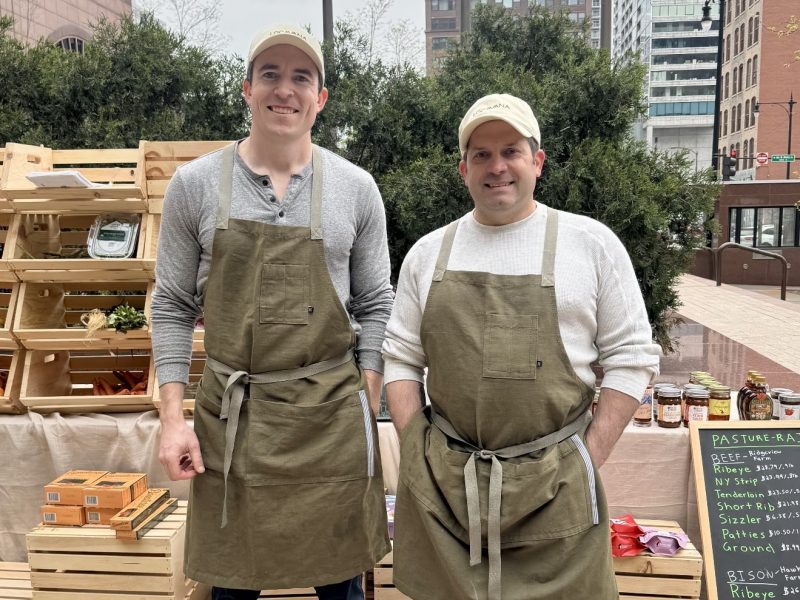
Startup tackles food system inefficiency with direct farm-to-home delivery
Zeeland-based Locavana expands delivery, helping residents buy local food easily while increasing farmer earnings and improving access across West Michigan communities.
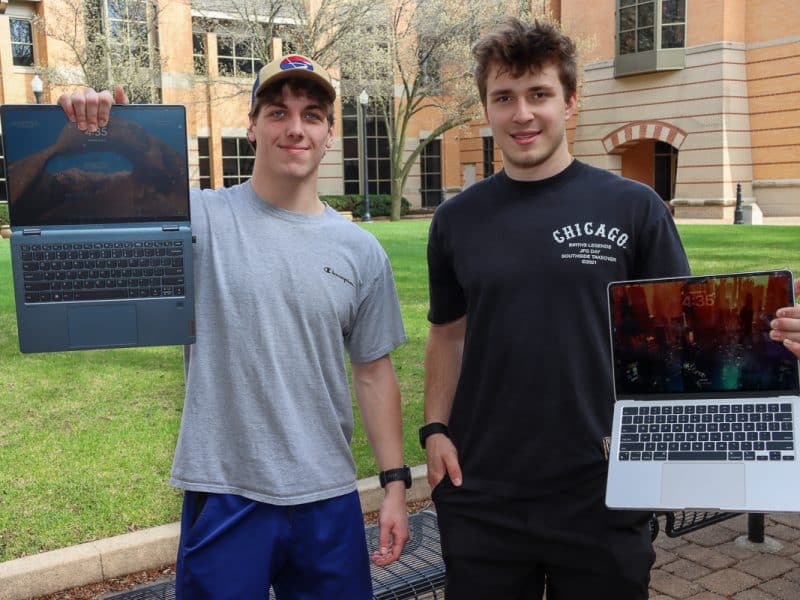
GVSU students turn old tech troubles into trusted local resale solutions
GVSU students solve risky, wasteful tech resale by building a trusted local model that improves safety, transparency, and sustainability.
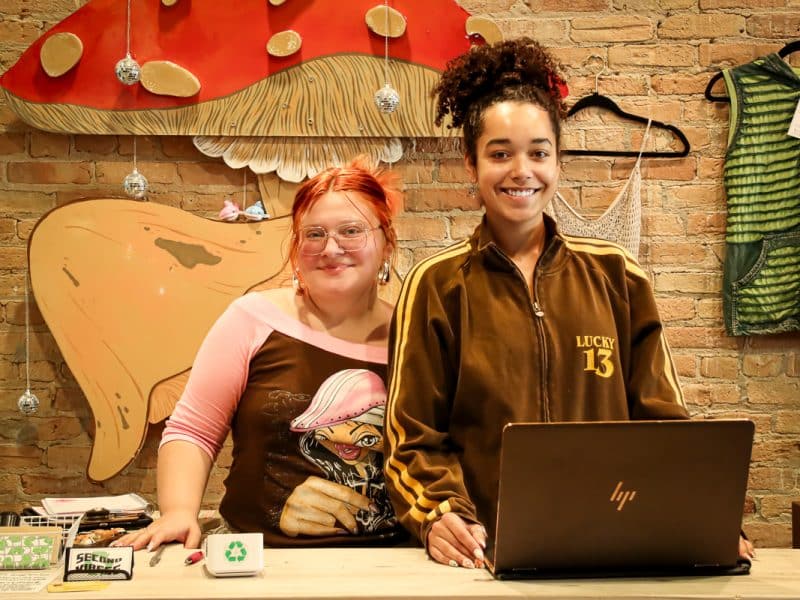
The little vintage district that could
Nestled in the center of Grand Rapids, a group of fashion-oriented creatives is subtly turning South Division Avenue into a lively cultural hub rooted in sustainability, community, and shared goals.


