
Using social media to match those in need with someone who can help
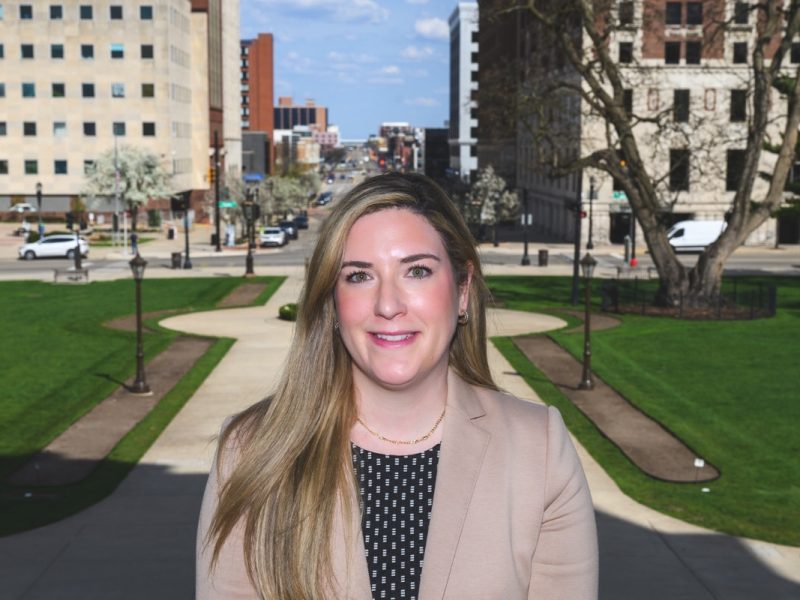
Abby McKiernan turns personal struggle into community action, creating platforms that connect neighbors, remove stigma and make asking for help easier.
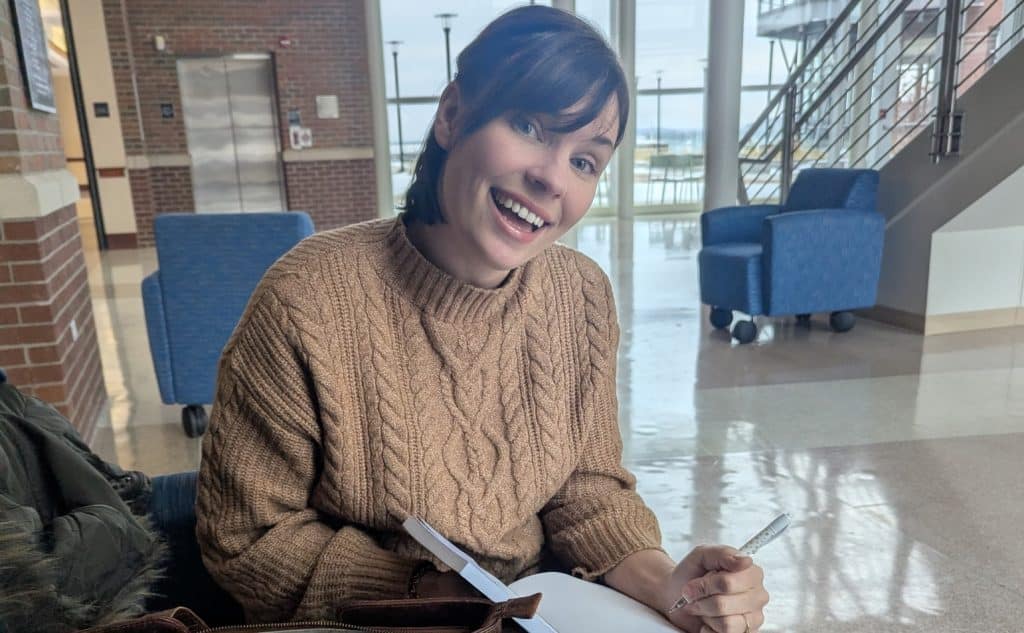
In 2017, Abby McKiernan needed help, but, due to circumstances, she had isolated herself with her two young children and had no one to turn to. So, she started asking for help from organizations that are meant to assist individuals like her. But it was daunting and time-consuming.
“I was taking time off my paying job in order to maybe get help to pay a bill that I already couldn’t pay,” McKiernan shares. “Logistically, that’s crazy.
“And then on top of that, you’re going into these organizations to ask for help, and you have to tell them the hardest, most embarrassing part of your life, and you have to be careful because you don’t want to sound too desperate that you’re a lost cause, but you have to sound desperate enough to warrant getting help. You have to be authentic, but you don’t want them to judge you too heavily.”
McKiernan, a Traverse City resident at the time, thought that there had to be a better way. Then, she found herself at a women’s Bible study and witnessed an “amazing moment” between two women who had just met—one who had just gotten herself out of being homeless after two years and a woman who offered her an extra bed set that she had been meaning to sell.
“This girl was so shocked by the offer, and when she asked the other woman why she would help someone she didn’t even know, the woman said, ‘Because I can,'” McKiernan recalls.
McKiernan wanted to “offer this beautiful moment to strangers everywhere.” Soon, she learned her next steps.
“I had a dream that night of God and I sitting on a bench talking and him giving me the directive to put people into a room without worrying about race, background, gender, lifestyle, etc., and to instead just connect people with a genuine heart to love and help and care for one another. No judgment or stigma or shame… just love.
“When I woke up, I realized, I know how to connect people. I can do that.”
McKiernan would match people in need with people who could help them, building a community so others didn’t have to feel what she felt when she was struggling.
“We’re not alone. So many people are going through the same thing, or similar things. For me, it’s nice to know I’m not the only one going through tough stuff.”
Creating a beacon of light
Her “crazy dream” became the Facebook group “Spark in the Dark.” She created the group as a way to ask for help with basic needs — things like health and safety, no requests for big-screen TVs — and a place for those who could assist to do so.
“The thought was that if you have something or need something, put it out there and let’s treat others how we want to be treated,” McKiernan explains. “It’s no different than asking your neighbor for a cup of sugar when you’ve run out, just online.
“I started the group with 50 people, and when I woke up, there were 300 people in the group. Fast forward, and we have over 33,000 Michigan members and we’ve met 120,000 needs.”
McKiernan comes from a humble past. She grew up in Mount Pleasant, became a mother at age 17, and moved to Traverse City in 2009. (Her family moved to the Grand Rapids area recently.) She said life was always a balancing act: being a mom, working multiple jobs, and taking classes at night. She went into public relations 15 years ago and nurtured a career in marketing, where she dipped her toes into the nonprofit world.
“I fell into a situation where I could create change,” she says. “I’ve always had a unique ability to understand the end goal and quickly work through several possible ways to get there and choose which one was the best path … I’m not afraid to shift and adjust and go in a different direction if it makes more sense to get me to the end goal. There is no set map, which means I can carve my own path and don’t know the perceived boundaries… which is both good and bad sometimes.”
Working with Facebook
So far, McKiernan’s bold dreams and willingness to fail are working out for the good.
At the end of 2019, McKiernan applied on a whim to Facebook’s Community Accelerator Program, which is intended for small businesses making an impact in their communities that wanted to scale to the next level. “Spark in the Dark” was accepted into the program in 2020.
The program came with funding, six months of training from Facebook, and connections with big-time names. Only 77 small businesses were accepted, 20 of which were from the U.S. At the end of the six months, each business was to make a three-minute pitch to Facebook, and the winners would receive more training and resources.
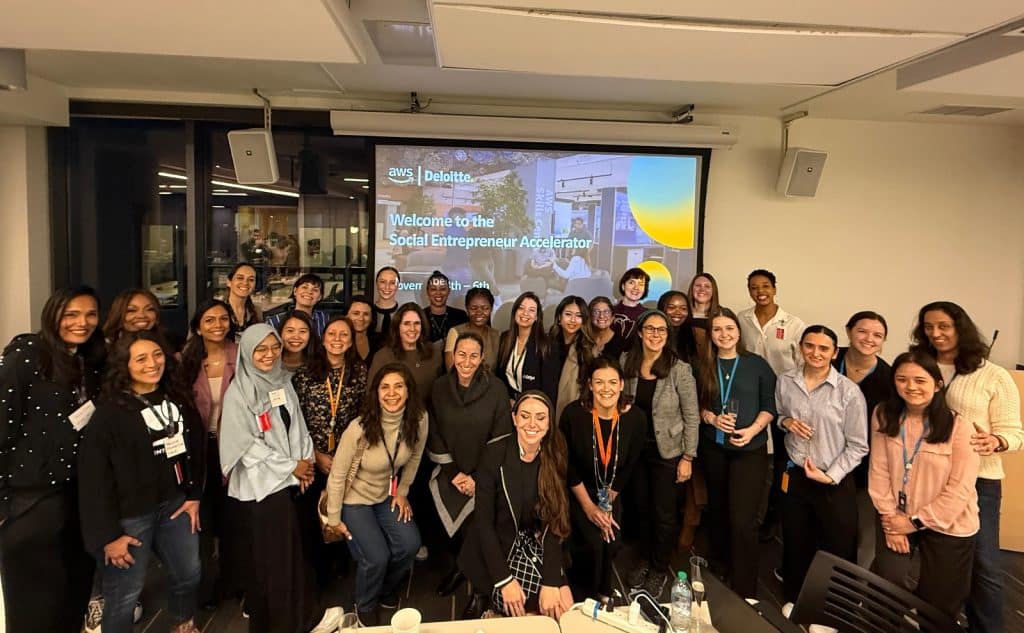
McKiernan was one of four winners, allowing her and her team to structure a volunteer training program, launch several groups, and put money toward development.
McKiernan’s idea snowballed, and she steamrolled through 2020 and 2021; she won the torch of ethics from Better Business Bureau in 2020 and was on the “40 under 40” list in Michigan in 2021.
Things shifted again in 2021.
“I started noodling about workplace barriers because I could see on ‘Spark in the Dark’ that so many people were struggling over gas cards and tires,” McKiernan explains. “In the grand scheme, companies want issues solved for their employees. They both want the same thing: that person at work. But sometimes we miss the common ground when we’re in the weeds.”
During a party, McKiernan met someone who told her he had found the perfect employee, but the worker later disappointed him. After a few questions, McKiernan recognized the name from “Spark in the Dark” — the employee had posted about a flat tire and needing rides to work. He got the rides for a while, but they stopped.
“I boldly told him to buy this great employee some new tires, and thankfully he listened, and that man still works at the company,” McKiernan says. “This man continues to rave about the company because he’s cared for.”
The future of giving
Fast forward to 2023, when McKiernan received a call from Dan Mastromonaco, a software entrepreneur. Mastromonaco and his wife had been donating to “Spark” members for years, and he wanted to make a more consistent contribution through software.
“He wanted to pick my brain to understand the highs and lows of ‘Spark,’” McKiernan says. “Three hours and some coffee later, we decided that we would be better working together. His technology plus my in-field knowledge could create something of a game-changer.”
The creation: HelpLink. HelpLink, which launched in 2025, is a tech-enabled nonprofit designed to meet an individual’s basic needs through a collaboration among businesses, employees, and nonprofit organizations.
How it works
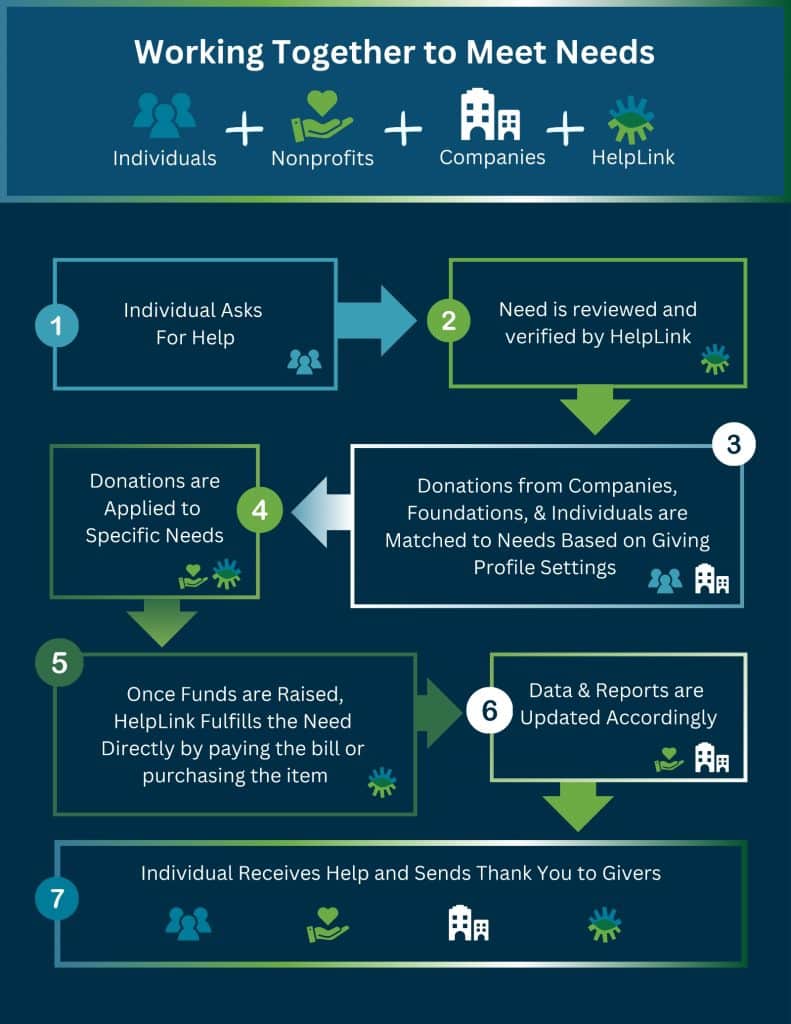
To ask for help, the steps are straightforward:
- Ask for yourself or another. A person may have up to two asks each month.
- Enter basic information about the need and the recipient.
- Wait for the request to be reviewed. All needs are verified through a combination of automated software and individual review.
After the review is complete, HelpLink publishes the need under an individual’s profile to ask the community for donations. Once a need has been fulfilled, the recipient can send a thank-you to everyone who helped.
There are several ways to donate:
- A company can give to employee and community needs at the same time through the giving tools. The process is customized and transparent, so companies can choose where the donation goes – from prioritizing staff needs to helping veterans to location-specific giving. Most of the membership base and community funds HelpLink receives are through corporate partnerships.
- Individuals can set up a monthly pledge to donate to particular community needs, or they can donate to specific individual needs.
“Donating takes about two minutes start to finish, asking for help takes less than five, and for a company to create a profile and a fund takes about 10 minutes,” McKiernan explains.
Businesses that set up profiles can track needs and requests, with full transparency of where their money goes, to whom, and to what.
That eases the greatest concern of some who are curious about HelpLink: trust.
“What we have built is so good it feels too good to be true,” says McKiernan. “A lot of people are wary—what’s the catch? We’re surrounded by crazy-fast technology, and nothing feels authentic in the software and tech world right now.
“The idea that Dan and I would go out and create something for those in their time of need is seen as amazing, but also makes others wary to buy in because they feel like there are hidden factors that we aren’t revealing.”
HelpLink prides itself on creating a technology that exhibits honesty, integrity, and transparency.
“Whether you’re a business owner or nonprofit owner or individual in the community, HelpLink has been built for you to connect with others, to help who you can with what you can,” McKiernan says. “No donation is too big or too small. We’ve made it so $5 really does matter. We’re rolling over your 30 cents. Many hands make light work.”
HelpLink’s next fundraiser is hosted by Bamboo coworking space in Grand Rapids and catered by HopCat on May 6 from 4-6 p.m.
Related Articles

#RG20LookBack: The Grand River is having the moment we imagined—together
In his 12th #RG20LookBack column, Rapid Growth publisher Tommy Allen revisits the 2008 story, “A River Runs Through Green Grand Rapids,” which now reads like an early spark for everything unfolding along the Grand River today.
How a sisterhood of dentists is expanding public health across Metro Detroit
A collective of African American women dentists delivers public health care, mentorship, and trust to underserved patients across Detroit, Wayne County, and Macomb County.
Fewer options, fuller ERs: The behavioral health fallout of Medicaid cuts
MHA advocates for state funding that preserves behavioral health care and keeps rural hospitals open.


