
Charting a way through: Mindfulness, medicine and the relationships that help us heal
A Michigan State University med student and part-time psychotherapist believes medicine works best when it treats the whole person — and he’s testing that idea four minutes at a time.
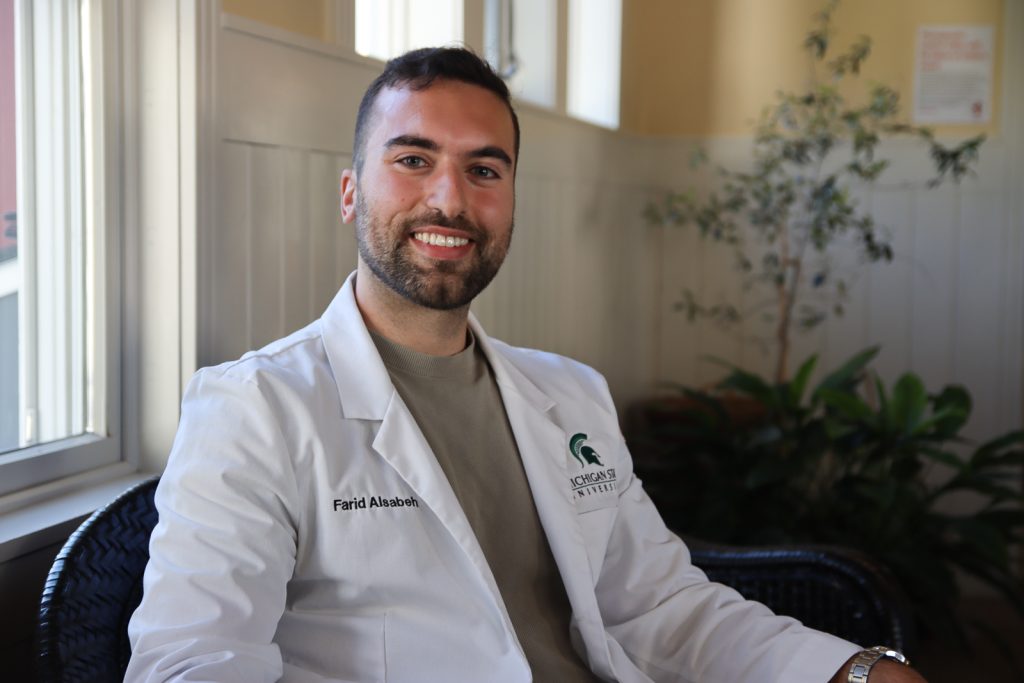
Years before Farid Alsabeh entered medical school, a parking lot, of all places, would become the setting that would help clarify the kind of physician he hoped to become.
Alsabeh was working as a psychotherapist at ACCESS, a community mental health organization in Dearborn, where medical care and psychological and social services were housed in separate buildings. On some days, he observed that his psychotherapy clients would, after meeting with him, cross the parking lot to receive medical care.
“They’re getting the psychological, emotional side from me, and they’re getting the physiological, biological side from the doctors,” Alsabeh says.
The physical separation came to represent something larger. Alsabeh was becoming more confident in his abilities as a therapist, but he also increasingly wanted to better understand the body, disease, and medications. He wanted, as he describes it, to bring those two halves of care closer together.
Today, Alsabeh is a third-year student at Michigan State University College of Human Medicine in Grand Rapids, a master’s-level psychologist, a part-time psychotherapist, and the owner of a psychotherapy clinic who hopes to pursue ophthalmology after medical school. And on certain evenings, folks can find him a few minutes from the medical school’s campus, sitting in a circle at Gilda’s Club Grand Rapids, inviting a room full of strangers to spend four minutes doing something deceptively difficult: nothing.
Or, more precisely, noticing, then doing nothing.
From service requirement to breakthroughs
Alsabeh first encountered organizations like Gilda’s Club through the medical school’s emphasis on community service. During their first two years, medical students take part in service activities that place them throughout the community. The requirement introduced Alsabeh to the work of the local Gilda’s Club.
“I would have never found Gilda’s Club on my own, even though it’s five minutes away,” Alsabeh says.
What followed became more than duty. It became personal.
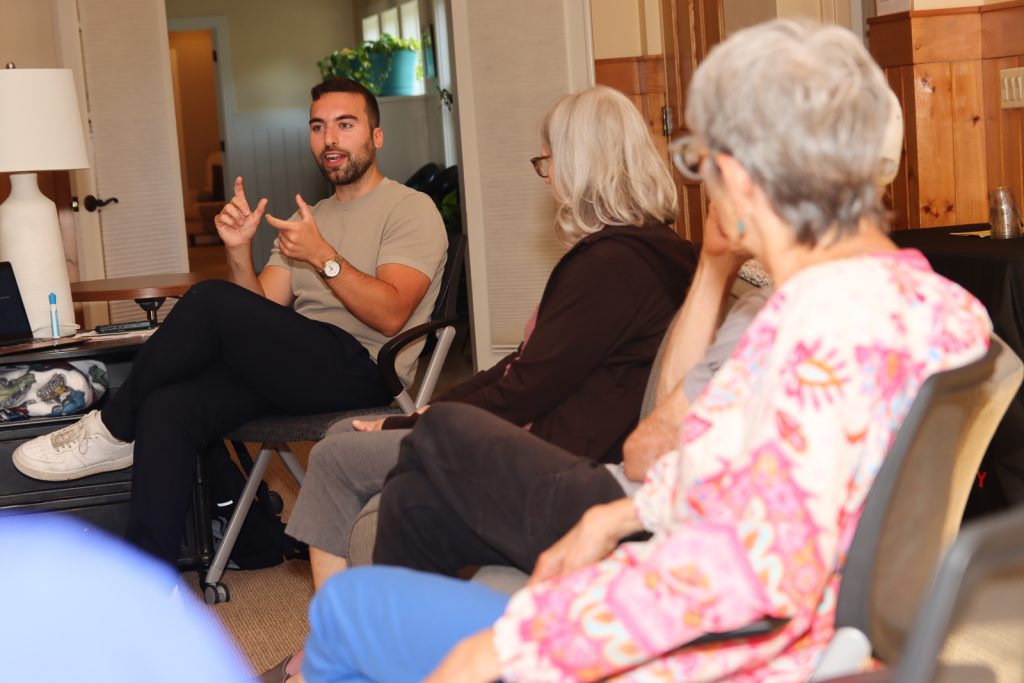
“Look how many people I’ve been able to help, and look how much I’ve been able to grow as a psychotherapist and a med student because MSU provided me with that opportunity,” he says, reflecting on the three years of volunteering at Gilda’s Club.
That growth matters, because Alsabeh believes, based on his unique intersection, that medicine is moving toward a model where emotional care isn’t just something that happens alongside treatment – it’s part of it.
“Everything you do as a doctor is rooted in a relationship of care,” he says.
Patients, Alsabeh believes, can sense the difference between a physician who approaches them primarily as a disease to diagnose and one who recognizes “someone who’s going through a human experience.”
“All of the technical expertise that you have is in service of that relationship with the patient,” he says.
Steve, whose last name is being withheld at his request for privacy, has experienced Gilda’s Club first as a support for himself and his wife during her cancer journey, and now through its spouse grief programming.
A retired educator who worked with students facing mental health challenges, Steve sees something missing in healthcare that sounds remarkably close to what Alsabeh hopes to restore.
“It’s transactional right now, and it’s not relational in a lot of instances,” Steve says. “If you don’t have a relationship with people you are serving, then you’re missing a key point and key component in helping the person be better.”
Learning to watch the mind
During his Gilda’s Club presentation, Alsabeh introduces what he calls “mindful detachment,” a mindfulness practice meant to help people recognize when useful thinking has crossed over into rumination – the mud of the mind where one often gets stuck.
Alsabeh uses a wheel as a metaphor. Thinking through a problem can move us forward. However, rumination keeps the wheel spinning while producing little more than heat and friction.
“When we’re anxious, the wheel is turning, but it’s getting us nowhere,” he tells the group gathered for his monthly session at Gilda’s Club.
The practice he has developed and shared here is remarkably accessible — no special equipment, no experience required, just four minutes and a willingness to sit still.
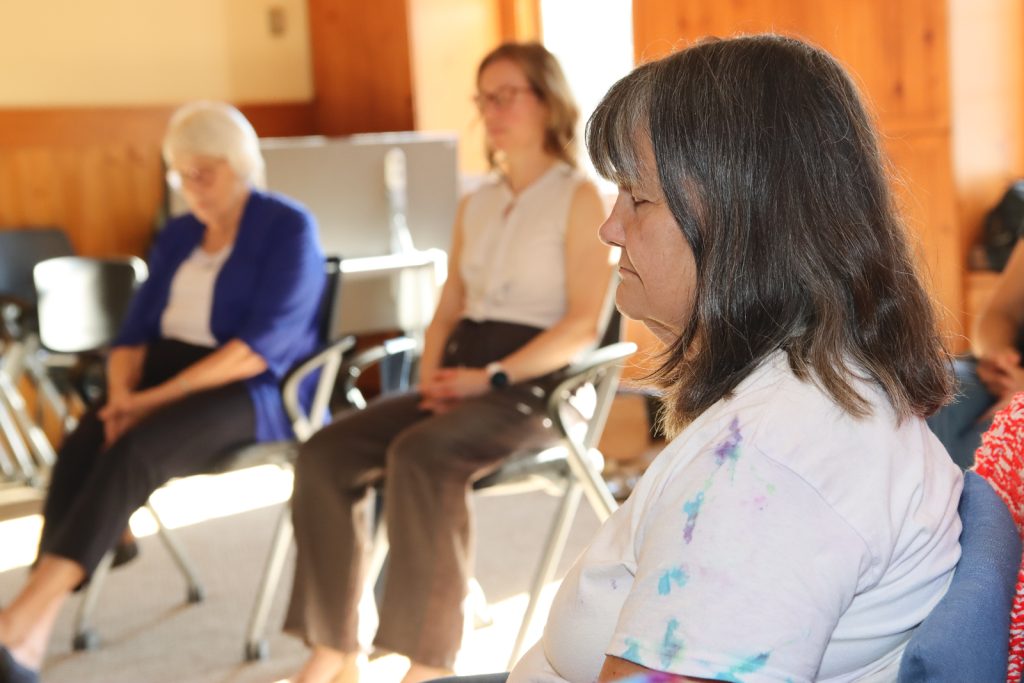
Participants are invited to sit comfortably, close their eyes, and simply observe whatever their minds produce: thoughts, memories, feelings, images, sensations. They’re not asked to judge those thoughts, solve them, suppress them, or follow them down rabbit holes. When folks notice themselves beginning to analyze or engage, the exercise is simply to recognize it and return to observing.
Alsabeh notes that meditation isn’t about forcibly clearing the mind.
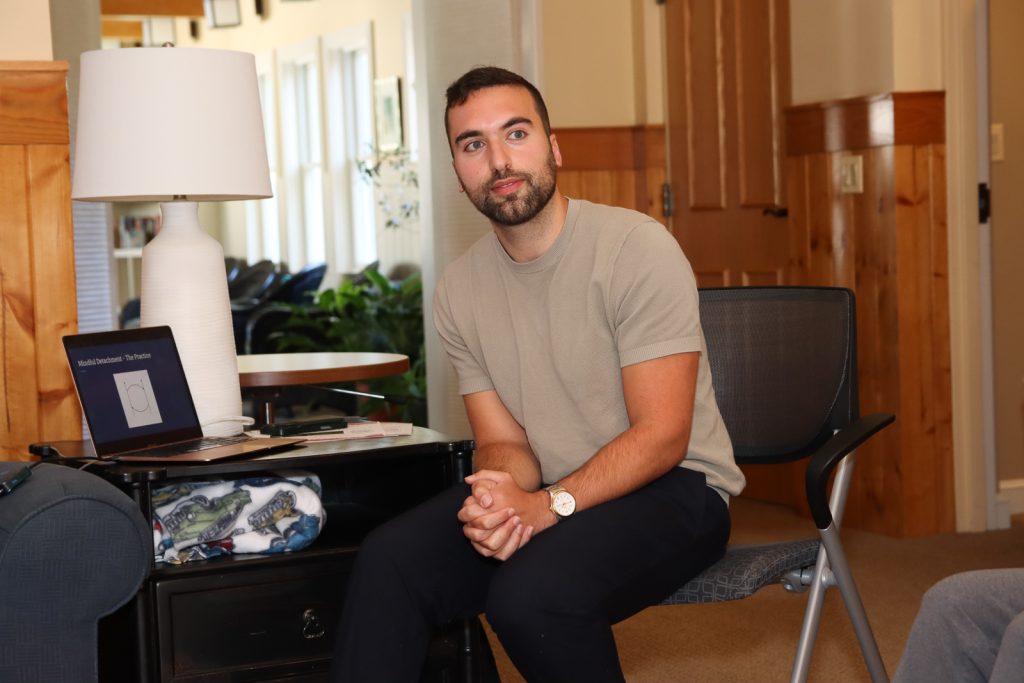
listening skills to hear the thoughts of those attending his monthly
mindful detachment sessions.
Instead, he employs the image of a shaken snow globe. Alsabeh reminds the attendees that trying to force every flake to the bottom only creates more activity. Leave the globe alone, though, and gravity eventually does the work on its own.
“It’s not about what happens with your mind,” Alsabeh says. “It’s about how you relate to what happens in your mind.”
He offers another tool for when thoughts start multiplying around the word “what” – what does this mean? What if this happens? What should I do?
Instead, he encourages shifting toward “how.” How does this moment feel? Is there tightness in the chest? Restlessness? A thought? A feeling?
That shift, Alsabeh explains, can move attention away from constructing another story about the experience and back toward noticing what’s actually happening in the present moment.
He frames mindful detachment as one tool among many — not a replacement for medical or mental health care.
Being remembered is part of being cared for
For Star, whose last name is also withheld for privacy reasons, the benefits reach beyond a single meditation exercise.
During an earlier session, Alsabeh explained to Star that what she experiences during his session is called aphantasia — an inability to voluntarily visualize images in her mind. By the time she saw him next, he’d researched it and brought more information to share with Star.
“I think these kinds of acts show just how he cares about you,” Star says. “He recognizes who his people are that he’s helping, and loves it when we come back.”
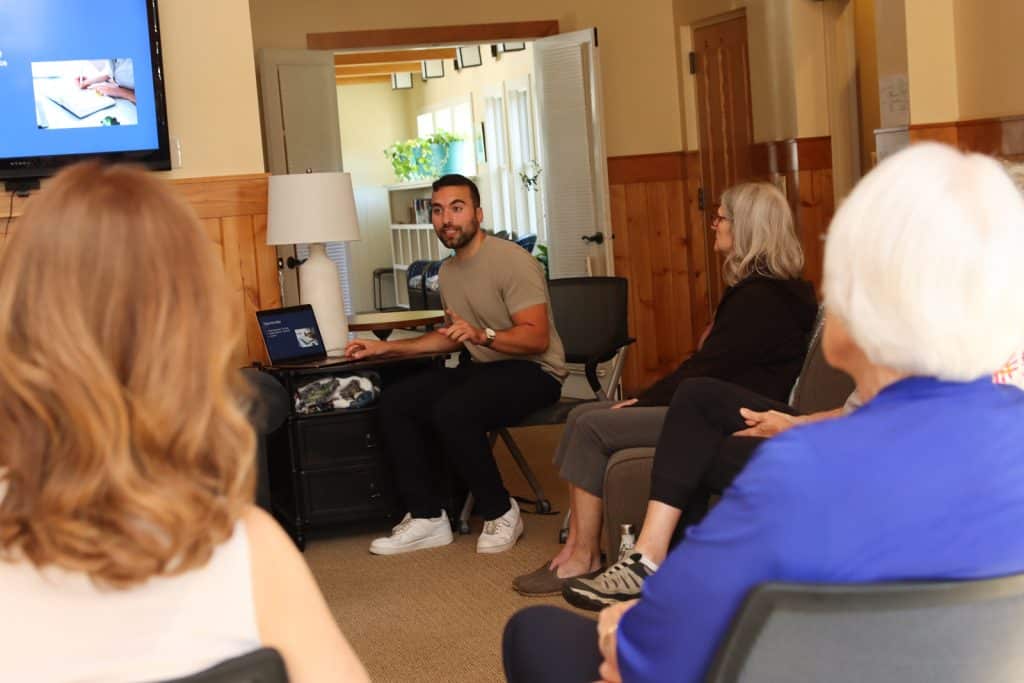
Star, a breast cancer survivor who’s been connected with Gilda’s Club for years and is also navigating grief after the loss of two friends who had cancer, says the mindfulness work leaves her feeling refreshed. She’s watched the Club offer far more than disease-specific support over the years, recalling friends who learned new things, made important friendships, and kept expanding their lives even while confronting serious illness.
It’s a reminder that healing and curing aren’t always the same thing.
And maybe that’s also what Alsabeh is learning here in the field while volunteering.
Medical school can teach the anatomy of the eye, the mechanisms of disease, and the interventions that can treat them. Gilda’s Club teaches something else entirely: how people find their way through uncertainty, how they find each other, and what it means to stay present when prescriptive medicine or an over-the-counter pill can’t make every hard thing disappear.
There is a way through
As he reflects on what other areas he has observed during his sessions, Alsabeh says he believes hopelessness may be among the greatest dangers people face when struggling with mental health.
“There is a way through,” he says. “There are techniques … and there are people.”
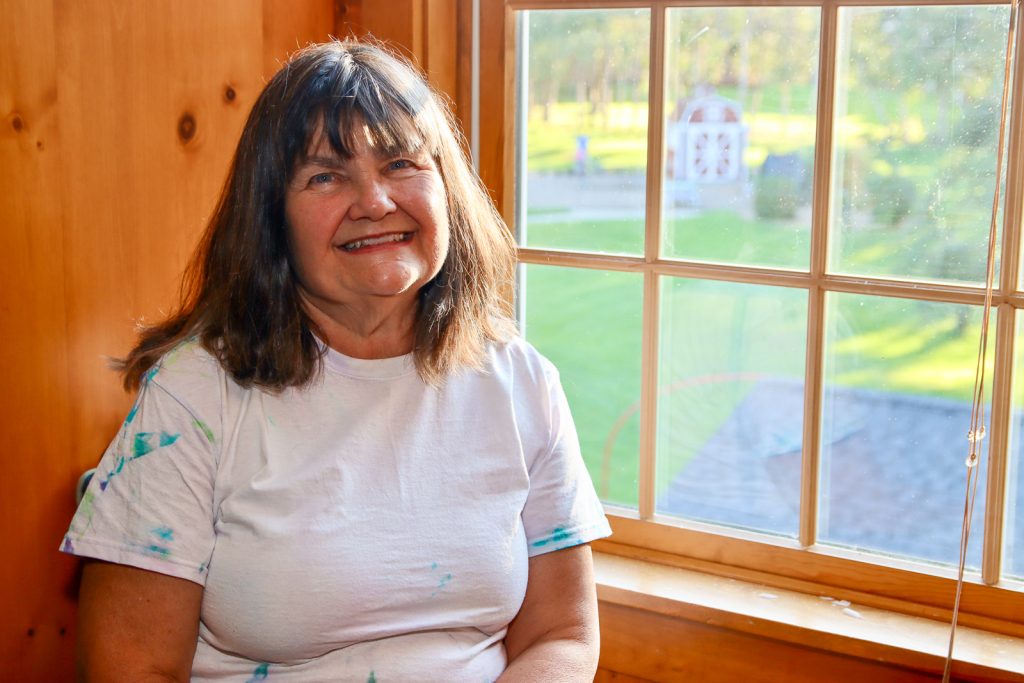
Steve reaches much the same conclusion from the other side of the circle.
“I think people lose hope,” he says, “and that’s where they start to stumble and fall.”
What began for Alsabeh with patients crossing a parking lot between two halves of care is becoming something different: an attempt to imagine a version of care with much less distance built in.
Photos by Tommy Allen
Related Articles
How are Michigan’s families doing?
Rising costs, child care shortages and barriers to health care are straining Michigan families. What could help?
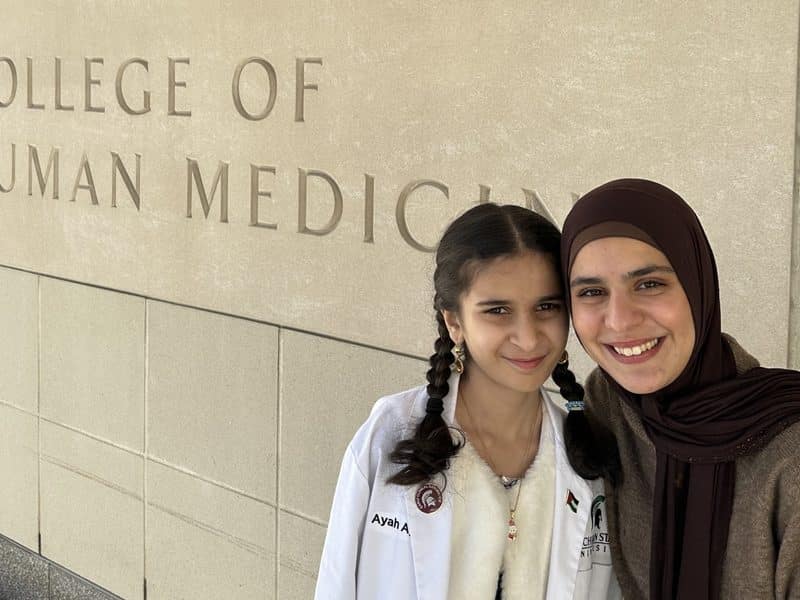
MSU med students help children see futures in health care
MSU College of Human Medicine students lead hands-on programs helping children explore health careers and feel more comfortable with doctors.
Rx Kids အစီအစဉ်ကိုမီချီဂန်ပြည်နယ်ရှိလူမှုအသိုင်းအဝိုင်းပေါင်း၆၀သို့တိုးချဲ့ခြင်းကမိသားစုများ၏ငွေကြေးအခက်အခဲကိုလျှော့ချပေးပြီးပိုမိုကျန်းမာသောကလေးငယ်များမွေးဖွားလာစေရန်အထောက်အကူပြုပါသည်။
အနှစ်ချုပ်-မီချီဂန်ပြည်နယ်၏ဤအစီအစဉ်သည်နိုင်ငံအတွင်းအနာဂါတ်ကိုယ်ဝန်ဆောင် မိဘများအတွက်သတ်မှတ်ချက်မရှိဘဲငွေသားထောက်ပံ့ပေးသည့်အကြီးမားဆုံးအစီအစဉ်ဖြစ်ပါသည်။


