
MSU med students help children see futures in health care
MSU College of Human Medicine students lead hands-on programs helping children explore health careers and feel more comfortable with doctors.
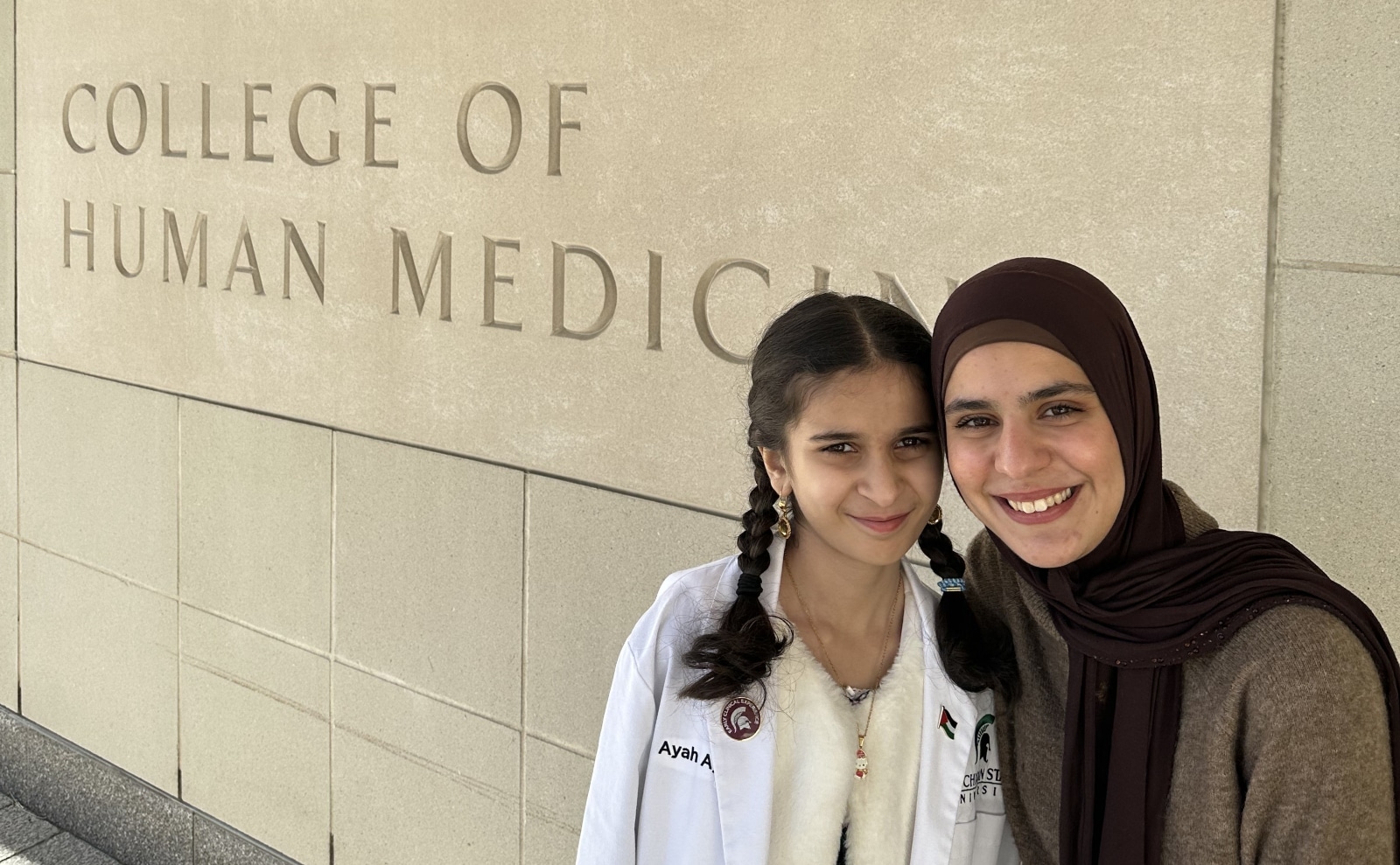
When Ayah Ayesh was growing up, she did not see many physicians or medical students who shared her Muslim and Arab identity.
Now a fourth-year student at Michigan State University College of Human Medicine, Ayesh is helping provide children – including her younger sister, Joumana – with the representation she lacked.
“As a kid, I never saw myself in medicine,” Ayesh says. “I never saw any representation of a Muslim Arab girl in medicine. I am super passionate about being the inspiration for other kids.”
Ayesh helps children learn about medicine through Reach Out to Youth and the Teddy Bear Health Fair.
Reach Out to Youth lets children explore medical careers with medical students. The Teddy Bear Health Fair helps children feel less afraid of doctors by letting them take a stuffed animal for a “checkup.” Both programs show children that people like them can work in medicine.
Utilizing ‘young, brilliant minds’
Grand Rapids psychiatrist Dr. Carolyn King created Reach Out to Youth with Dr. Donald Tynes in 1990 when they were medical students at Wayne State University.
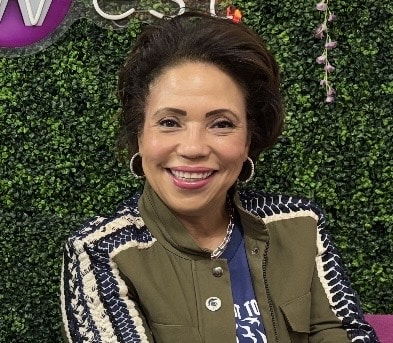
“We brought our nieces, neighbors and cousins into the medical school,” King says. “We took them into the anatomy lab and showed them how the median nerve works to pull the fingers down. These were kids 7 to 11. We thought, ‘This was a lot of fun. Let’s do it again.’”
The free program now serves children ages 7 to 11 at four medical schools in Michigan and Ohio.
“I had no idea this program was going to last 36 years,” King says. “I thought I was doing a program, a one-and-done. Around year 15, I thought, ‘Clearly, this is not going away.’ That’s when I had to formalize it.”
King established a nonprofit to give the growing effort more structure, but medical students continue to carry out much of the work.
“Each year, you have these young, brilliant minds who want to give back,” King says. “They’re going into the field of medicine, they want to see humanity improve, and they have all this energy.”
Medical students at the MSU College of Human Medicine in Grand Rapids have participated in Reach Out to Youth for more than a decade. King credits her late friend Eileen DeVries with helping make the connection.
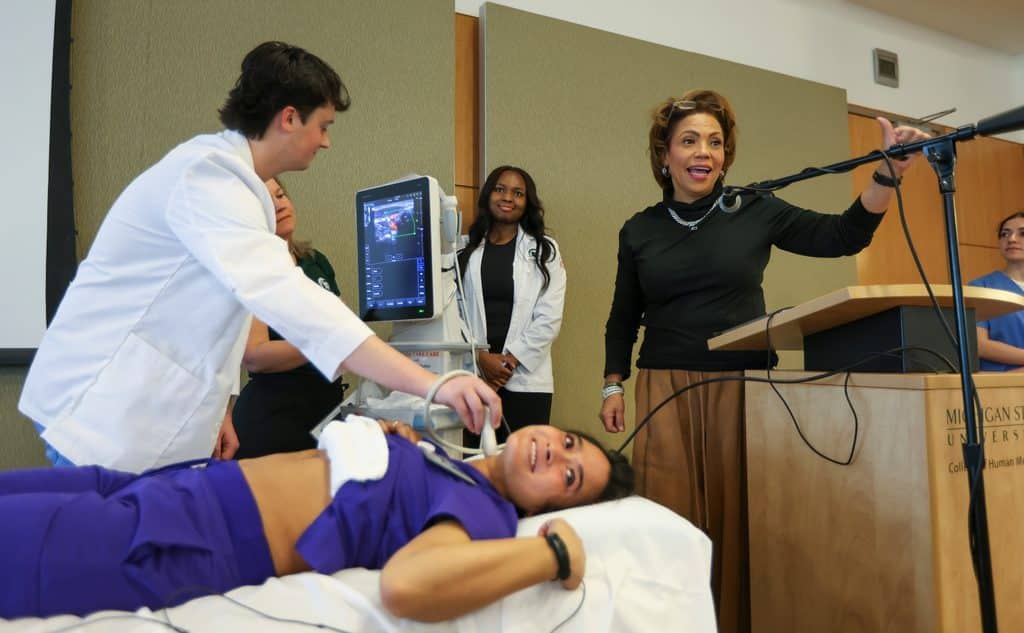
King wanted to bring Reach Out to Youth to Grand Rapids while the Secchia Center was being built. DeVries encouraged her to bid on a garden party at a fundraiser. King won when no one else bid, paying $1,000 for tea for 10 in DeVries’ backyard.
“I told Eileen, ‘You haven’t heard about Reach Out to Youth yet, but you’re about to,’” King says.
DeVries invited the medical school’s Dean Marsha Rappley, MD to the tea.
“I turned the tea into a soft launch for Reach Out to Youth in Grand Rapids,” King says. “The dean attended and said, ‘Yes, we’ll do it.’ That’s how the program came here.”
The February 2026 event drew 117 children, 60 parents and more than 100 medical student volunteers. Children studied the heart, digestion and other body systems.
Showing kids they belong
Ayesh says children need to meet medical providers who look like them. She calls her efforts “a full-circle moment, especially because I didn’t grow up seeing anyone who looked like me.”
Ayesh is the daughter of Palestinian immigrants and one of seven siblings. Her parents did not have the opportunity to complete their own education, but they emphasized hard work.
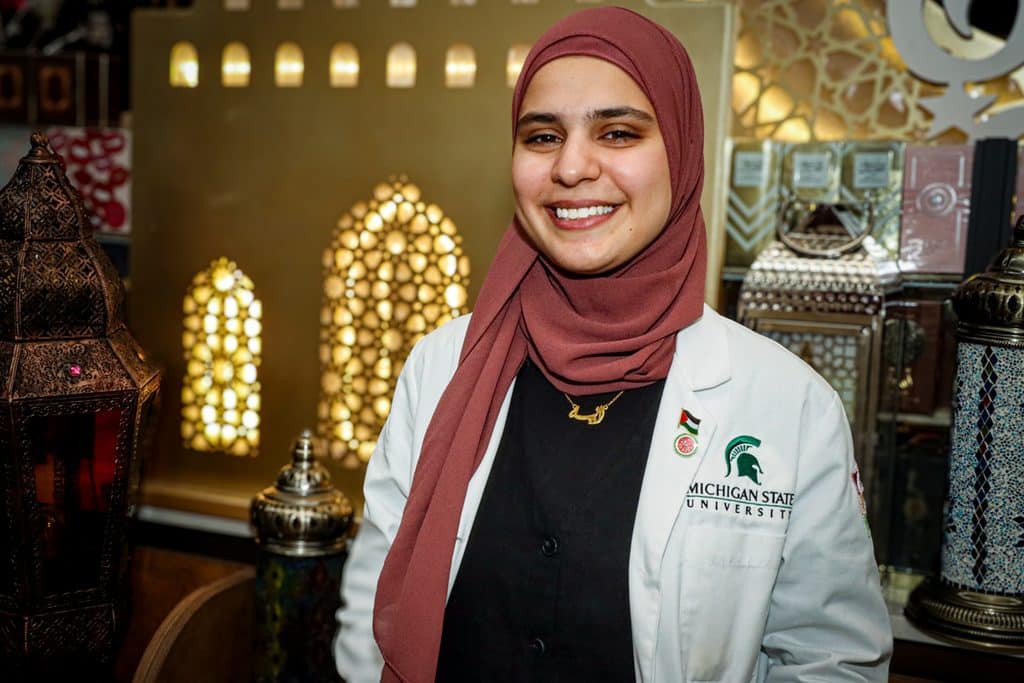
“My older sister, Awatef, always wanted to be a doctor, and she was the first role model that I had looked up to,” she says.
Both sisters attended Grand Valley State University and are now studying at the College of Human Medicine’s Grand Rapids campus. Ayah Ayesh plans to graduate in May and is applying for residency programs. She is considering specializing in obstetrics and gynecology.
Ayesh did not participate in medical career programs as a child. When she learned about them in medical school, she made sure Joumana attended, starting in about fourth grade.
“She became so passionate about medicine,” Ayesh says. “She would sit next to me while I was studying. They gave her a stethoscope at one of the events, and she would be constantly using it. She says that she wants to be a doctor now.”
Joumana is now a seventh grader. She attended both the Teddy Bear Health Fair and Reach Out to Youth, returning to the latter each year she was eligible.
Ayesh recognizes that her sister has advantages she did not have. Joumana is growing up surrounded by older siblings who attend college, including sisters studying medicine and pharmacy.
“I didn’t even know what college was when I was a kid,” Ayesh says. “Now my sister has six other siblings who are in college, and college seems like something normal to her at home.”
Before graduating from Forest Hills Central High School, Ayesh attended several other schools and observed differences in the opportunities and encouragement children received.
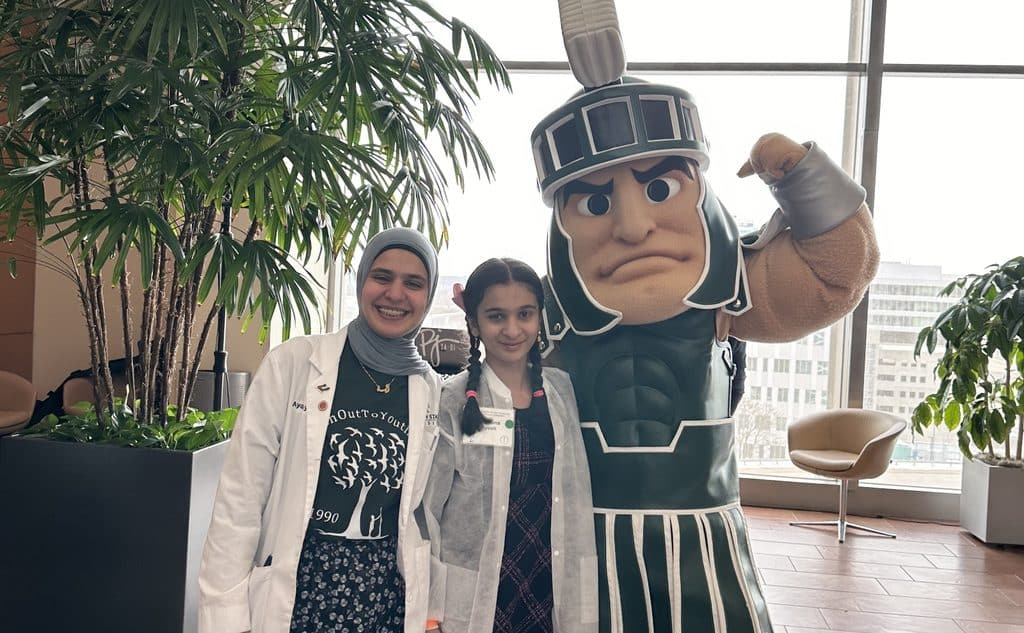
“I saw the disparities that exist among the different ZIP codes and what schools you go to,” she says. “Not all the kids get encouragement to pursue a career or go into health care, just to envision themselves beyond school.”
A one-day program such as Reach Out to Youth cannot eliminate those disparities or provide the sustained academic, financial, and mentoring support needed to become a physician. It can give children an entry point, however, by allowing them to visit a medical school, meet medical students, and begin asking how someone becomes a doctor.
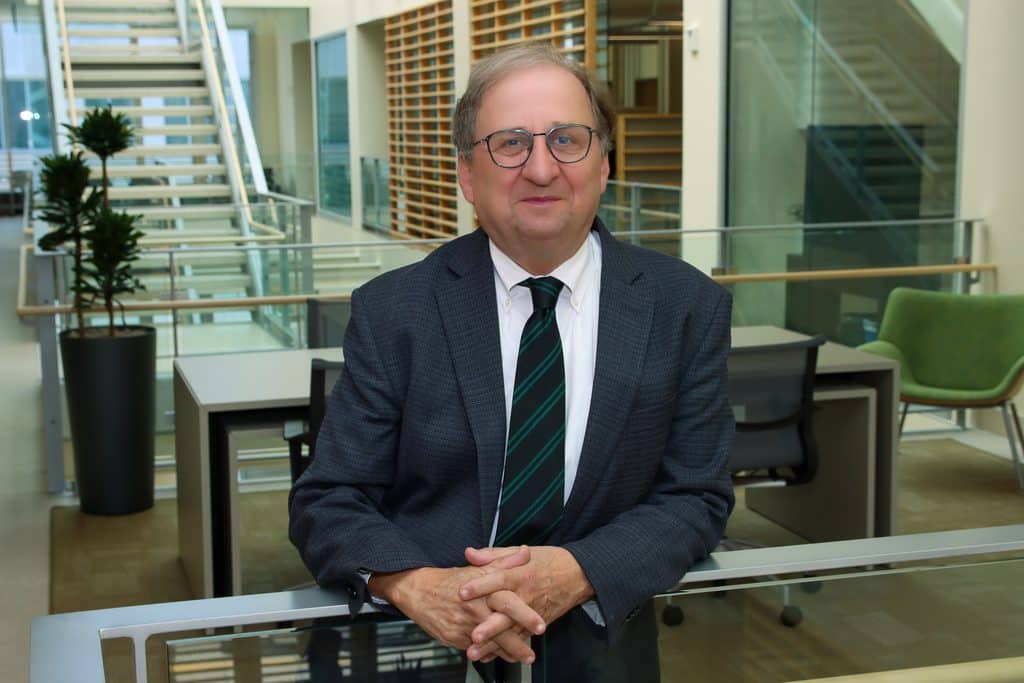
Getting kids involved
Reach Out to Youth uses active learning to make medicine approachable.
Its themes rotate through brain, muscle, and immunity, with each participating medical school developing its own interpretation. Wayne State created “Motor City Muscles” for its current muscle curriculum, using parts of a car to help children learn about cardiac, skeletal and smooth muscles.
Ayesh has volunteered nearly every year of medical school. She has helped with activities including dissections, ultrasound demonstrations, medical histories and basic physical examinations.
“A lot of it is encouragement for the kids, talking with them, showing them that medicine can be fun,” she says.
Children also receive materials they can play with and use to continue exploring at home – such as Joumana’s stethoscope.
The program can benefit the medical students leading the activities, Ayesh says. Children often ask basic questions that remind the students why science once fascinated them.
“They’re so fascinated by the little things that you forget how exciting it is as a kid to experience science or experience medicine for the first time,” she says. “Even for us as medical students, it reignites our spark in medicine because we take it for granted.”
Something as routine as listening through a stethoscope can become new again when a child hears a heartbeat for the first time.
“They find it the coolest thing ever,” Ayesh says. “They’re like, ‘Oh my God, is that the heart? Why does it sound like that?’ We listen to a heart every day, so for us, it’s not so fascinating anymore.”
The next Grand Rapids Reach Out to Youth event is scheduled for Feb. 27, 2027, at the Secchia Center.
Raising comfort levels
While Reach Out to Youth focuses on introducing children to medical careers, the Teddy Bear Health Fair was started to promote children’s health and make medical care less intimidating.
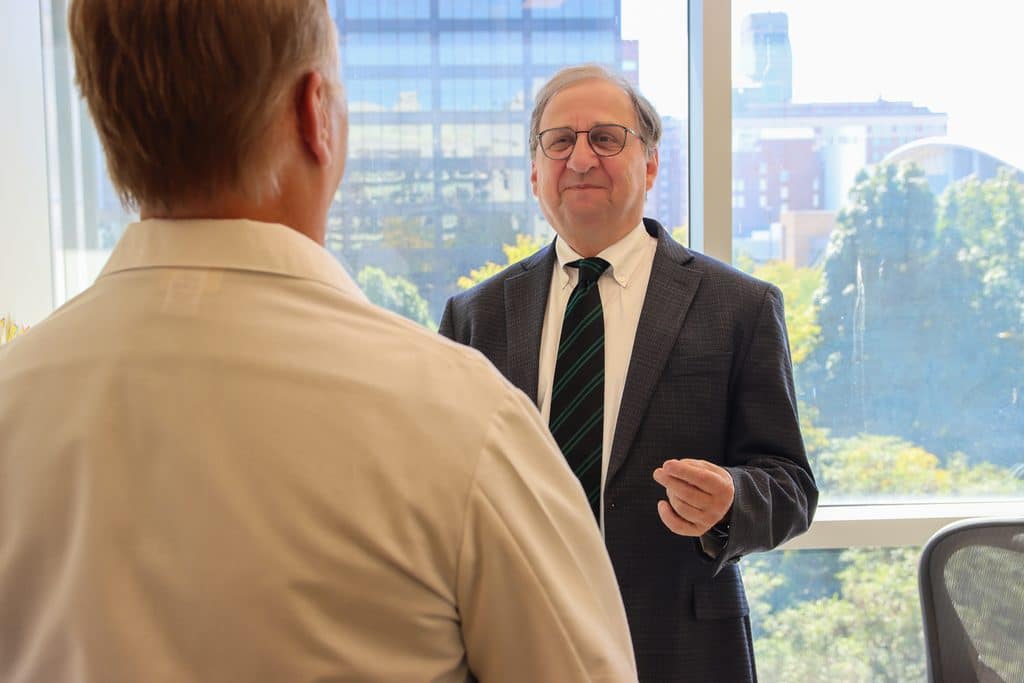
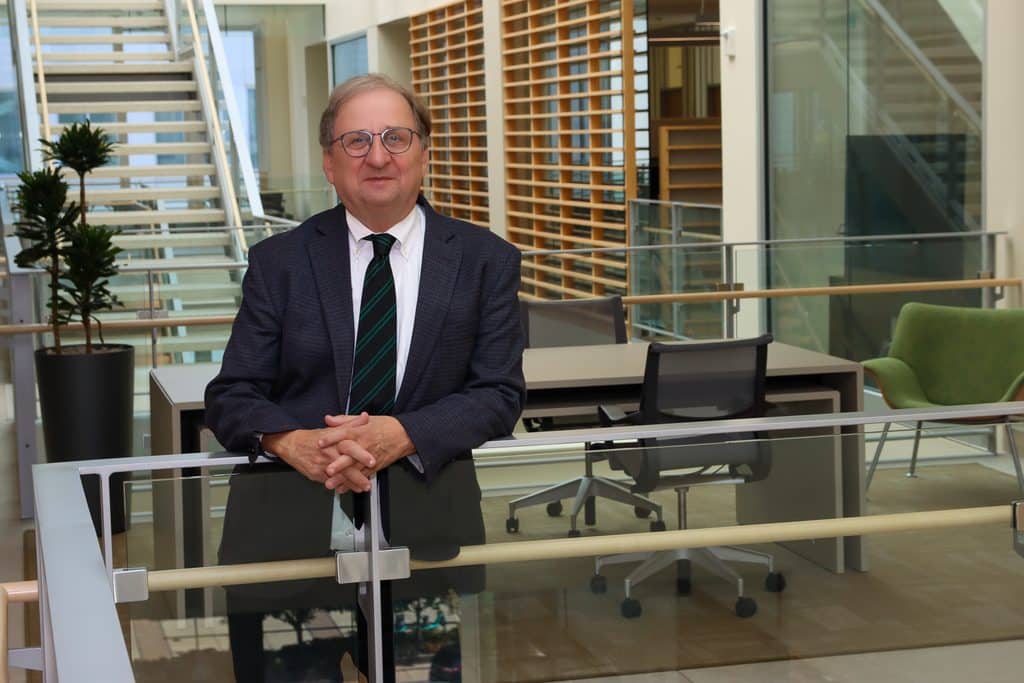
Dr. B. Keith English, chair of the Department of Pediatrics and Human Development at MSU College of Human Medicine, has been involved with the event throughout his 13 years at the university. The event, originally called the Teddy Bear Picnic, began in East Lansing more than 20 years ago and has since expanded to Grand Rapids and Flint.
“The idea for doing it was focused more on reaching out to the community and telling them that the health and well-being of children is important,” English says. “We want to do what we can to support that. We’re here for you. We want to keep kids healthy.”
That emphasis on prevention is central to pediatrics, he says.
“We’re here to take care of sick kids, but things like immunizations are sort of the center of pediatrics,” English says. “We’d rather keep you well than respond to when you’re sick.”
The free event invites children to bring a teddy bear or another stuffed animal for an examination conducted by physicians and students from MSU’s health colleges. Children can watch as someone listens to their stuffed animal’s heart and lungs, takes a pretend X-ray, places a splint on its leg or gives it an immunization.
“Part of it was trying to make kids less apprehensive when they did need to go to the doctor,” English says. “It’s always very stressful for the child and the family if it’s an acute problem. Part of this was designed to reduce that anxiety a little bit by having the teddy bear be the patient.”
This year’s free Grand Rapids Teddy Bear Health Fair will be Oct. 10 at the new MLK Park Community Center. Families can register online. Activities will include the Teddy Bear Hospital, activities with the Grand Rapids Gold basketball team, lead-reducing water kits, brain activities, arts and crafts, oral health education, emotional and mental health education, giveaways and other family activities.
“Many community groups want to have a booth and meet with families and tell them what they’re doing,” English says.
English says the fair has attracted as many as almost 1,000 people in Lansing. The Grand Rapids and Flint events are newer and have not yet reached that attendance level, though more than 400 people attended the 2025 Grand Rapids event.
English says community pediatric practices, the pediatric residency program and Helen DeVos Children’s Hospital help support the Grand Rapids event.
The event was not created to guide children toward medical careers, but English says it may spark their interest. Many medical students and physicians considering pediatrics have told him their career decisions reflect early experiences with health care, including their own illnesses or those of siblings and friends.
English believes positive early interactions can help children understand that pediatrics is not something to fear.
“An early exposure to pediatrics being something that’s not scary, but something that’s about trying to help children and adolescents be comfortable and healthy, does resonate,” he says.
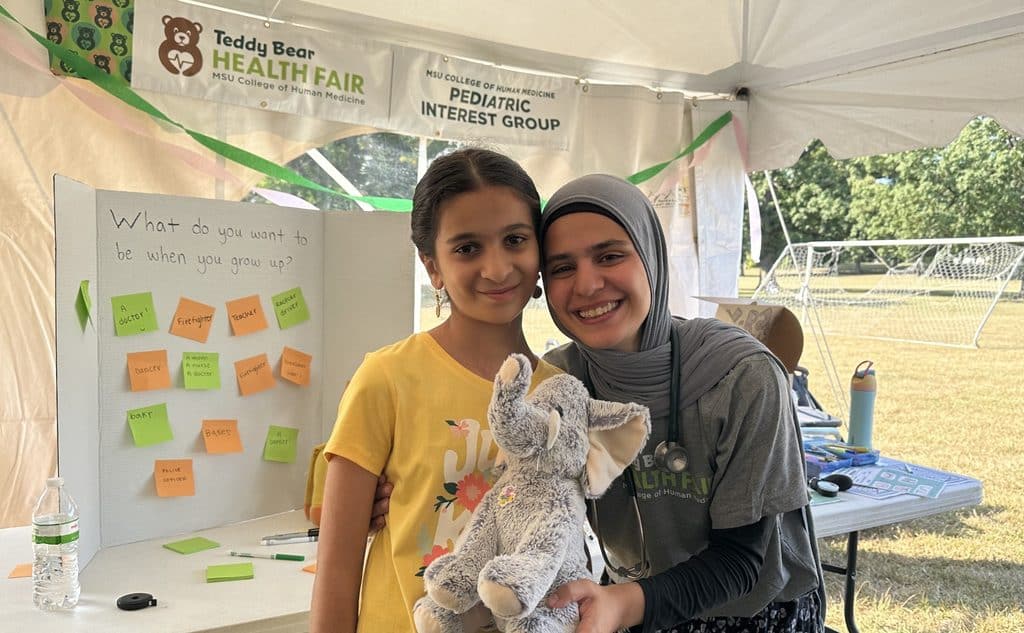
The event also provides medical students with experience interacting with children. Some arrive already planning careers in pediatrics.
“They get to do face painting with a bunch of kids or listen to their heart and lungs, and it’s very validating for them,” English says. “They know, ‘Yeah, this is the right career for me. I want to be working with children.’”
Volunteers also ask children what they want to become when they grow up.
“We wanted the kids to dream big and think about what they wanted their future to look like, even if it was something crazy or unrealistic,” Ayesh says. “It was just to give them the motivation to do what they want and dream.”
Showing they work
Neither the Reach Out to Youth nor the Teddy Bear Health Fair has hard data showing their effectiveness, though a grant from the Bill and Susan Lewis Foundation is allowing a Reach Out to Youth team member to review records since 1990 and to survey former students.
“People ask that question all the time: ‘What has been the outcome?’” King says. “I’m an outcomes girl, but when I was a medical student, I had no idea this program was going to last 36 years.”
But English believes that good early experiences with doctors clearly matter. A pediatrician encouraged him to attend medical school, and other doctors became his role models.
“I had a lot of wonderful teachers who validated that being a pediatrician was the right thing to do,” English says. “I wound up doing pediatric infectious disease as a specialty partly because those were my role models. I admired those people, and at least subconsciously, I wanted to be like them when I grew up.”
The programs have already helped Joumana picture herself as a doctor.
Ayesh also wants to mentor students who are curious about medical school.
“They’re fascinated by everything,” Ayesh says. “They’ll hear a heartbeat and immediately ask, ‘Is that the heart? Why does it sound like that?’ In medicine, we’re exposed to these things every day, so it’s easy to forget how incredible they really are. Seeing it through their eyes reminds me of that.
Photos courtesy of Johnny Quirin/MSUCM, Ayah Ayesh and by Tommy Allen
Medicine Across Michigan looks at how MSU College of Human Medicine’s community-based approach to medical education is expanding access to care, strengthening our state’s physician workforce, and meeting the needs of rural, medically underserved, and emergent communities. Through editorially independent reporting, Rapid Growth digs into the people, partnerships, and practices helping build healthier communities across Michigan. This series is underwritten by Michigan State University’s College of Human Medicine. Learn more at humanmedicine.msu.edu.
Author
Related Articles
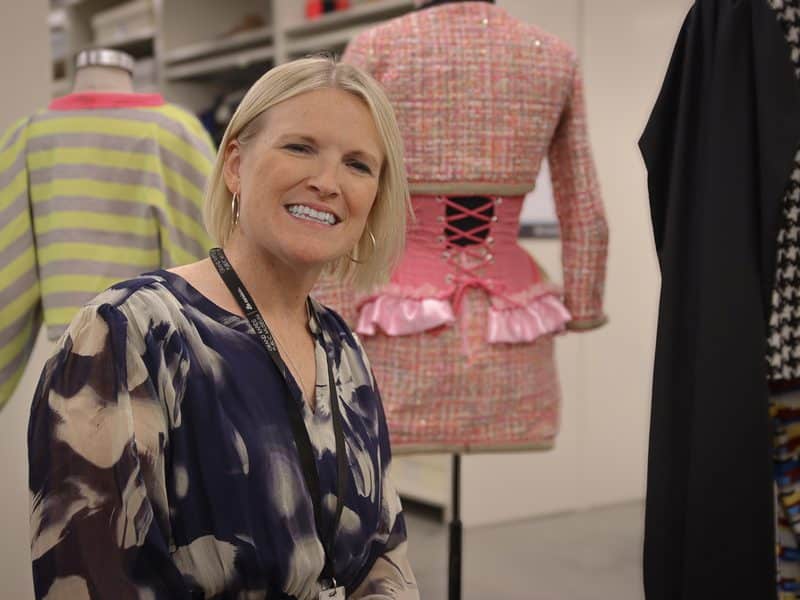
Something for every season: Fashion, curiosity, and community at the GRPM’s new archive center
Inside the Grand Rapids Public Museum’s new Archives Center, Kendall College of Art and Design students are turning decades-old garments into inspiration for their next designs.
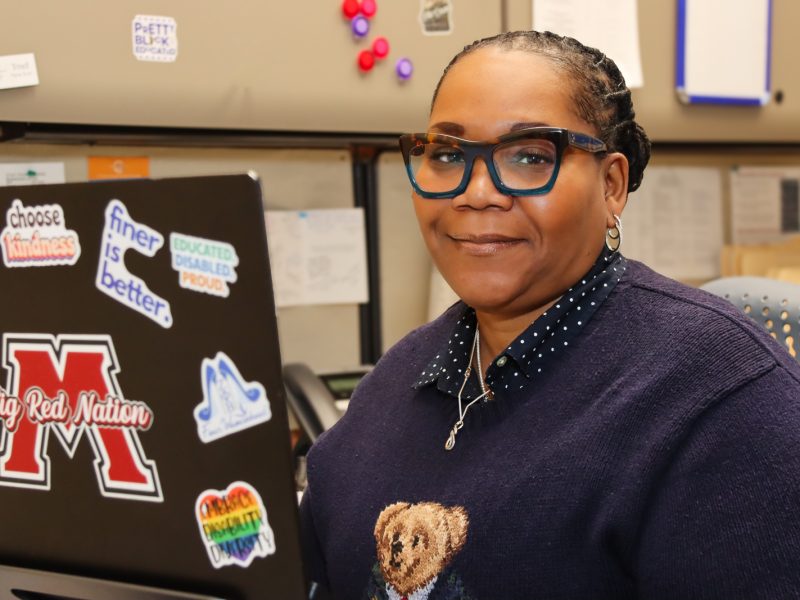
Partnerships help students with disabilities prepare for careers while building confidence and independence
Disability Network West Michigan partners with schools and colleges to remove barriers and help students progress toward employment and independent living.
New talent report highlights AI gap, workforce shifts in region
The Right Place’s 2026 Talent Report outlines AI challenges, labor shifts, and strategies to attract, develop, and retain the regional workforce.


